
The One Person Allowed to Hover
Grandparents aren't backup parents — they're a completely different role.
- Kids with an invested grandparent handle sibling transitions without regression, stay grounded during family stress, and build deeper social confidence through their teen years.
- The move: stop treating grandparents as lighter-duty parents and unlock three specific superpowers they're built for.
Why your kid's grandparent should break every modern parenting rule
We spend years training ourselves not to helicopter. Give them space. Let them struggle. Don't micromanage their friendships or hover over homework.
Good advice. For parents.
But there's one person in your kid's life who should do the exact opposite -- and research says the results are extraordinary.
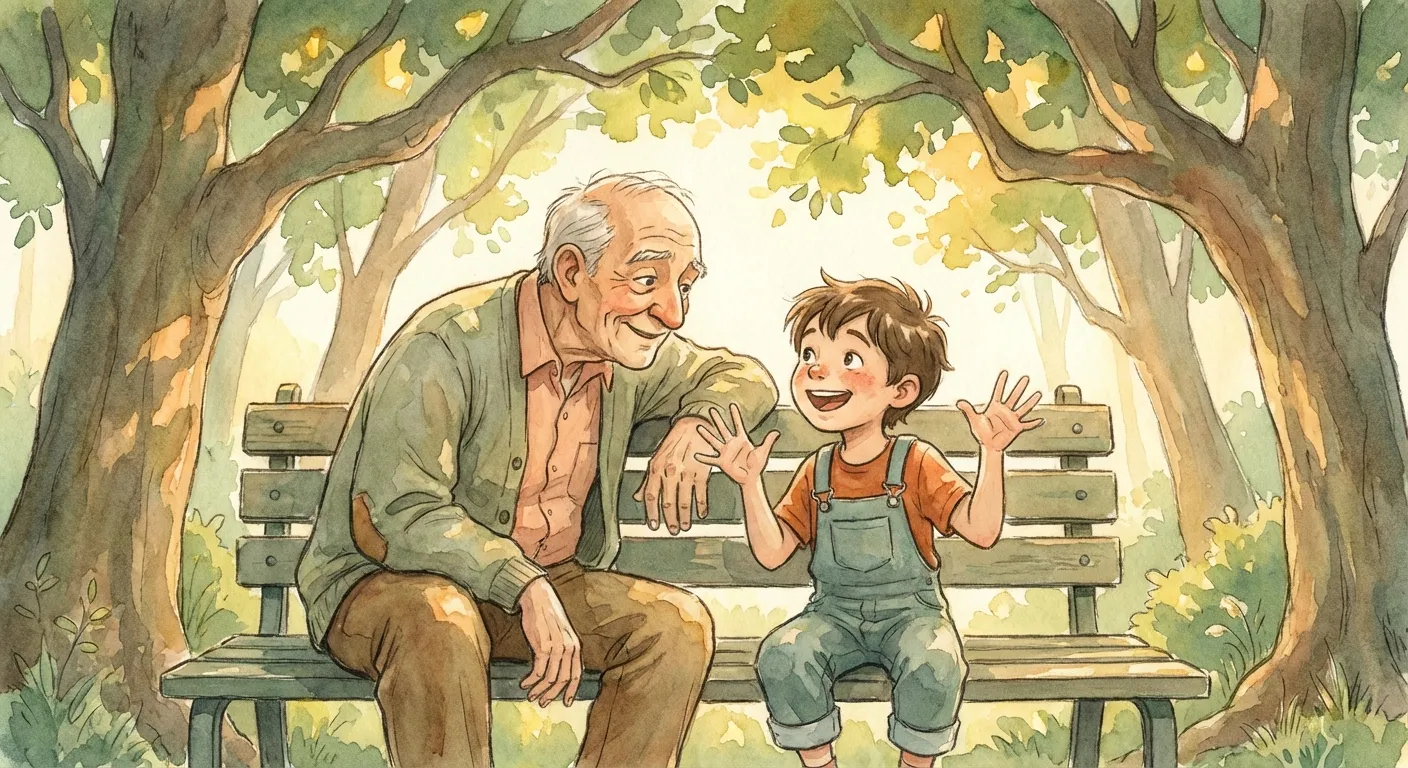
Grandparents who hover, who ask about every friend by name, who show up to every game, who remember which teacher they like and which one they don't -- those grandparents are providing something parents literally cannot. A different kind of attention, from a different kind of relationship, that unlocks a developmental channel nothing else reaches.
Three Superpowers (Not Backup Parenting)
The mistake most families make is treating grandparents as lighter-duty parents -- same role, lower stakes. But the research points somewhere more interesting. Grandparents aren't understudies. They're a different cast entirely.
The Spotlight Shift
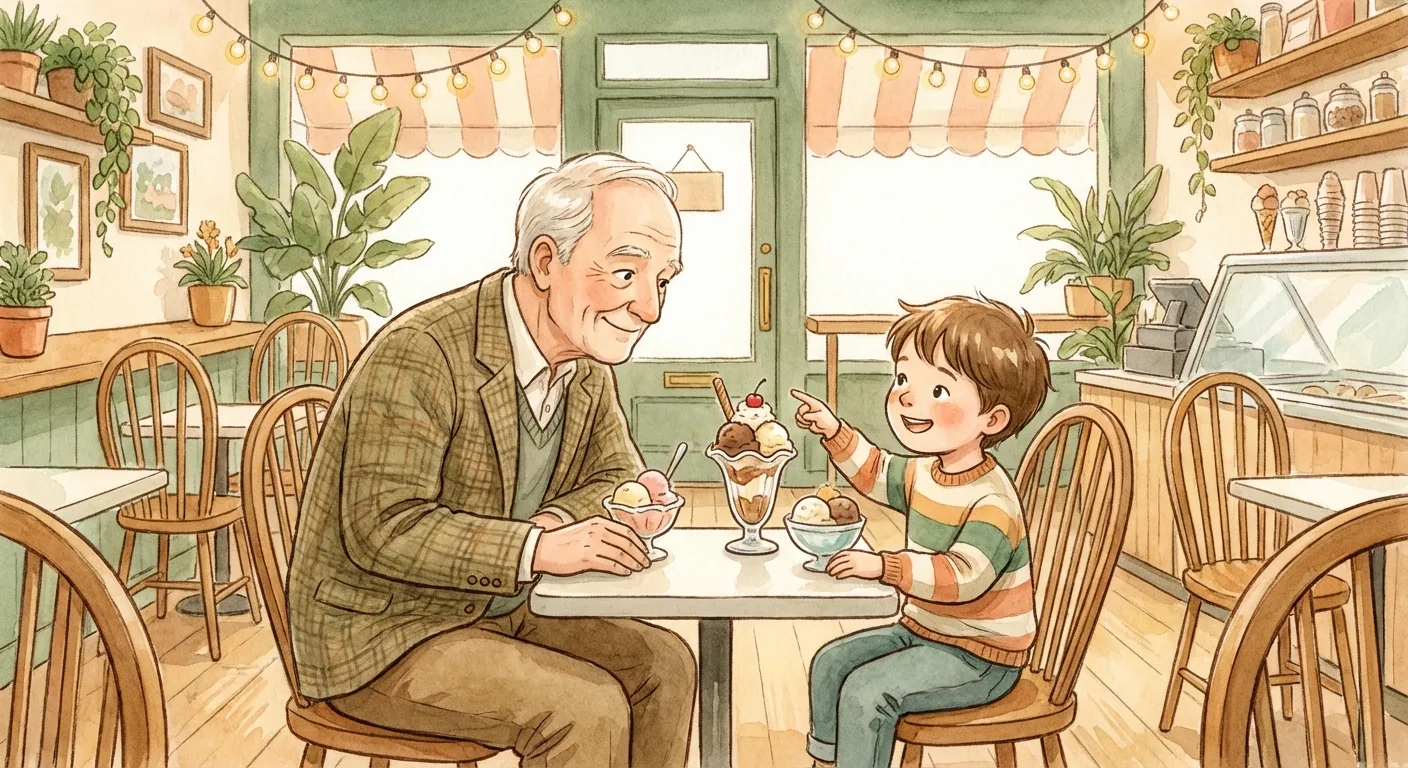
All attention floods toward the newborn. The older kid feels it instantly. This is exactly when a grandparent swoops in with one-on-one outings, reading sessions, and undivided focus. One person making the older child feel like the center of someone's world. Most sibling jealousy and regression? Prevented right here.
The Calm in the Storm
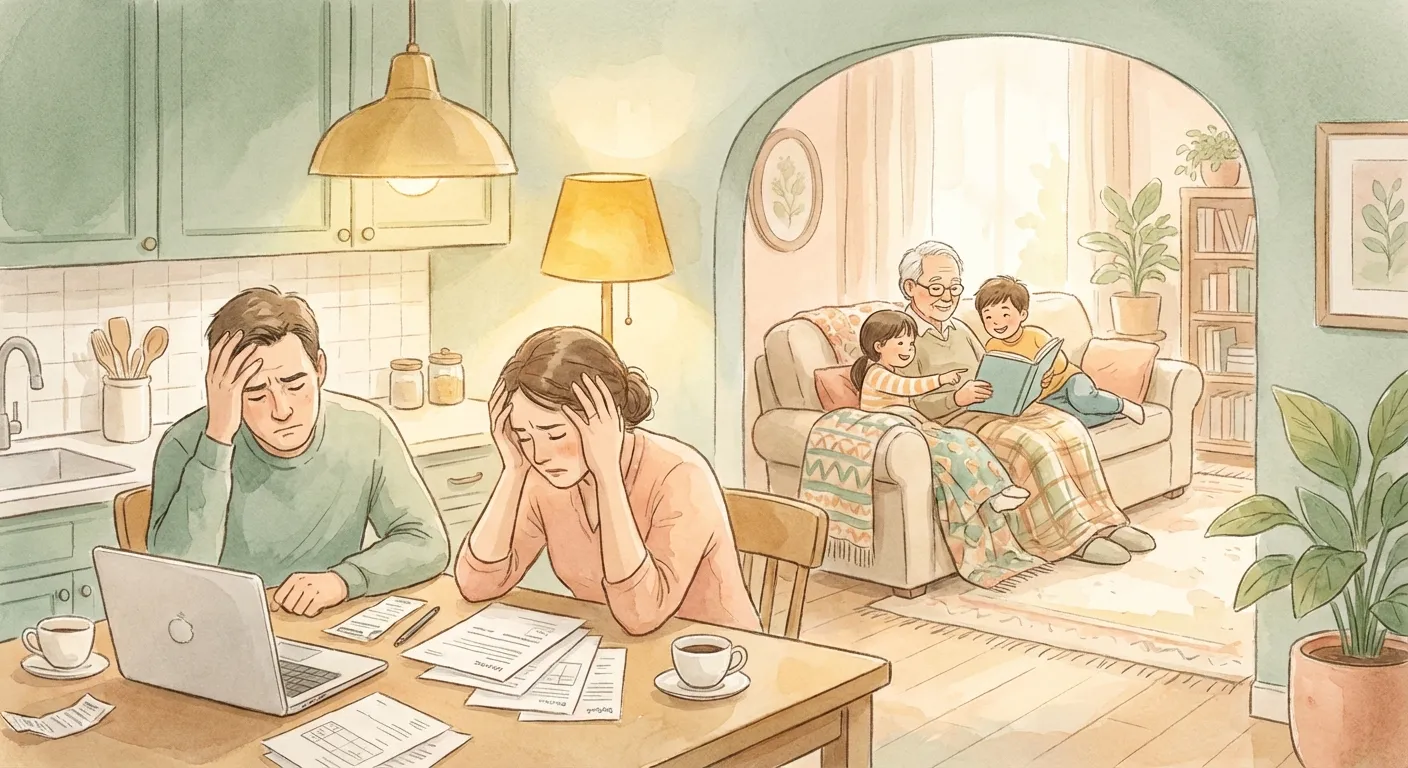
Every couple hits rough patches. Kids absorb that tension like a sponge. A grandparent doesn't need to fix anything or take sides. Just being a calm, loving presence -- and gently naming what's happening ("sometimes grown-ups disagree, and that's okay") -- gives kids the stability they need to ride it out.
The Devoted Fan
Here's the counterintuitive one. Kids -- especially teenagers -- thrive when there's an adult outside the parent-child dynamic who's genuinely, visibly invested in their life. Someone who asks about their classes, remembers their friends' names, follows their interests, shows up to their events. This is hovering. And from a grandparent, it's gold.
Why This Works (The Research)
A meta-analysis of 66 studies found that mothers with active grandparent support report significantly less stress and raise more well-adjusted children. But the effect goes deeper than stress relief.
Studies of adolescents consistently show that kids do better -- socially, academically, emotionally -- when they have a dedicated adult beyond their parents who takes genuine interest in their lives. Evolutionary psychologists call this "alloparenting," and they consider it fundamental to human development. Not a nice-to-have. Fundamental.
| Parent's job | Grandparent's superpower | |
|---|---|---|
| Attention style | Give space, foster independence | Hover, show up, be the biggest fan |
| During conflict | Navigate the disagreement | Be the island of calm for the kids |
| New sibling | Care for the baby | Make the older kid feel like a star |
| Discipline | Set boundaries, enforce rules | Unconditional adoration (that's it) |
| Core role | Managerial + relational | Pure relational. No managing. |
Boundaries That Make It Actually Work
The catch: grandparent relationships blow up over logistics, not values. Bedtimes, snack rules, screen time. Tiny things that feel enormous in the moment. Here's a framework that prevents most of the friction before it starts.
Home Court Rules
Whoever's house it is sets the rhythm. At Grandma's: Grandma's rules. Later bedtimes, extra cookies, different standards -- all fair game. At your house: your norms lead. Simple reciprocity. Eliminates most rule conflicts before they begin.
Open Input, Final Say
Welcome their perspective. Decades of experience is worth hearing. But parenting decisions rest with the parents. The deal: share whatever you're thinking, and don't take it personally if we go a different direction.
Enjoy, Don't Manage
The most effective grandparent role is relational, not managerial. Connection, fun, unconditional adoration. Not weighing in on bedtimes, eating habits, or discipline calls.
Who delivers the boundary matters
When a line needs to be drawn with a grandparent, it should come from their own adult child -- not the in-law. This isn't conflict avoidance; it's respect for the original relationship. And remember: our brains aren't wired to receive negative feedback gracefully. The sting always lands first, no matter how carefully it's delivered.
When Advice Lands Wrong
A grandparent says something critical about how you're raising your kid. Your threat response fires before you can think. Here's a script that actually works:
"Hold on -- I want to hear this, but I need a second to take it in. Before we get into that, can you tell me something you think we're doing well?"
Why it works: It redirects their brain from emotional reaction into reflective thinking -- which takes time and effort. It reframes the conversation as collaborative, not adversarial. Once they've named something positive, ask them to explain their concern. There's often a real insight underneath.
Building the Bridge
None of this happens automatically. Here's the playbook: