
Your Kid Remembers 3 Words. Ten Minutes Later, They Nail All 15.
Ancient orators memorized speeches with vivid story chains. Kids can too.
- Kids who chain-story their lists remember 15 out of 15 instead of 3, hold onto material for weeks, and start asking to study this way.
- The move: instead of re-reading the list, co-create one ridiculous story where each item causes the next scene.
No flashcards. No repetition drills. Just ten minutes of laughing together on the couch and a memory trick so old the ancient Greeks used it to memorize entire speeches.
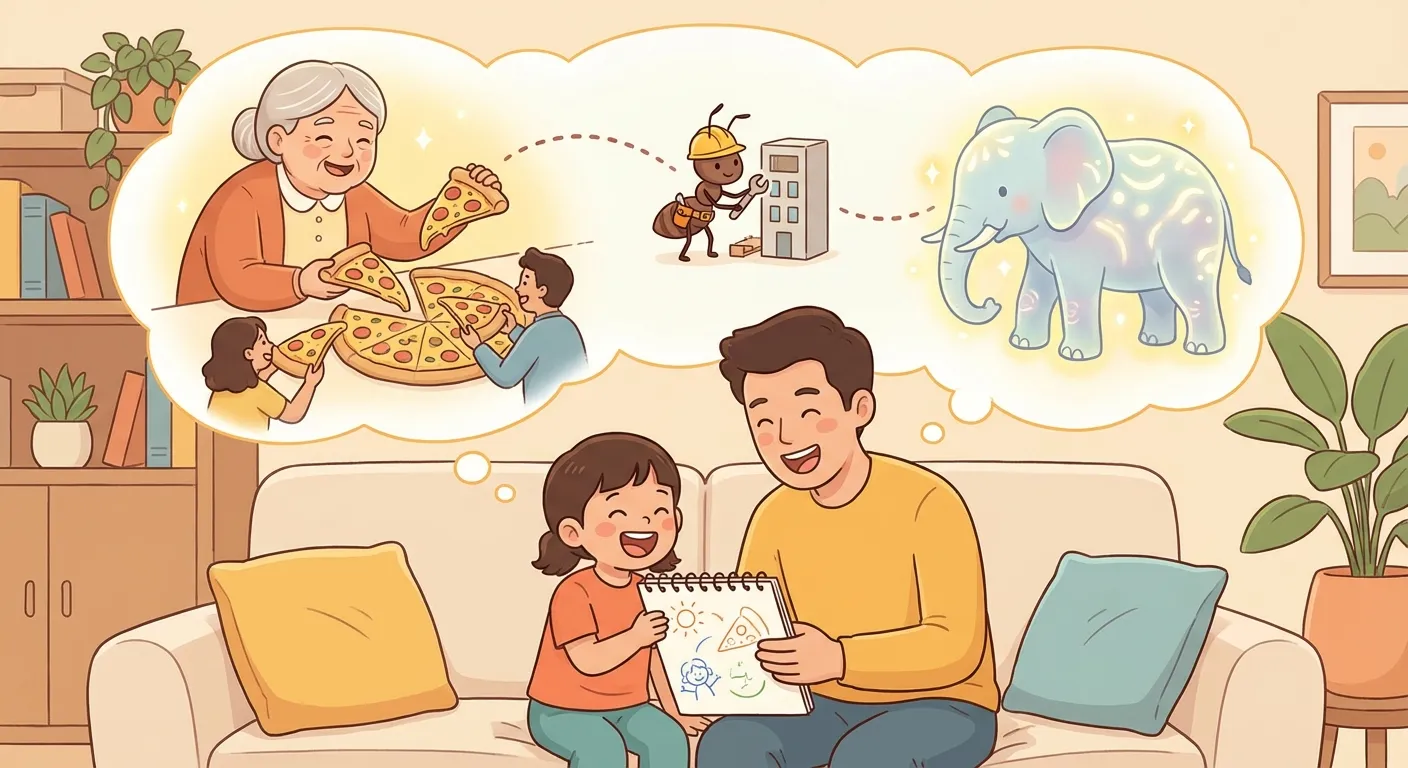
Here's the setup. Your kid has a vocabulary test tomorrow. Fifteen words. You read them aloud. They close their eyes and try to recall.
Three. Maybe four.
Now try something different. Spend ten minutes building the most ridiculous story you can imagine together. Each word becomes a scene. The weirder, the better.
Test again.
All fifteen.
Read & Repeat
Chain Story
That face they make when they realize they got every single one? That's the moment you're playing for.
Why This Works (It's Not Magic, It's Wiring)
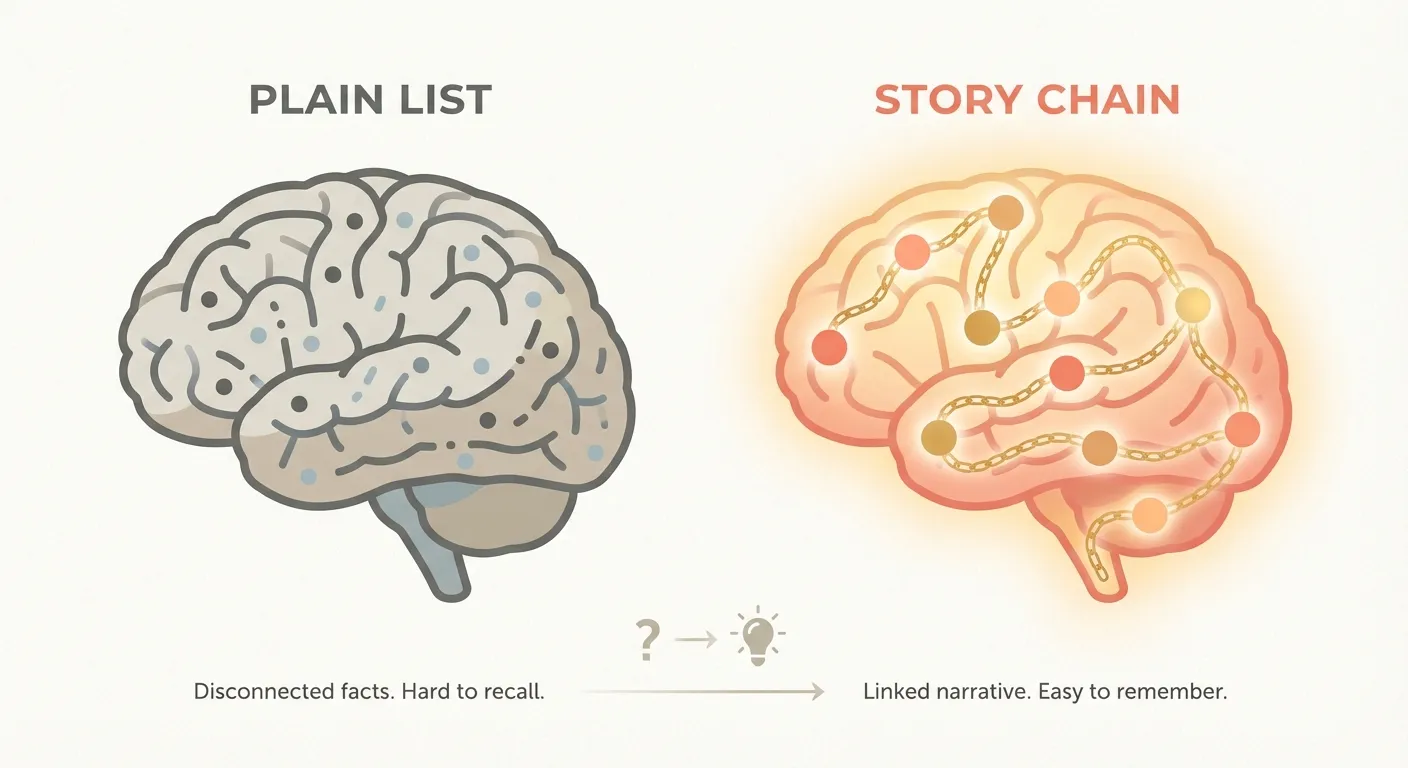
A plain list gives your brain one path to each item. One path means one chance to lose it. A story chain gives each item three paths at once: the narrative sequence, the mental picture, and the emotional hit (usually laughter). Three hooks are much harder to shake loose than one.
It holds onto anything weird, funny, or surprising.
This isn't new. Ancient Greek and Roman orators memorized hours-long speeches by weaving facts into vivid mental stories. Cognitive scientists have studied the technique ever since and keep confirming the same thing: emotionally vivid, visually striking, or downright weird information sticks.
The Five-Minute Version
Write the list out
Grab whatever your kid needs to memorize. Vocab, dates, science terms. Eight to fifteen items on paper or a whiteboard where you can both see them.
Run the "before" test
Read the list once. Cover it. Ask how many they can remember. They'll probably get 3-5. Perfect.
Build the chain
First item: make up something absurd. Your kid takes the next item and connects it. Go back and forth. The only rule: each item connects to the one before it. The wilder, the better.
Retell it 2-3 times
Take turns narrating the whole story. Each pass locks it tighter. When your kid starts correcting you on a detail, it's working.
The big reveal
Cover the list. They replay the chain silently in their head and write down every item. Watch the look on their face when they get them all.
Watch It In Action
Say your kid has eight vocab words. Here's how a chain story might go:
8 Words, 1 Ridiculous Story
Each word is anchored to a vivid, absurd image. The chain connects them all. Your kid replays the story and the words come tumbling out in order.
The Four Rules That Make It Stick
Go Weird
Ordinary images fade. A hamster driving a monster truck? That stays forever.
Go Funny
If your kid is laughing, the memory is locking in. Chase the giggles.
Go Big
A "big dog" is forgettable. A dog the size of a house that sneezes glitter? Unforgettable.
Keep It Linked
Each item must connect to the next through cause and effect. The chain is the whole point.
Works For Way More Than Vocab
| Subject | What to Chain | Example Move |
|---|---|---|
| History | Timeline events | Each event becomes a scene in a sprawling epic |
| Science | Classifications | Kingdom, phylum, class become characters in a food chain |
| Languages | New vocabulary | The sound of the word becomes a character that looks like its meaning |
| Math | Formulas | Each variable is a character doing something related to its operation |
| Music | Scales, chord progressions | Notes become characters in a musical adventure |
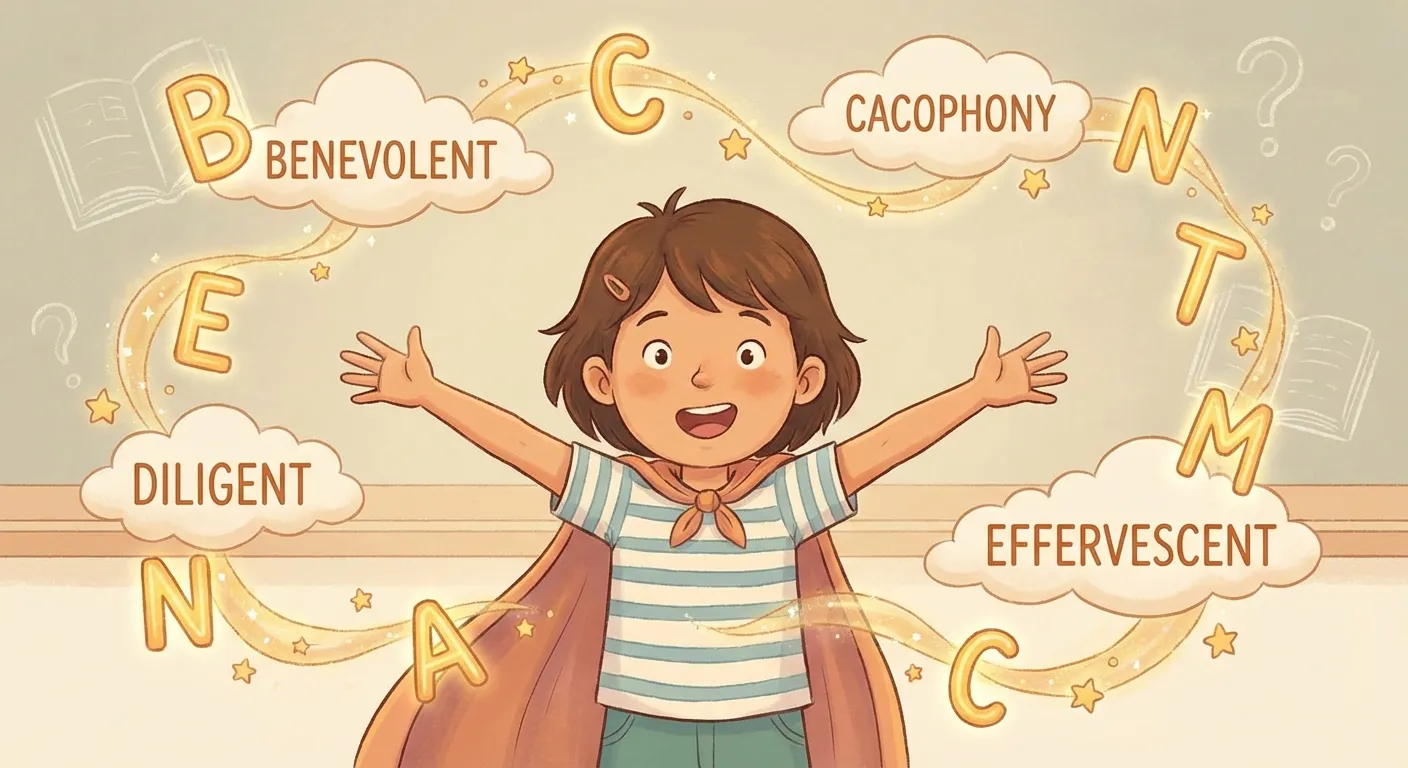
The Secret Ingredient: Let Them Drive
The more creative control your kid has, the deeper the memory goes. Their weird ideas. Their gross humor. Their nonsensical connections. Those are the ones that lodge deepest.
Don't steer toward "making sense." The whole point is that it doesn't make sense. Your job is to laugh and add fuel.
Making It a Habit
Start low-stakes
Try it with a grocery list or names of family members in age order before bringing it to school material.
Make it a ritual
"Let's chain it" becomes your go-to phrase whenever memorization homework shows up.
Revisit old chains
Weeks later, quiz your kid on a chain you built together. You'll both be amazed at how much stuck.
Let them teach it
When they show a friend or sibling, they cement it as a permanent tool in their toolkit.
Tonight's Challenge
Pick any list your kid needs to learn. Spend ten minutes making the most absurd story you can. Then test them. That look on their face when they get every single one? You earned that.