
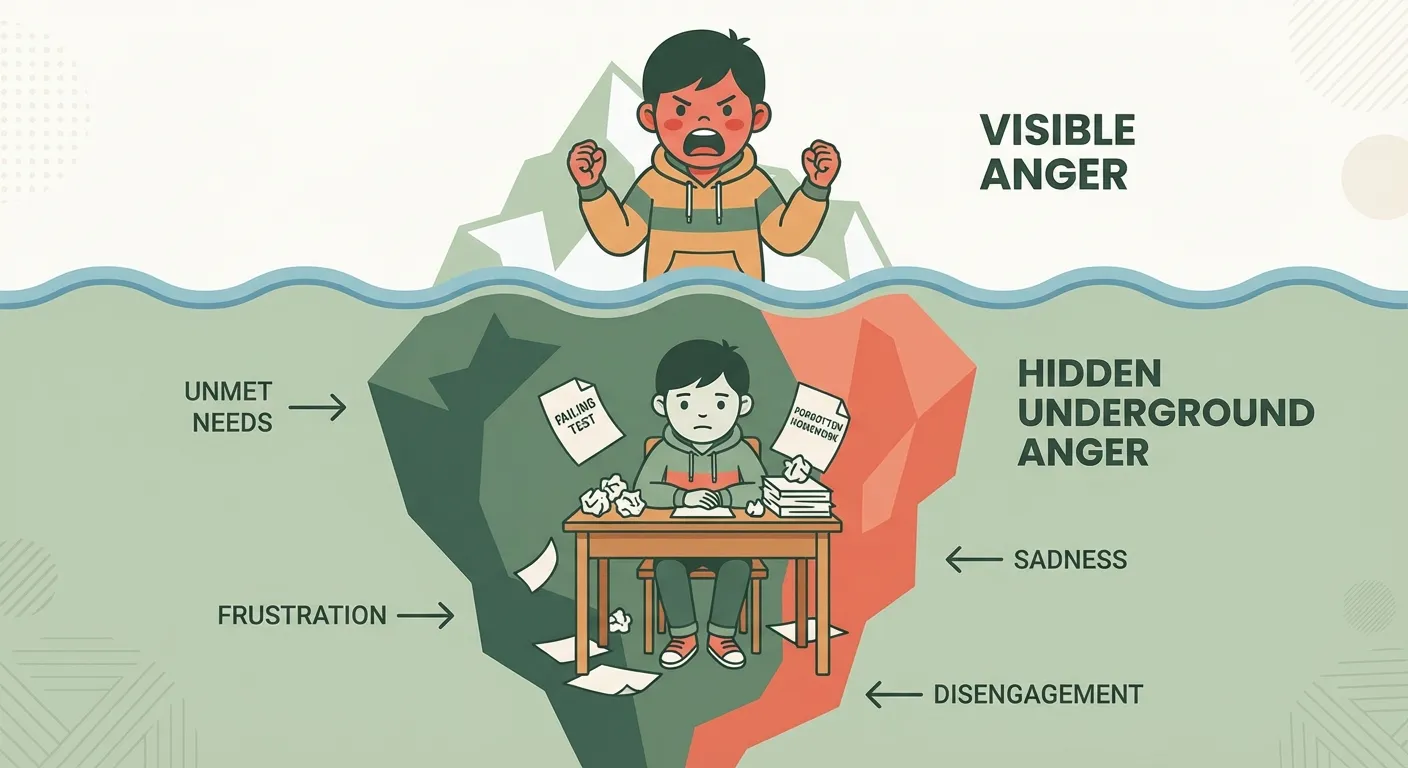
The Quiet Kid Who's Actually Furious
Most parents only worry about loud anger. The quiet kind does more damage.
- Kids trained on the anger spectrum stop faking apathy, stop tanking their own performance, and start telling you what's actually wrong.
- The move: learn the 4 signs of underground anger, then use the WARM method to pull your child toward verbal expression one step at a time.
Why the child who "never gets angry" might be the one who needs anger training most.
Picture this: your kid bombs another test. Smart kid. Capable kid. You've tried tutoring, rewards, consequences. Each fix works for about a week, then fades. You assume it's motivation, or focus, or maybe they just don't care enough.
What if it's anger?
Not the screaming, door-slamming kind. The invisible kind. The kind that looks like laziness, forgetfulness, or apathy -- but is actually rage that went so far underground your child might not even recognize it themselves.
This is what researchers call the anger spectrum. And the bottom of it -- the place where anger becomes completely silent -- is the hardest level to spot and the hardest to fix.
The Anger Spectrum: 8 Levels Every Parent Should Know
Kids express anger along a predictable continuum. Most parents only worry about the loud, visible levels. But the real danger zone? It's at the bottom.
From Healthy to Hidden
The goal: move your child UP, one level at a time, before adulthood.
Calm problem-solving
Names the problem, stays composed, works toward a fix. The adult goal.
Calm but disengaged
Composed and respectful, but doesn't try to fix things. Still healthy -- they're managing themselves.
Loud but on-topic
Emotional, maybe yelling, but focused on the actual issue. "This homework is SO stupid!"
Loud and scattered
Anger spills into unrelated complaints. Mad about a game, starts griping about dinner.
Personal attacks
"You're the worst parent ever!" Anger targets people instead of problems.
Destructive outbursts
Slamming doors, throwing objects. Anger jumps from words to actions.
Physical aggression
Hitting, kicking, biting -- directed at people or themselves.
Underground anger
Invisible. Shows up as chronic forgetting, underperformance, subtle sabotage. The child may not even know they're angry.
Spotting Underground Anger
This is the pattern that fools parents into thinking anger isn't the issue:
Red Flags That Anger Has Gone Underground
- Capable but underperforming. A smart kid who consistently bombs tests or "forgets" assignments. You know they can do better.
- Fixes don't stick. Tutoring helps for a week, then stops. New rewards motivate briefly, then fade. Each solution works just long enough to give you hope.
- They lose more than you do. The child hurts themselves most -- even though the underlying drive is frustration with someone else.
- Common in early teens. Some underground behavior between 13-15 is normal boundary-testing. It becomes a problem when it causes failing grades, damaged friendships, or risky choices.
Here's the counterintuitive part: a kid who's screaming at you is actually in a better position than a kid whose anger has gone underground. Because when anger is verbal, you can see exactly where they are on the spectrum. You can coach them. When it's invisible, there's nothing to work with.
Why Shutting Down Angry Words Backfires
When your kid says something heated, every instinct says stop that right now. But here's the logic:
| If You Shut Down the Words | If You Let Them Talk |
|---|---|
| The anger doesn't vanish -- it goes invisible | You can see exactly where they are on the spectrum |
| Shows up as passive-aggressive behavior, underperformance | You have something concrete to coach |
| Gets harder to address over time | Each conversation is a chance to move them one level up |
| Child may not even realize they're angry | Child develops vocabulary for their emotions |
The exception: if angry language becomes a habitual tool to control or hurt others -- not tied to a specific frustration -- that's a behavior issue. Address it directly, with warmth but firmness.
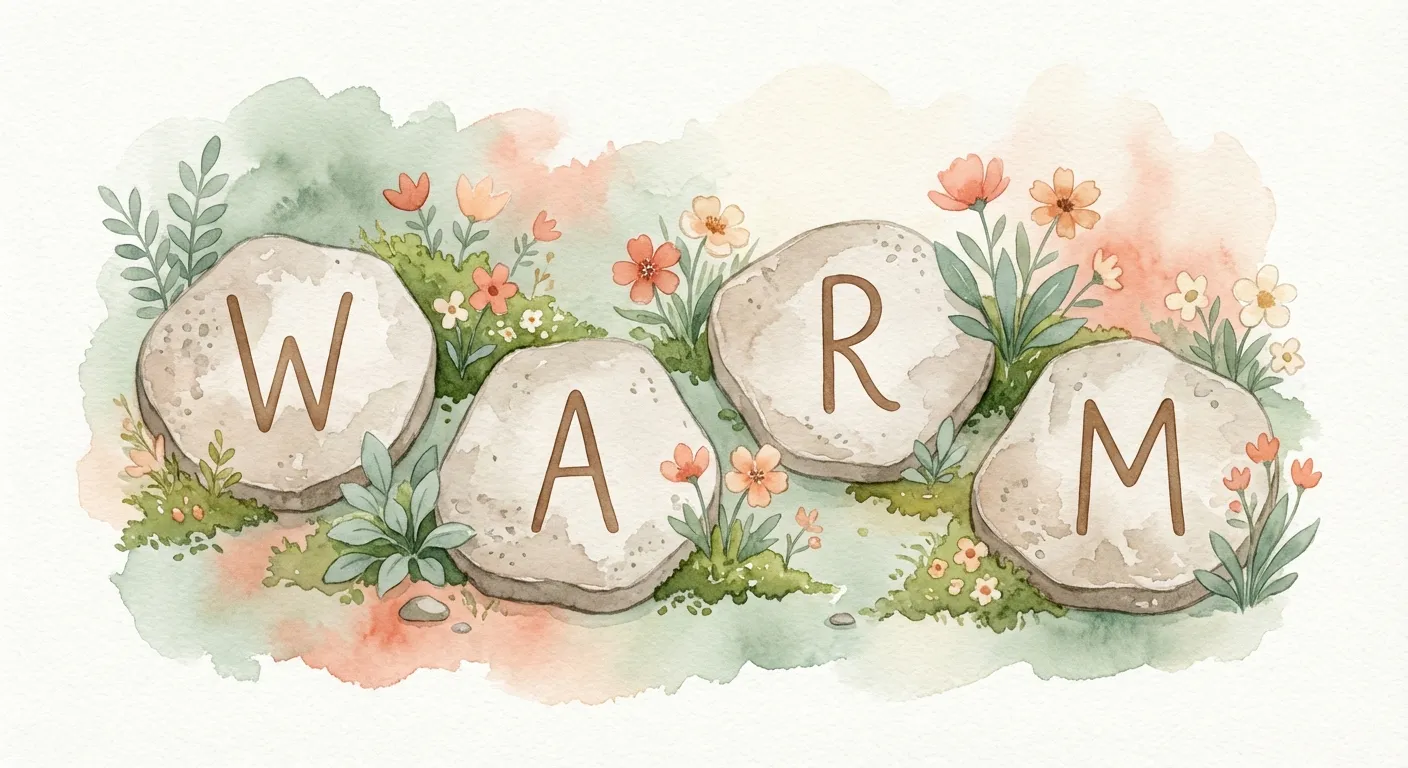
After an Outburst: The WARM Method
Wait until the storm passes. Once your child is calm and receptive, walk through these four steps.
Welcome their feelings
Make it clear that being angry is okay. What matters is how they show it.
Acknowledge what went right
Even in a rough outburst, name what they did well. It gives them a floor to stand on.
Request one upgrade
Just one specific improvement. Phrased as what TO do, not what NOT to do. One level up.
Model it yourself
When you're frustrated, let them see you handling it well -- out loud, on purpose.
What's Normal at Each Age
Anger skills develop on a timeline. Knowing what to expect keeps you from overreacting -- or under-reacting.
| Age | What to Expect | Your Focus |
|---|---|---|
| Under 6 | Basic anger -- words or actions. Little self-regulation yet. | Keep the connection strong. Let angry words come out. Redirect destructive actions calmly. |
| 6 - 12 | Growing ability to manage anger, but most expressions still immature. | Use WARM after outbursts. Model healthy anger. Celebrate each step up the spectrum. |
| 13 - 15 | Some underground behavior is normal -- eye-rolling, foot-dragging, selective memory. | Distinguish harmless boundary-testing from genuinely harmful patterns. Stay steady. |
| 16 - 17 | Should be moving past underground patterns toward open expression. | Aim for mature anger skills by 17. If still stuck in destructive or underground patterns, consider professional support. |
The Long Game
Daily Practices That Build Anger Skills Over Time
- Catch it early. Learn your child's pre-anger signals -- jaw clench, sudden silence, tone shift. Intervene before the explosion.
- Build connection in calm times. Even 10 minutes of daily one-on-one time builds the reservoir that prevents meltdowns.
- Model repair. When you lose your temper, circle back: "I got too loud earlier. I'm sorry. Here's what I wish I'd done instead."
- Know your triggers. Tired, hungry, stressed? You're more likely to shut down anger instead of coaching through it.
- Track progress over months, not days. A child who was throwing things six months ago and is now yelling but keeping hands down? That's real growth. Name it.
One level at a time. That's all you're asking for.
Your coaching + your example = their self-regulation.