
The Second Storm
(And How Not to Be It)
Your kid's tantrum is one storm. You losing it is the second. Here's the three-phase move that makes you the thing that doesn't break.
Their prefrontal cortex is offline. Yours is the only one available.
- Kids who get co-regulation instead of correction during meltdowns build faster self-regulation, stronger attachment, and the ability to narrate their own hard moments.
- The move: ground yourself first, hold the space without teaching, then bridge back with warmth — not a lecture.
Your four-year-old just launched a wooden block at your head. She's screaming, kicking, and she bit her brother thirty seconds ago. Every cell in your body is screaming back: Stop this. Fix this. Make it stop NOW.
Here's what actually decides how the next ten minutes go: not what she does. What you do.
Because right now there's one storm in the room. But if you yell, grab, lecture, or panic, there are suddenly two. And two storms don't cancel each other out. They amplify.
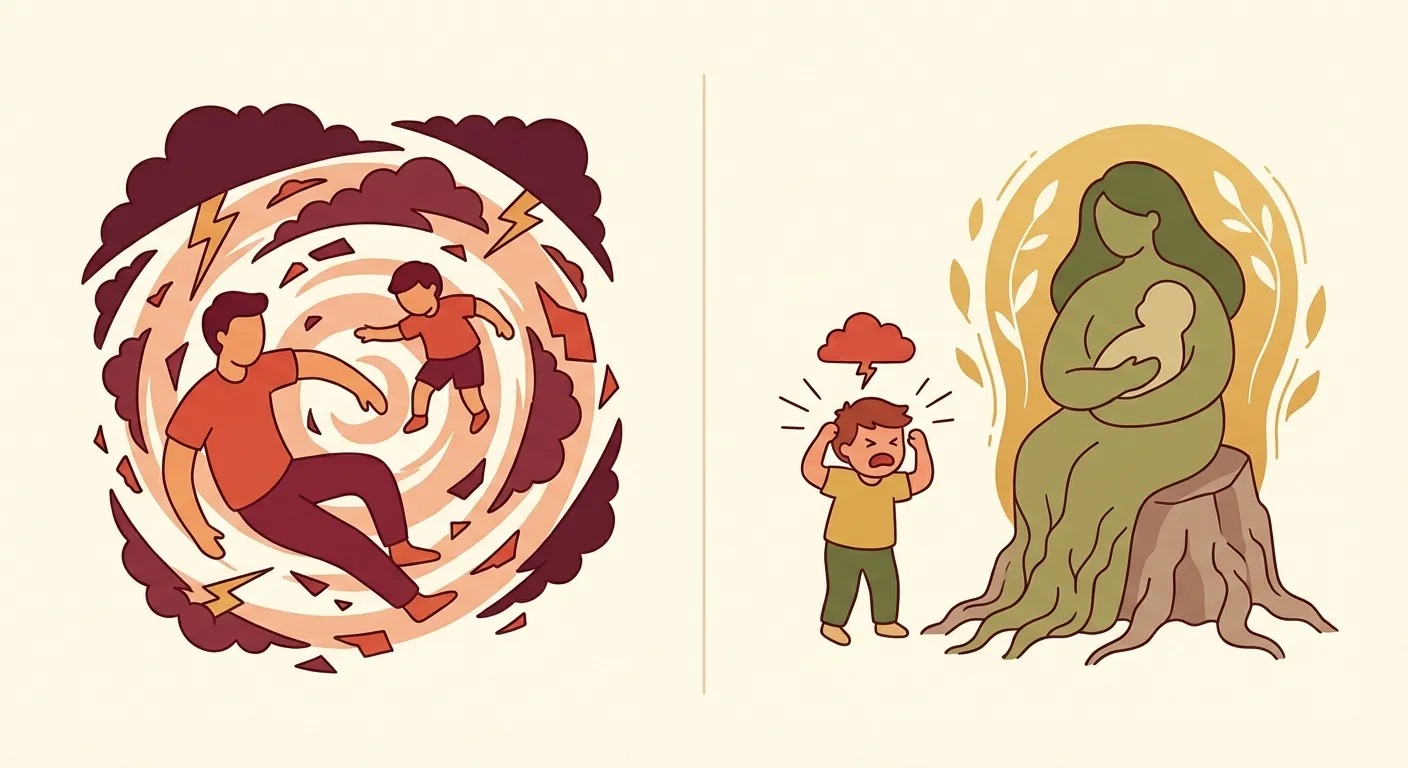
A child who can't stop themselves needs an adult who can. Your job isn't to end the storm. It's to be the thing that doesn't move.
Why They Can't "Just Stop"
The prefrontal cortex -- the brain's impulse control center -- is profoundly underdeveloped in young children and won't fully mature until their mid-twenties. When stress hormones flood their system, the thinking brain goes offline. The survival brain takes over.
In that state, your kid literally cannot reason, process instructions, or "choose" to calm down. Asking them to is like asking someone mid-sneeze to hold it. The hardware isn't available.
What is available: co-regulation. A calm nervous system nearby that theirs can borrow. That's you.
First Move: Change Your Language
When a child's body is out of control, they need short, declarative statements. Not questions. Not pleas. Not explanations. The shift is small but the effect is massive:
| Leaves the child in charge | Puts you in the driver's seat |
|---|---|
| "Please stop throwing things!" | "I'm stopping the throwing." |
| "You can't kick people!" | "I'm going to hold your legs until the kicking stops." |
| "Why are you hitting me?!" | "I'm blocking that. My job is to keep us both safe." |
Notice the pattern: every effective statement starts with "I'm." It shifts the center of gravity from a child who has already lost control of their body to an adult who hasn't. Telling a dysregulated kid to "stop" is handing the steering wheel to the person whose hands are shaking the hardest.
The Three Phases
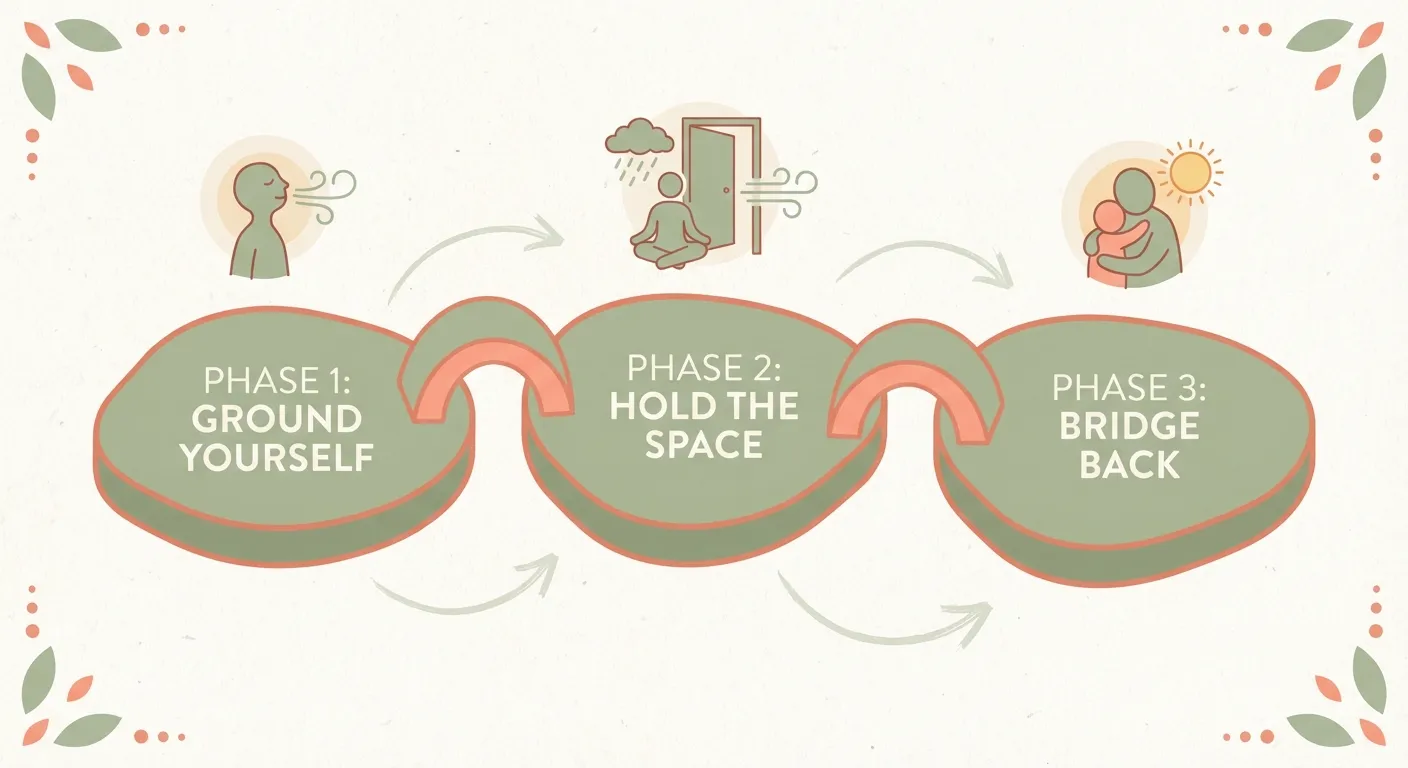
Before you touch your child or say a word, take one slow breath. Not for them -- for you. What happens in the next thirty seconds depends entirely on whether you walk in regulated or reactive.
If your heart rate spikes and your jaw clenches, name it silently: "My body is reacting to the noise. I'm not in danger. My child needs me regulated."
That tiny act of self-narration activates your thinking brain and slows the cascade. You're not suppressing the stress. You're giving it a name so it doesn't drive.
This is the hard part. Your child is flailing, screaming, maybe saying awful things. Your only goal: physical safety and calm presence. Not teaching. Not correcting. Not reasoning. Just being the wall they can't knock down.
Move them somewhere contained. Pick them up. Carry them to a smaller room. A smaller space sends a body-level signal that the world isn't falling apart.
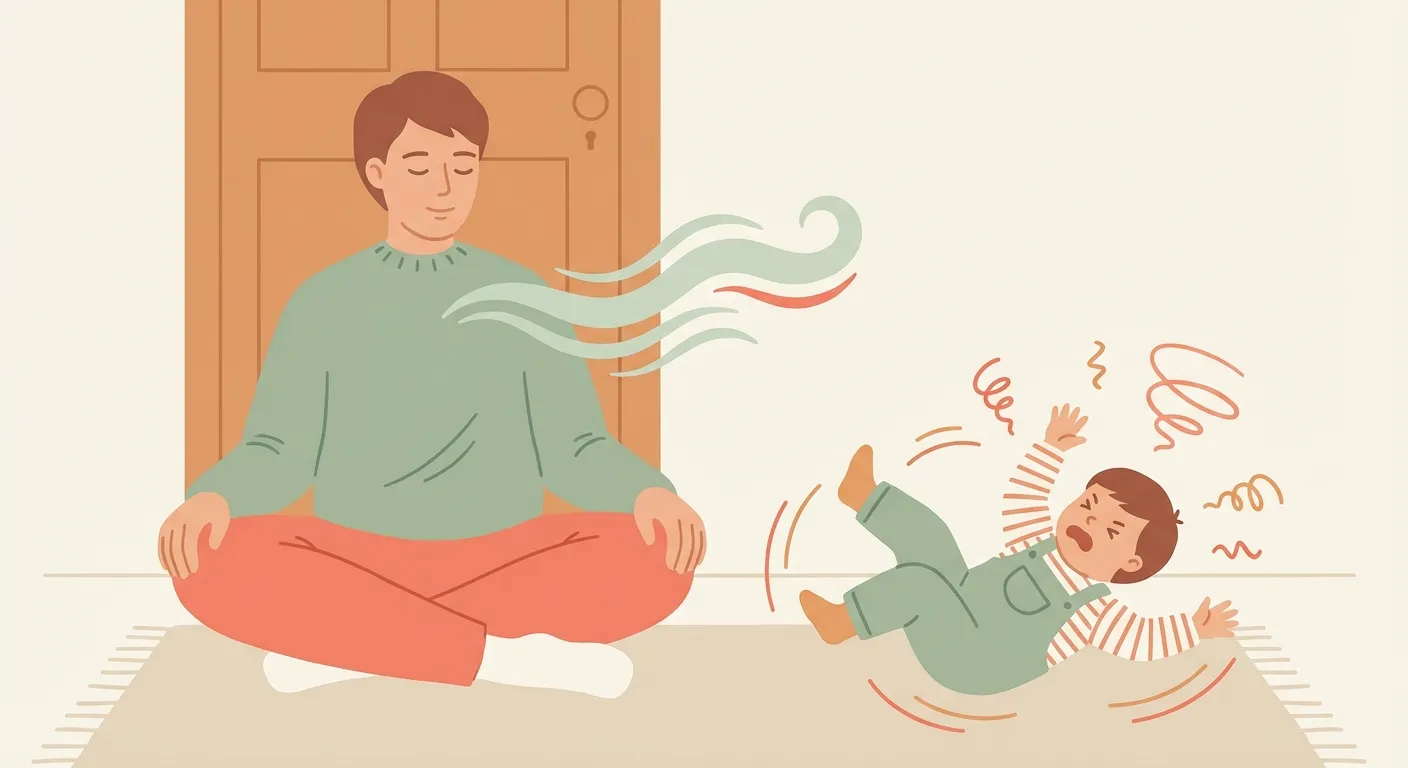
Park yourself at the door. Sit down, back against it. You are now the boundary. Block any hits or kicks with open hands -- firm, not aggressive.
Breathe audibly. Long, slow exhales -- exaggerate them enough that your child can hear them through the screaming. If you can't think of what to do next, just breathe. Slow exhales are the single most effective thing you can do for both nervous systems.
Say almost nothing. Their brain can't process language right now. Even kind words may register as more noise, more threat.
Wait. Three minutes. Maybe twenty-five. There's no fast-forward button. The storm runs on its own clock.
When They Scream "I Hate You"
Those words aren't aimed at you. Your child is drowning in sensations they can't name. The screaming is directed at the overwhelm -- at the terrifying feeling of being out of control in their own body.
Mental translation that changes how the words land: "I hate you!" = "I'm scared and I can't make it stop!"
If You Need to Step Out
That's okay. You're human. If you feel yourself about to lose it, name it and come back.
Key: name what you're doing, say you're coming back, then follow through. Completely different from walking away in frustration.
You'll feel the shift -- a quieting in their body, a change in their breathing. Resist the urge to lecture. Right now they need warmth, not lessons.
If they reach for a hug, give it. If they go quiet, sit with the quiet. This moment is where trust gets rebuilt. Don't rush it.
Hours or even a day later, replay it together. Not as a lecture. Not to extract an apology. Just to build a shared story of what happened, told with warmth:
That's it. No moral needed. Narrating a chaotic moment -- calmly, without blame -- helps your child's brain organize the experience. What was overwhelming and formless gets a shape. Next time, that shape is easier to recognize and regulate.
The Long Game
Five Moves That Reduce Meltdowns Over Time
- Catch the ramp-up. Most meltdowns don't come from nowhere. Learn the early signals -- clenched fists, that particular whine, pacing. A redirect at 60% works. At 100%, nothing does.
- Separate the urge from the action. Wanting to hit is normal. Actually hitting is not okay. Give the physical energy a safe outlet: stomping, squeezing a pillow, running laps outside. Big feelings need movement, just not aimed at people.
- Fill the tank in calm times. Fifteen minutes of uninterrupted, child-led play each day reduces the frequency and intensity of meltdowns more than any discipline strategy.
- Know your own triggers. If you always lose it when they bite, or when it happens in public -- name that to yourself. Triggers you've identified have less power than the ones running in the background.
- Repair when you slip. You will lose your cool sometimes. When you do, come back: "I yelled earlier, and that wasn't helpful. I'm sorry. I'm working on it too." This doesn't undermine your authority. It models exactly what you're teaching.
Your child's storm will pass. Every single time.
The only question is whether you're the anchor or the second storm.