
What If Bedtime Was Solved by Friday?
Most families see bedtime transform within five nights.
- Kids go from screaming for 45 minutes to fussing for 3 and falling asleep alone. Parents get their evenings back.
- The shift: stop solving the problem for them -- say goodnight while they're still awake and let them find their own way down.
The check-in method that teaches babies to fall asleep on their own.
4+ months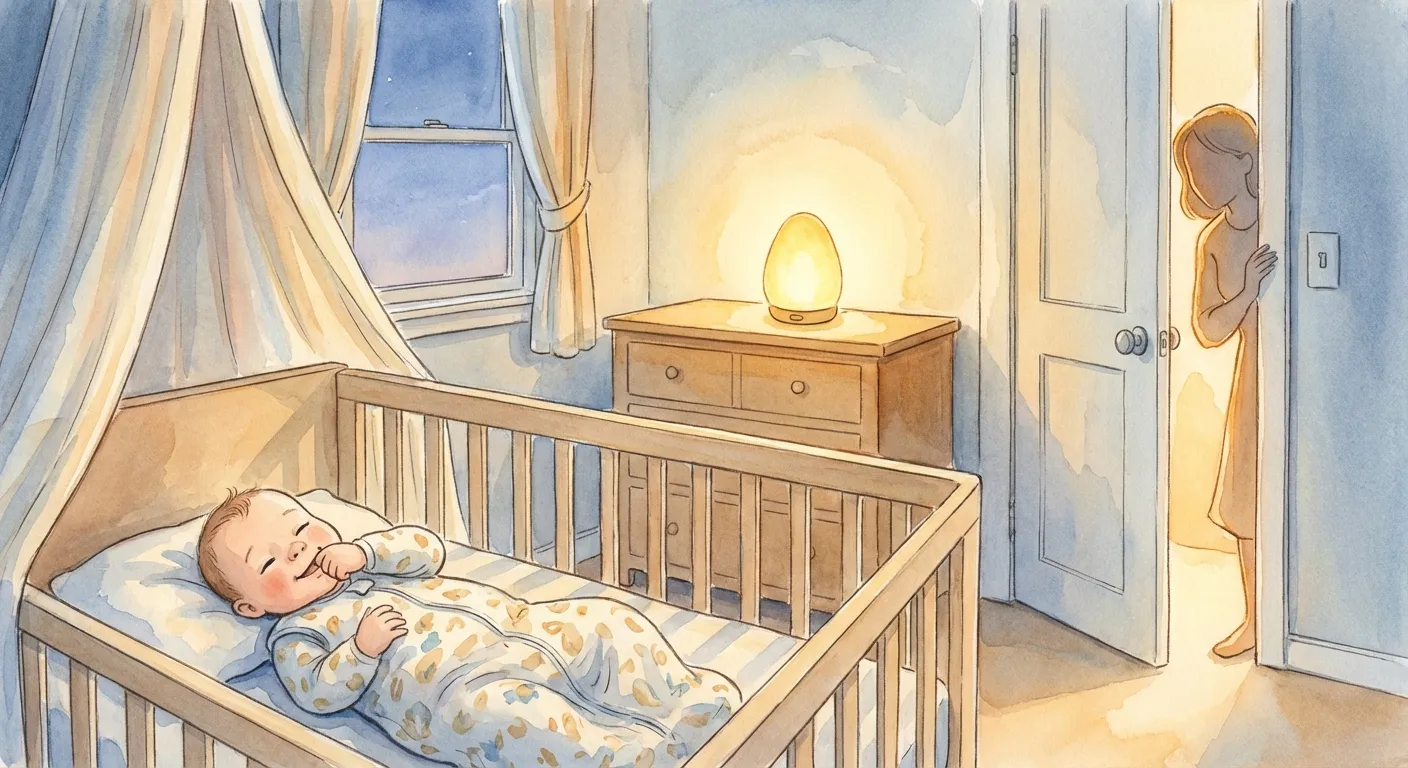
Monday night, you're rocking your baby for forty-five minutes. Thursday night, you lay them down, say goodnight, and walk out. They fuss for three minutes and fall asleep.
That's not a fantasy. That's what this actually looks like for most families who try it.
Around four months, something changes. Babies develop the ability to calm themselves -- thumb-sucking, shifting position, quiet self-talk. The hardware is there. But if nobody gives them the chance to use it, it stays dormant. Every time you rock them to sleep, you're solving a problem they're ready to solve themselves.
You're not ignoring your baby. You're giving them room to discover they can calm themselves -- while showing them you're still there.
The Four-Step Method
Wind down together
Same routine every night. Bath, quiet time, a song -- whatever your family does. Repetition is the signal. Your baby starts recognizing: sleep is coming.
Say goodnight while they're still awake
This is the key move. Place them in bed sleepy but conscious. Say goodnight. Step out. They fall asleep through their own settling, not through yours.
If they cry, pop back in for 30 seconds
Quick visit. Voice only. No picking up, no rocking, no feeding.
The visit says "I'm here" without taking over the settling process. Then you step out again.
Repeat until they're asleep
Return at regular intervals if the crying continues. Stay calm, stay brief. Each check-in is a reassurance, not a rescue mission.
The Week-Long Arc
Here's what makes this worth committing to: the change happens fast.
| When | What Happens |
|---|---|
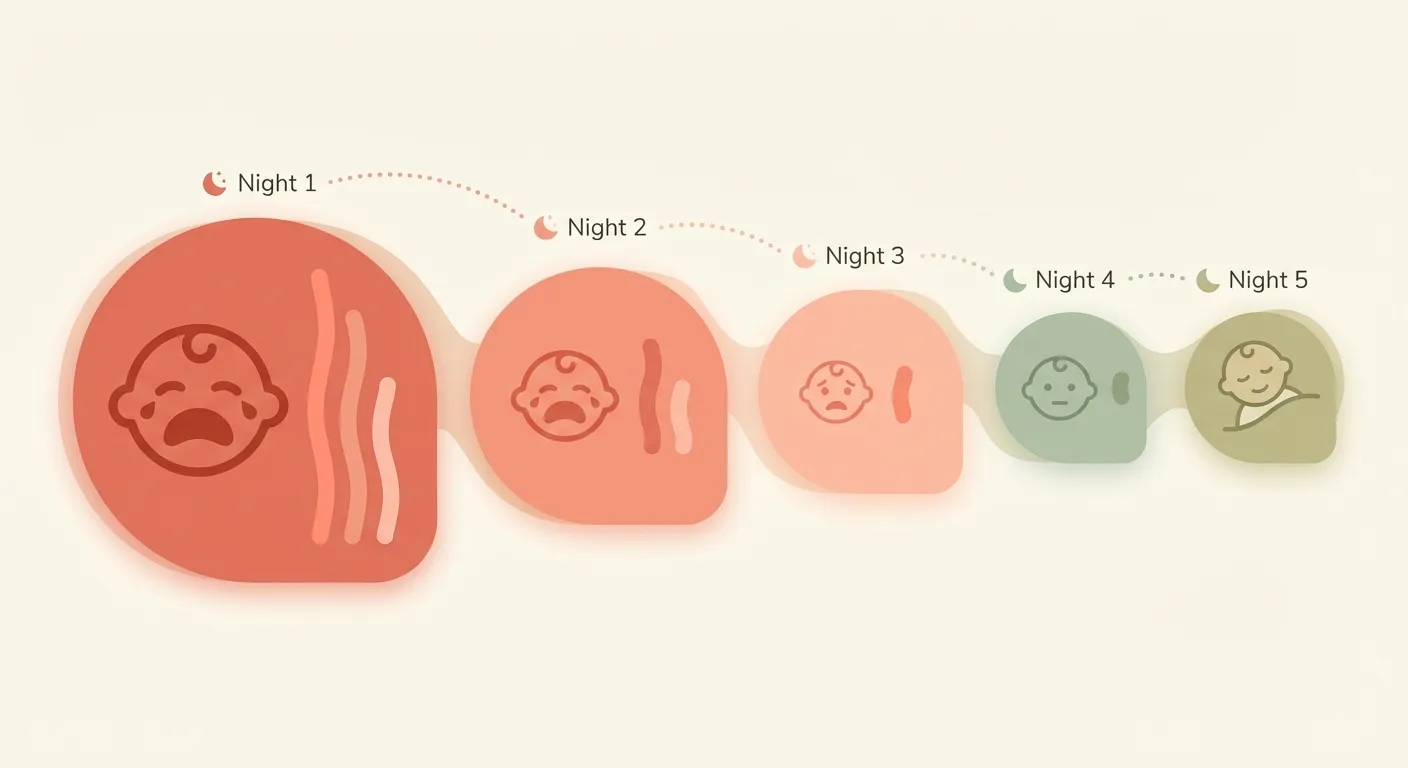
| Night 1 | The hardest one. There will be crying and it will feel long. Your baby is used to the old way and doesn't understand the change yet. This is normal. |
| Night 2-3 | Crying gets noticeably shorter. Your baby is starting to figure out their own settling moves -- a thumb, a favorite position, quiet sounds. |
| Night 4-5 | The protest shifts from angry to fussy to just a little complaining. Some babies skip the fussing entirely and go straight to sleep. |
| End of week | Most babies are settling quickly on their own. You say goodnight, you walk out, and it just... works. |
How to Read the Signals
Working
- Crying gets shorter each night
- Self-soothing behaviors appear: thumb-sucking, head-turning, quiet babbling
- Baby falls asleep between check-ins, not during one
- Protest shifts from angry to just fussy
Pause and Reassess
- Baby is under 4 months -- not ready yet
- Crying escalates over several nights instead of decreasing
- Signs of illness, teething pain, or genuine distress
- Your gut says something else is going on -- trust it
Three Mistakes That Undo Everything
The halfway pickup
If you sometimes pick them up and sometimes don't, you teach your baby that enough crying eventually works. That makes crying louder and longer, not shorter. Commit to the plan or wait until you can.
The long visit
A check-in that turns into five minutes of rocking and shushing defeats the purpose. You've just moved the soothing ritual to a different time slot. Keep it quick: voice only, 30 seconds, out.
Starting too early
Before 4 months, babies genuinely need your help to settle. Their self-calming systems aren't developed yet. This approach is for when the capacity is there but the practice isn't.
The Bike Analogy
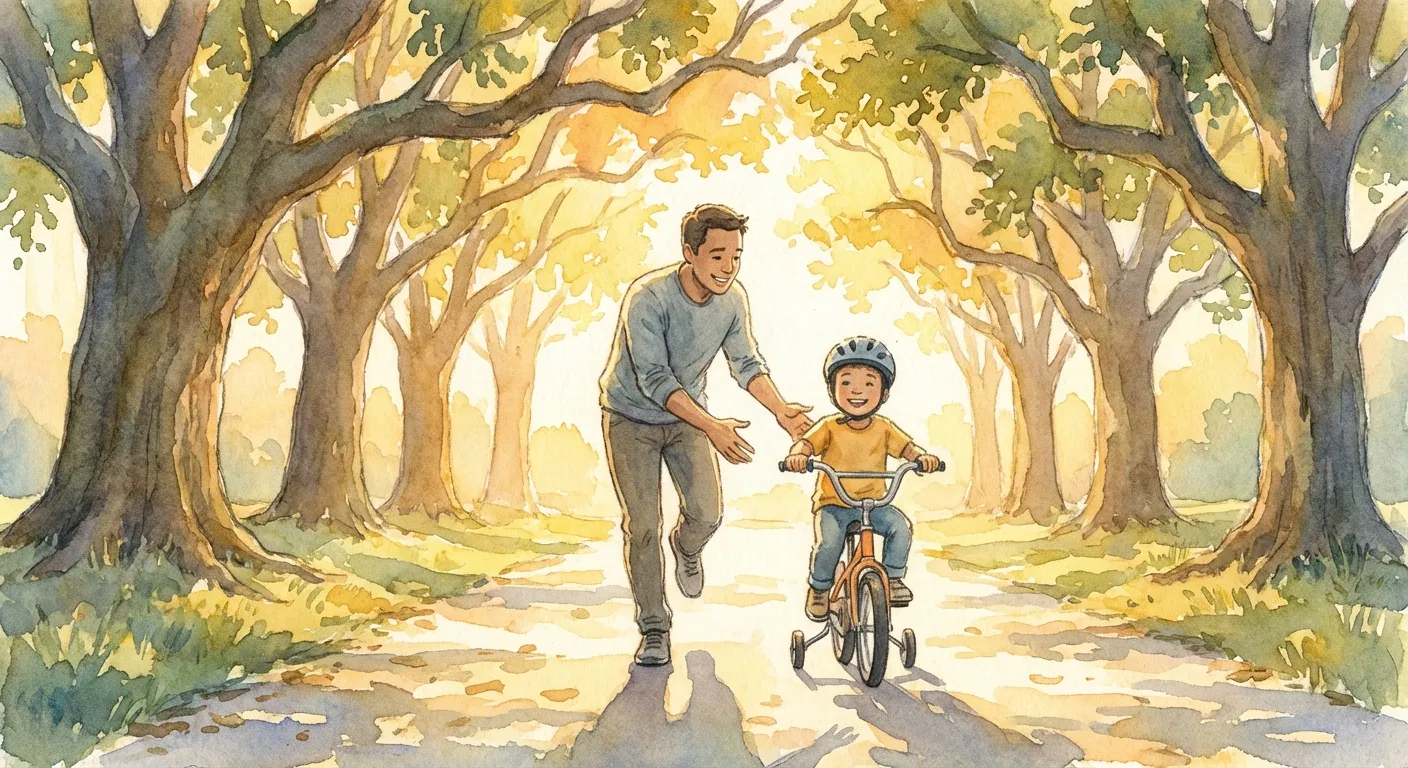
Think of it like teaching your kid to ride a bike. You can hold the seat forever, but at some point you have to let go for them to find their balance.
The check-ins are you jogging alongside -- close enough to be seen, far enough to let them try.
Falling asleep on your own is a skill. Like all skills, it takes practice.
Your job isn't to do it for them -- it's to be close enough that they feel safe trying.