
The Laziest Bedtime Hack That Actually Works
You solve bedtime by going to bed yourself. Seriously.
Bedtime battles are a training loop — and your child is winning.
- Kids who self-regulate at bedtime handle transitions better, sleep more independently, and don't need nightly negotiations to wind down.
- The shift: stop controlling bedtime and start demonstrating it — dim the lights, announce your tiredness, and actually go to bed.
Here is the most unfair thing about bedtime: the harder you try, the worse it gets. You do the countdown. You do the warnings. You set the timer. You negotiate, threaten, bribe, plead. And every single night, your kid gets better at fighting you — because you're giving them nightly practice.
So what if you just... stopped?
Not stopped caring. Not stopped parenting. Stopped controlling bedtime — and did something wildly counterintuitive instead.
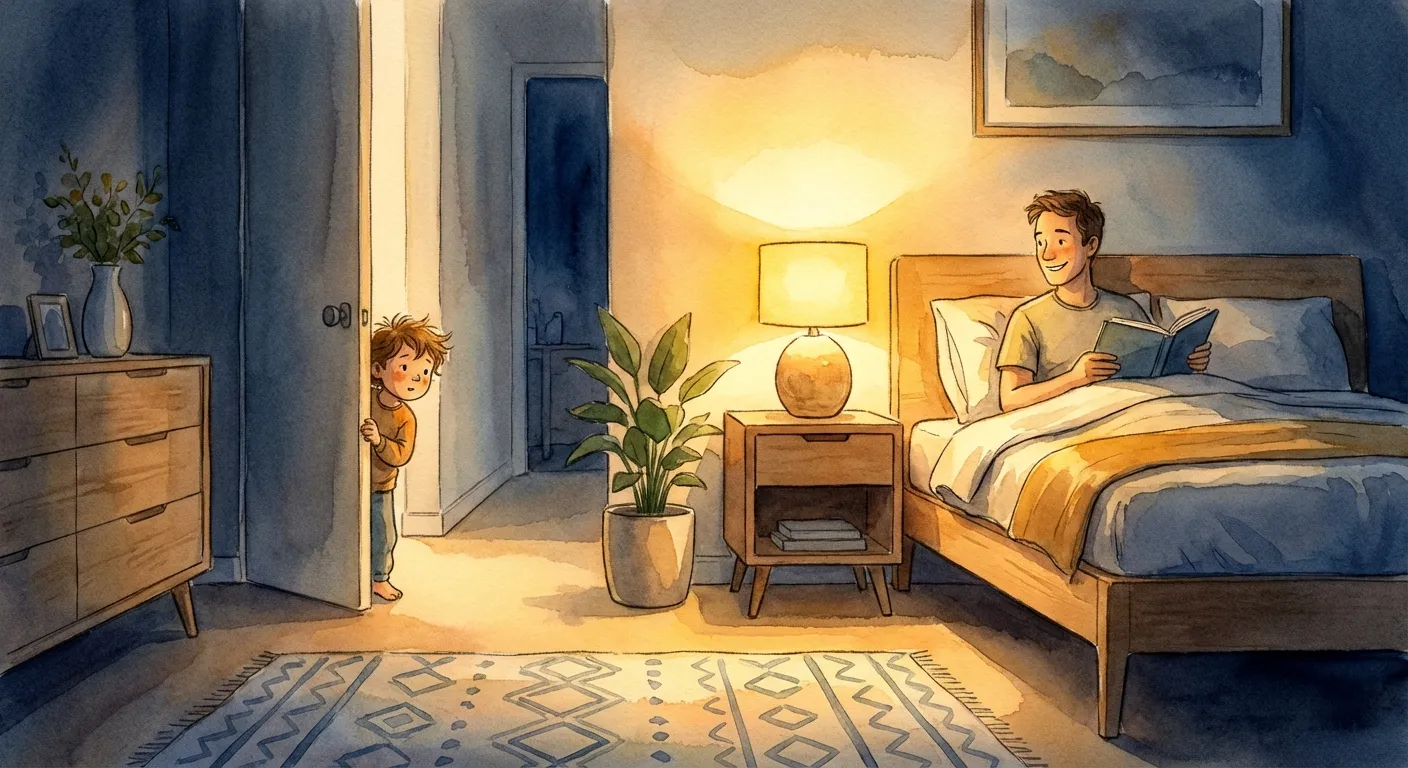
You go to bed first.
Why Bedtime Fights Are Your Fault (And That's Great News)
This is not a guilt trip — it's a leverage point. If the battle exists because of the structure you set up, then you have the power to dismantle it tonight.
Here is what is actually happening every evening in most homes:
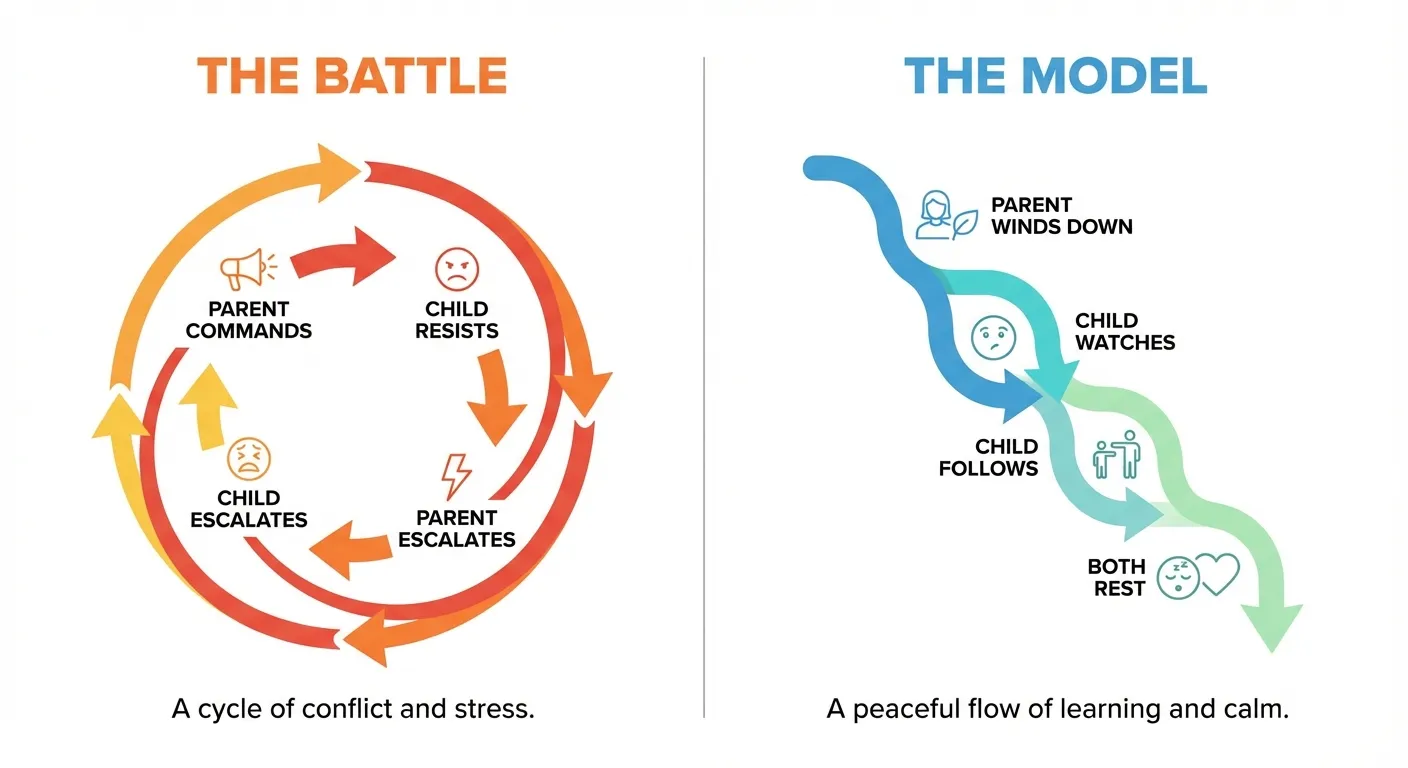
Left: what most families do. Right: what works.
The battle loop is self-reinforcing. You command, they resist, you escalate, they escalate — and tomorrow you both come back with more ammunition. Your child is literally getting nightly reps at resisting bedtime.
The modeling path breaks the loop entirely. There is nothing to resist when nobody is giving orders.
It's teaching them to notice when their body is tired — and act on it.
The Three-Move Method
This is the entire system. Three moves, every night, no exceptions. It feels too simple to work. It works because it is simple.
Move 1: Demonstrate Winding Down
When evening comes and you spot the tired signals — yawning, eye-rubbing, whining, slowing down — dim the lights and start your own wind-down. Say out loud what your body is telling you:
Then actually do it. Go upstairs. Brush your teeth. Get into bed with a book. Make winding down look like something you want to do — not a punishment you are performing.
Move 2: Welcome, Don't Summon
When your child wanders up (they will), receive them warmly. A hug, a quiet smile. No lectures about the time. If they are still wired, one gentle question:
Stay calm. Stay in bed. Keep your energy low. You are the anchor they settle around.
Move 3: Settle Together Quietly
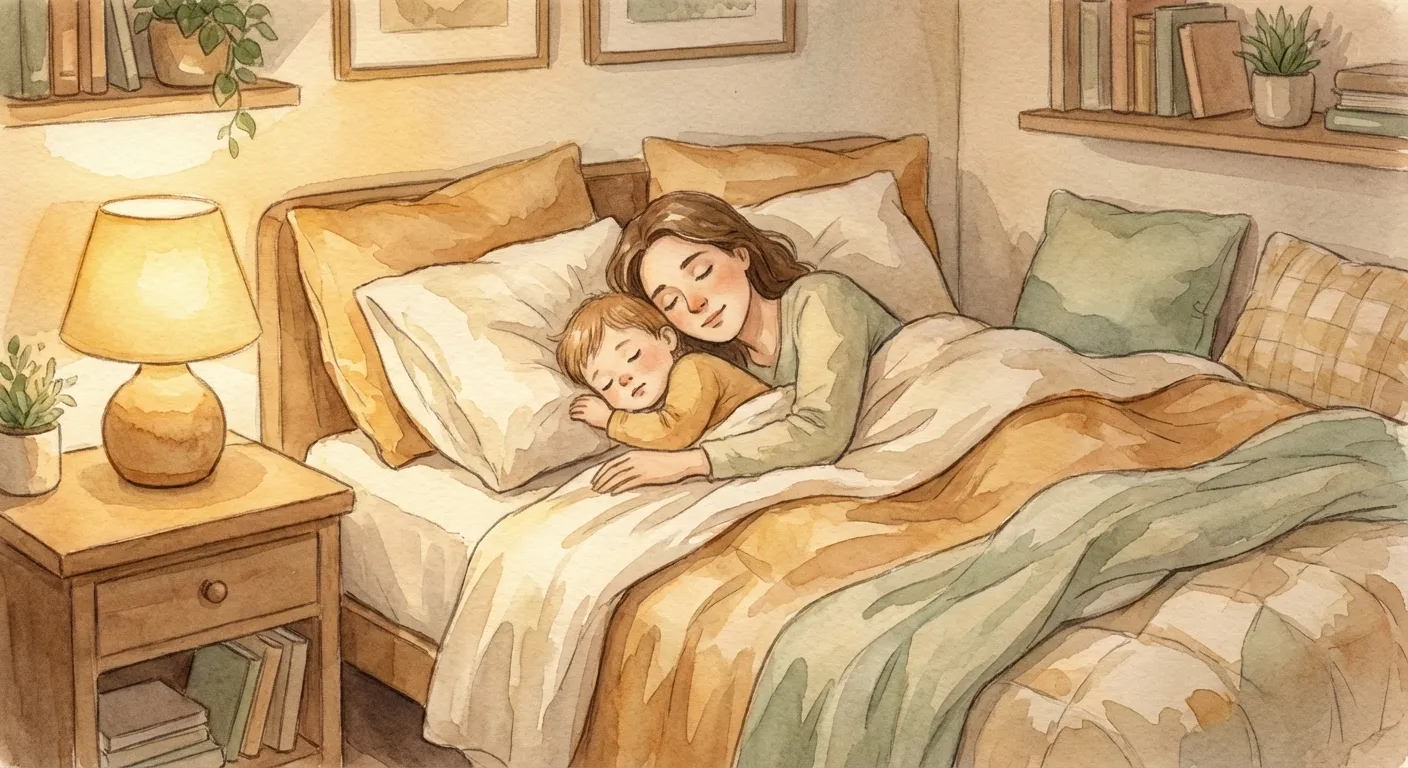
Once they are in bed with you, keep everything still. Rub their back. Breathe slowly. If they want to talk or fidget:
Night after night, you are both practicing the same thing: noticing tiredness and responding with stillness instead of activity.
What You Say vs. What You Stop Saying
| Stop Saying | Start Saying |
|---|---|
| "It's bedtime. Now." | "My body's getting tired. I'm heading up." |
| "You need to be in bed by 8." | "What does your body feel like right now?" |
| "This is the last warning." | "I'm going to close my eyes. Join me whenever you're ready." |
| "If you don't go to bed right now..." | (Nothing. You're already in bed reading.) |
| "Why can't you just go to sleep?" | "Let's get quiet and still so our bodies can settle." |
The Honest Timeline
What to Expect, Week by Week
Why This Beats Every Bedtime Routine You Have Tried
Traditional bedtime routines solve sleep from the outside in: impose a schedule, enforce a sequence, manage the child's body. This approach works from the inside out: the child develops the internal skill of recognizing and responding to their own tiredness.
Externally imposed sleep creates dependence — the child needs you to manage bedtime forever. Internally recognized sleep creates independence — the child carries the skill with them to sleepovers, camp, college, the rest of their life.
You are not teaching them to go to bed. You are teaching them to listen to their own body. That is a skill that compounds every single year.
You cannot force sleep. You cannot argue a child into feeling tired.
But you can show them what winding down looks like — and let their body do the rest.