
The One Question That Cracks Any Behavior Problem
Most parents ask "how do I stop this?" There's a better question. One that flips the whole problem inside out and hands you the answer.
You can decode any repeated behavior in about two minutes.
- Kids who learn replacement behaviors carry them everywhere -- fewer blowups at school, smoother transitions, and the ability to say 'I need a break' instead of losing it.
- The move: ask what you'd do to cause the behavior on purpose, match it to one of four needs, and swap in a replacement that's faster and easier.
Your kid throws their pencil every time you mention homework. Or they scream bloody murder in the grocery store. Or they interrupt you the second you pick up your phone.
You've tried consequences, bribes, ignoring it, not ignoring it, and some combination of all four in a single afternoon.
Here's the problem: you've been asking the wrong question.
"How do I stop this?" is a dead end. It treats the behavior like the problem. It's not. The behavior is a message. And until you decode that message, every strategy you try is a shot in the dark.
The question that actually works?
Ask yourself
"If I had to MAKE this behavior happen on purpose, what would I do?"
Read that again. It's backwards. Counter-intuitive. And the moment you answer it, you've cracked the case.
Why This Question Works
When you try to stop a behavior, you're working against something you don't understand. When you figure out how to trigger it on demand, you've just mapped the entire mechanism.
Think about it:
Pencil throwing
"I'd hand him a hard math worksheet right after he's been playing." There it is -- the trigger is the transition from fun to difficult work.
Grocery meltdown
"I'd walk past the candy aisle and say no." Now you know -- the behavior is about being denied something she wants.
Constant interrupting
"I'd start talking to another adult and not acknowledge him for 5 minutes." Bingo -- he's bidding for attention.
Picking at skin
"I'd...actually, I couldn't make it happen. She does it randomly." That tells you something too -- it's self-soothing, not connected to anyone else.
One question. Four answers. Each one leads you somewhere different.
The Four Needs Behind Every Behavior
Decades of developmental research boil down to this: every challenging behavior your child does is serving one of four purposes. Your detective work tells you which one.
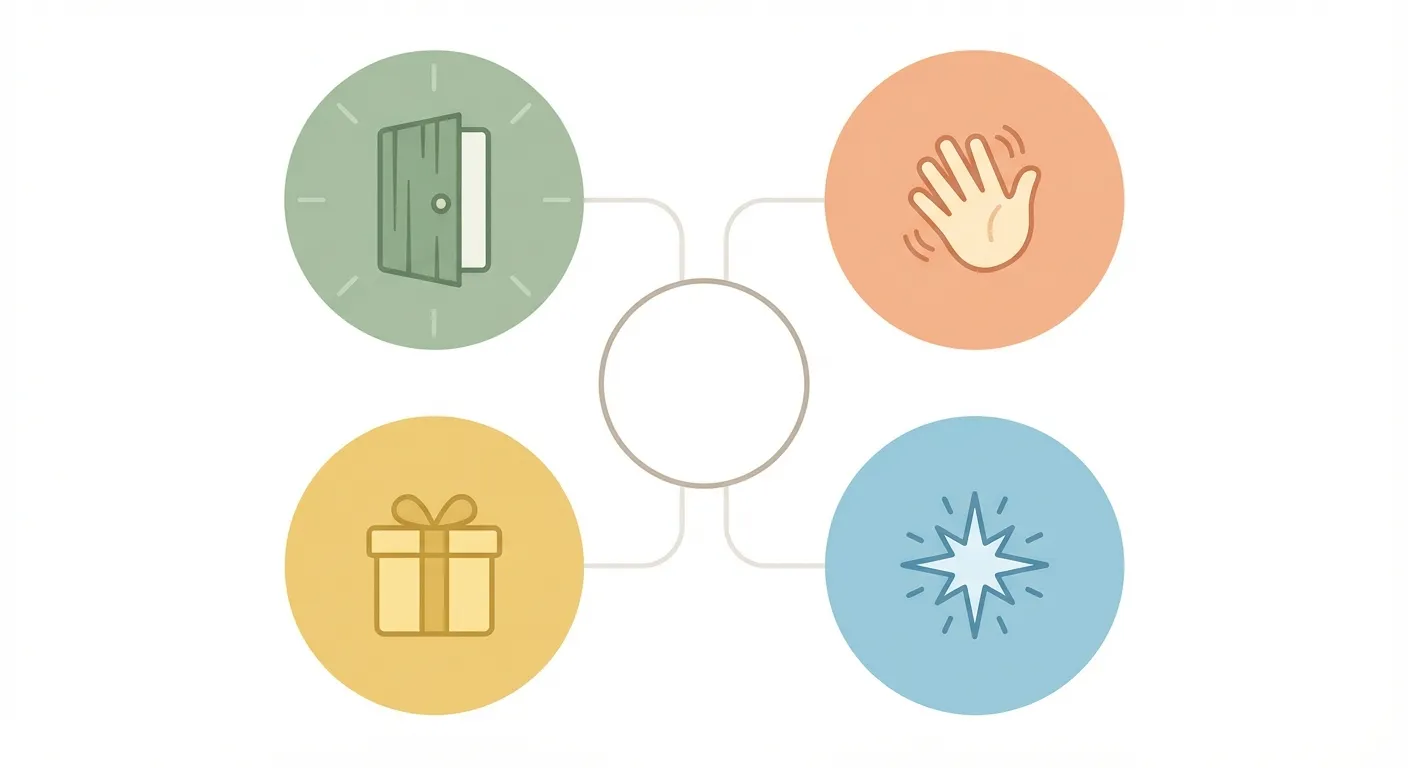
| Need | What They're Getting | The Tell |
|---|---|---|
| Escape | Gets them out of something hard, boring, or uncomfortable | Happens when demands are placed on them |
| Attention | Gets a reaction from you -- positive or negative | Happens when you're focused elsewhere |
| Access | Gets them a thing, activity, or privilege they want | Happens when they've been told no |
| Sensory | Produces its own physical comfort or stimulation | Happens whether anyone else is around or not |
This isn't theoretical. It's mechanical. Your child throws the pencil and homework disappears -- that's escape, operating like clockwork. Your child whines for the iPad and you cave -- that's access, running exactly as designed.
The behavior isn't random. It's working.
From Trigger to Fix in Three Steps
Once you know the need, the solution reveals itself. Here's the whole process:
Ask the backwards question. "If I had to make this happen, what would I do?" Write down your answer. You now have the trigger.
Match it to the need. Look at what your child gets out of the behavior. Task disappears? Escape. You stop what you're doing? Attention. They get the thing? Access. Nobody else is involved? Sensory.
Teach a replacement that serves the same need. This is the part most parents skip. You can't just remove a behavior -- you have to give them a better way to get what they need.
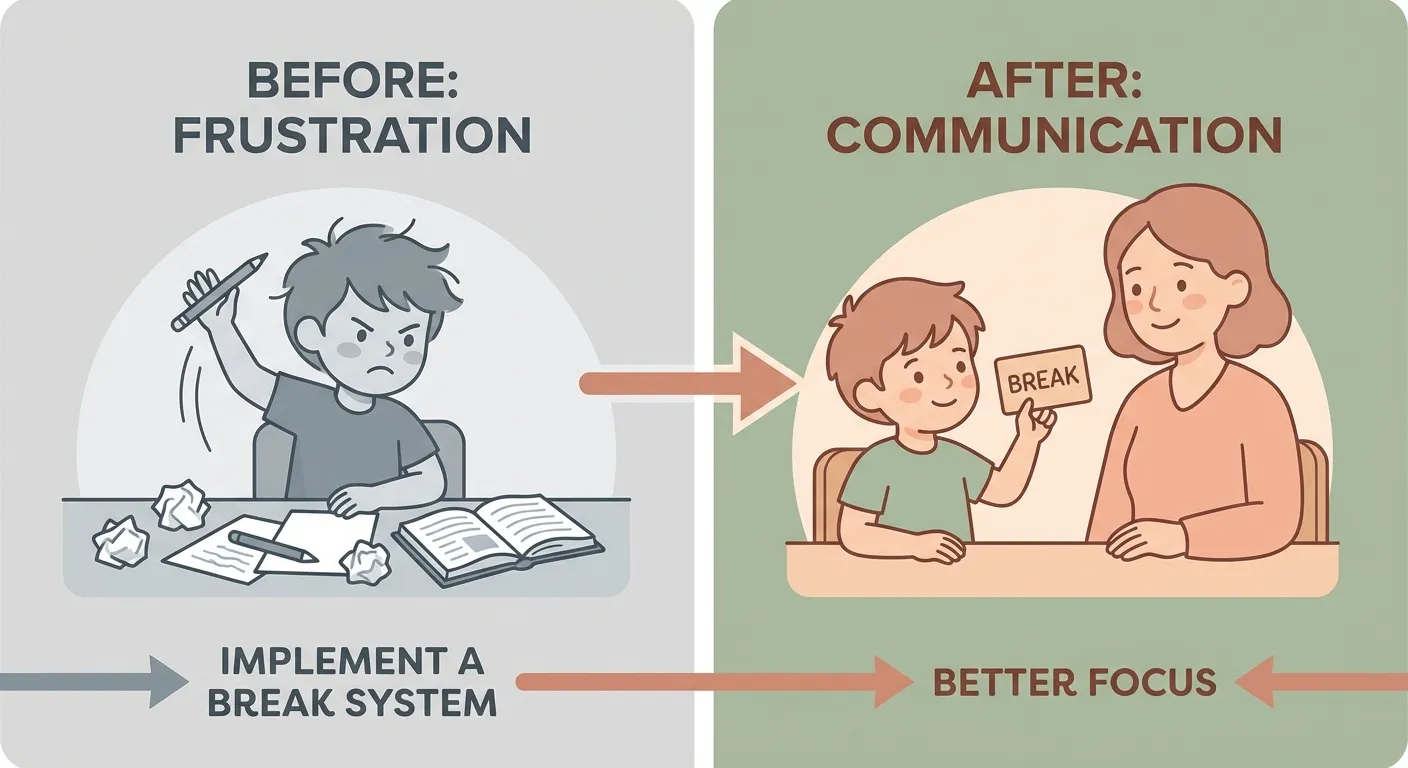
The golden rule: The replacement must be faster and easier than the problem behavior. If asking for a break takes 5 minutes of negotiation but screaming ends homework in 10 seconds, screaming wins every time.
The Swap Sheet
Once you've identified the need, here's what to teach instead:
Escape behaviors
- "I need a break" card or signal
- "Can you help me?"
- "Can I do this later?"
- Thumbs down = I'm stuck
Attention behaviors
- Tap your shoulder
- Hand raise
- "Mom, I need you"
- Scheduled 1-on-1 time so they're not running on empty
Access behaviors
- "Can I have ___ ?"
- "Is it my turn yet?"
- Wait for a timer
- Trade for something else
Sensory behaviors
- Fidget tool
- Movement break (jump, spin)
- Stress ball or textured item
- Deep breathing routine
Write Your Hypothesis
Take what you've figured out and write it down. One sentence. This becomes your working theory -- the thing you test over the next week.
Your behavior hypothesis
If someone who's never met your child could read that sentence and picture exactly what happens, you've nailed it. If it's vague -- "acts out," "gets upset" -- tighten it. Specifics are everything.
The Part Nobody Warns You About
When you stop reinforcing the old behavior, it gets worse before it gets better. Your child is running an experiment: "Does screaming still work? Let me try LOUDER screaming."
This is called an extinction burst, and it's actually good news. It means your plan is working. They're testing the system one last time.
| What it feels like | What it actually means |
|---|---|
| "It's getting worse, this isn't working" | They noticed the rules changed and are testing the new boundary |
| "Maybe I should just give in this once" | Giving in now teaches them to escalate harder next time |
| "They seem more upset than before" | The old strategy is failing them -- they need you to hold steady so they can learn the new one |
Hold the line. Compare week to week, not day to day. Is it happening less? Are episodes shorter? Is your child starting to use the replacement? Those are your signals.
Tonight's Assignment
Pick the one behavior that's driving you the most crazy right now. Ask yourself the backwards question: "If I had to make this happen on purpose, what would I do?"
Write down your answer. That's the trigger.
Now look at what your child gets out of it. That's the need.
You just did in two minutes what most parents spend months circling around. The behavior isn't a mystery anymore. It's a message -- and now you can read it.