
Your Kid Sets the Table. You Say... Nothing.
Why the most powerful response to your child's effort is the one that feels the most wrong.
The strongest acknowledgment for a child's effort is silence.
- Kids who aren't scored on every small act cooperate more naturally, compete less with siblings, and pitch in without being asked.
- The shift: replace evaluative praise with belonging — treat contribution as expected, not exceptional.
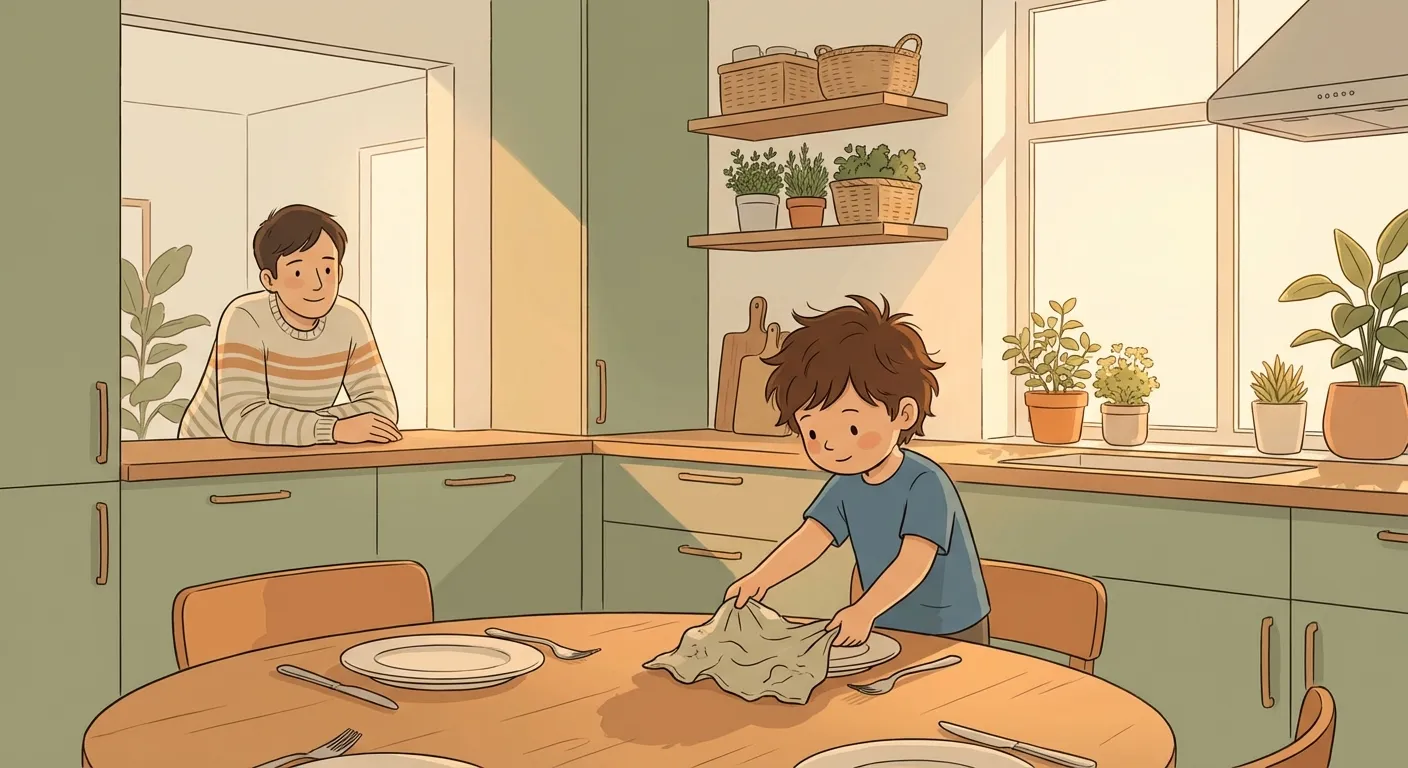
Your six-year-old folds the napkins for dinner. They're lumpy, uneven, and one is basically a crumpled ball. Every fiber in your body wants to say "Good job, sweetie!"
Don't.
Instead, put those napkins on the table. Use them. The lumpy one goes right next to the nice plates. And you say... nothing. You just eat dinner.
That silence is doing more for your child's motivation than a thousand "good jobs" ever could.
Sounds wrong, right? We've been trained to believe that praise is how you build confident kids. But research on intrinsic motivation -- backed by over 1,500 studies -- tells a different story. Constant evaluative praise doesn't build confidence. It builds dependence. Kids stop doing things because the task matters and start performing because the applause feels good.
Psychologists call it the "overjustification effect." Reward a behavior someone already enjoys, and they start doing it for the reward instead of the satisfaction.
Kids don't need to be told they're doing a good job.
They need to feel like what they're doing matters.
The Praise Trap vs. The Contribution Path
Here's what happens in most homes: kid does something, parent applauds, kid does the next thing while looking over their shoulder for the reaction. The task isn't the point anymore. Your face is.
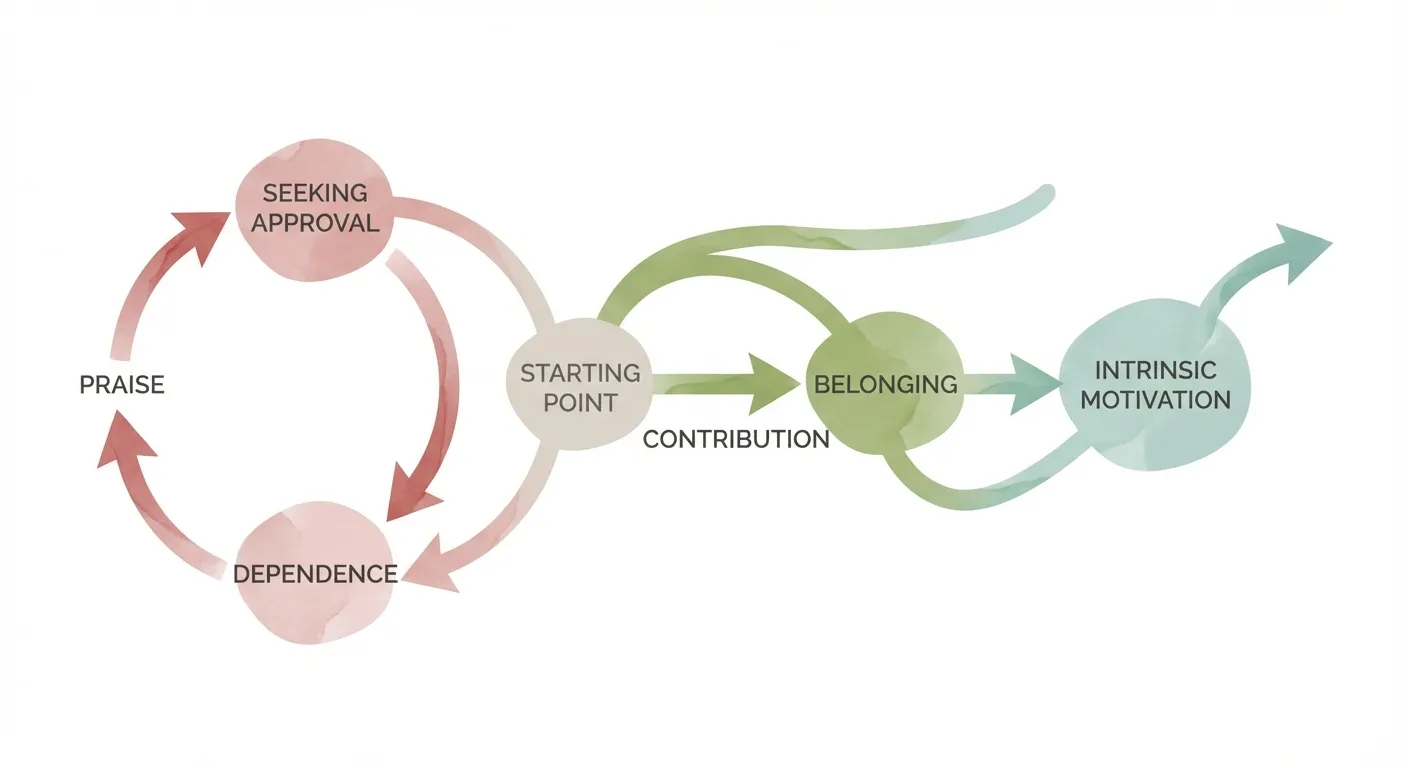
Two paths: one creates performers, the other creates contributors.
Five ways constant praise quietly backfires
- Shifts the motive. They stop doing things for satisfaction and start performing for applause.
- Creates a validation loop. "Watch me! Look! Did I do good?" becomes a reflex.
- Sparks competition. Siblings compete for who gets noticed instead of cooperating.
- Dilutes your words. When every small act is "Amazing!" -- truly exceptional moments have nothing left.
- Wears you out. Keeping up nonstop enthusiasm is exhausting and unsustainable.
Cross-cultural research adds something striking: in many traditional communities around the world, parents rarely use evaluative praise at all. Yet their kids are remarkably motivated, cooperative, and eager to pitch in. The difference? Contribution is treated as a natural part of family life -- something you grow into -- not a performance to be applauded.
9 Moves That Replace "Good Job"
These aren't tricks. They're a different operating system for how acknowledgment works in your family.
1. Just Use It
The most powerful acknowledgment requires zero words. Your kid's wobbly letters on the grocery list? Bring it to the store. Their lumpy napkin fold? Put it on the table. When you use what they made without commentary, the message lands: your contribution counts here.
2. Name the Pattern, Not the Moment
Instead of reacting to each individual action, wait. Comment on the trajectory -- sparingly, maybe once a week.
Being seen over time means more than any in-the-moment "great job."
3. Link It to Growing Up
Kids are deeply motivated by the desire to be seen as capable. Use that.
You can even gently tease: "Should I ask your little cousin to help instead? Or are you up for it?" Keep it light. They almost always rise to it.
4. Narrate What You See in Others
Build awareness by pointing out contribution around them -- in family members, friends, even strangers.
This builds the eye for contribution without making it about the child directly.
5. Understate It
A bit of dry humor signals expectations without lecturing.
Light and warm. The child reads the message -- and often responds with action instead of argument.
6. Connect It to the Bigger Picture
Frame effort as part of the family's shared project, not an isolated task to be graded.
7. Use Reciprocity
When a child wants your help but hasn't been contributing, don't lecture -- just draw the connection.
Not punishment. Just how families work -- help flows both ways.
8. Let Reality Do the Talking
Instead of nagging, point out what naturally happens when things don't get done.
Natural consequences teach responsibility without requiring your judgment.
9. Follow Their Energy
When a child invents their own weird method, run with it. Kid starts stacking plates in a tower? "Stack them as high as you can, then carry the whole tower over."
The moment a child owns the how, the task stops feeling like an order.
What This Looks Like in Practice
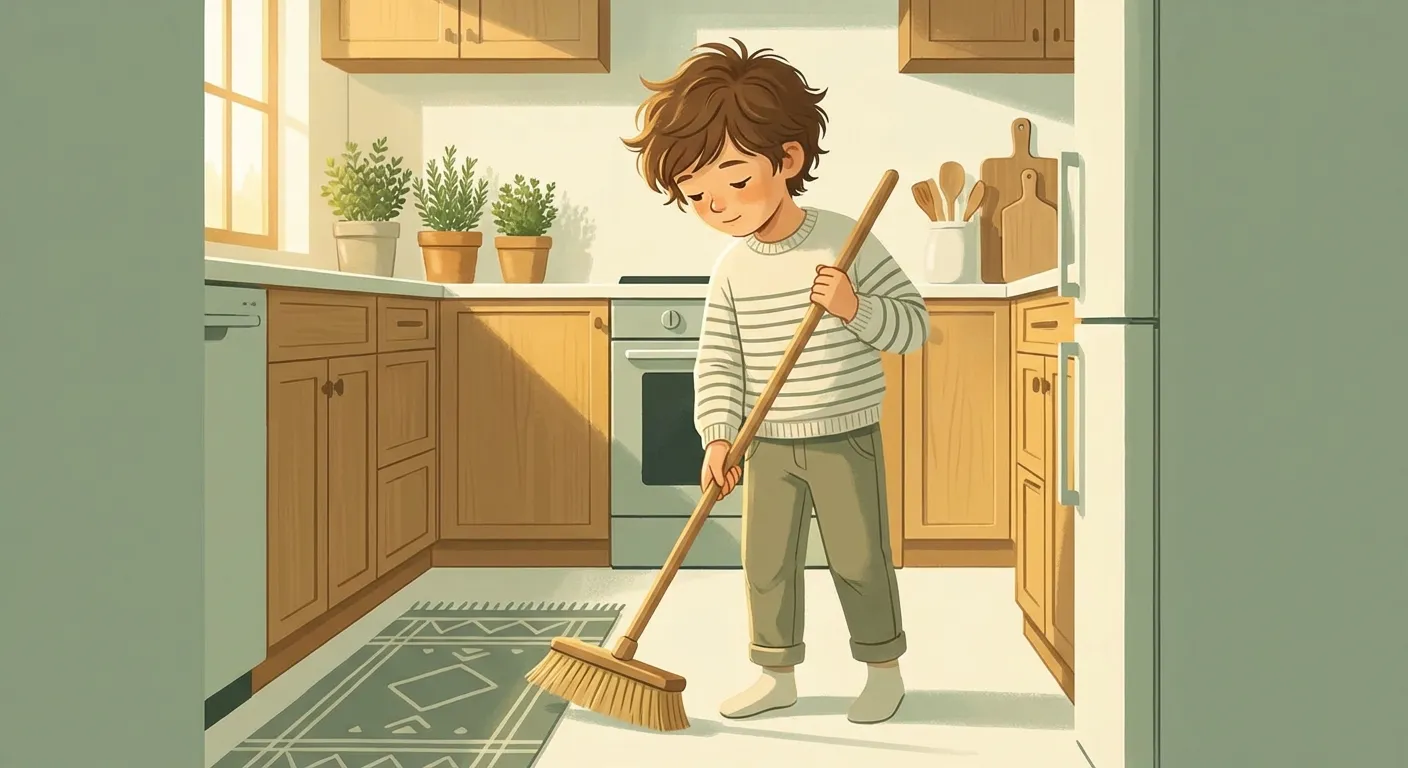
No audience needed. The task itself is enough.
The Quiet Week Challenge
Pick one week. Cut your evaluative praise in half. Here's how:
Just count
For one day, notice how often you say "good job," "great," "amazing." Don't change anything -- just tally.
Pause three seconds
Each time the urge hits, wait. You'll often realize the moment doesn't need words at all.
Replace with one of the 9
When you do want to acknowledge something, pick a move. A nod. A connection to family. A comment about growing up.
Watch what shifts
After a few days, notice: Is your child seeking attention less? Contributing more naturally? Do interactions feel less performative?
This isn't about going cold. Warmth, affection, genuine delight -- always welcome. You're just removing the constant evaluation. The scoring of every small act.
Connection + Autonomy + Competence
Praise provides none of these.
Acknowledgment -- being included, trusted, and treated as capable -- provides all three.