
Teach the Last Step First
The secret to teaching routines is where you let your kid start.
- Kids who finish tasks themselves on day one stay motivated for weeks. They brush teeth, get dressed, and pack bags without you standing over them.
- The move: start at the last step so your kid gets 'I did it!' immediately, then work backward through the whole sequence.
The backward trick that gives kids "I did it!" on day one

Your four-year-old can't brush their teeth alone. Fifteen steps, from walking to the bathroom to putting the toothbrush away. That's a lot of steps to fail at.
So here's what most parents do: start at step one. "First, pick up your toothbrush." Kid fumbles. Parent corrects. Kid gets through step two. Parent corrects again. By step five, everyone's frustrated and the parent finishes the job.
There's a better way. Flip the whole thing around. Do steps 1 through 14 yourself, and let your kid do step 15: put the toothbrush away.
Done. "I did it!" Big grin. Day one.
Why Backward Feels Like Magic
When kids finish something, their brain registers completion. Not partial credit. Not "good try." Completion. That hit of "I finished the whole thing" builds the motivation to keep going tomorrow, when you back up to step 14 and let them do the last two steps.
The Three Approaches (Pick One)
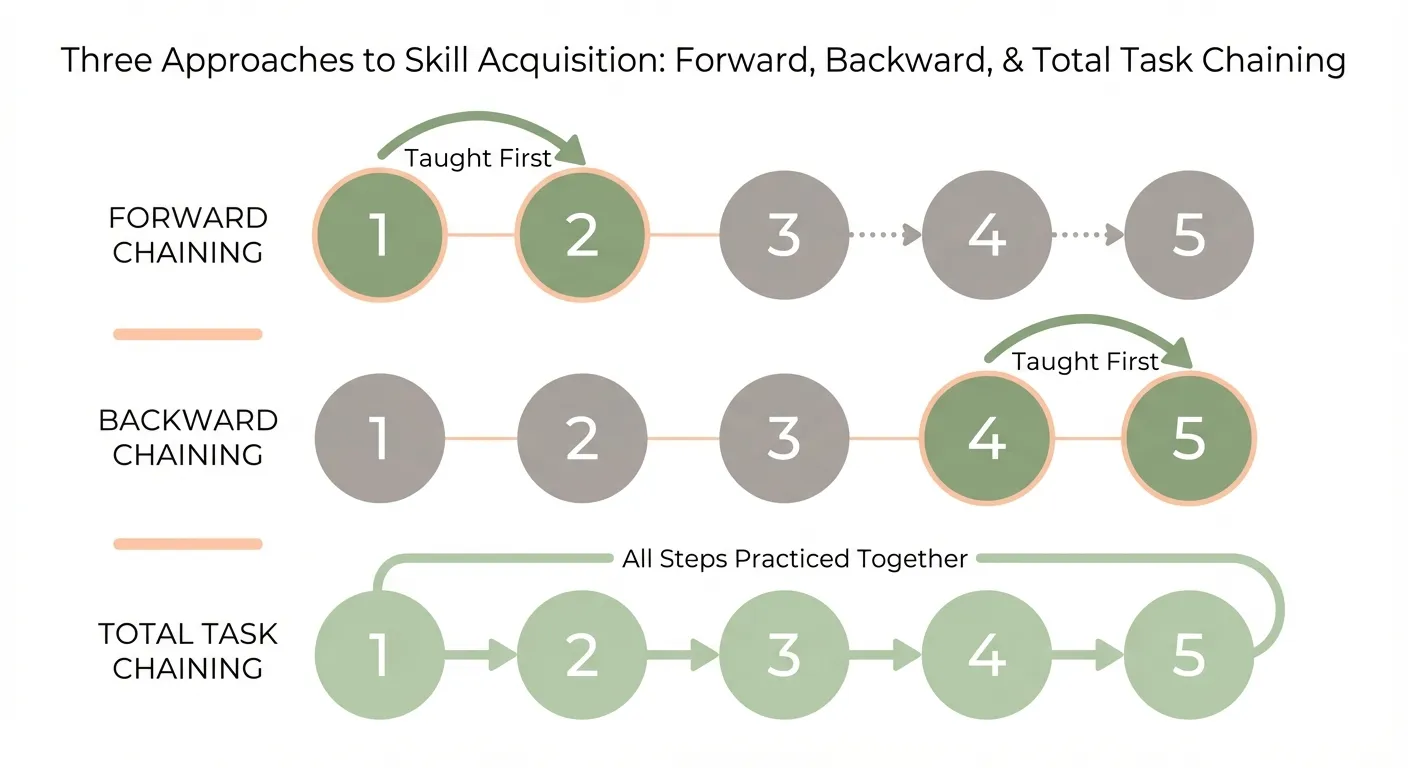
There isn't one correct way to teach a multi-step skill. There are three, and the right one depends on the kid and the task.
Backward Chaining
You do the gray steps. Kid does the green steps.
Best for: Kids who get discouraged easily. Self-care routines. Any task where the payoff is at the end.
Forward Chaining
Teach from the start, add one step at a time.
Best for: Skills where early steps must be understood before later ones make sense (reading, recipes, math procedures).
Total Task
Practice all steps every time, reducing help across the board.
Best for: Tasks that feel natural as a unit (getting dressed, making breakfast, packing a school bag).
The Help Dial
Once you've picked your approach, you need to decide how much help to give on the steps they're learning. Think of it as a dial, not a switch.
The key rule: give just enough help for success, then dial it back. Three to five successes in a row? Time to drop one level.
Fading in Action
You've been showing your kid how to put toothpaste on the brush. They've nailed it three days running. Tomorrow, try just telling them.
If they stall, bump back up to showing. No drama. Try telling again next time.
When They Mess Up (And They Will)
Errors that get practiced become errors that get memorized. The fix is fast and simple:
The Four-Beat Error Correction
1. Stop it. Don't let the wrong version keep rolling.
2. Show the right way. Quick demo, no lecture.
3. Let them redo it. Immediately. While the correct version is fresh.
4. Celebrate the redo.
No frustration, no lengthy explanation. Stop, show, redo, celebrate. Move on.
The Finish Line: Real Independence
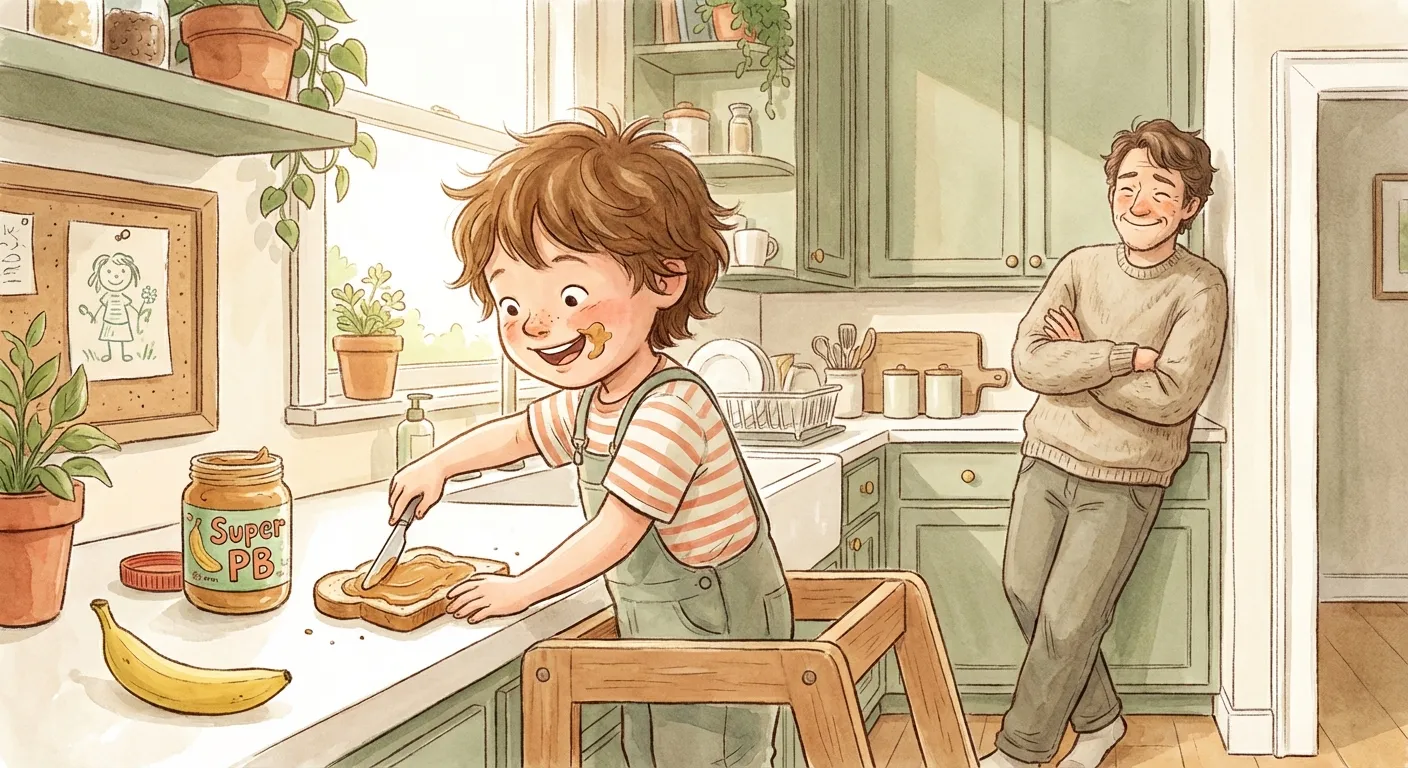
The goal isn't a kid who follows your step list perfectly forever. It's a kid who doesn't need the list at all.
To get there, gradually swap your reminders for environmental cues. A picture checklist on the bathroom wall. A timer that signals bedtime instead of your voice. Clothes laid out the night before. The goal is to transfer the prompting from you to the world around them.
And when they start the whole routine unprompted for the first time? That's the moment. That's the payoff for every patient backward step you took to get here.