
Three Minutes to a Calmer Kid
(No, Really)
The breathing trick that actually rewires your child's brain — and it works faster than you think.
Three minutes of breathing, three times a day, rewires your kid's brain.
- Kids who practice this fall asleep faster, handle big emotions without melting down, and self-settle at 2 AM instead of showing up at your door.
- The move: swap one long meditation for three short breathing sessions spread across the day — frequency builds the neural pathways, not duration.

Here's something that doesn't sound right: three minutes of breathing, done three times a day, changes your kid's brain more than a twenty-minute meditation session.
Not "helps them relax a little." Physically changes the structure of their brain. Stronger prefrontal cortex. Better emotional regulation. Improved focus. The kind of changes that show up on brain scans.
And it starts working in three weeks.
Why Short Beats Long
The research is counterintuitive. You'd assume more time = more benefit. But what actually builds emotional regulation is frequency — how often your brain practices shifting gears, not how long it stays in one gear.
| 3 x 3 minutes | 1 x 20 minutes | |
|---|---|---|
| Total time | 9 min | 20 min |
| Brain "gear shifts" | 3 per day | 1 per day |
| Kid cooperation | High (it's short) | Good luck |
| Fits into your day | Easily | Barely |
| Neural pathway building | Stronger | Weaker |
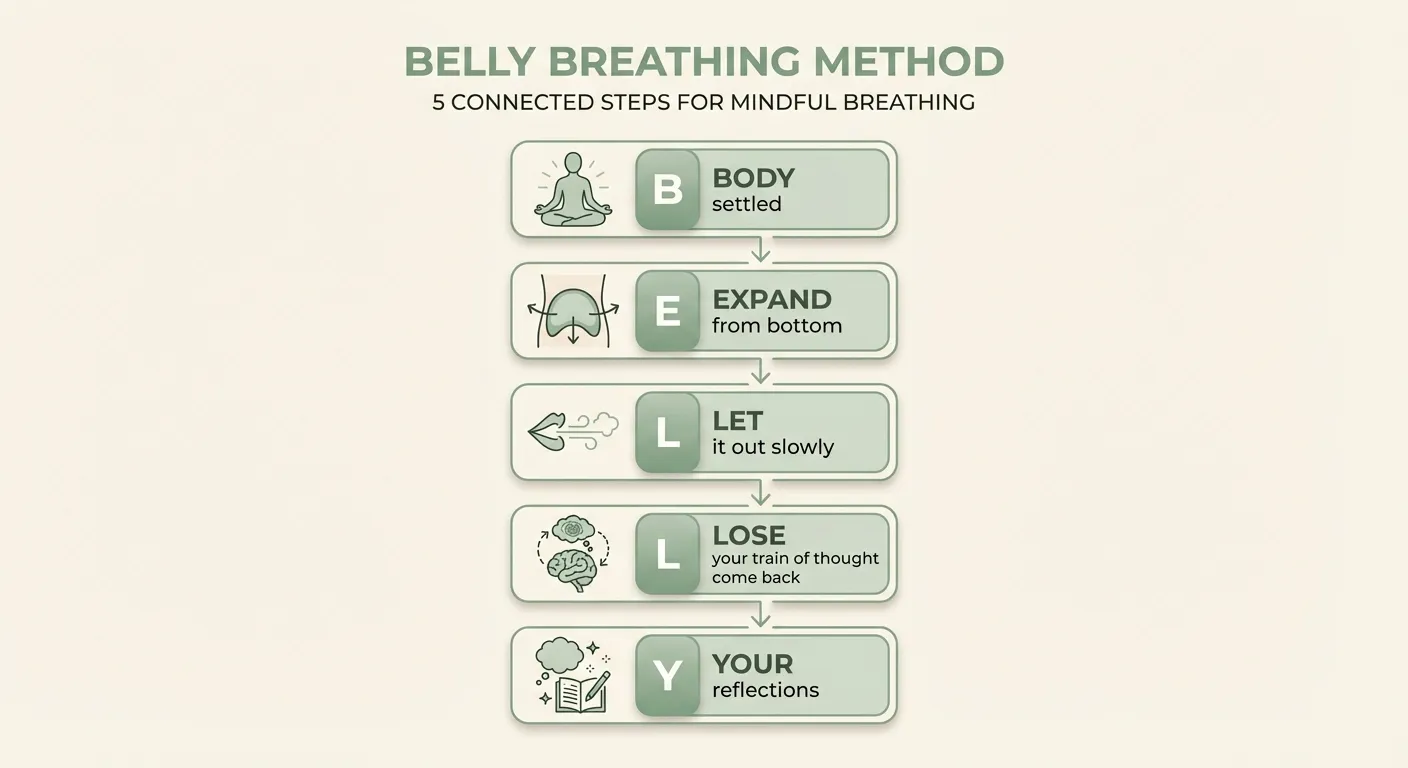
The BELLY Method: How to Actually Do It
Five steps. Each one takes about 30 seconds. Do it together — your kid follows your lead.
Body Settled
Sit somewhere comfortable. Couch, floor, bed, kitchen chair. Hands wherever feels natural. Eyes can close or just rest on something.
Expand From the Bottom
Breathe in slowly, filling lungs from the bottom up. Hands on belly to feel it rise. This catches shallow chest-breathing and redirects it.
Let It Out Slowly
The exhale is where relaxation lives. In-breath energizes. Out-breath releases tension. Make the exhale slightly longer than the inhale.
Lose Your Train of Thought? Come Back.
Minds wander. That's not failure — that's the exercise. Noticing you've drifted and bringing focus back is the mental muscle you're building.
Your Reflections
Finish gently. Then connect it to real life: when could you use this? Before a test? When someone's annoying you? At bedtime?
How Long, How Often, What Age
Start shorter than you think. A successful 90-second session builds more habit than an abandoned 10-minute one.
Bedtime Is the Power Move

Of all the times to practice, bedtime delivers the biggest payoff. Kids who do calm-down breathing before sleep fall asleep faster and sleep more deeply. And if they wake up anxious at 2 AM? They already have a tool to settle back down instead of lying there spiraling.
That alone is worth the three minutes.
Four Situations Where This Shines
Sleep Struggles
Fall asleep faster, sleep deeper, and self-settle at 2 AM without coming to your room.
Big Emotions
Pause before reacting. Breathing dials down fight-or-flight and brings rational thinking back online.
Test & Performance Nerves
A few quiet breaths at their desk or on the bench cuts stress hormones and sharpens focus.
Your Own Reset
Five minutes on the couch, eyes closed, slow breathing. You come back to the chaos with a clearer head.
When to Expect What
Research shows measurable shifts start around week 3. By week 9, study participants report significantly improved mood and stress resilience. The reason it sticks: neuroplasticity. Repeated practice builds new neural pathways that become permanent structural changes.
You're not teaching a coping trick. You're literally remodeling your child's brain architecture.
Making It Stick
- Let them catch you using it. Say it out loud: "I need a minute to breathe so I can think clearly." Kids copy what they see, not what they're told.
- Name it when they use it on their own. "I noticed you used your breathing before your game. Smart move." That's the moment it becomes theirs.
- Anchor to transitions. Morning. Car ride home. Pre-homework. Bedtime. Attach it to what already happens and it stops being a separate activity.
- Keep it short early on. Two successful minutes every day beats ten ambitious minutes that fizzle out by Thursday.
- Skip it when they're hungry, tired, or rushed. The practice won't land. Pick calm, fed moments and build from there.
Three minutes. Three times a day. Three weeks to see it working. That's the whole formula. Tonight at bedtime, sit down together, put your hands on your bellies, and breathe.