
The Quieter You Get, the More They Listen
The quietest parent at the playground is usually running the most tools.
- Kids trained on these moves ride out tantrums faster, pick up on a raised eyebrow before you say a word, and channel restless energy into real contributions around the house.
- The move: stop defaulting to talk-repeat-yell and start matching each situation to a specific low-volume tool.
11 discipline tools that replace volume with precision

There is a parent at every playground who barely raises their voice. Their kid acts up, and instead of matching the energy, they get quieter. Slower. Almost bored. And somehow, it works faster than anything you have tried.
That is not luck. It is technique.
Across Arctic communities, tropical villages, and dozens of cultures where parents almost never yell, anthropologists have documented something surprising: these parents don't have fewer tools than Western parents. They have more. Touch, facial expression, silence, redirection, real work. Each tool is precision-matched to a different type of misbehavior.
If your discipline defaults to talking -- first asking nicely, then repeating, then raising your voice -- you are running one play on every down. Here are eleven more.
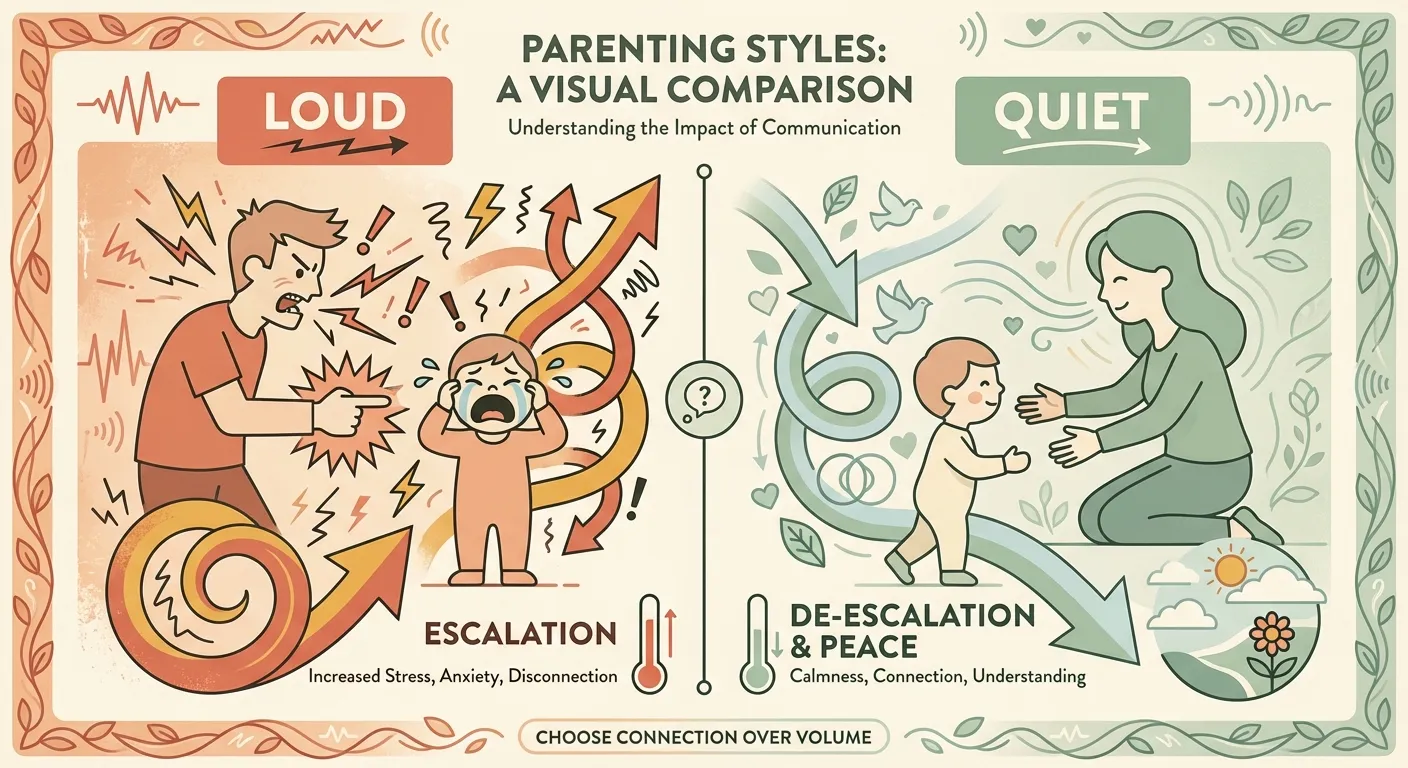
Volume up = escalation up. Volume down = resolution down.
Part 1: Meltdown Tools
When they have lost it. Your job: bring the temperature down.
Drop Your Energy
Their intensity goes up. Yours goes down. Fewer words. Fewer gestures. Flatten your expression. Think: spa waiting room.
For: screaming, thrashing, full meltdown
Anchor trick: Picture the most relaxed you have ever been -- warm bath, hammock, the moment before sleep. Hold that image and let it pull your body language down into it.
Physical Comfort
Touch talks directly to the emotional brain. When reasoning is offline, a steady hand on the back or a firm hug cuts through where words cannot.
For: rising tension, child getting physical, you are about to talk too much
Playful options: Flip them upside down. Gentle roughhousing. Tickles. Laughter and tears use the same release valve.
Redirect to Wonder
Anger and curiosity cannot run at full volume simultaneously. Point their attention at something genuinely interesting and the spiral loses momentum.
For: whining, cranky, starting to escalate
Change the Scene
When nothing works indoors, move the whole situation outside. Fresh air, open space, and natural light reset the nervous system. No plan needed. Just get through the door.
For: meltdown at home, both stuck in a loop
Step Back
For older children who have enough self-calming experience: walk away. Let the emotion run its course without an audience.
For: older child having a tantrum they can ride out
Not for toddlers who cannot yet self-regulate. Being left alone escalates their distress.
Part 2: Thinking Tools
When they still have some self-control. Your job: engage their brain, not your voice.
The Face
Put everything into a look. Raised eyebrow. Wide eyes. Slow head shake. Children are extraordinary face-readers. A well-timed expression works silently, at distance, and skips the argument entirely.
For: about to touch something off-limits, boundary-testing in public
State the Consequence
Replace commands with information. Describe what will happen. Walk away. Let them think it through. You are handing them a puzzle, not issuing an order.
For: something unsafe or inconsiderate
Deliver it like a weather report, not a threat. You are giving them data. What they do with it builds their judgment.
Ask, Don't Tell
A question activates thinking. A command activates resistance. Keep the tone light. Drop the question and move on.
For: rudeness, ignoring you, not helping
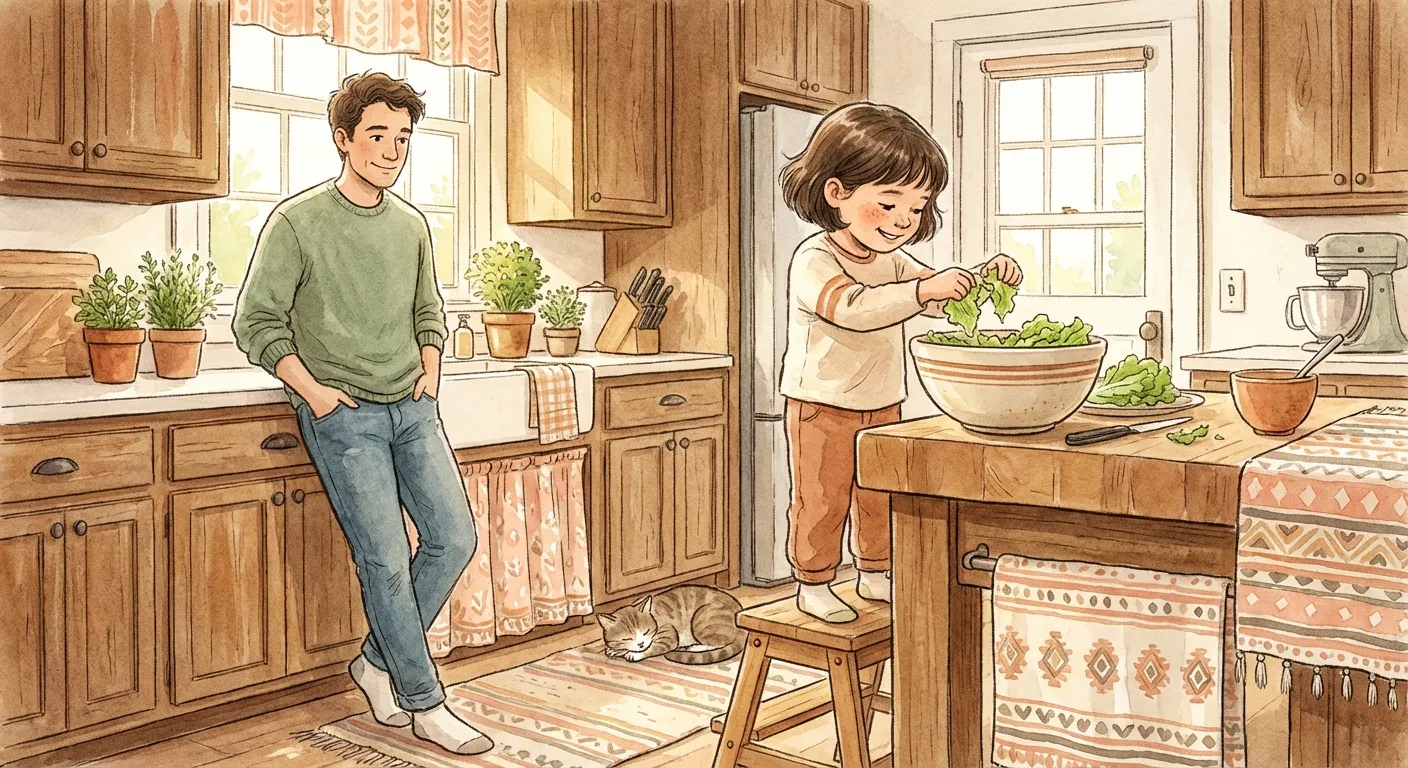
Give Them a Job
Misbehavior often means too much idle energy and not enough purpose. Hand them real work -- not busywork, something the family actually needs done. Whining and restlessness evaporate when a child has a task that matters.
For: whiny, bored, clingy, underfoot
Act, Don't Discuss
Stop negotiating transitions and just begin them. Put shoes by the door and start walking. Set food on the table. Run the bath. Children follow action more readily than instruction.
For: time to leave, eat, sleep, or switch activities
Reduce "Do you want...?" questions. Constant choices create decision fatigue and open the door to negotiations.
Full Ignore
Not half-ignoring while muttering "I'm not engaging with this." Genuinely: blank expression, eyes past them, body turned away. Zero emotional output. Even ten seconds is often enough. Then welcome them back warmly the moment the behavior shifts.
For: attention-seeking, performative whining, low-level acting out
The lesson they absorb: misbehavior gets nothing. Cooperation gets belonging, warmth, and connection.
Quick Reference: Which Tool for Which Moment
| The Situation | Reach For | Words Needed |
|---|---|---|
| Full meltdown | #1 Drop Energy + #2 Comfort | Almost none |
| Whining / cranky | #3 Redirect to Wonder | One sentence |
| Stuck in a loop at home | #4 Change the Scene | One sentence |
| About to touch / break something | #6 The Face | Zero |
| Doing something unsafe | #7 State the Consequence | One sentence |
| Rude / ignoring you | #8 Ask, Don't Tell | One question |
| Bored / underfoot / clingy | #9 Give Them a Job | One sentence |
| Won't transition | #10 Act, Don't Discuss | Zero |
| Performative tantrum | #11 Full Ignore | Zero |
The Common Thread Across All 11
Across traditional parenting cultures worldwide, anthropologists have noticed a shared philosophy: the point of discipline is to activate the child's own thinking -- not to overpower them with yours.
These tools do not tell children what to do. They give clues, set up puzzles, and create conditions where the child figures out the right behavior themselves. That is why most of them involve less talking. Commands shut thinking down. Clues turn it on.
Your First Month
Week 1
Pick one tool that feels natural. Most parents start with #1 Drop Energy or #7 State the Consequence. Use it every chance you get.
Week 2
Notice your defaults. When you catch yourself reaching for volume, that is the signal to swap in a tool. Do not judge it. Just notice and redirect.
Week 3
Expect a testing phase. When you change your response pattern, children push harder at first to see if the old reaction is still available. This is normal and temporary.
Week 4
Watch for the shift. Tantrums get shorter. Transitions get smoother. You feel less drained. The toolkit is working.
Every time you meet a child's storm with stillness, you show them that big feelings don't require big reactions.
Over time, their brain learns to find that stillness on its own.