
You Painted the Wrong Color
You don't need to repaint. Start with a pillowcase.
- Kids who get consistent color exposure — even from bedding and backpacks — show steadier energy and smoother transitions over 2-3 weeks.
- The move: swap curtains, bedding, and throw pillows to the right temperature for your child — warm for wired, cool for quiet.
Why your instincts about room color are probably backwards -- and how to use that to your advantage
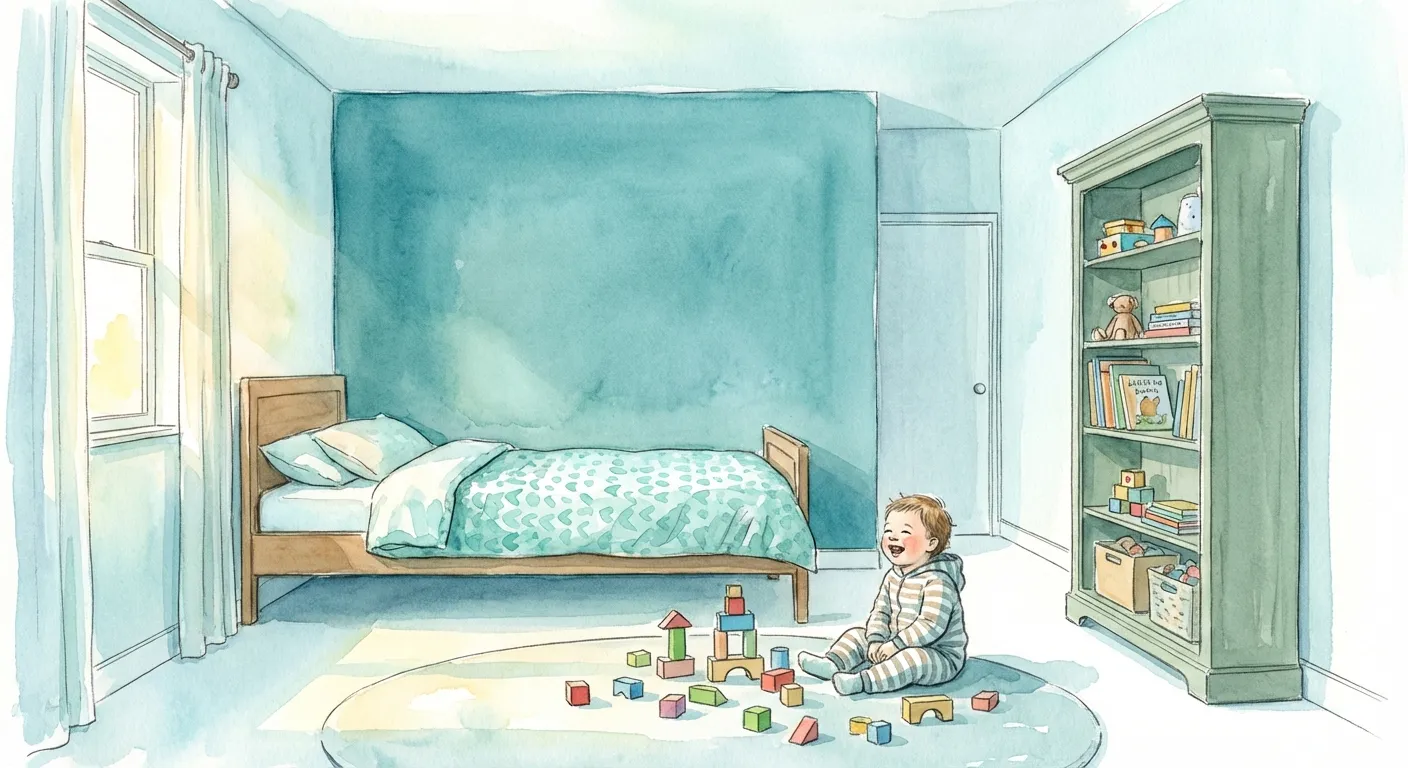
Your kid bounces off the walls every evening. So you paint their room a soothing ocean blue. Makes sense, right? Cool, calm, settled.
Except now bedtime is worse.
Here is the thing nobody tells you about color: the shade on the wall is not the one doing the work. Your child's visual system generates the opposite response. Blue walls trigger warmth. Warm walls trigger coolness. The eye compensates, the same way your body shivers in the cold -- it pushes back against what surrounds it.
Which means that blue room just activated your already-wired kid.
Cool rooms energize quiet kids.
Match the Color to the Child
First, figure out which direction your child leans most of the time. Not on their wildest day or their sleepiest -- the general pattern over a typical week.
If your child is truly 50/50 -- sometimes wired, sometimes flat, no clear pattern -- go neutral warm: soft peach, sandy beige. That gives a gentle settling effect without overcorrecting.
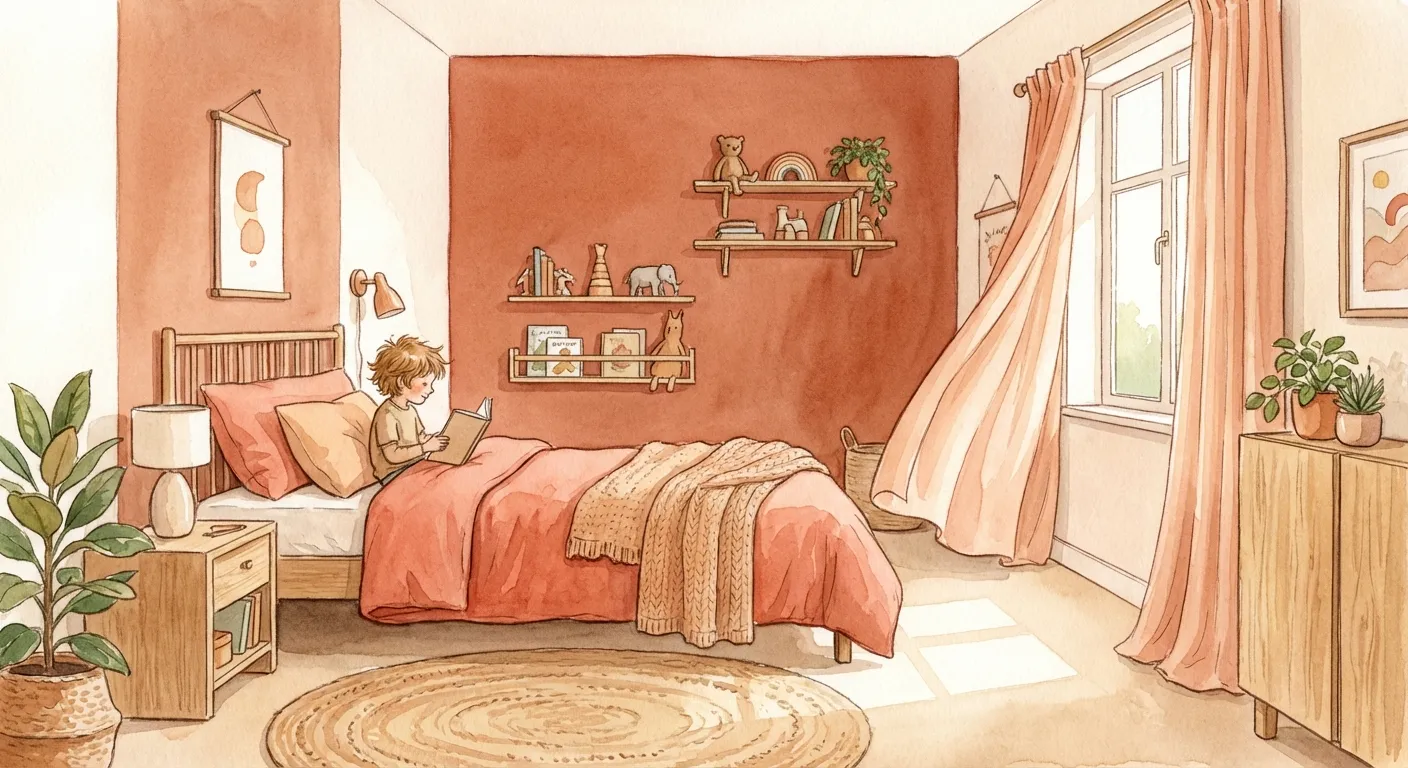
A terracotta accent wall and warm peach bedding. The room feels cozy. The nervous system quietly cools down.
The Instinct Trap
Your gut says: put the hyper kid in blue, put the sluggish kid in orange. This is exactly backwards. Those colors reinforce the existing pattern instead of balancing it. The wall color triggers the opposite internal response -- so warm tones for the wired kid, cool tones for the flat kid.
You Do Not Need to Repaint
Seriously. Before you touch a paint can, start with what you can swap in an afternoon.
| Item | Wired child (go warm) | Quiet child (go cool) |
|---|---|---|
| Bedding | Warm peach duvet | Aqua-patterned duvet |
| Curtains | Coral or terracotta | Teal or sage green |
| Throw pillows | Soft red-orange, clay | Cool blue, mint |
| Rug | Warm jute or sienna | Slate blue or seafoam |
| Lampshade | Soft coral | Pale teal |
| Pajamas | Peach, coral tones | Teal, bright aqua |
That last row is not a joke. Pajamas, backpacks, lunch boxes -- these surround your child for hours at a stretch. A wired kid in a soft coral hoodie. A sluggish kid in a bright teal jacket. Small, consistent exposure adds up.
Teal walls, aqua patterns, sage bookshelf. The room feels fresh. The nervous system gently wakes up.
The READ Method
A four-step process to get this right without overthinking it.
Read your child's energy pattern
Watch them over a typical week. Mostly wired and buzzing, or mostly flat and slow? Most kids lean one direction.
Evaluate their main spaces
Bedroom, play area, wherever they spend the most time. What colors dominate now? Are they accidentally reinforcing the pattern you want to balance?
Adjust with what you have
Bedding, curtains, throw pillows, a rug, artwork. Fast wins you can try before committing to anything bigger.
Document what shifts
Give it 2-3 weeks. Is bedtime easier? Are mornings smoother? Energy more balanced? Color is a nudge, not magic -- but consistent nudges add up.
Room by Room
Wired child's bedroom
Terracotta accent wall behind the bed. Warm peach bedding. Soft coral lampshade. Cozy and inviting -- the nervous system quietly cools down.
Quiet child's bedroom
Teal or soft blue accent wall. Aqua-patterned duvet. Sage-green bookshelf. Fresh and alive -- the system gently wakes up.
Shared play area
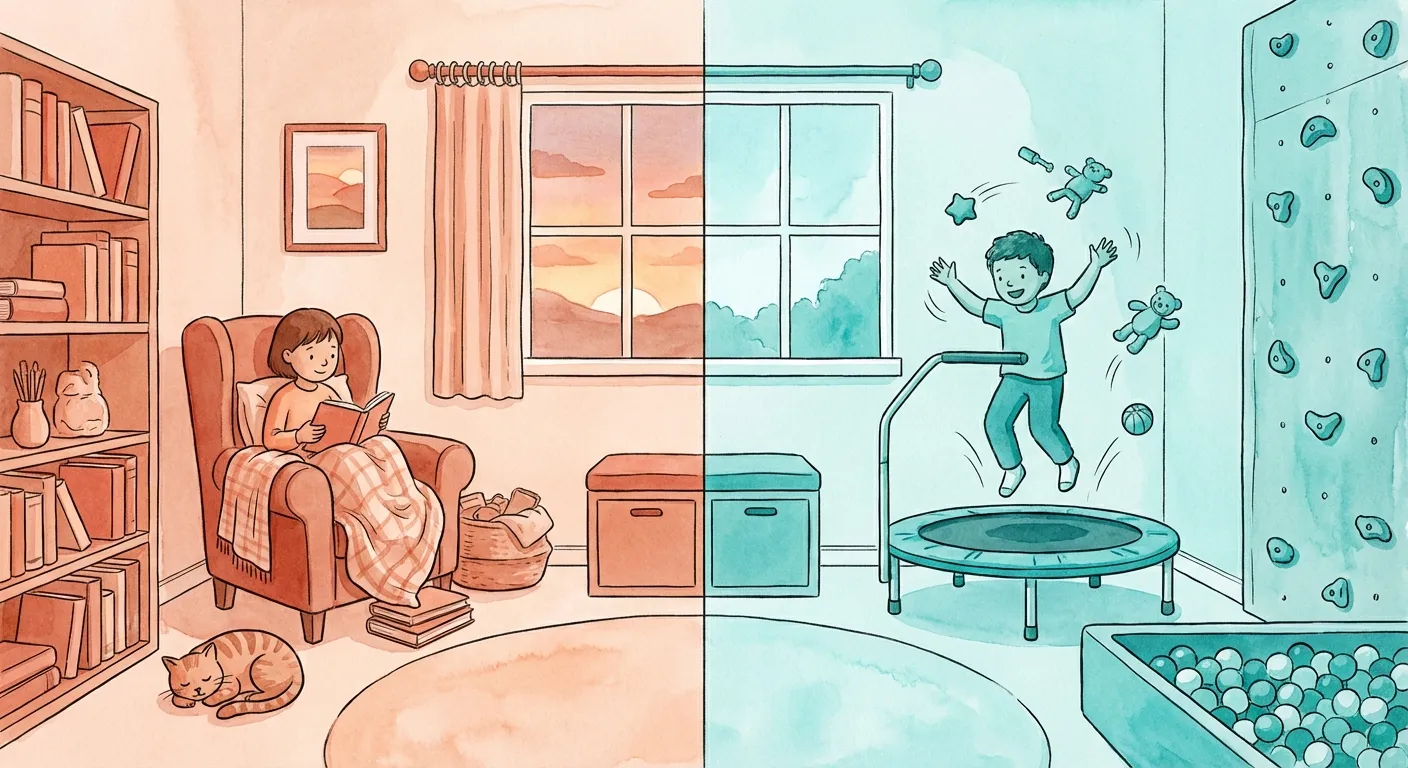
Use zones. A warm-toned reading nook for the child who needs settling. A cool-toned building corner for the one who needs sparking.
Clothing and everyday items
Pajamas, backpacks, lunch boxes -- they surround your child for hours. Think of them as portable color exposure.
The Long Game
Three things worth remembering as your child grows.
Energy patterns shift. A three-year-old tornado may become a mellow seven-year-old. What works now might need updating in a year or two. Stay observant.
Layer, do not overhaul. Add a colored throw blanket this week. Swap the curtains next month. Gradual is fine -- and easier to course-correct if you notice something is off.
Watch for seasons. Some kids run hotter in summer and flatter in winter. Swap bedding and accessories seasonally if you notice a pattern. Two sets of pillow covers and you are covered.
The colors surrounding your child are already doing something.
You are just choosing what.