
The Parents Who Rarely Raise Their Voice Have the Kids Who Actually Listen
Discipline that works doesn't start with the consequence. It starts 30 seconds earlier.
- Kids get better at self-regulation, arguments drop dramatically, and the relationship stays intact even through the hardest corrections.
- The shift: connect first, correct second, reconnect immediately after -- every single time.
Your authority is a bank account. Every command spends it. Here's how to build a surplus so massive that on the rare occasion you do get firm, your child stops mid-stride.
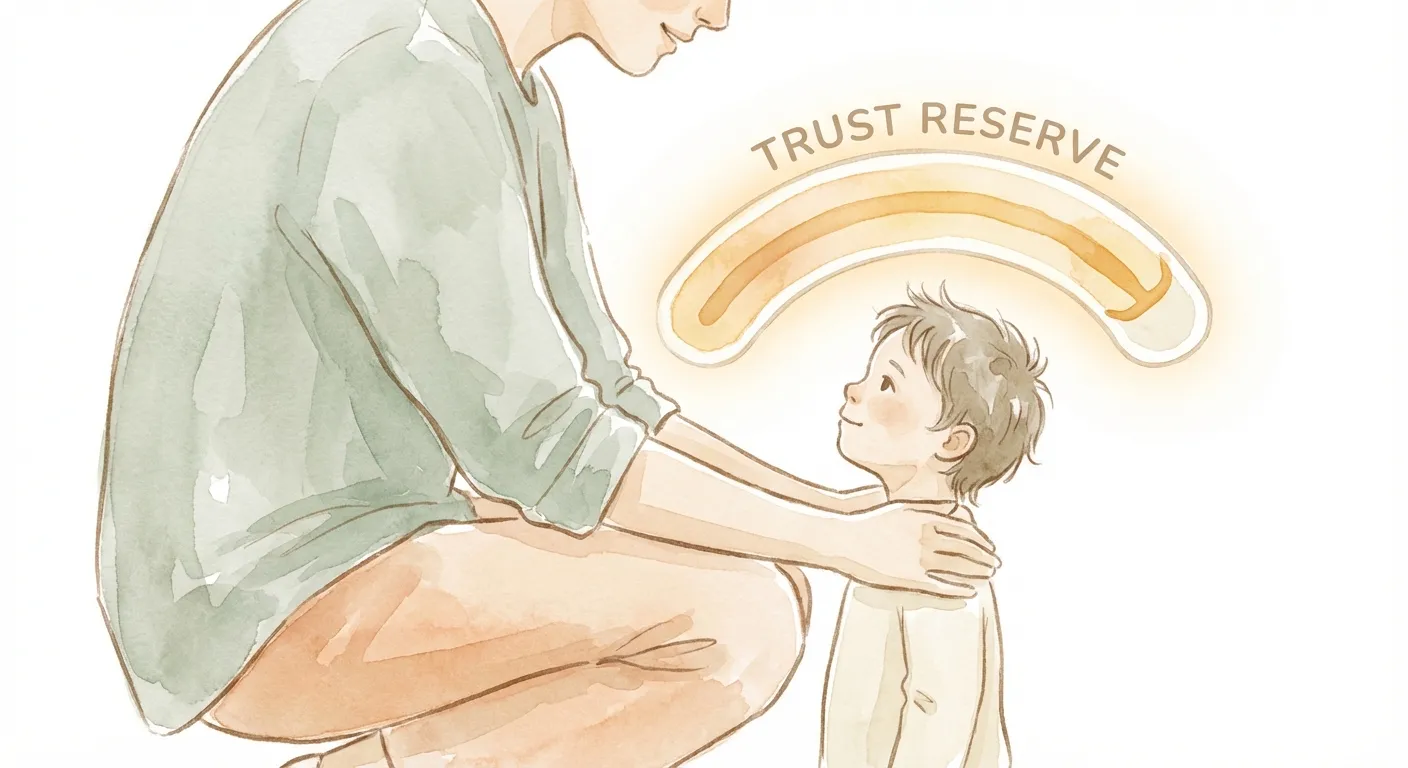
There's a parent at every playground whose kids just... respond. No counting to three. No threats. No volume increase. They say something once, calmly, and the kid does it. It looks like magic.
It's not magic. It's math.
Think of your parental authority like a bank account. Every time you raise your voice, bark an order, or default to punishment, you make a withdrawal. Do that all day, every day, and you're operating on overdraft. Your words stop carrying weight. Your kid tunes you out -- not because they're defiant, but because your currency is worthless.
Parents who lead with warmth? They're sitting on a surplus. When they do get firm -- and they do, occasionally -- it lands like a thunderclap. Because it's rare. Because it means something.
Meet the need first. Then address the behavior. This single shift changes everything.
Deposits vs. Withdrawals
Before we get into the system, get this table into your bones. Every interaction either builds your account or drains it.
| Withdrawals | Deposits |
|---|---|
| Yelling across the house | Walking over, eye contact, calm request |
| Barking commands on repeat | Asking once, then gently guiding |
| Punishing in the heat of the moment | Pausing, checking the real cause first |
| Lecturing after they already feel bad | Letting genuine remorse do the teaching |
| Constant "no" and "stop" and "don't" | Redirecting toward what you DO want |
| Threats you won't follow through on | Few rules, consistently enforced |
Before You React: Run the REACH Check
Most parents skip straight to correction. The ones with the authority surplus do something different -- they diagnose first. Takes about 15 seconds and prevents 80% of unnecessary conflicts.
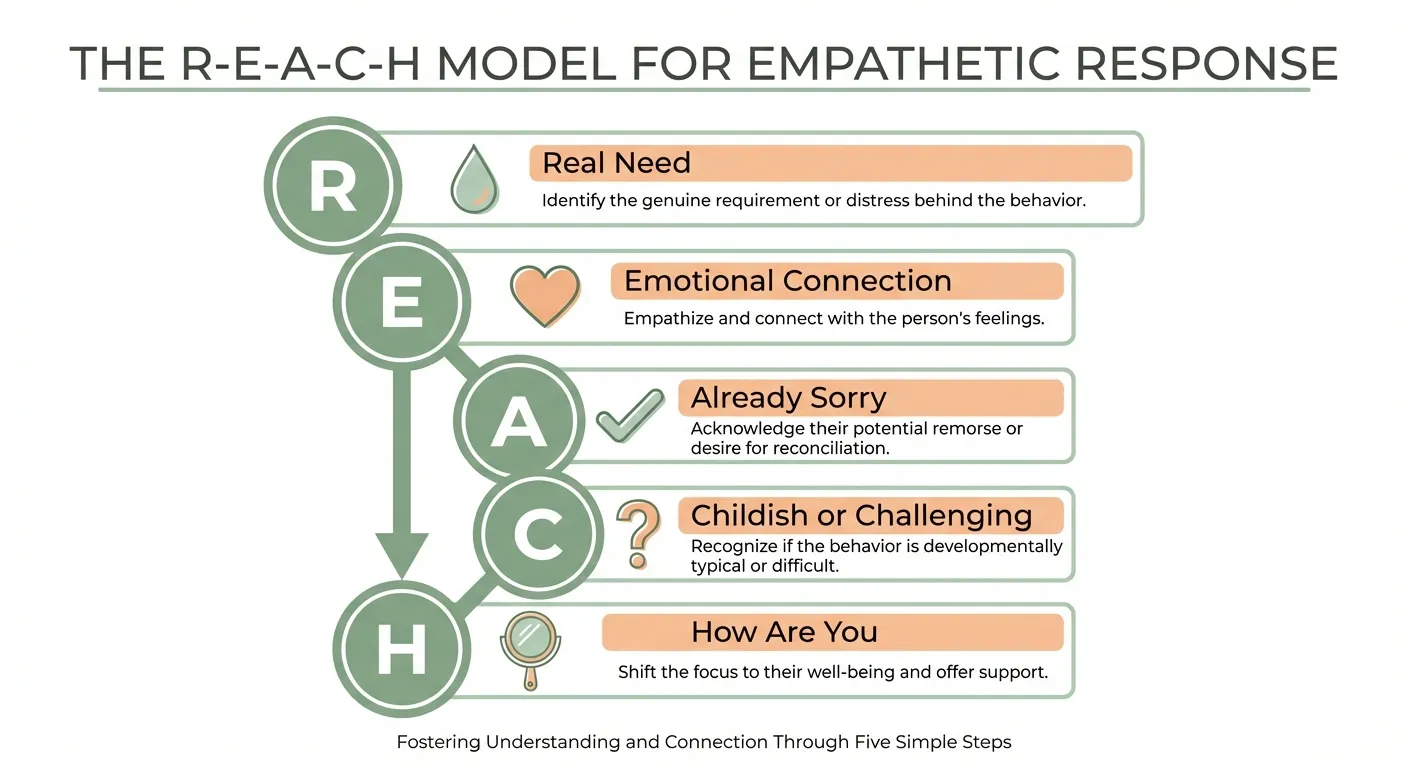
R Real Need?
Hungry? Tired? Coming down with something? Overstimulated? The younger they are, the more likely the "misbehavior" is just biology.
E Emotional Connection?
Have they been getting enough focused attention from you? Any disruptions lately -- new school, parent traveling, schedule overload?
A Already Sorry?
Is your child showing genuine remorse -- not fear of getting caught, but real regret?
C Childish or Challenging?
Is this age-appropriate immaturity, or genuine defiance? A toddler saying "no" is practicing independence. A seven-year-old staring you down and refusing is different.
If genuine defiance: Move to the Gentleness Ladder.
H How Are You?
Are you reacting from frustration, exhaustion, or a bad day? Or responding from calm authority?
The Gentleness Ladder
When the REACH check confirms you're dealing with real defiance and you're calm enough to respond well -- start at rung 1. Only step down when the rung above genuinely didn't work.
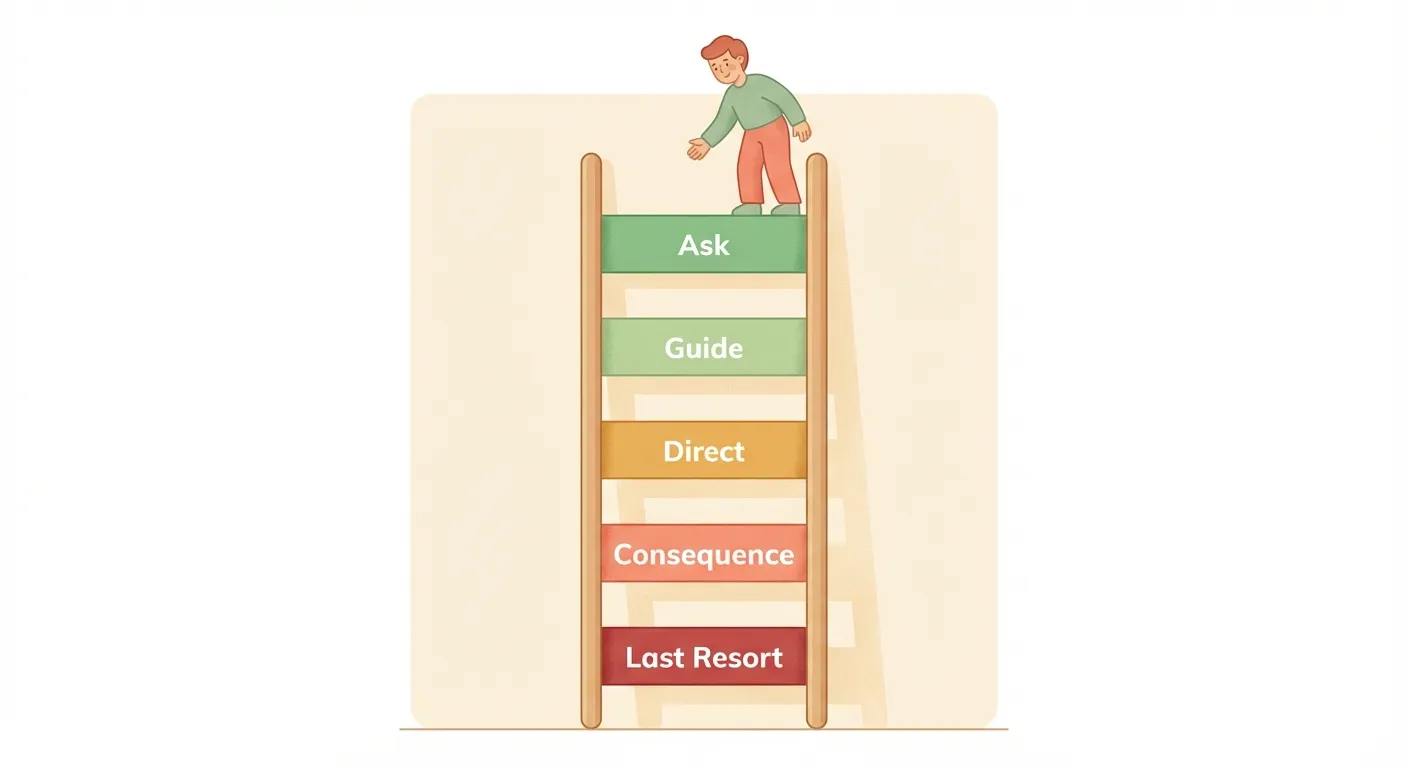
Ask Gentlest
"Hey, could you bring the dishes to the sink?" lands completely differently than "Put your dishes away NOW." A request honors their autonomy and invites cooperation.
Guide Gentle
Physically steer them in the right direction. Walk your toddler to the car instead of repeating "time to go" five times. Hand on shoulder, walk to the bathroom for teeth brushing. Especially effective under age 4.
Direct Moderate
A clear, calm instruction. Use sparingly -- commands spend your influence. If you normally ask, the rare direct statement carries real weight. If you constantly command, it all becomes noise.
Consequence Firm
Only for clear defiance when gentler approaches have failed. Decide consequences calmly and in advance -- not in the heat of the moment. Kids have a razor-sharp sense of fairness.
Structured Incentives Last Resort
Reward/removal systems for specific, recurring problems where nothing else has worked. Use narrowly and temporarily. Overuse trains kids to ask "what do I get?" instead of developing internal motivation.
When Consequences ARE Needed: The Correction Sandwich
Sometimes you're past rung 3 and a consequence is genuinely called for. The trick is wrapping it so the lesson lands without damaging the relationship. Three steps:
Connect First
Get on their level. Eye contact. Physical warmth -- hand on shoulder, sitting close. Let them feel your presence before they hear the consequence.
Correct Clearly
Name the behavior. State the consequence. Calm, matter-of-fact. No lecturing, no anger.
Reconnect After
Immediately reassure. The consequence happened. Now rebuild. They need to know the relationship is intact.
The One Thing You Must Never Punish Through
Every child has a primary way they feel loved. Using THAT specific channel as punishment doesn't just correct -- it devastates. Know which one is theirs, and protect it.
| If they light up when you... | NEVER use this as punishment |
|---|---|
| Praise them | Harsh words, sarcasm, public criticism. For this child, your disapproval doesn't sting -- it shatters. |
| Spend time together | Isolation for every infraction. This child doesn't feel corrected -- they feel abandoned. |
| Hug or cuddle them | Physical punishment or withholding affection. They won't process the lesson -- they'll only register that their safe place became a source of pain. |
| Give them things | Threatening to destroy or take back gifts given with love. It teaches them your generosity has strings. |
| Help them with tasks | "Do it yourself" when they're struggling. From the person they most rely on, it feels like being cut loose. |
The Long Game
This isn't just a discipline technique. It's a compounding investment. Four habits that keep the account growing:
Catch it early
Notice the warning signs before full meltdown -- the whining, the eye-rolling, the withdrawal. A 30-second reconnection at the first sign often prevents the blowup entirely.
Fill up during calm times
Connection isn't just for crises. Daily deposits of focused attention, affection, and encouragement make discipline moments far less frequent and far easier to navigate.
Model repair
When you lose your cool (and you will), go back and say: "I handled that badly. I'm sorry. Here's what I wish I'd said instead." This teaches more about self-regulation than any lecture.
Know your triggers
Are you more reactive when tired, hungry, stressed from work, or running late? Name your patterns so you can catch yourself before you escalate.
A child who feels connected accepts correction without resentment.
Connect first. Then correct. Watch the authority build.