
The One-Question Toy Test That Builds Independent Kids
The difference between a toy that teaches and a toy that creates dependency.
- Kids who discover their own errors stay on task, feel zero shame about mistakes, and develop the habit of trying again — without being told to.
- The move: stop being the feedback loop. Pick activities where the material does the correcting, then sit down and say nothing.
Before you buy another toy, play another game, or set up another activity -- run it through this filter. One question decides whether your kid learns to think for themselves or learns to look at you for answers.
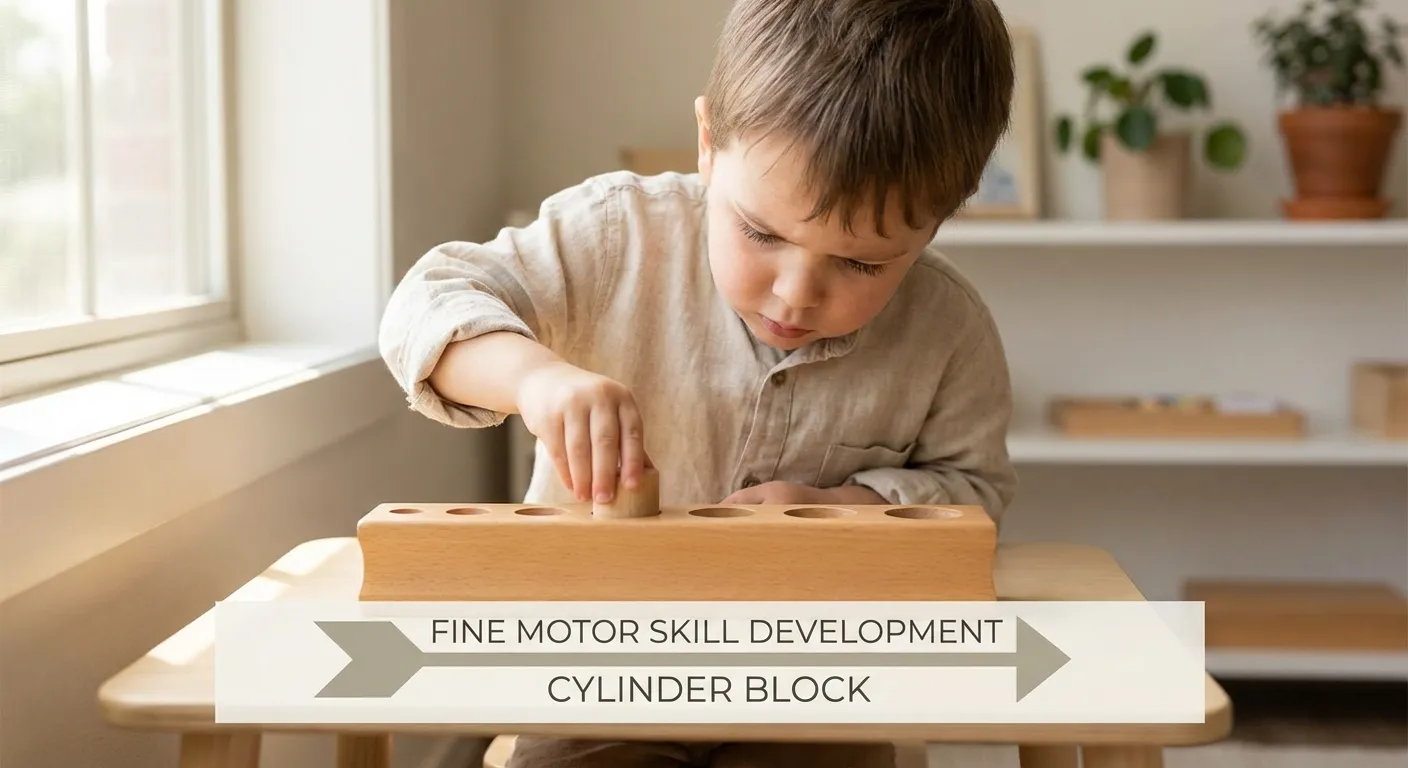
Pick up any toy in your house right now. Hold it. And ask yourself this:
That's it. That single question separates toys that build independent thinkers from toys that build kids who check your face before every move.
Maria Montessori figured this out in 1907. She called it control of error -- the idea that the best learning materials have the feedback built in. The mistake is visible. The child sees it themselves. No teacher, no parent, no correction needed.
And here's the thing: it works so powerfully that Montessori watched a four-year-old repeat the same exercise sixteen times in a row, completely absorbed. Other children sang around her to try to break her focus. She didn't notice them. The material held her because she was solving it herself.
What "Passes" and What Doesn't
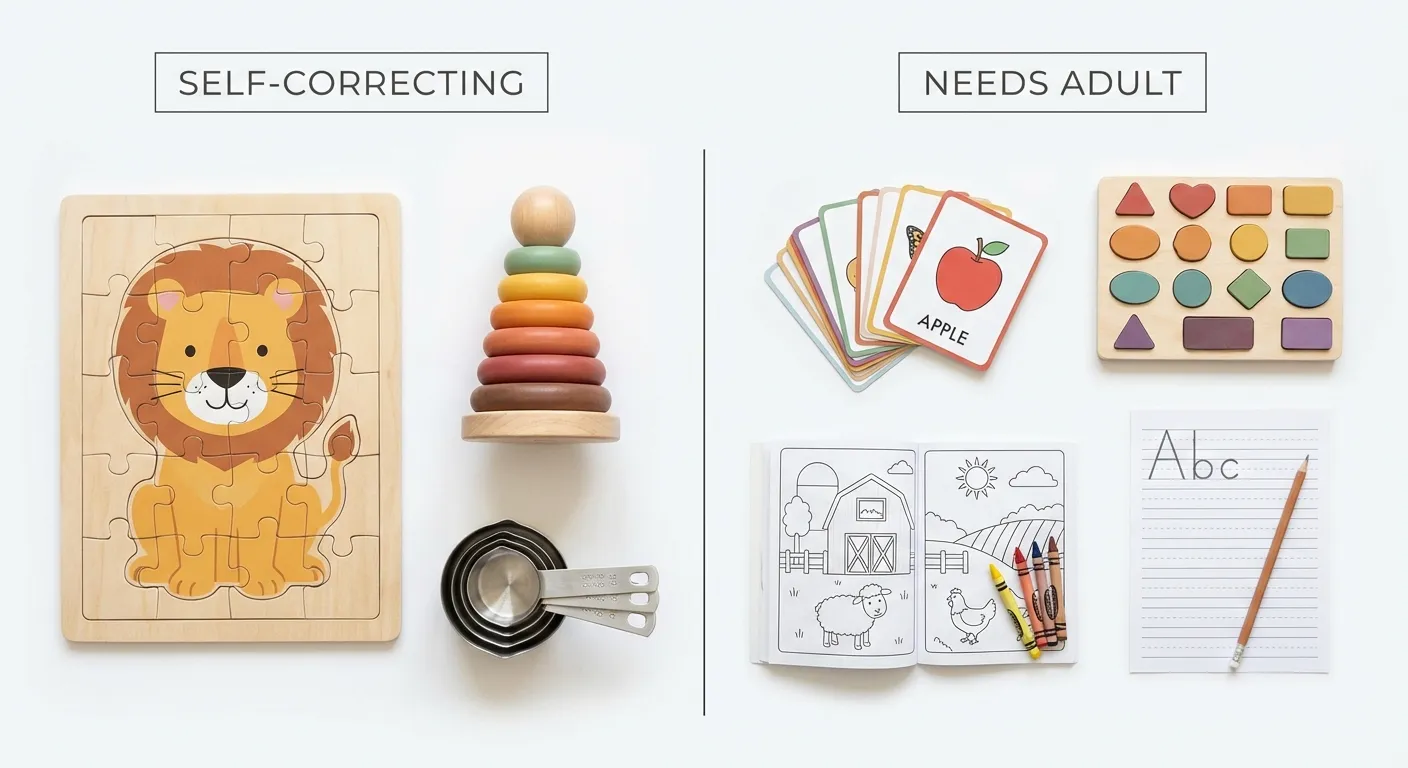
Run your kid's favorite activities through the test. Some will surprise you.
| Activity | How the error shows | Verdict |
|---|---|---|
| Jigsaw puzzle | Piece doesn't fit. Physically won't go in. | PASS |
| Stacking rings by size | Stack looks lopsided. Wobbles. | PASS |
| Coloring book | Going outside the lines -- but says who? | FAIL |
| Setting the dinner table | Extra fork. Missing plate. Obvious. | PASS |
| Flash cards | Child doesn't know if they're right until you flip. | FAIL |
| Pouring water between cups | Overflow or not enough. Can see it. | PASS |
| Drawing "correctly" | No visible standard -- needs adult opinion. | FAIL |
| Counting objects into groups | Leftovers or empty slots. | PASS |
| Sorting by color | Mismatch is visible. Red among blues. | PASS |
| Handwriting worksheets | "Good enough" is a judgment call. | DEPENDS |
Notice the pattern? Activities that PASS don't need you. The child gets real-time, built-in feedback. Activities that FAIL require you to be the feedback loop -- which means your kid is learning to depend on your reaction instead of their own observation.
Why This Changes Everything
When the material gives the feedback, something shifts in the child's brain. Watch what happens:
That concentrated attention is the prize. When a child is problem-solving on their own -- no social overhead, no people-pleasing, no anxiety about being wrong -- they enter a flow state that actually builds cognitive skill. The material pulls them in because the challenge is the reward.
Three Moves You Can Make Tonight
You don't need to buy anything new. You just need to rethink what you already have.
If your kid spends time on flash cards or drawing-to-match exercises where you're the judge, trade it out for a puzzle, a stacking toy, or a sorting game where the answer is visible.
Your kid is doing a puzzle. They try a piece in the wrong spot. It doesn't fit. You see the right spot. You know exactly where it goes. Say nothing. Let the material do its job. Your silence is the strategy.
Setting the table is a perfect control-of-error activity. Four people, four plates, four forks. If there's one left over or one missing, the error is right there on the counter. No correction needed.
The Hardest Part: Your Own Hands
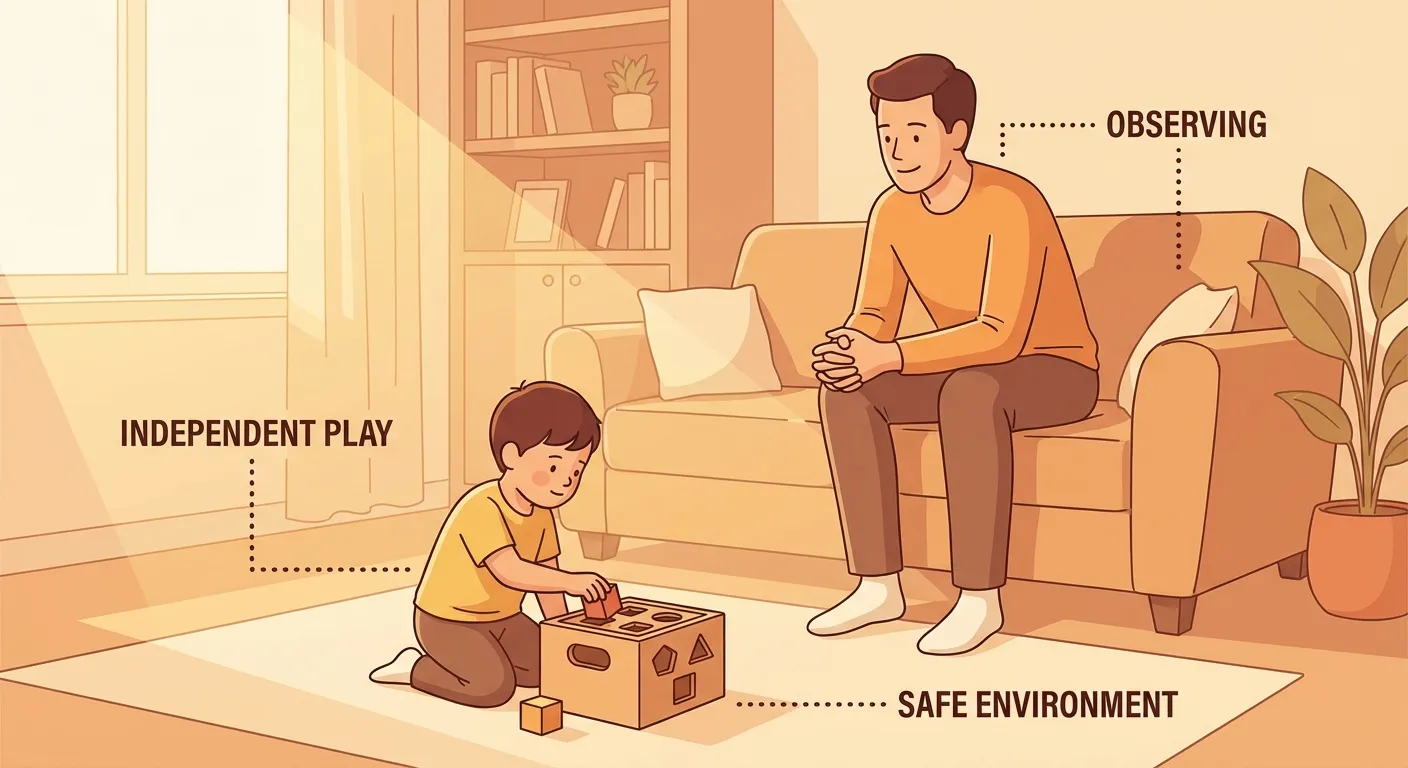
Montessori said something sharp about the adult's role. She changed the title from "teacher" to "directress" -- someone who directs the environment, not the child. The job isn't to correct. It's to set up conditions where correction happens without you.
At home, same principle. Your job is environment design, not real-time quality control. Pick the right toys. Set up the right activities. Then sit down, keep your hands in your lap, and watch your kid become someone who solves problems instead of someone who asks permission to try.
Run the Test Right Now
Walk to your kid's play area. Pick up three things. Ask: "If they get this wrong, will they know?" Keep the ones that pass. That one shift -- choosing self-correcting over adult-correcting -- compounds every single day.