
Say Less, Get More
A noun is a nudge. A verb is a command. Reach for the noun.
- Kids who handle their own lunchbox, towel, teeth, and shoes without anyone raising their voice.
- The shift: state the object, not the order — and when one word isn't enough, let a sticky note do the nagging for you.
Your ten-sentence reminder isn't working. One word might.
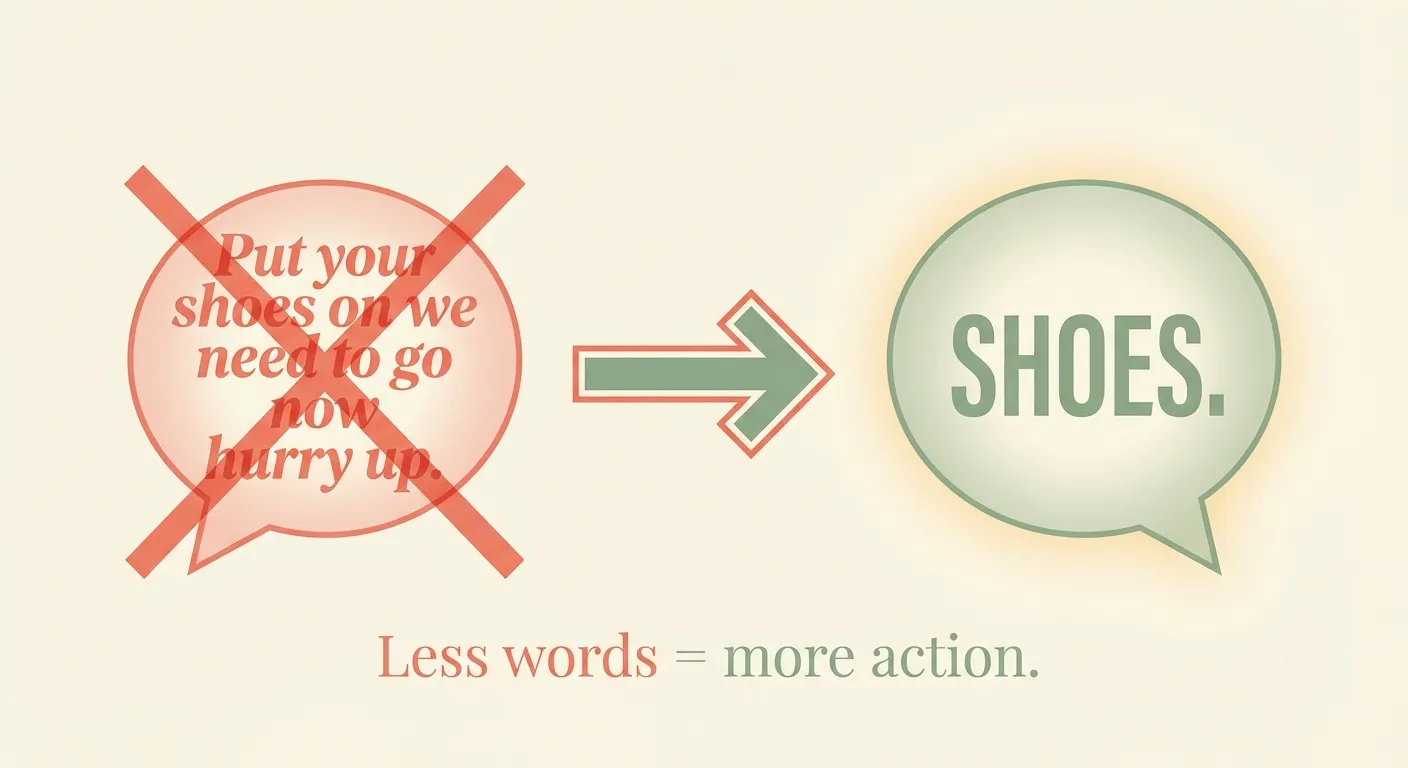
You've said it five times. The lunchbox is still on the counter. The shoes are still off. The backpack is still on the floor. So you say it a sixth time, louder, with that edge in your voice that you swore you'd stop using.
Here's the thing nobody tells you: every extra word you add is working against you. Kids don't tune out because they're defiant. They tune out because a full sentence sounds like a lecture, and lectures trigger one response in a developing brain: resist.
The fix is almost stupidly simple. Say one word.
"Lunchbox."
That's it. That's the whole reminder.
One word is a nudge. A full sentence is a lecture. The single word calls attention to the thing and trusts your kid to know what to do about it. And that trust? It's the secret ingredient.
Why Fewer Words Work Better
Research in developmental psychology shows that children are wired for autonomy. Direct commands activate a resistance reflex -- the same instinct that helps them become independent thinkers also makes them push back when they feel controlled.
But here's the good news: small shifts in how you communicate can bypass this reflex entirely. You don't need a new parenting philosophy. You need four switches.
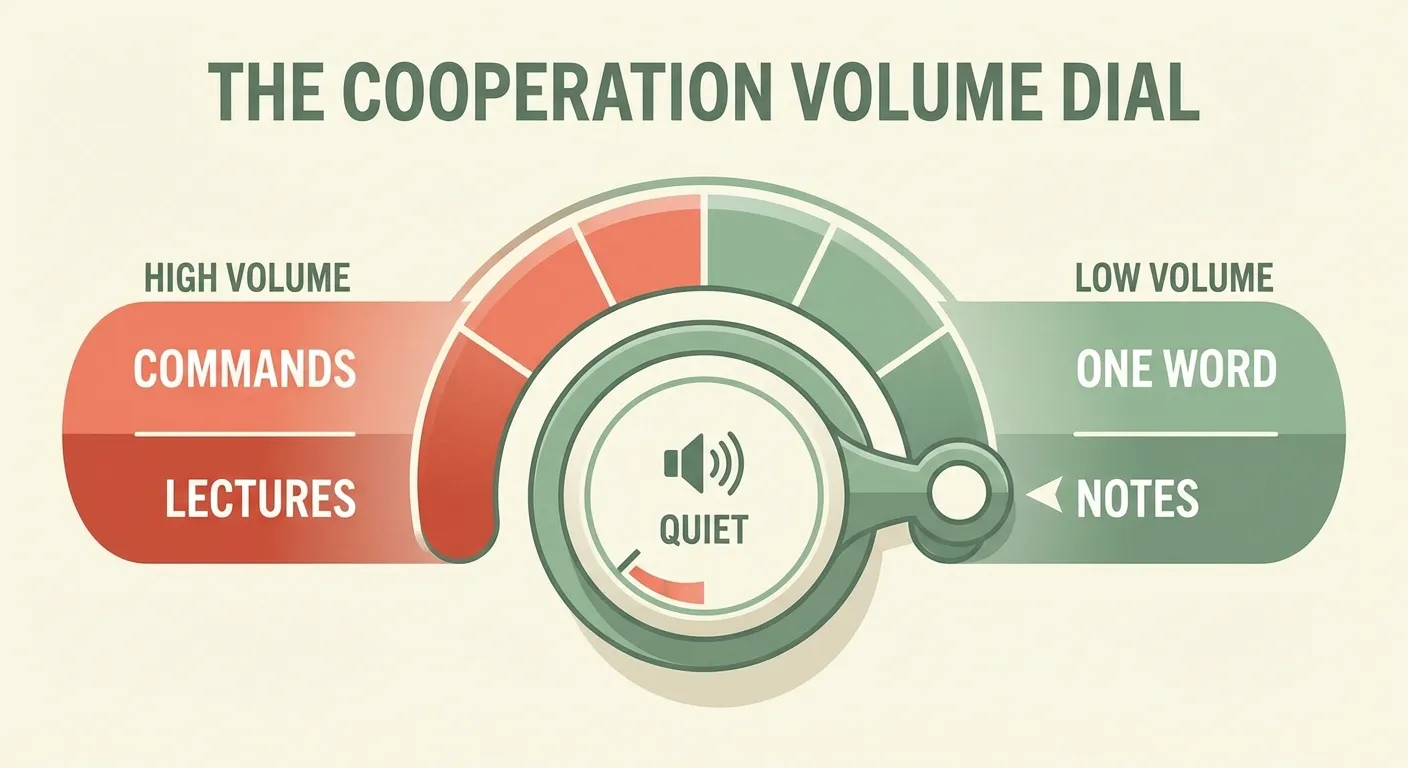
The One-Word Switch
This is the fastest win. Instead of narrating the problem, state the noun. One word points at the thing. A sentence points at the person.
| What You're Saying Now | The One-Word Version |
|---|---|
| "You forgot your lunchbox again! I keep telling you to put it in your bag the night before..." | "Lunchbox." |
| "How many times do I have to tell you about your wet towel on the bed?" | "Towel." |
| "Did you brush your teeth yet? Go brush your teeth. Now." | "Teeth!" |
| "Get your backpack, we need to leave right now, hurry up!" | "Mia -- backpack." |
"Seatbelt" is a gentle reminder. "Sit!" is a command. Nouns point at the thing. Verbs point at the person. Reach for the noun.
When One Word Isn't Enough: Write It Down
A note doesn't raise its voice. It doesn't repeat itself. And kids of all ages -- even pre-readers -- find written messages surprisingly compelling. Something about seeing it in writing makes it feel official without feeling hostile.
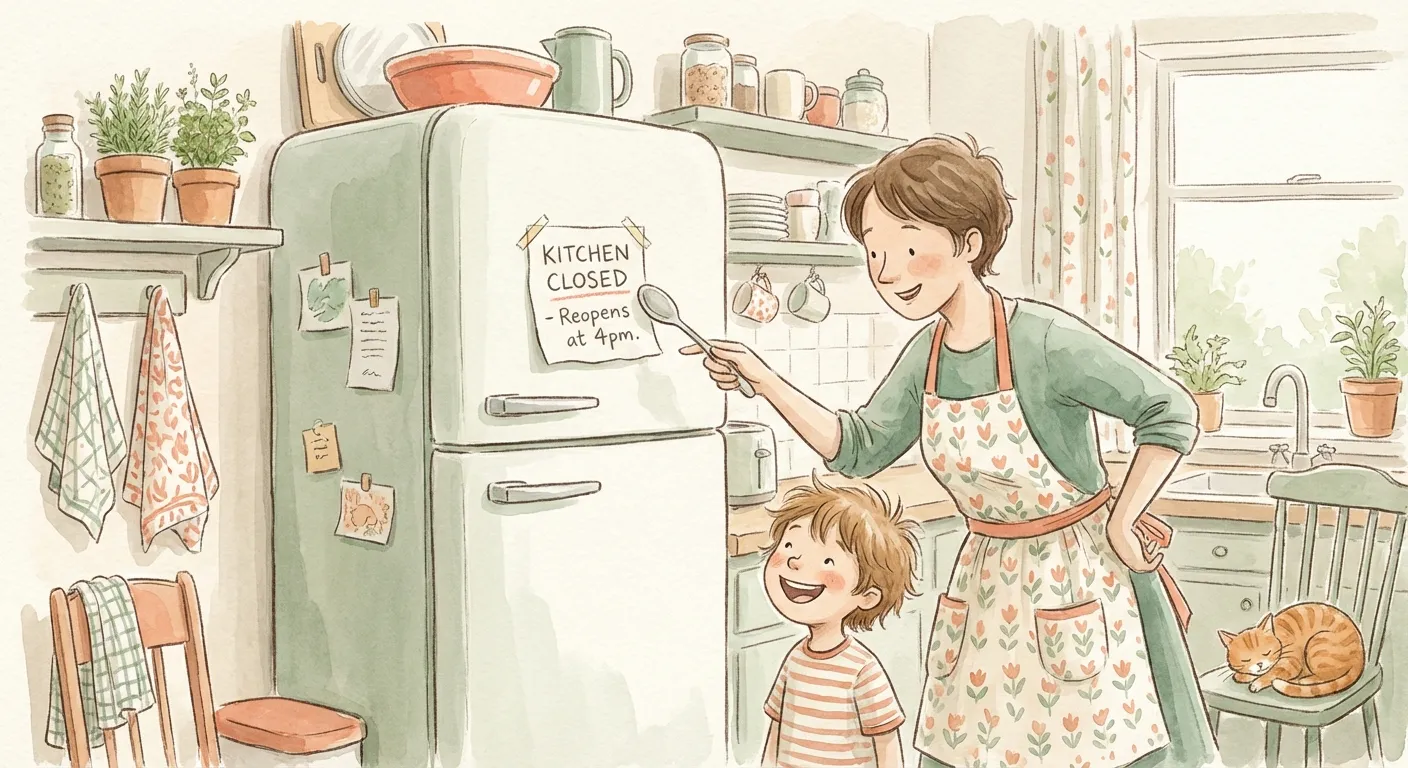
Snack window reopens at 4pm.
please return all wet towels to the hook.
Thank you for your cooperation.
Notes work because they're impersonal. The rule isn't coming from you (the person they're currently annoyed with). It's coming from The Management. The sign on the door. The note on the mirror. Same message, zero power struggle.
The Full Toolkit: Four Cooperation Switches
The one-word trick and the sticky note are two moves from a bigger system. Here are all four switches that replace orders, threats, and nagging with approaches that actually work.
Hand Over the Wheel
Give them a role, a choice, or a mission. Cooperation stops being something you extract and becomes something they choose.
State the Facts
Describe reality without blame. No judgement, no sarcasm. Just the facts. Let them connect the dots.
Lead with "I"
When you start with "you," the other person braces for attack. Leading with "I" keeps the conversation about the problem, not the person.
Lighten the Load
When tension is building, try the opposite: make it ridiculous, make it fun, make it a challenge.
When sharing your feelings, the word "you" sneaks in and turns everything into an accusation. "I don't like it when you kick me" lands worse than "I don't like being kicked." Drop the "you" and the defensiveness drops with it.
Making It Stick
- Notice cooperation when it happens. Most parents only comment when things go wrong. A simple "That was really helpful, thanks" deposits into the cooperation account.
- Pick your battles early. Willpower is finite -- yours and theirs. Save the big asks for when everyone has energy.
- Model what you want. If you bark orders at your partner, your kids learn that's how people get things done. Let them catch you asking nicely.
- Repair when you slip. You will still yell sometimes. Circle back: "I didn't like how I talked to you earlier. I'm going to try that differently next time." That teaches more than a perfect track record.