
The Scorecard Effect: How Kids Who Track Their Own Progress Start Coaching Themselves
Self-rating is the part most parents skip — and the part that actually works.
- Kids who rate themselves learn what good behavior actually looks like from the inside. They stop waiting for adults to tell them how they did and start adjusting mid-day on their own.
- The move: at every checkpoint, ask them to rate themselves first — then compare notes in 10 seconds flat.
A daily tracking card that turns behavior goals into a game worth winning
Your kid already keeps score. Video game levels, basketball points, who got more screen time than their sibling. Kids are natural scorekeepers. The trick is pointing that instinct at something that actually matters.
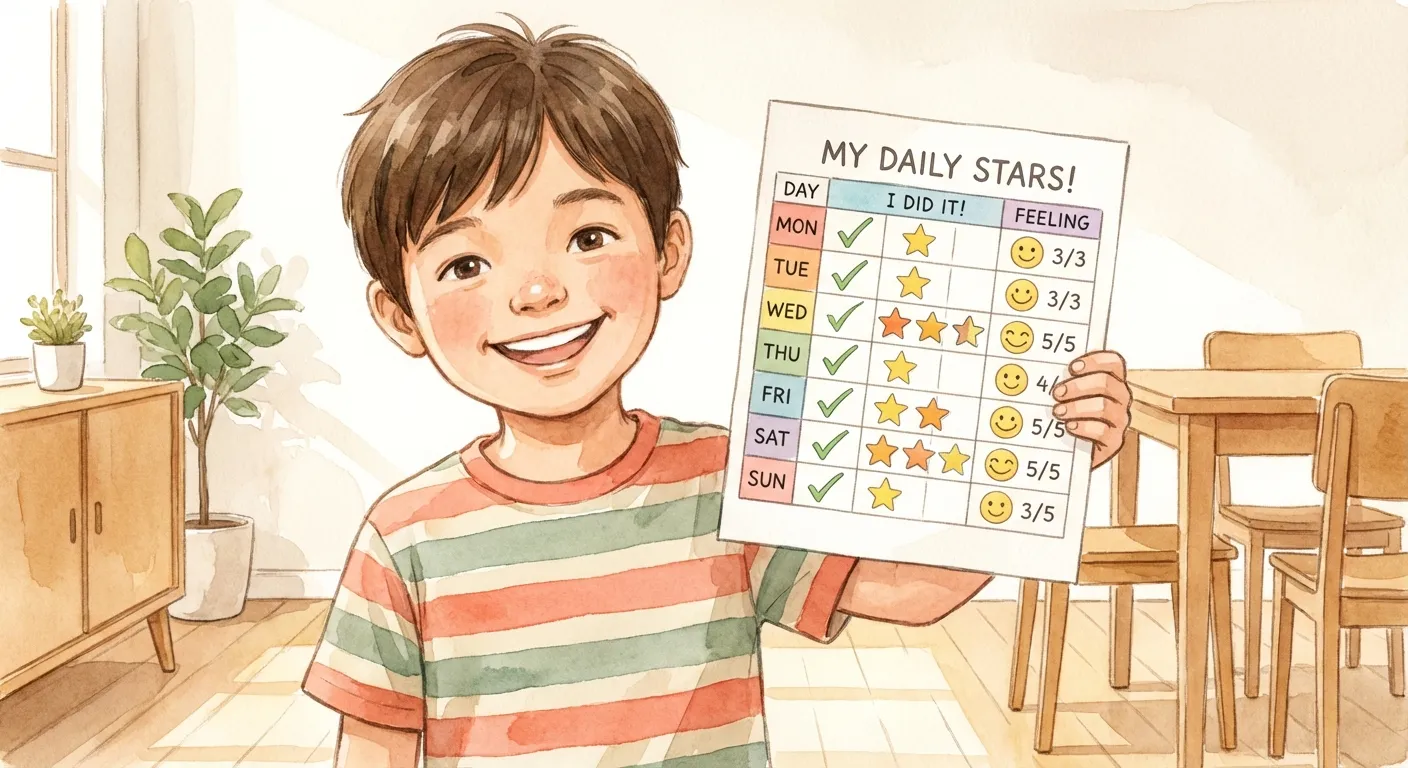
Daily progress tracking takes a behavior your child is working on and turns it into a score they can see, rate themselves on, and beat tomorrow. It's not a reward chart collecting dust on the fridge. It's a live scorecard they carry all day, getting quick ratings at every checkpoint.
And here's what makes it stick: kids who rate themselves start noticing their own behavior before anyone says a word.
What the scorecard actually looks like
Mia's Tuesday Scorecard
| Time | Stays in seat | Asks for help | Starts work on time |
|---|---|---|---|
| Morning block | Great | Good | Great |
| Before lunch | Good | Great | Okay |
| Afternoon block | Great | Good | Good |
| End of day | Great | Great | Great |
| Total | 14 / 16 | 13 / 16 | 12 / 16 |
Two or three target behaviors. Four check-in points through the day. A simple rating at each one. That's it. The magic isn't in the card design — it's in the rhythm it creates.
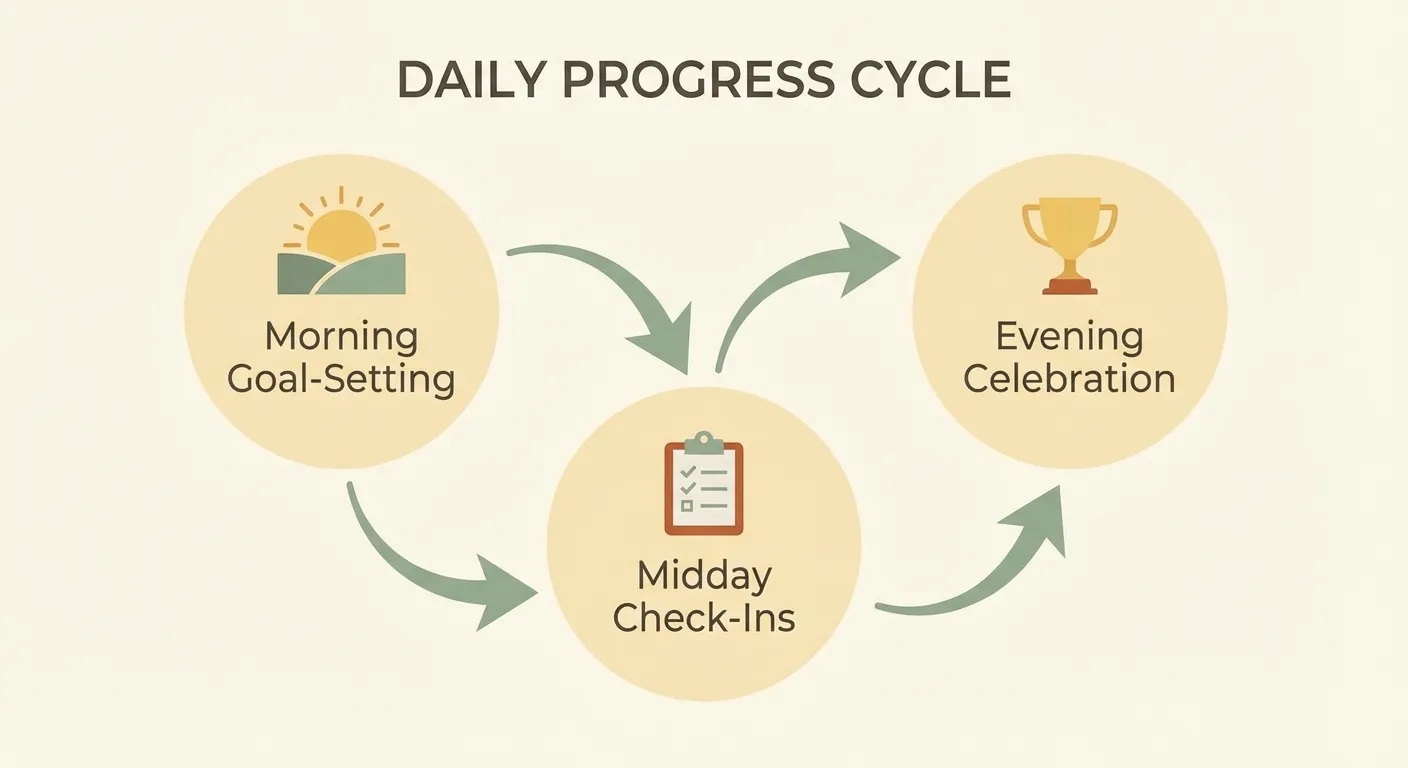
The daily rhythm: three moves
1 Morning check-in (2 minutes)
Set the tone before anything else happens. Review the targets, state the goal, hand over the card.
Two minutes. Not a lecture. Not a warning. Just: here's what we're playing for today.
2 Quick ratings at every transition (30 seconds each)
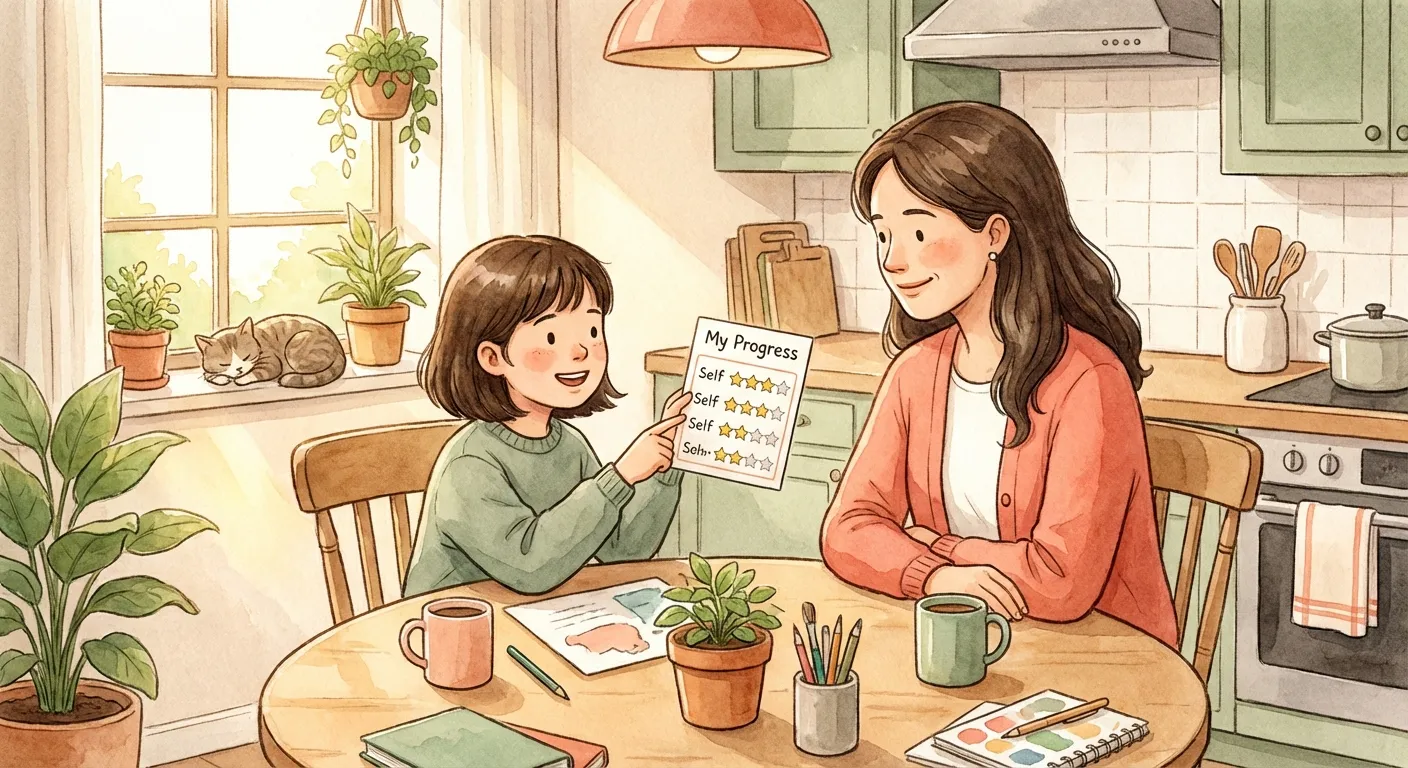
End of a class period, after lunch, before recess — any natural break is a checkpoint. The critical move: let them rate themselves first.
Child says "Good."
"I'd say Great — you didn't move once. Mark it down. Nice."
Thirty seconds. Rate, mark, move on. This isn't therapy — it's a score update.
3 End-of-day checkout (5 minutes)
Tally the scores together. Did they hit the goal? Celebrate or recalibrate — never punish.
Pick your rating scale
Whatever clicks with your kid. The only rule: keep it to 3-4 levels so ratings take seconds, not minutes.
Alternatives: thumbs up/sideways/down, stoplight colors, smiley faces, numbers 1-5. Match it to what your kid responds to.
Why self-rating is the secret weapon
The first few days, your kid will rate themselves higher than you rate them. Every time. That's expected — and it's actually the point.
When there's a gap between their rating and yours, you get a 10-second coaching moment:
Over time, their self-ratings start matching yours. That's the scorecard effect in action — they've internalized what the behavior actually looks like. They're not waiting for you to tell them anymore. They're coaching themselves.
Before and after
Without the scorecard
- Feedback only when things go wrong
- Kid doesn't know where they stand
- End of day = surprise consequence
- "Good job today" (too vague to learn from)
With the scorecard
- Feedback at every checkpoint
- Kid tracks their own score all day
- End of day = known result, no surprises
- "12 out of 16 on staying seated" (specific and buildable)
When things go sideways
Lower the bar. If they're averaging 8 and the goal is 15, the gap is too wide. Set it at 10 and build from there. Winning early matters more than the number.
Raise it. Add a stretch goal with a bonus reward. The scorecard should feel like a real game, not a guaranteed trophy.
Get specific. "I gave you Okay because you needed four reminders. What would Good look like next time?" Make it about the play, not the player.
Lead with the win. "You followed directions perfectly — that's 4 points. Staying seated was trickier — that's a 2. Total is 6 out of 8. Solid progress."
The endgame: fading the card
The scorecard is a scaffold, not a lifestyle. Once behaviors are consistent, start pulling it back:
Check-ins from 4x/day to 2x, then 1x. They're holding the pattern on their own.
Self-tracking only. They rate themselves. You spot-check occasionally.
Daily goals become weekly. Track averages instead of daily totals.
Verbal check-ins replace the card. "How do you think you did with staying on task today?"
Celebrate the graduation. "You don't need the card anymore. You're tracking this yourself now." That moment? That's the win.
The goal was never the card. The goal was a kid who notices their own behavior, adjusts in real time, and doesn't need you hovering over every transition. The scorecard just gets them there faster.