
Stop Saying "Hurry Up"
Dawdling isn't laziness. It's a brain groove your reminders are deepening.
- Kids who build their own starting signal get ready without prompts, self-correct mid-drift, and own their mornings by week four.
- The move: one honest conversation, then four weeks of silence and the lightest physical cues you can manage.
You've said it eleven times this morning. It hasn't worked any of the eleven times. The most effective dawdling cure ever written says the problem isn't your child's speed. It's your voice.
Charlotte Mason was a British educator who, in 1906, wrote something that sounds like it came from a neuroscience lab: dawdling isn't laziness or defiance. It's a physical groove worn into the brain. A track. And every time you say "hurry up," "come on," "shoes, NOW" -- you're not filling in that groove. You're digging a second one right beside it. The groove that says: wait for someone to tell me what to do.
Her cure is four weeks long. And after the first day, you don't say a single word about dawdling again.
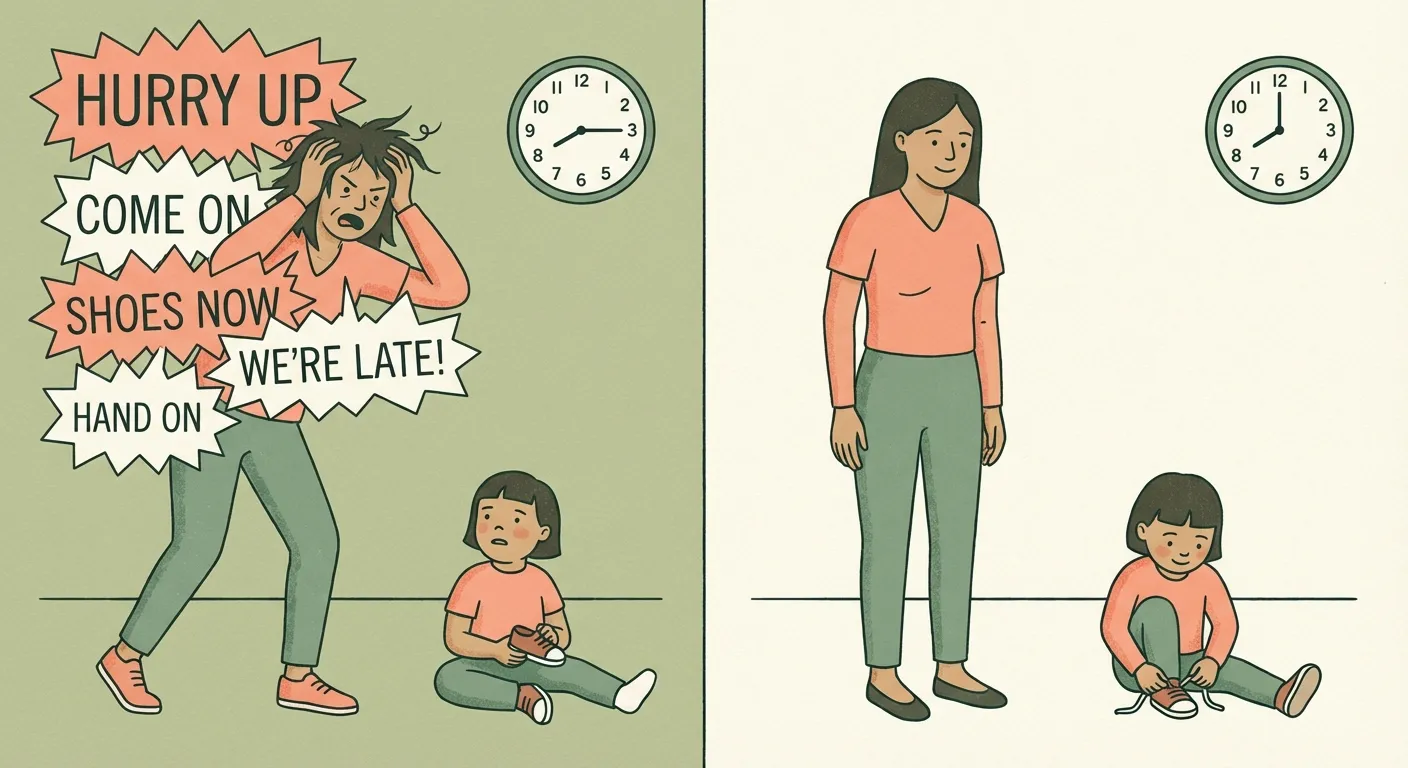
Same morning. Same child. The difference is what comes out of your mouth.
Why Your Reminders Make It Worse
Think about what happens when you remind a child to put on their shoes. They put on their shoes. It works. So you do it again tomorrow. And the day after. And three months later you're still standing in the hallway saying "shoes" and wondering why nothing has changed.
Nothing has changed because the reminder is the system. The child's brain never built a track for "I put on shoes." It built a track for "someone tells me to put on shoes." Remove the reminder and the child stands there, blank-faced, one shoe in hand. Not because they forgot how shoes work. Because the neural pathway doesn't start with them. It starts with you.
| What reminders train | What silence trains |
|---|---|
| Wait for a prompt before acting | Generate your own momentum |
| The parent owns the task | The child owns the task |
| Gets louder over time (nagging spiral) | Gets quieter over time (self-correction) |
| Brain track: "wait for signal" | Brain track: "begin" |
Mason nailed this over a century ago. Repeated reminders don't assist the child's will -- they replace it. The child learns to outsource the starting signal to you. Then you resent being the starting signal. Then you yell. Then you feel guilty. Repeat daily for years.
One talk. Then silence.
Your face and your presence do the rest.
The One Conversation
The protocol starts with exactly one serious talk. Not a lecture. Not a threat. A genuine, sit-down conversation where you tell the child what you've noticed, how it affects both of you, and that you believe they can change. You mean every word.
Pick a calm moment. Not during a morning rush. Not after a blowup. Sit at their level. Be direct and warm.
That's it. After this conversation, the word "dawdling" doesn't leave your mouth for four weeks. No "remember what we talked about." No loaded sighs. No eyebrow raises that clearly mean you're doing it again. The talk happens once because repeating it teaches the child that words are the intervention. They learn to wait for the speech instead of building their own engine.
What Replaces Words
If you can't talk, what do you do? Two things. Both are harder than talking.
Your face
Mason calls it the "hopeful, expectant eye." For four weeks, you watch the child with visible confidence that they're going to do this. Not anxious hovering. Not the tight-lipped face that says I'm watching you. Genuine expectation. The look that communicates, without a syllable: I see you. I believe you. Keep going.
This is difficult. Your natural expression after watching a child stare at a wall for three minutes while holding a sock is not hopeful. You have to override your own brain track -- the one that fires "this is hopeless" -- and hold an expression of calm confidence. You're rewiring two brains at once: theirs and yours.
Your hands
When the child drifts (and they will, constantly at first), you redirect with the lightest possible physical cue. The key word is lightest.
Why so light? Because the lighter the intervention, the more of the work the child's brain does. A shout moves the child, but it fires the neural track for "someone else is running this." A gentle touch moves the child while keeping the track for "I am acting" alive. The child's own brain does the firing. That's what builds the new groove.
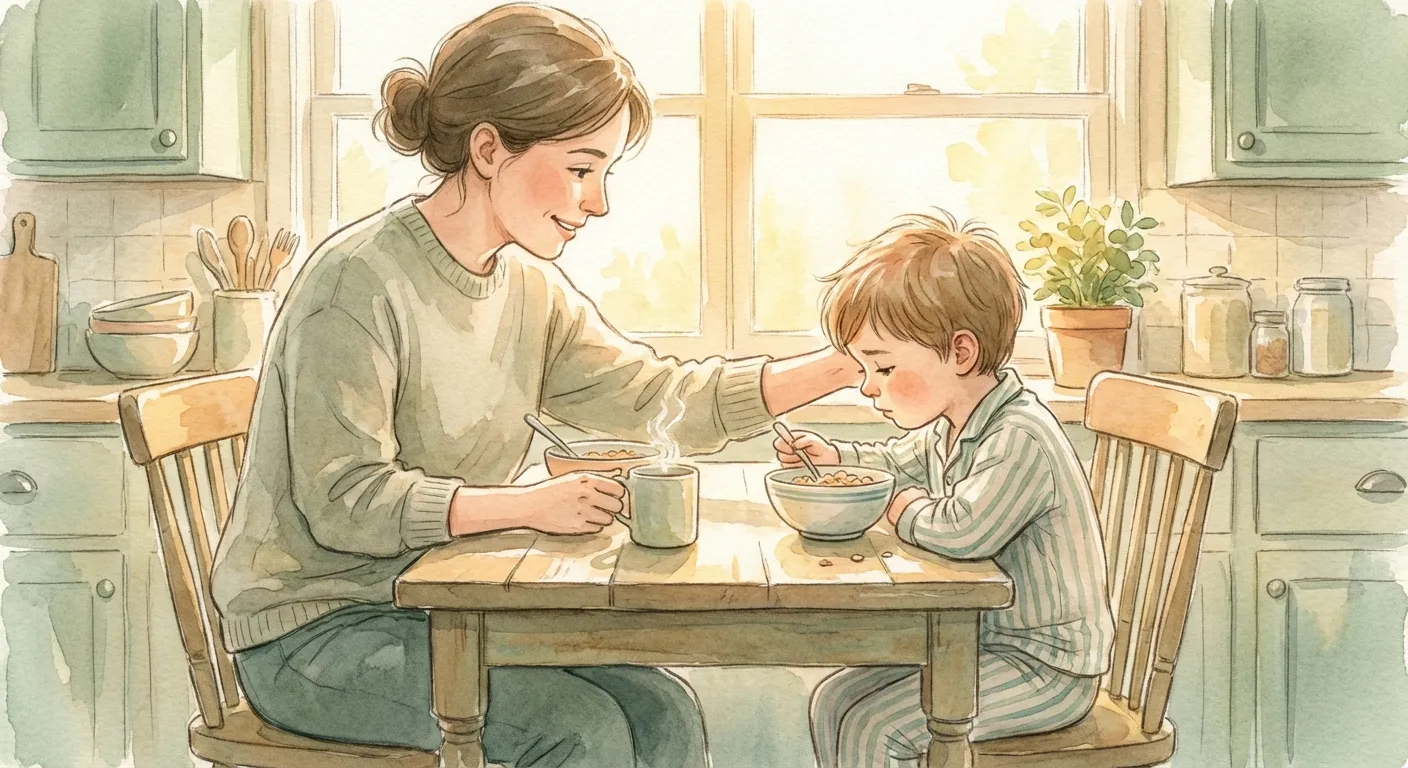
The lighter the touch, the more the child's brain does the work.
The Part Where You'll Want to Quit
Mason identifies a specific moment when the protocol fails. It's not week one, when everything is hard and you know it. It's week two or three, when things are working.
The child is faster. Mornings are calmer. You think: we've turned the corner. I can ease up. One slow morning won't hurt.
The new habit isn't stable yet. It just looks stable because you've been ensuring it fires every single day. The moment you stop ensuring, the old track reactivates. One morning of unchecked drifting tears up the new growth and reopens the groove. The danger isn't the child relapsing. It's you.
This is why she compares it to nursing through measles. You don't take a day off from measles because the fever dropped. You stay the course until the illness is actually gone. Four weeks. No off days. Not on weekends. Not when you're exhausted. Not when the dawdling seems minor enough to ignore.
How You Know It's Working
The new track builds silently. But Mason describes a clear sequence if you know what to look for.
Pauses shorten. The child still drifts, but the gap between drifting and responding to your cue shrinks. Where it took three cues, it takes one.
Redirections drop. You use fewer touches, fewer glances. The child catches themselves mid-drift -- not from trying harder, but because the new track is starting to fire on its own.
Self-correction appears. The child starts a task, begins to drift, and pulls themselves back with no cue from you. The new track is now strong enough to compete.
Independence. You can ask: "Think you can get ready in five minutes without me?" And they say: "I'll try." The will has been strengthened.
The Only Reward That Sticks
When the child finishes quickly, the time they saved belongs to them. Not as a prize you give. As a fact of physics.
| Don't say | Say instead |
|---|---|
| "Great job getting ready so fast!" | "You have fifteen minutes. They're yours." |
| "See how much better today was?" | (Nothing. Smile.) |
| "I'm so proud of you!" | Let the free time speak. |
No praise. No commentary. The leisure speaks for itself. A sticker chart builds the track "act fast, get sticker" -- remove the sticker and the motivation vanishes. But "act fast, get free time" is self-sustaining. The reward is built into the behavior. It can't be taken away because the child produces it through their own action.
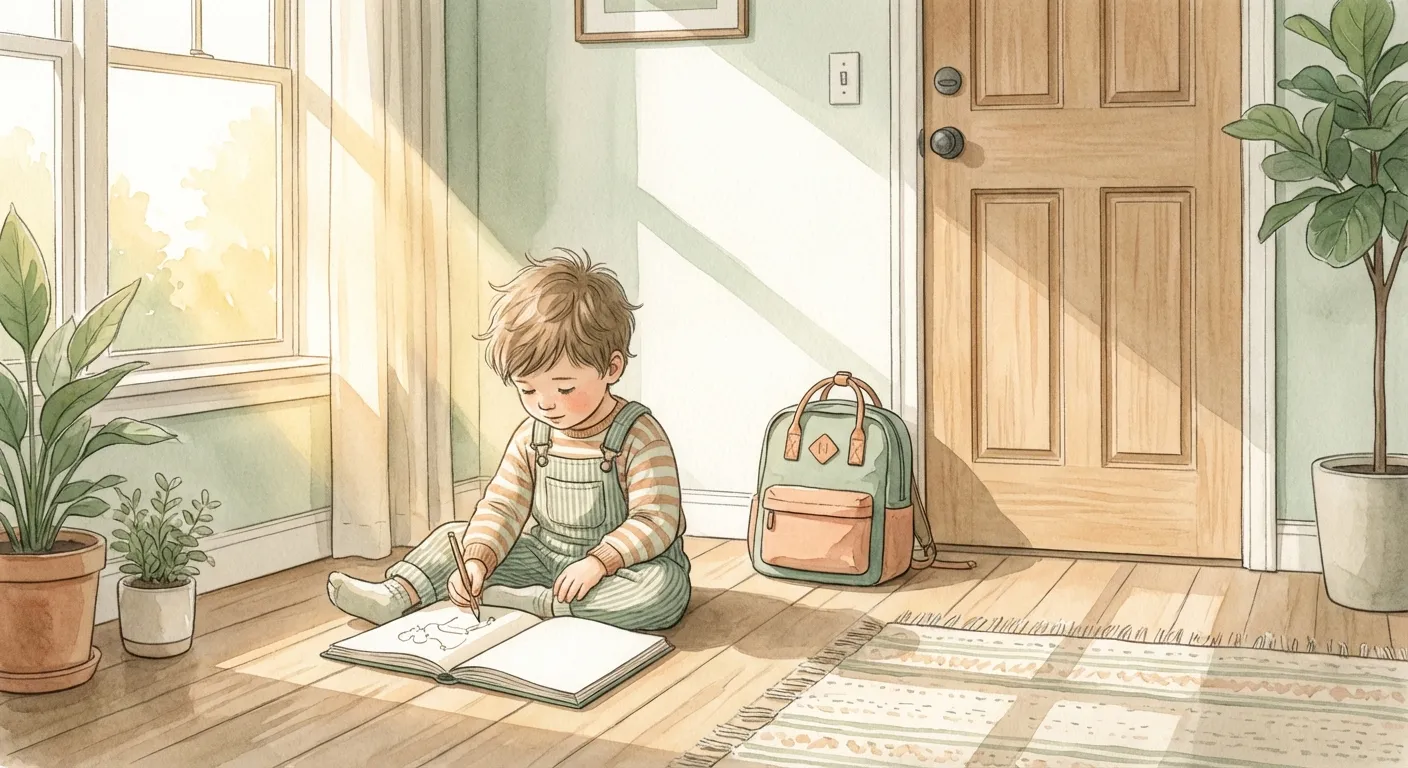
The reward for being fast isn't praise. It's time that belongs entirely to them.
Why This Works When Nothing Else Has
Every other approach attacks the symptom. Timers attack the symptom. Consequences attack the symptom. Sticker charts attack the symptom. Mason attacks the track.
Her model: dawdling is a physical groove in the brain, deepened by repetition. You can't lecture a groove away. You can't punish it away. You can't bribe it away. You can only overwrite it -- by laying down a new groove through weeks of unbroken repetition, and completely starving the old one of use.
The protocol's components aren't negotiable. One talk, then silence. A hopeful face, not an anxious one. The lightest touch. Zero lapses. Four weeks. They're not tips. They're conditions -- all of them must be present simultaneously for the biology to work.
One honest conversation. Then four weeks of silence, presence, and the lightest possible touch. No reminders. No praise. No days off. The groove that built the problem is the same groove that fixes it.