
She Borrowed Your Calm
The moment your toddler gives back what you gave her — and why patience is the most powerful parenting move there is
You can't discipline a skill into a brain that hasn't built it yet.
- Kids raised this way regulate themselves when you're not in the room, use words instead of fists, and actually want to be the kind of person who stays calm.
- The shift: replace "she's being difficult" with "she doesn't have this skill yet" — then match your expectations to what's actually possible.
Her zipper is stuck. She's three. She yanks it, yanks it again, then her face crumples and the screaming starts.
You kneel down. You don't fix it. You just say: "That zipper is tricky, huh?"
Six months later, same zipper, same jacket. She tugs. It sticks. She grunts, pauses, and whispers to herself: "It's tricky." Then she gets it.
She borrowed your calm. She took the exact words you used and made them hers. That is how self-regulation actually develops — not through discipline, not through consequences, not through lectures. Through borrowing.
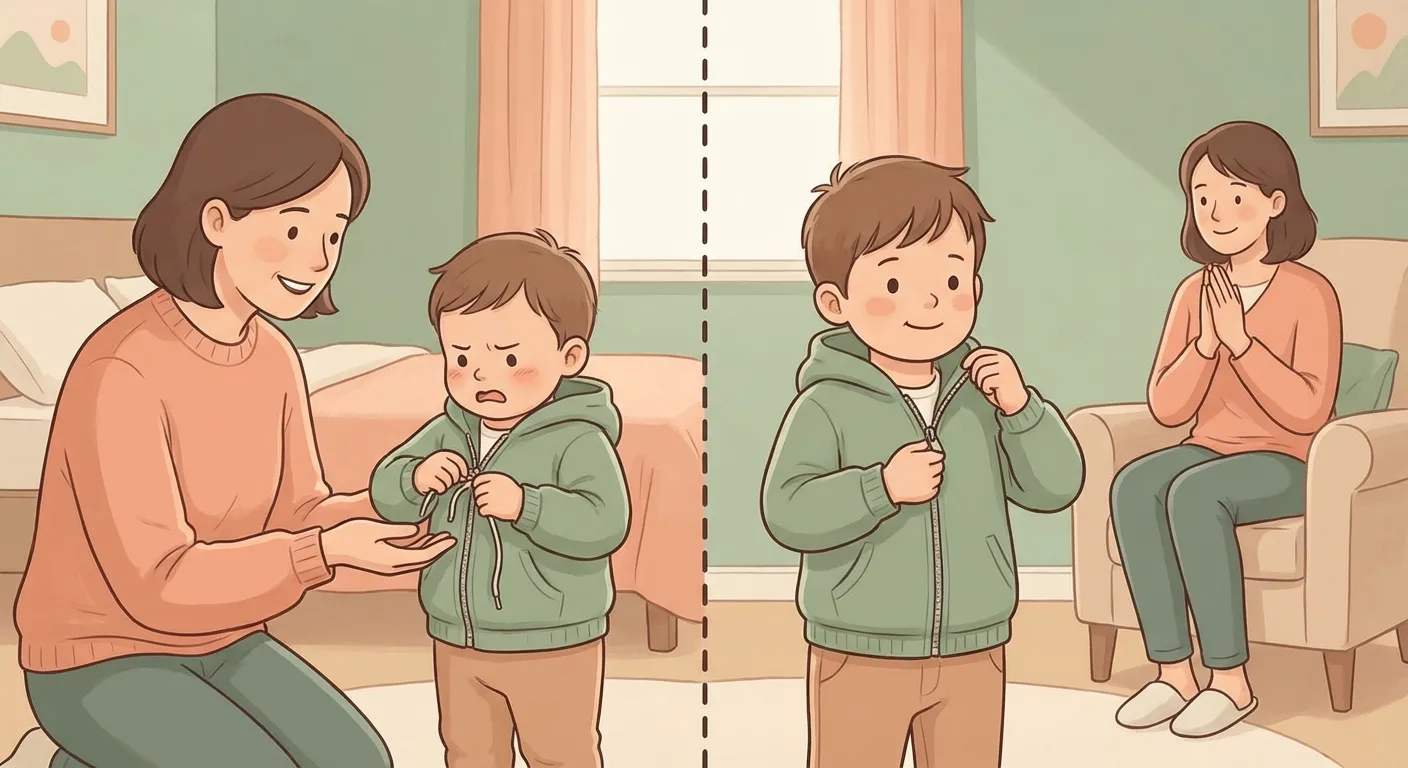
The zipper moment: she took your calm and made it hers
You can't discipline a skill into existence. You can only model it until your child's brain is ready to pick it up.
Why Discipline Before Readiness Backfires
The part of the brain that handles impulse control — the prefrontal cortex — develops on a biological schedule. Major growth at 3-4. Another surge at 6-7. Full maturity? Not until the mid-twenties.
Expecting a two-year-old to control her emotions is like expecting her to read before she can recognize letters. The hardware isn't installed yet.

Self-regulation builds block by block — each age adds new capacity
When you punish a child for something her brain can't do yet, you don't teach self-control. You teach fear. And fear-based compliance evaporates the moment you leave the room.
One Reframe That Changes Everything
| Instead of thinking... | Try thinking... |
|---|---|
| "She's being difficult" | "She doesn't have this skill yet" |
| "He knows better" | "He knows the rule, but can't execute it under pressure" |
| "She needs consequences" | "She needs modeling and time" |
| "I'm being too soft" | "I'm matching my expectations to what's possible right now" |
This single shift — from bad behavior to missing skill — transforms your response from punishment to patience. And patience, it turns out, is where the real kung fu lives.
The Playbook by Age
Comfort freely
Soothe every cry. Don't scold. She genuinely cannot do better yet. Teaching self-control at this stage is like teaching algebra to a kid who can't count.
Plant seeds
During calm moments, name future capabilities: "Tomorrow I bet you'll be so brave at drop-off." Offer alternatives during upsets. Absorb protests with warmth.
Mirror growth
She notices how others respond now. Name her wins: "You stayed calm even though that was hard — did you notice?" Let her start identifying with composure.
Watch it click
After years of modeling, gentle cueing, and patience, she manages herself — not because you told her to, but because she wants to be the kind of person who does.
Scripts for the Hard Moments
Don't explain. Don't lecture. Just be present. The lesson comes later, when the brain is back online.
Name the growth. Let her feel it. This is how identity shifts.
At this age she can start to answer. Give her the chance.
Model the exact regulation you're trying to grow in her. She's watching.
Your five-year-old is at a birthday party. Another kid grabs her toy. She opens her mouth, stops, takes a breath, and says: "I was using that." No screaming. No hitting. No looking at you for rescue. She handled it because she wanted to handle it — because she identifies with being the kind of person who stays calm. That didn't come from a consequence chart. It came from years of watching you stay calm when it was hard.
How to Spot the Wiring Coming Online
Watch for these glimmers
Every one of those moments is a sign. Name them. "You waited! That was hard and you did it." Each time you name it, you strengthen it.
This is not permissiveness
Waiting for readiness does not mean having no standards. This approach holds very high expectations for emotional composure. The difference is when those expectations kick in. Deep patience early. Gradually firm as capacity grows. The result: a child who regulates herself from the inside — not because she's afraid of what happens if she doesn't.
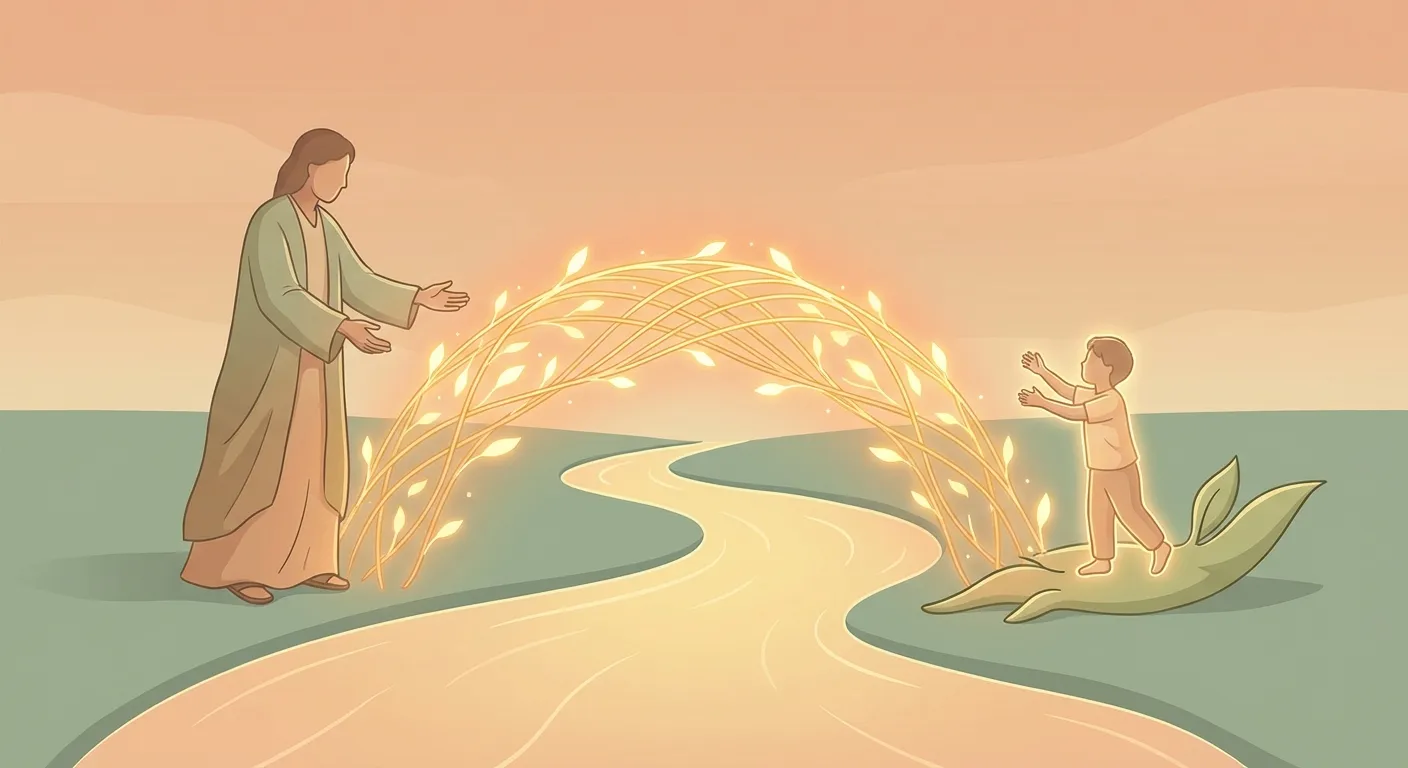
Your patience is the bridge until her own capacity arrives
Your child is not giving you a hard time.
She's having a hard time — and doesn't yet have the tools to do better.
Your patience is the bridge until her own capacity arrives.