
The 9-Question Quiz That Predicts Your Child's Resilience
Researchers at Emory University found one thing that reliably predicts how well kids handle adversity. It takes five minutes at dinner to build it.
The shape of a family story matters more than the content.
- Kids raised on oscillating narratives — good times, hard times, recovery — develop a built-in framework for surviving their own struggles.
- The shift: stop sanitizing family history. "We had hard times and we made it" is the sentence that builds resilience.
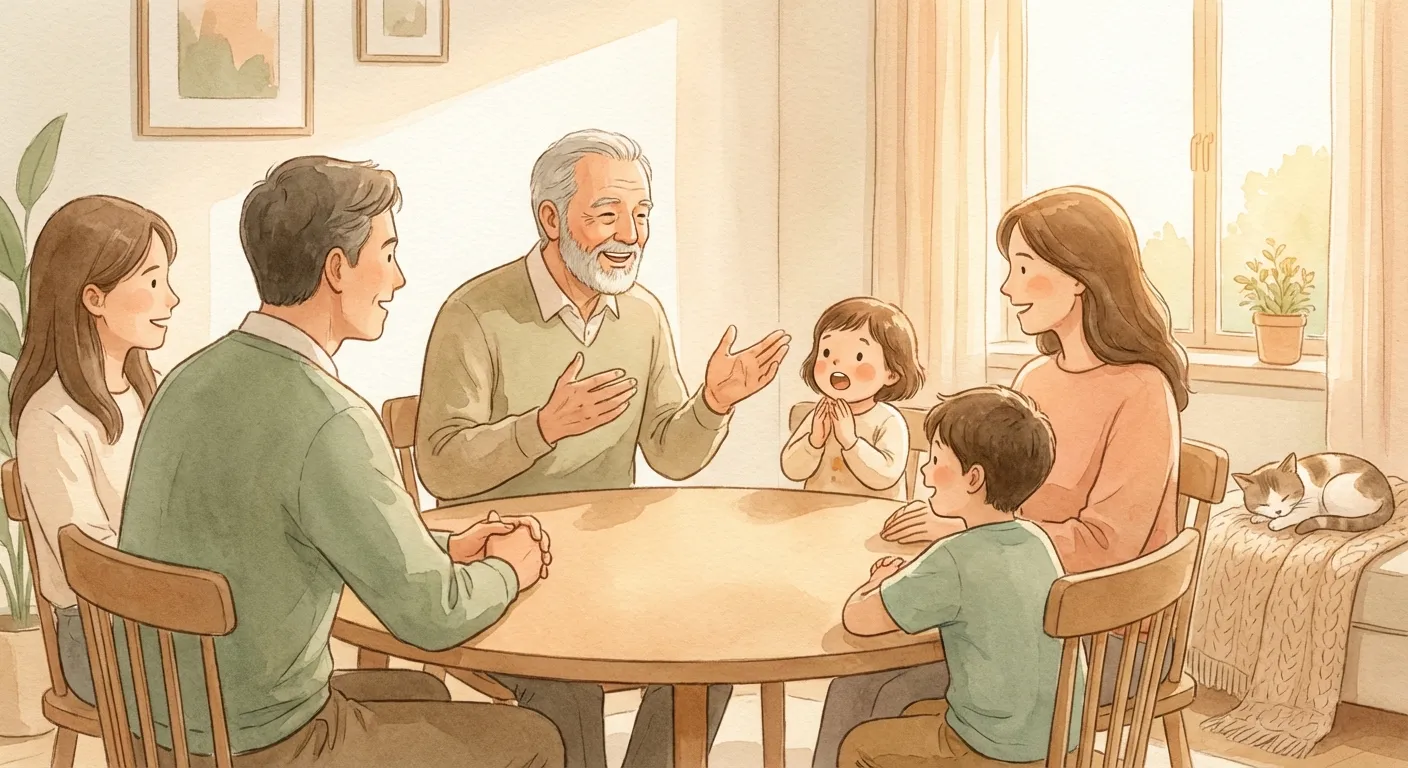
Here is a strange question: Can your child tell you how their grandparents met?
It sounds trivial. But psychologists Marshall Duke and Robyn Fivush at Emory University spent years studying what makes some children bounce back from hardship while others crumble. They tested self-esteem scales, temperament profiles, family income, school quality. Then they tried something almost absurdly simple: they asked kids questions about their family history.
The results were not close. Children who could answer questions about where their grandparents grew up, what challenges their parents faced, and how their family weathered hard times showed significantly higher self-esteem, stronger sense of identity, and greater resilience under stress.
Not therapy. Not enrichment programs. Family stories, told casually over dinner.
Take the Quiz
These nine questions come from the work of Duke and Fivush at Emory University. Try them with your child tonight -- no prep, no pressure. Just see how many they can answer.
The Family History Quiz
The score itself is less important than what happens during the conversation. The act of telling and hearing these stories is the thing that builds resilience. The quiz is just the door in.
Why This Works: The Oscillating Narrative
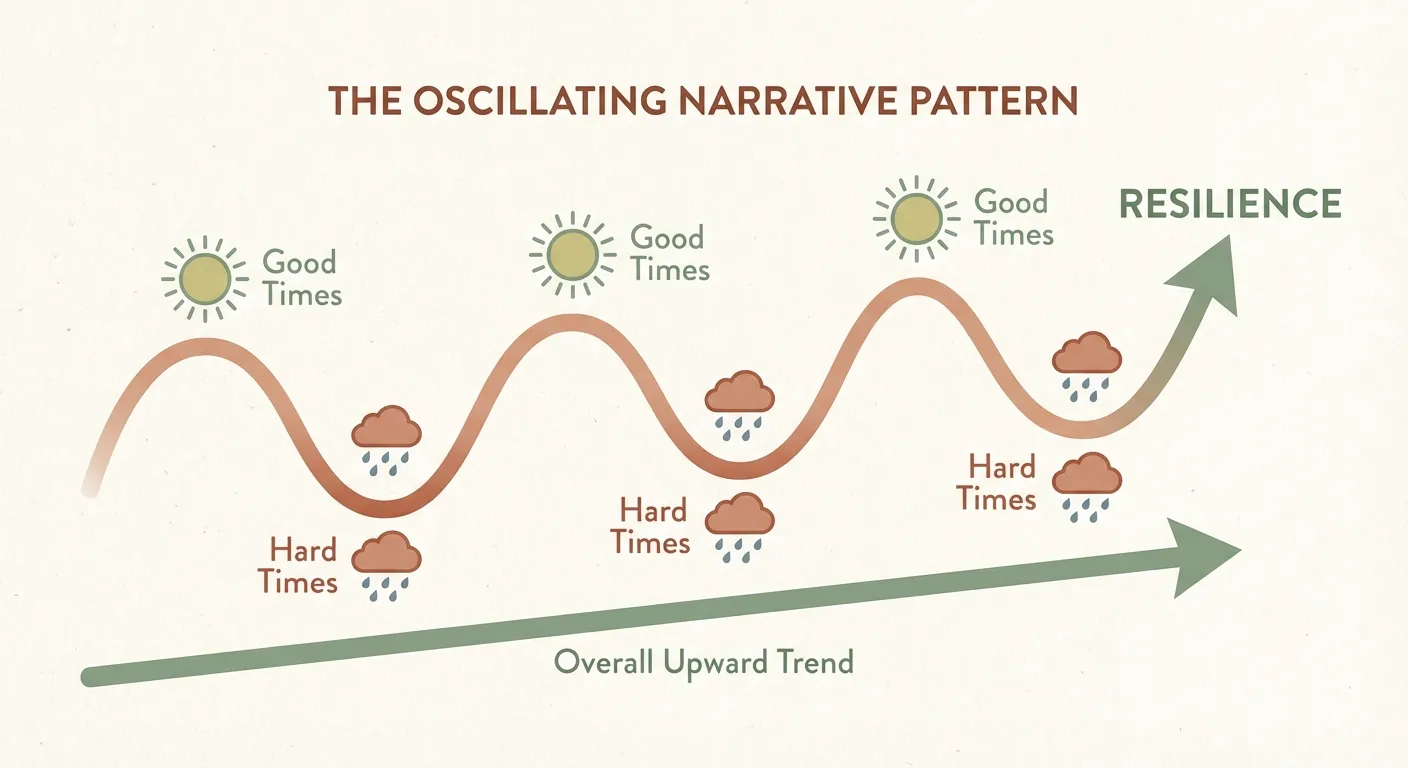
Duke and Fivush discovered something specific about which stories matter most. Not the triumphant ones. Not the tragic ones. The ones that oscillate.
"Things were good, then something hard happened, and we pulled through together."
This particular shape -- good times, then difficulty, then recovery -- teaches children three things at once: that struggle is normal, that it is survivable, and that they come from people who survive it. No pep talk delivers that. The story does the work.
How to Tell Stories That Stick
Most parents instinctively edit the hard parts out. "Grandma had a great life" is easier than explaining the year she spent rebuilding after the fire. But the edited version is the one that does not build resilience.
Sanitized Version
"Grandpa always worked hard and did well."
"We moved here because it was a nice town."
"Everything worked out fine."
Oscillating Version
"Grandpa lost his first business. He was scared. Then he started again and built something even better."
"We moved because Dad lost his job. It was rough. But we found this place and made it ours."
"It was really hard for a while. And then we figured it out."
The second column is not darker. It is more honest. And honesty is what gives children a framework for their own struggles: This is hard, but hard things are part of our story, and we get through them.
Build a 5-Minute Storytelling Habit
Pick One Recurring Moment
Sunday dinner, the drive to practice, bedtime. Consistency matters more than length. Five minutes is plenty.
Start with One Question from the Quiz
Do not dump nine stories at once. Pick one question, tell your piece, then let the conversation breathe.
Include the Struggle
Every good family story has a moment where things got hard. That is the part your child needs to hear. Not to scare them -- to show them what their people are made of.
Call the Elders
Grandparents, great-aunts, family friends -- they carry stories nobody else knows. Record a conversation. These become priceless.
Let Your Child Add Their Chapter
Ask: "What would you add to our family story? What do you think we are really good at?" Their answer tells you what has landed -- and makes them part of the narrative.
Your family story does not need to be dramatic. It does not need to be unusual. It just needs to be told -- with the hard parts left in -- so your child knows exactly who they come from, and what that means about who they can become.