
Your Kid Doesn't Want to Be Entertained. They Want to Be Useful.
The identity shift that turns restless kids into calm, capable ones.
The exhausting schedule of kid activities isn't making your child happier. It's making them needier.
- Crew kids handle boredom without panic, carry bags at the store without being asked, and say 'Can I help with dinner?' like they mean it.
- The move: aim for a 3:1 ratio -- three real-life-together activities for every one kid-centered outing.
A three-year-old tears lettuce into a salad bowl. It takes her four times longer than it would take you. The pieces are uneven. Some fall on the floor. She doesn't care. She is locked in -- focused, careful, proud.
That look on her face? That's not play. That's purpose.
And it's the single most underused tool in modern parenting.
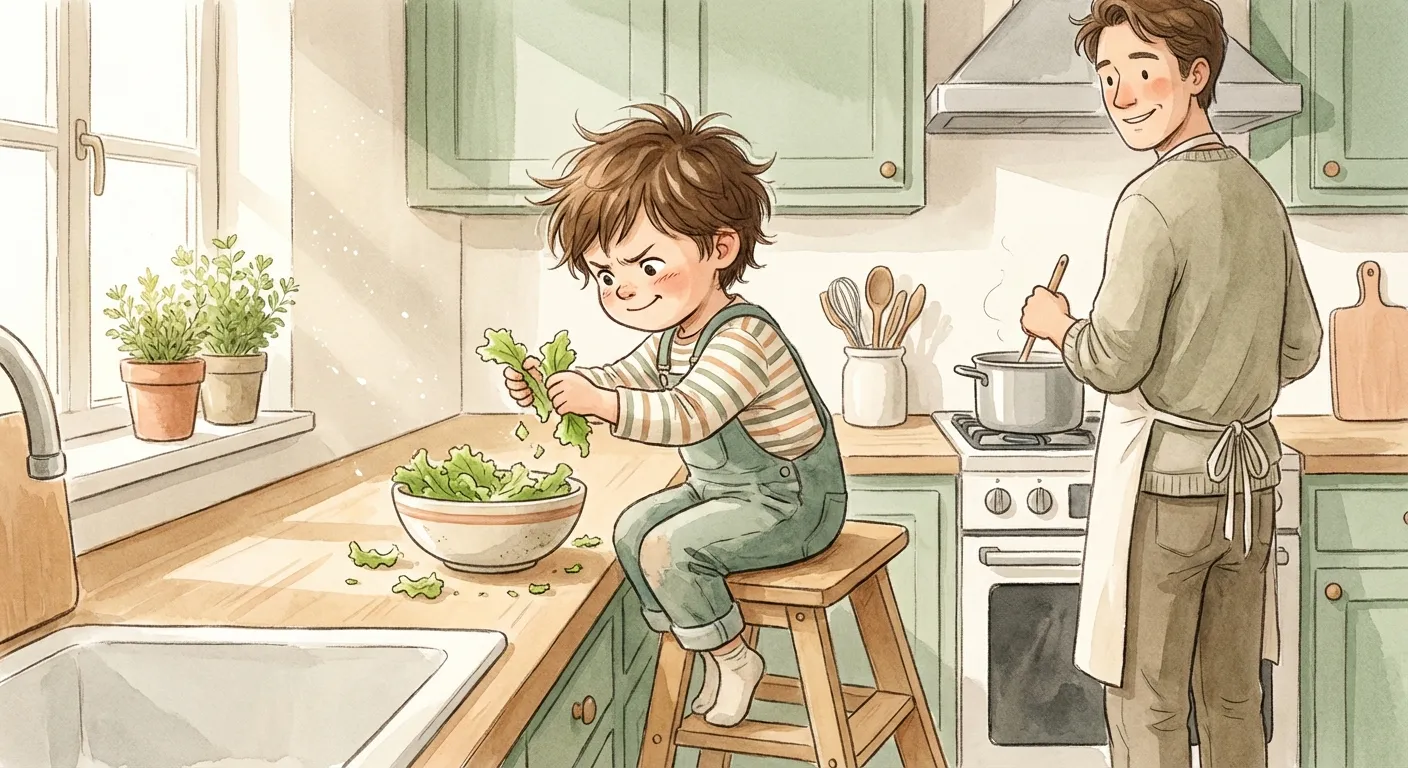
The look on a child's face when their work actually matters.
The Apprentice Effect
Anthropologists studying families across cultures -- from rural Mexico to the Canadian Arctic -- discovered something that upends how most Western parents spend their time. In most of the world, children don't live in a separate "kid zone." They grow up inside adult life. They cook, clean, run errands, and socialize alongside adults from the time they can walk.
Those kids consistently show higher cooperation, more self-reliance, and greater emotional stability.
Not because their parents found better enrichment programs. Because their parents gave them something more powerful: a real role.
This isn't a behavior management trick. It's an identity change. A child who thinks "I'm here to be entertained" acts one way. A child who thinks "I'm useful around here" acts entirely differently.
Two Kids, Two Stories
The Audience Kid
Weekends are bounce houses, theme parks, structured activities
Parent schedules, drives, hovers, pays
Child's inner script: "My comfort is everyone's job"
Meltdown on the way home -- every time
"I'm bored" = parent's problem to solve
The Crew Kid
Weekends are errands, cooking, yard work, real life -- together
Parent works alongside, child has a role
Child's inner script: "I belong here. I'm useful."
Steady energy, no crash
"I'm bored" = their own doorway to create
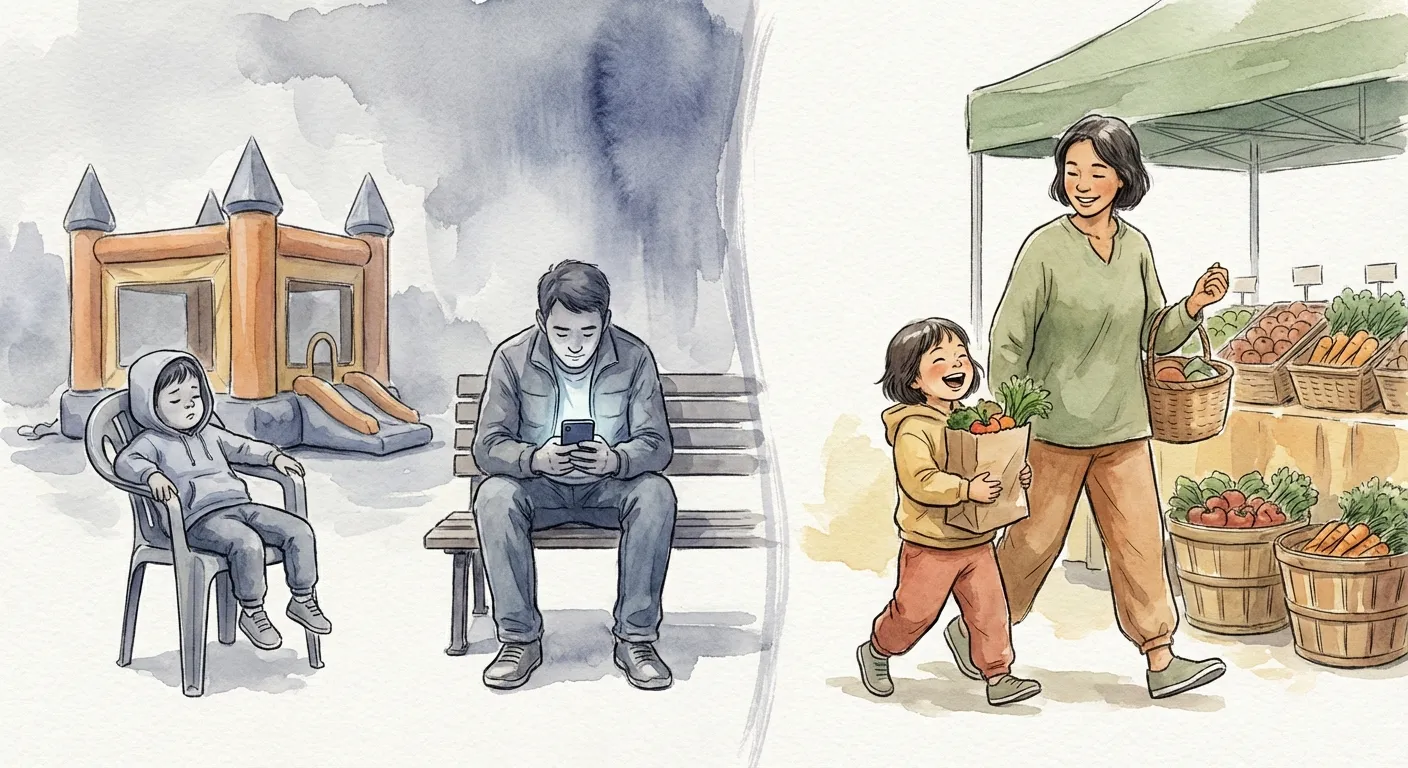
Same kid. Different role. Different behavior.
How to Build a Crew Member
You don't need a system. You need six words: bring them into your real life.
Hand them a vegetable peeler
Or let them tear lettuce, stir the pot, measure ingredients. Speed is irrelevant.
Give them a rag and a bolt to turn
They won't fix anything. They'll learn that fixing things is what people do.
Bring them. All of it.
Hardware store, dry cleaner, grocery run. The world through their eyes is already fascinating.
They open envelopes, stick stamps
A three-year-old with a stack of junk mail is a three-year-old with a job.
Small watering can, weed bucket
They water. You weed. Nobody needs to orchestrate anything.
They hold the leash (with backup)
Responsibility is felt in the hands first.
Notice: it's not "Let me set up a special activity for you." It's "I'm doing something. Come be part of it." That distinction matters. The first is entertainment. The second is belonging.
The One-Question Filter
Before saying yes to any weekend activity, ask yourself one thing:
| Passes | Doesn't Pass |
|---|---|
| Farmer's market | Bounce house |
| Hiking a trail you'd hike anyway | Theme park where you're a wallet |
| Cooking a real meal together | Indoor play zone |
| Visiting friends (adults enjoy it too) | Anything where the parent just watches |
| Working in the yard | Fourth enrichment class of the week |
Kid-focused outings aren't banned. They just become the occasional treat instead of the backbone of your week. Aim for a 3:1 ratio -- three real-life-together activities for every one kid-centered outing.
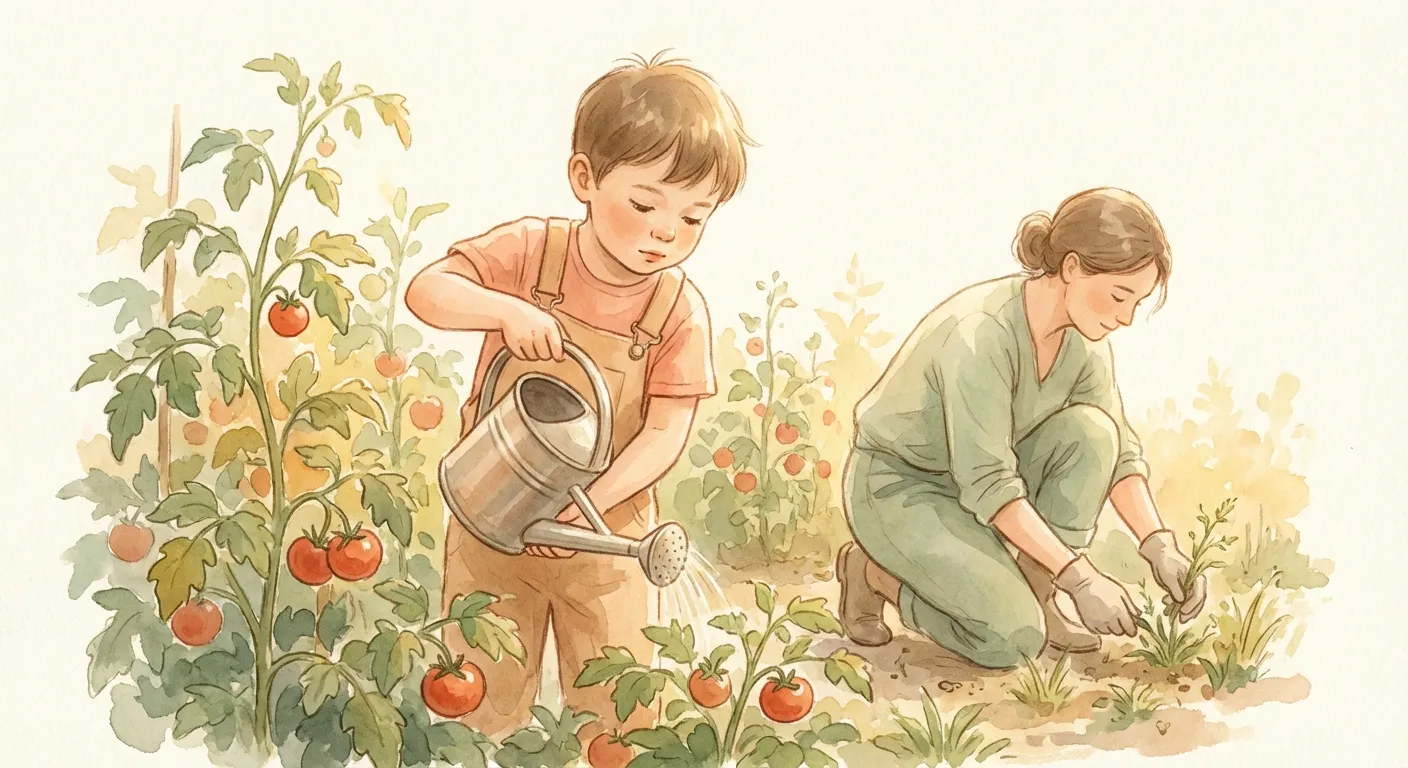
Parallel work. No one directing. Everyone connected.
The Parallel Presence Move
There's a second gear to this: being near your child without being "on."
Read a book at the park while they figure out the playground. Work in the garden while they dig in the dirt nearby. Fold laundry in the living room while they build something on the floor.
No directing. No narrating. No orchestrating. Just shared space.
Children who experience this regularly become dramatically better at self-directed play. They stop needing you to be the source of all stimulation, because they learn that being near someone who's calm and occupied is its own kind of good.
When a child is the center of the universe -- when adults orbit around their preferences, schedule around their activities, rush to fill every silence -- the child learns a distorted lesson: my comfort is everyone's job.
That sounds generous. It actually makes children more anxious. The world feels fragile when you're the only sun in the sky.
When a child is part of a team -- contributing, watching, sometimes just tagging along -- they learn something more durable: I belong here. I'm useful. This family works because we all pitch in. That's where calm comes from.
What the Transition Looks Like
The Typical Arc
Watch for the comedown pattern
After heavily stimulating, child-centered outings (theme park, all-day birthday party), your child may be noticeably harder to manage for an hour or two. The more stimulation, the steeper the crash.
If you see that pattern consistently, it's your signal to shift the ratio further toward everyday togetherness and fewer high-stimulation events.
Making It Permanent
One more move that makes the whole thing stick: shift your household work to waking hours. Cook, clean, organize, and run errands while the kids are up and can participate. Then protect nap time and post-bedtime as your actual rest. You get recharged. They get real inclusion. Everyone wins.
The most connected families aren't doing the most activities together. They're living their actual life together -- and every member of the crew knows it.