
The One-Second Fix
The difference between easy kids and hard kids often comes down to when parents first acted.
- Kids corrected at the first offense stay easy to guide through childhood — they trust parental authority, respond to a look instead of a showdown, and keep their natural sense of right and wrong intact.
- The shift: treat the first misbehavior as the moment that matters most — not the tenth.
What if the behavior problem you've been battling for months could have been solved with a single glance?
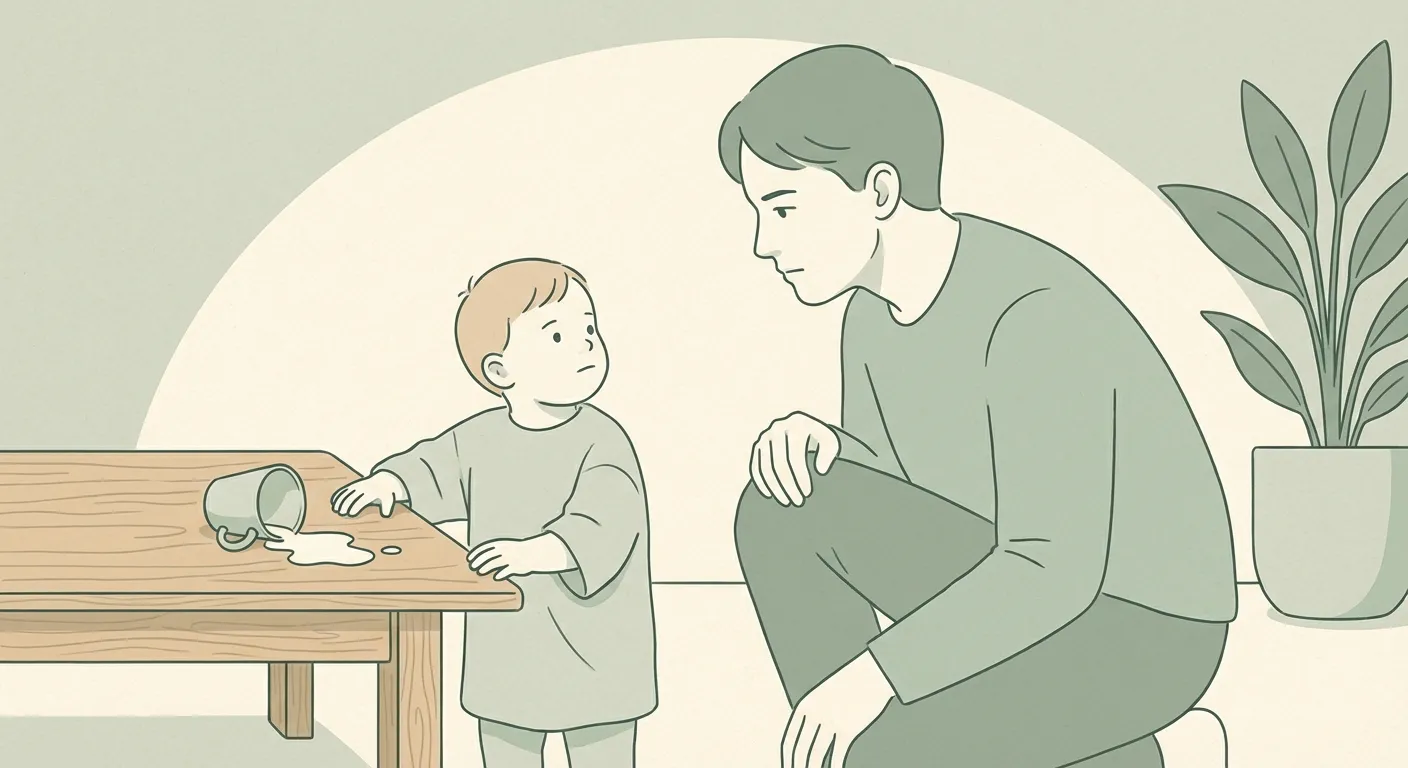
There's a moment every parent recognizes. Your kid does something — grabs food off a sibling's plate, shoves another child, tells a casual lie — and you think: I'll deal with it if it happens again.
Charlotte Mason, a British educator who shaped how generations of parents think about early childhood, had a blunt take on that instinct: you just made the problem ten times harder to fix.
Her argument is shockingly simple. The very first time a child misbehaves, their own conscience is already doing most of the work. They know something's off. All you have to do is confirm it. One look. One brief word. Done.
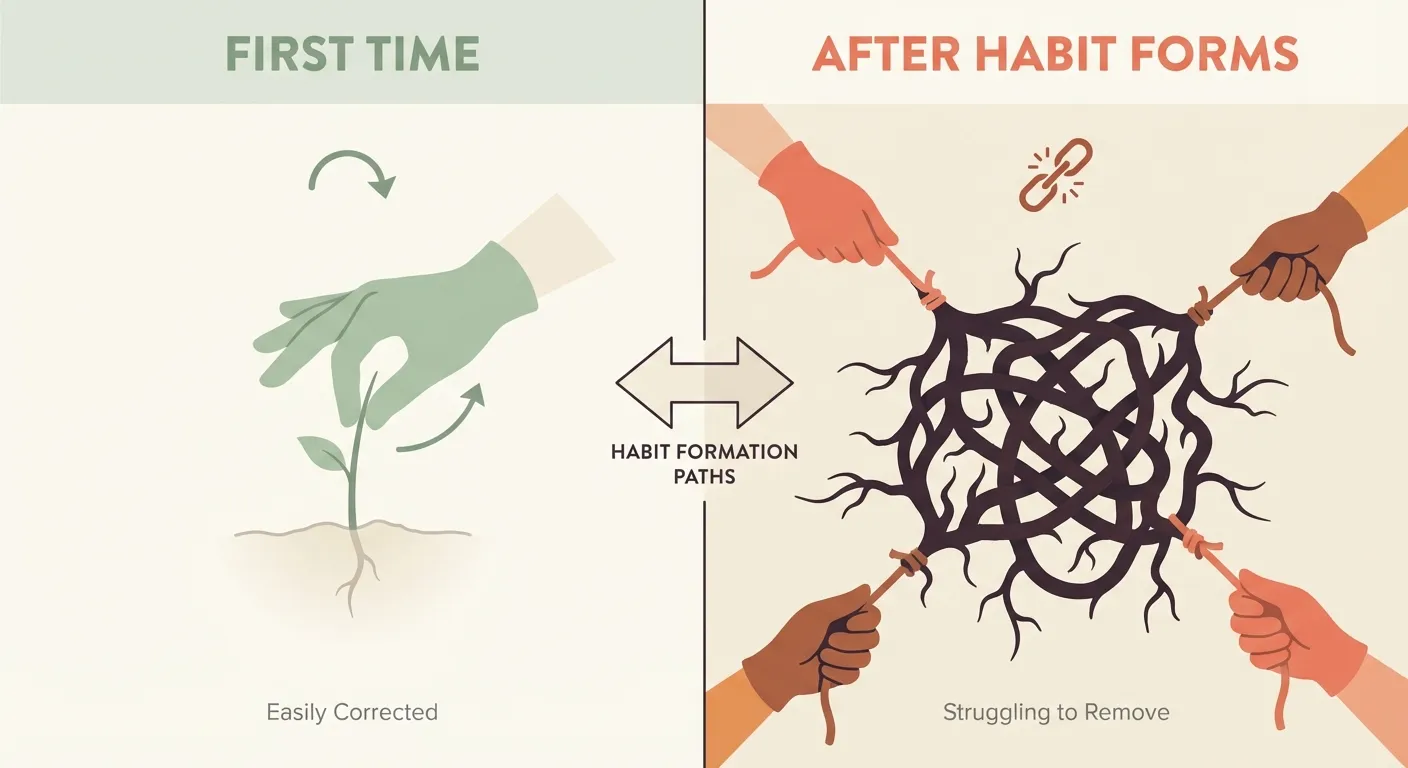
Wait until it becomes a pattern? Now you're fighting biology. The behavior has been physically encoded — neural pathways carved, habit loops locked in. That gentle look won't cut it anymore. You'll need weeks, maybe months, of sustained effort to undo what one second could have prevented.
The Real Cost of "He'll Grow Out of It"
Here's what the math actually looks like:
| Factor | Correct at First Offense | Wait Until Habit Forms |
|---|---|---|
| Effort required | A look or a word | Weeks of consistent redirection |
| Child's resistance | Almost none — conscience is active | High — behavior feels normal to them |
| Emotional cost | Zero friction | Frustration, power struggles, tears |
| Relationship impact | Child trusts your guidance | Child feels you're suddenly unfair |
| Time investment | 1 second | Months |
That last row is the killer. One second versus months. Same behavior. The only difference is when you acted.
The Four Traps That Make You Wait
If early correction is so easy, why don't parents do it? Mason identified the mental traps that keep us passive:
What the Fix Actually Looks Like
This isn't about being strict. It's about being present for two seconds at the right moment. Here's the entire protocol:
See it: Notice the behavior immediately. Don't file it away for later.
Show it: Let your face convey genuine displeasure. Not anger — grief. The message is "that's not who we are," not "you're in trouble."
Stop: That's it. No lecture, no explanation, no lengthy conversation about feelings. The child's own conscience fills in the rest.
The Scripts
Because sometimes "a look" feels too vague, here's what it sounds like in real life:
Notice the pattern: brief, certain, no drama. The confidence in your voice does the heavy lifting. You're not debating whether the behavior is acceptable. You already know, and so does your child.

Why This Works So Well With Young Kids
Mason makes a counterintuitive claim: children's moral sense is actually stronger at younger ages, not weaker. A two-year-old who takes a toy and sees your disappointed face feels the weight of that immediately. They haven't yet learned to rationalize, minimize, or argue back.
That window is a gift. Every time you use it — one look, one word, first offense — you're reinforcing their natural moral compass. Every time you ignore it, that compass gets a little less sensitive.
The kids who seem to have an effortless sense of right and wrong? They aren't born more virtuous. They had parents who caught things early, when correction was still measured in seconds, not months.
The One Rule
When you see it the first time, act the first time. One look. One word. One second. That's the whole strategy — and it's the one that prevents a hundred harder conversations later.