
The 3:30 PM Meltdown Is a Fuel Problem
A child's mood tracks with mealtimes more than most parents realize.
- Kids on steady fuel sit through class without fidgeting, transition between activities without tears, and actually finish homework before dinner.
- The move: three principles — protein-anchor every meal, eat fiber before carbs, move gently after eating.
That after-school explosion? It's not defiance. It's a brain running on empty.
Your kid walks through the door and within minutes it's tears, slammed doors, or a full-volume meltdown over nothing. You've tried reasoning, consequences, deep breaths. None of it sticks because you're solving the wrong problem.
The brain runs almost entirely on glucose. It burns through roughly 20% of your child's entire energy supply — and kids have smaller reserves than adults. So when blood sugar drops, the brain doesn't quietly downshift. It panics. Focus dissolves. Patience evaporates. A minor frustration becomes a five-alarm emotional fire.
The fix isn't a behavioral strategy. It's breakfast.
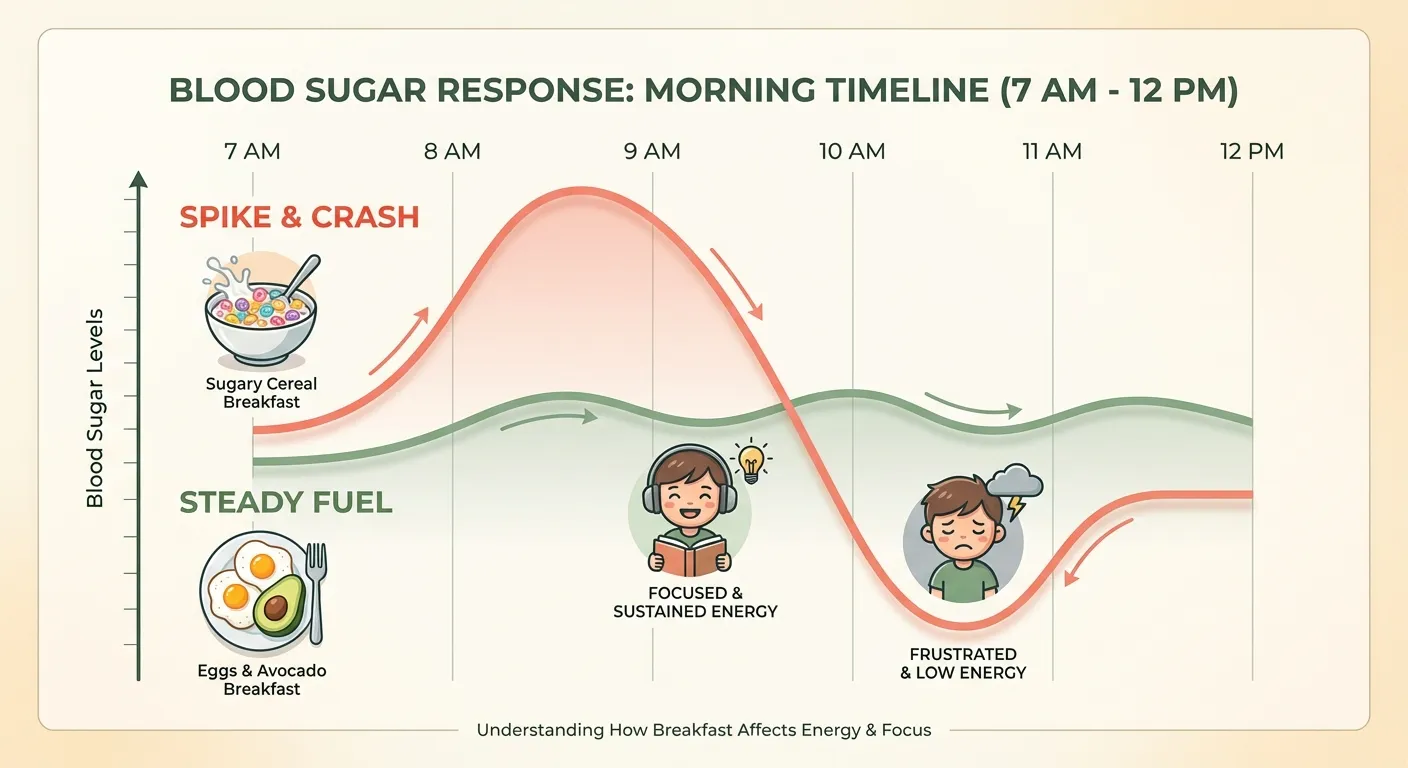
Same kid. Same morning. Different fuel.
The Breakfast Swap That Changes Everything
The single highest-impact change most families make is upgrading breakfast. A bowl of sugary cereal spikes blood sugar within 30 minutes, then crashes it an hour later — right when your child needs to concentrate at school. Protein slows digestion, keeps glucose release gradual, and provides the amino acids growing brains need.
| Spike & Crash | Steady Fuel |
|---|---|
| Sugary cereal with milk | Scrambled eggs with wholemeal toast |
| White toast with jam | Porridge with nuts and nut butter |
| Pastries or muffins | Smoothie with yoghurt, berries, and seeds |
| Fruit juice on its own | Overnight oats with Greek yoghurt |
Same principle applies to snacks. An apple on its own will spike and drop. Pair it with a handful of almonds or a slice of cheese and the energy release smooths right out.
The Order Trick Nobody Talks About
Here's something surprising: the order you eat foods in changes how your body processes them — even if the foods are identical. Starting with fiber and protein before carbohydrates significantly reduces the glucose spike from a meal.
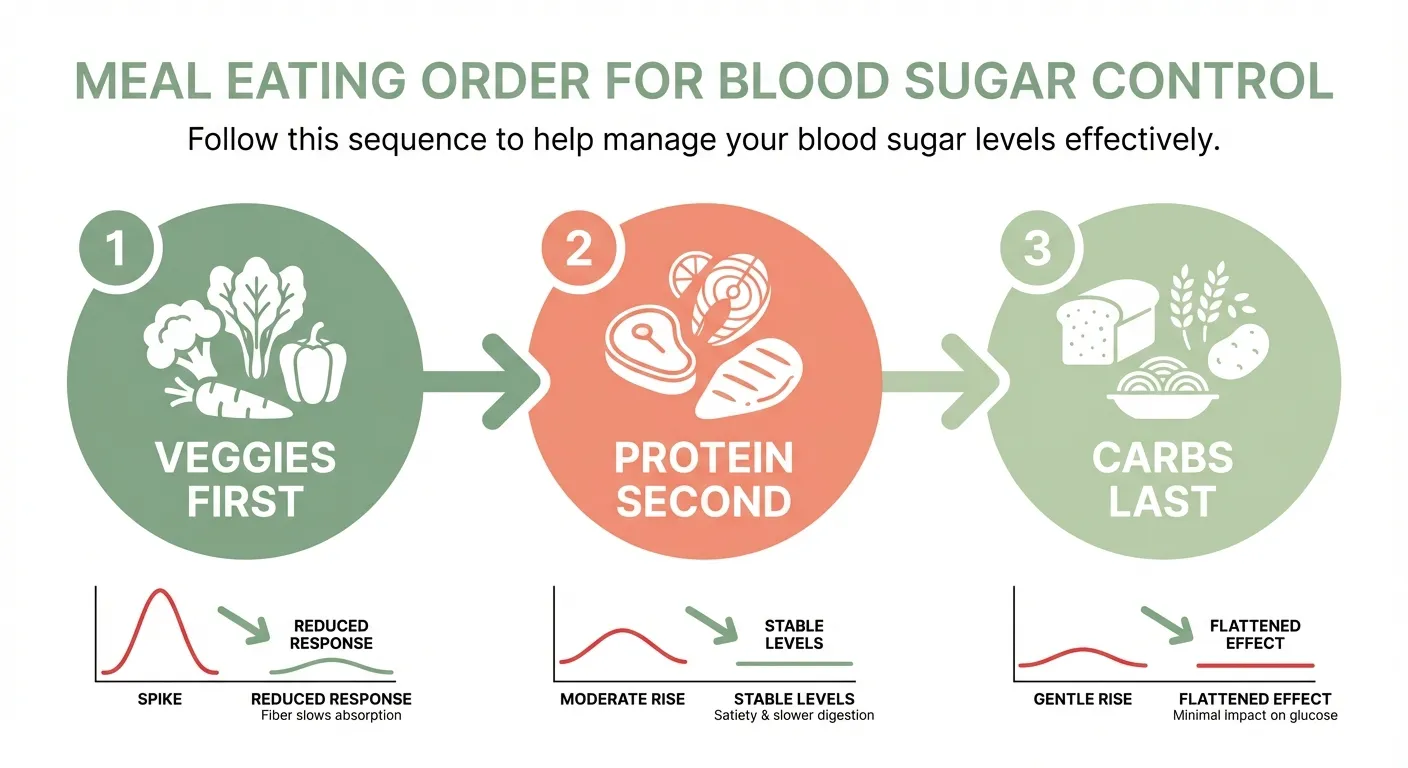
Same meal, different sequence, dramatically different blood sugar response.
Serve a small salad or raw veg while the main course finishes cooking
They eat the fiber first without even thinking about it. By the time the pasta arrives, their body is primed to process it more evenly.
Encourage the protein and vegetables before the bread or rice
No need to make it a rule. Just plate it that way and let the natural eating order do the work.
Dessert after a full meal is metabolically different from biscuits as a snack
Sweet foods after protein and fiber cause a fraction of the glucose spike they would on an empty stomach. You don't need to ban treats — just position them.
The After-School Snack That Kills the Meltdown Window
The gap between lunch and dinner is where most children's energy regulation breaks down. A child arriving home with low blood sugar is neurologically primed for emotional chaos. The fix is absurdly simple: have something protein-rich ready before they walk in the door.
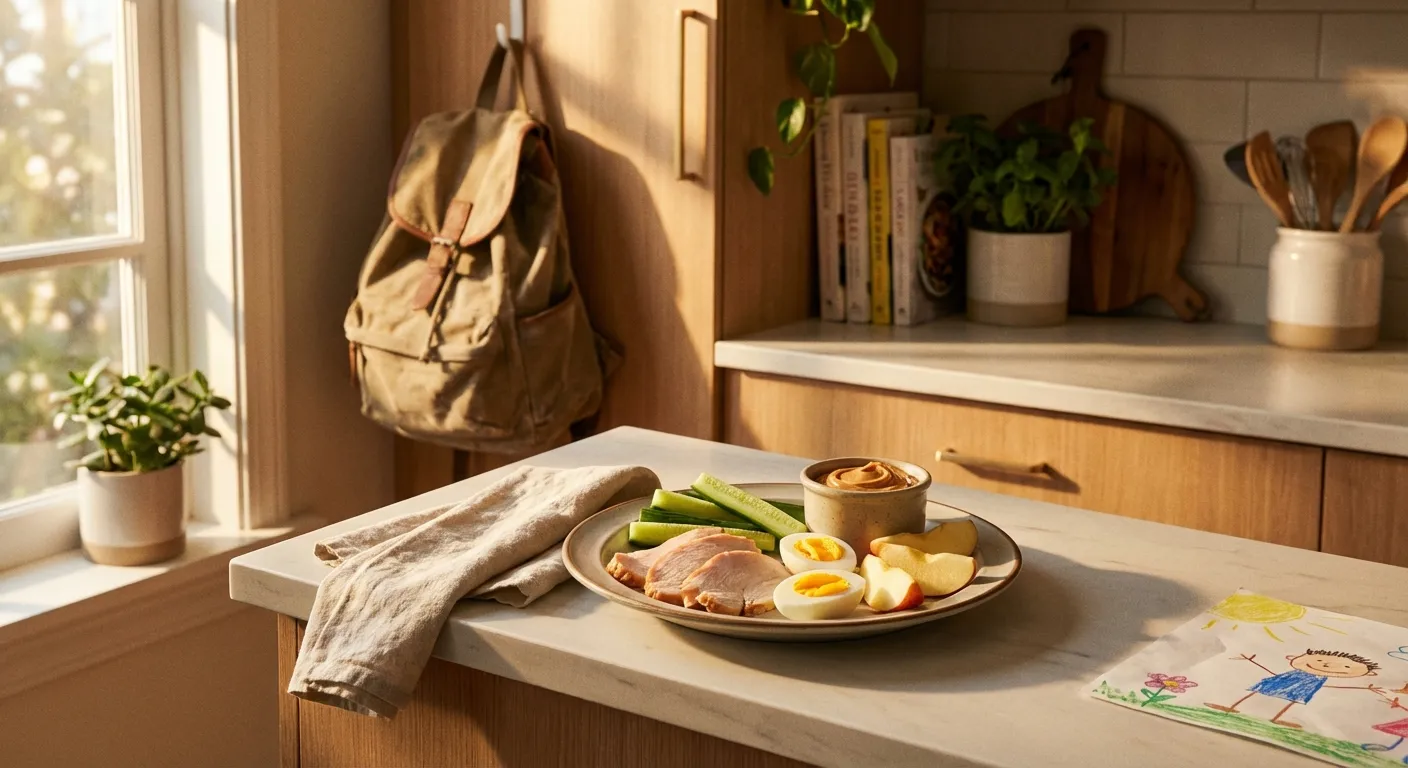
Ready before the backpack hits the floor.
Especially important for neurodivergent kids
Self-regulation is energy-expensive. A child who spends the morning managing sensory input, sitting still, or working harder than peers to follow instructions burns through glucose faster. When blood sugar dips, the systems that were already strained are the first to break. Steady fuel doesn't replace other support — but it gives every other strategy a better foundation.
What a Steady-Fuel Day Looks Like
Eggs any style with wholemeal toast, or porridge with milk, nuts, and nut butter. Protein and slow-release carbs to carry them through the morning.
Oatcakes with cream cheese, or yoghurt with seeds. Something that pairs protein or fat with a carb.
Vegetables or salad first, then the main portion. A wrap with chicken and avocado, bean soup with bread, pasta with meat sauce — lead with fiber.
Ready on the counter before they arrive. A boiled egg, sliced turkey with cucumber, or peanut butter on a rice cake. Protein-rich, zero prep drama.
Veggies and protein first, carbs alongside. Then a short walk, tidying up together, or a family game. Even standing and chatting while clearing plates helps the body process the meal.
Start Tonight
- Prep tomorrow's after-school snack right now. Boil eggs, slice turkey, set out rice cakes and peanut butter. Have it visible on the counter before they walk in.
- Upgrade breakfast in the morning. Pick one protein-rich option your child will actually eat. Eggs, yoghurt with nuts, cheese on toast — whatever works. Make protein the main event.
- Watch the pattern for three days. Pay attention to mood and focus at different times. You'll quickly see which meals are fueling well and which ones are letting them crash.
This isn't a diet. It's not a restriction. It's understanding that your child's brain is an engine, and you get to choose the fuel. Steady the supply and the focus, mood, and self-control follow — often within days, not weeks.
Build it into the routine, not willpower. Batch-prep snack boxes on Sunday. Put the protein option at eye level in the fridge. Make the steady-energy choice the default, and it sustains itself.