
The Kids Who Build Language in Secret
They're not missing a milestone. They're constructing something bigger than a first word.
A child who understands everything but says nothing is building, not broken.
- Kids who fit the pattern — fierce independence, deep focus, music obsession, spatial intelligence — often skip single words and arrive at language fully assembled.
- The shift: separate comprehension from production. A child who follows instructions nonverbally is in a completely different situation than a child who doesn't understand.
Here's something researchers noticed that most milestone charts will never tell you: some children skip single words entirely. They go quiet for months—sometimes years—and then one afternoon they speak in a full sentence.
Not "mama." Not "ball." Something more like: "I don't want the blue cup, I want the green one."
As if the whole system was already built. They were just waiting to turn it on.
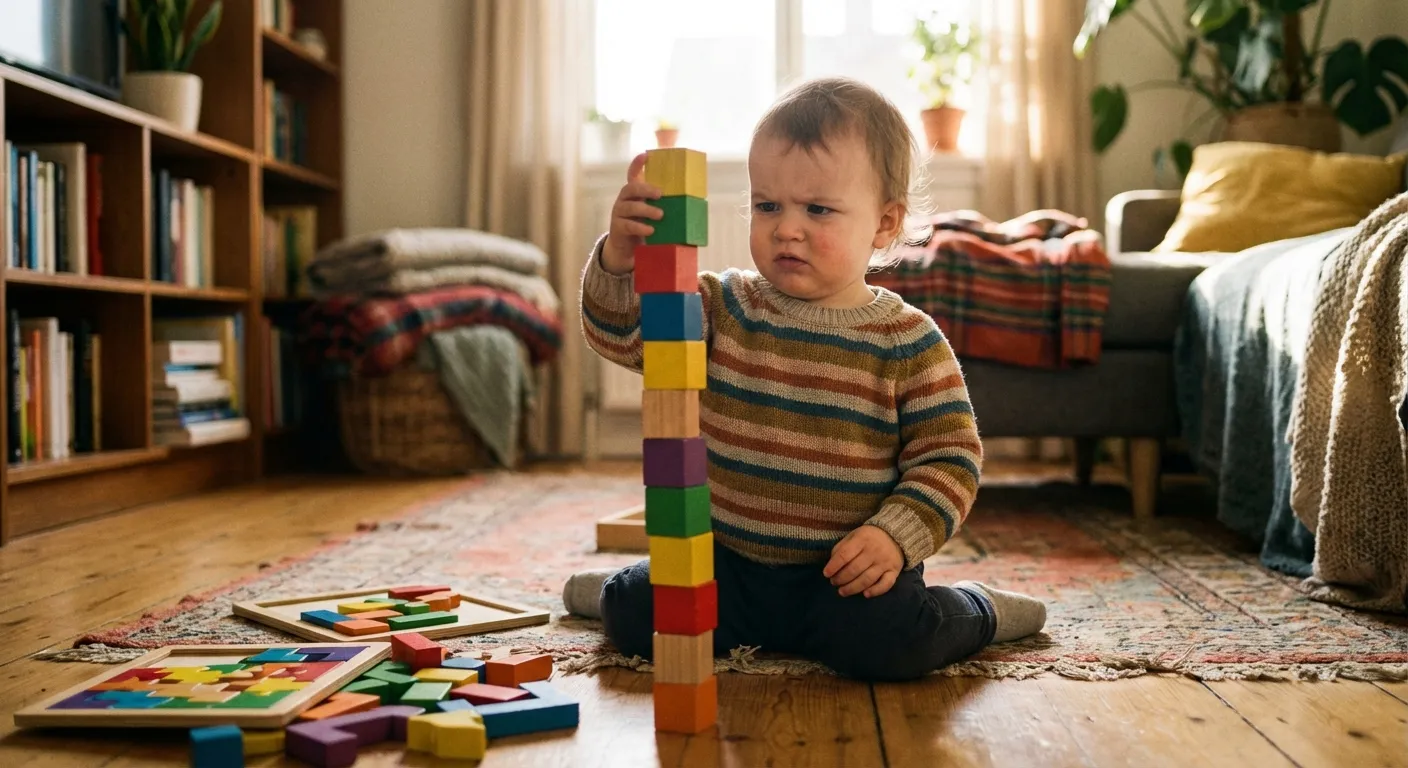
The same concentration they bring to blocks, they bring to language. You just can't see it yet.
Multiple independent research groups have studied these children—kids who talk significantly later than their peers yet light up every other cognitive measure. Across studies totaling hundreds of children, a consistent profile emerged. And the most striking finding wasn't what these kids couldn't do. It was what they could.
The Hidden Wiring
While the world focuses on what isn't coming out of their mouth, something else is happening. These children are running advanced software on different hardware. Their brains are busy—just not with speech yet.
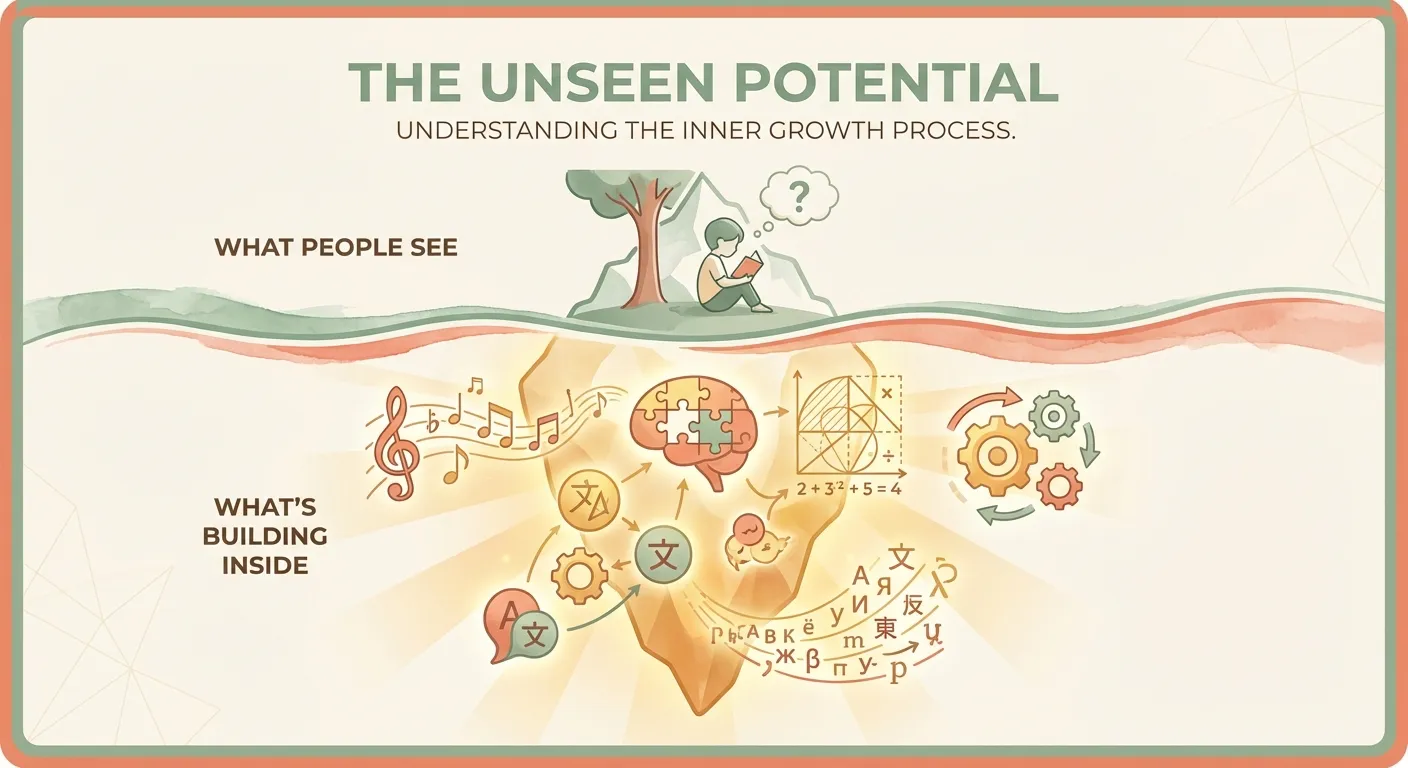
What everyone notices is the quiet. What they miss is the engine running underneath.
And the single most important one:
They clearly understand everything you say—they just aren't saying it back yet.
A child who follows instructions, answers questions nonverbally, and obviously comprehends language is in a profoundly different situation than a child who shows no evidence of understanding. That gap between comprehension and production is the signature of the internal builder.
The Family Fingerprint
These children don't appear randomly. Their families look different from the general population in specific, repeatable ways.
| Pattern | What Researchers Found |
|---|---|
| Analytical careers | Engineering, science, math, computing, accounting—close relatives in highly analytical fields appeared in the majority of families |
| Musicians | Most families had at least one close relative who played an instrument. Many had professional-level musicians. |
| Higher education | College and postgraduate degrees appeared more often than in the general population |
| Other late talkers | A meaningful portion of families had relatives who also talked late—the pattern runs in families |
Engineers, musicians, PhDs. Families where analytical thinking is the water everyone swims in. The child isn't an anomaly in these families. They're the latest expression of a cognitive style that favors building systems over producing output early.
The Temperament That Goes With It
These kids don't just think differently. They move through the world differently.
Strong-willed. Intense. Laser-focused when something catches their interest. Completely indifferent to things that don't. Sound like anyone in those analytical, musical families?
No single trait matters. The combination does. Analytical family + cognitive strengths + fierce will + deep interests = a recognized pattern.
The Leap
This is the part parents remember for the rest of their lives.
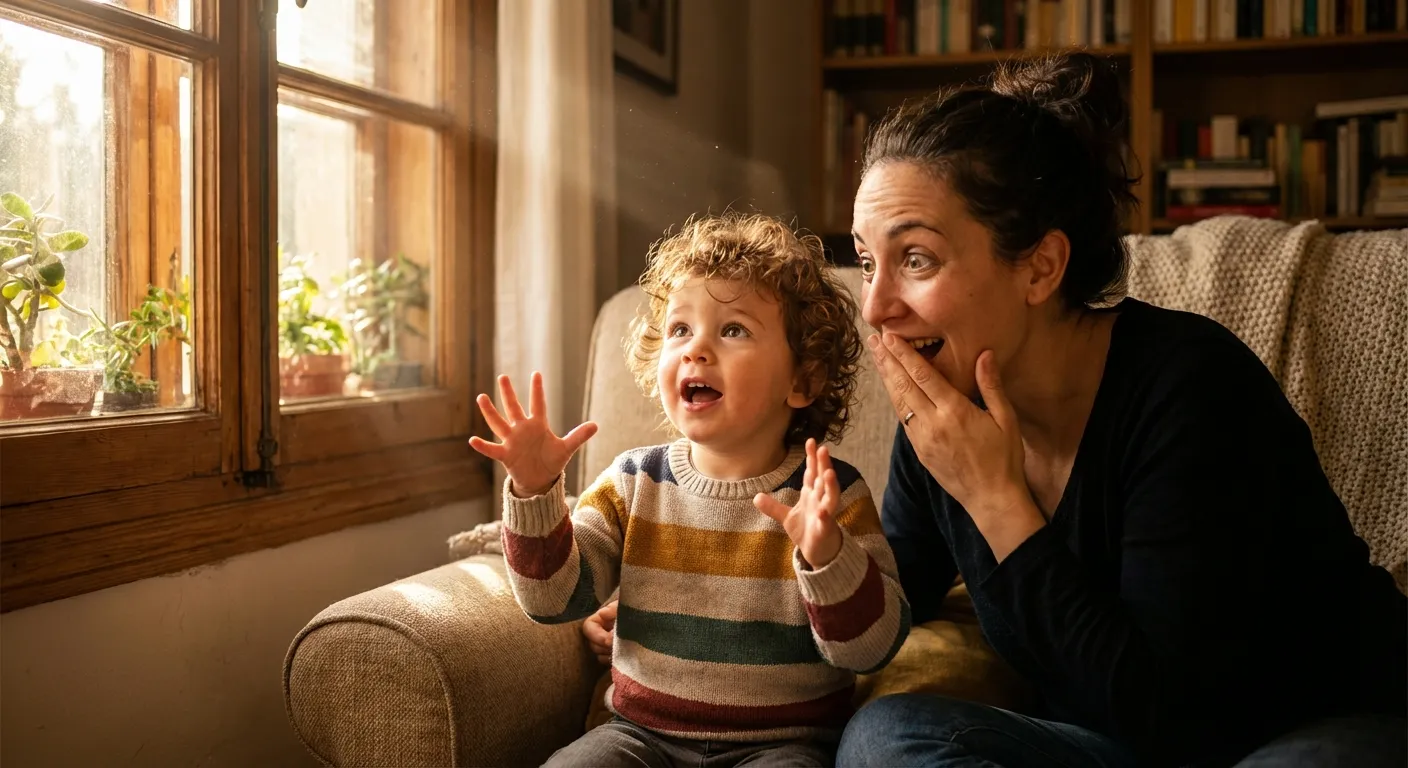
When the internal system goes live, it doesn't trickle out. It arrives.
Many children who fit this profile don't start talking the way milestone charts expect—one word at a time, slowly assembling vocabulary. Instead, they seem to build the entire language system internally, then flip it on. Full phrases. Complex sentences. As if they'd been rehearsing silently for months.
That's not a child who was behind. That's a child who was building.
Children talk late for many reasons—hearing loss, autism, developmental disorders. Get thorough professional evaluations before assuming this pattern fits. Matching these traits does not replace a diagnosis. It gives you better questions to ask.
What To Do Right Now
See physicians and developmental specialists—not just school-supplied evaluators. Rule out hearing loss, autism, and physical causes. A pattern match doesn't substitute for that process.
Someone who trained with, works alongside, or regularly refers to your first evaluator isn't independent. True independence matters.
Delayed speech + intense focus + sensory sensitivities overlap with autism screening criteria. A brief evaluation that checks boxes without deeply understanding your child can produce a misleading diagnosis.
Puzzles solved, music engaged with, tech figured out, instructions understood. Video is especially powerful. This evidence helps professionals see the full picture.
Connecting with parents whose children fit a similar profile gives you shared knowledge and the reassurance that you're not imagining what you see.
Playing the Long Game
The milestone chart says your child is behind. The puzzle they just solved says something different. The music that stops them in their tracks says something different. The way they navigated your phone at eighteen months says something different.
Maybe they're not behind at all. Maybe they're just building something bigger than a first word.