
Your Teen's Friends Are a Better Goal Engine Than Your Nagging
Willpower fades. Social infrastructure doesn't.
- Teens who build a goal crew — even just one partner or checker — stick with commitments weeks after solo goal-setters have quietly quit.
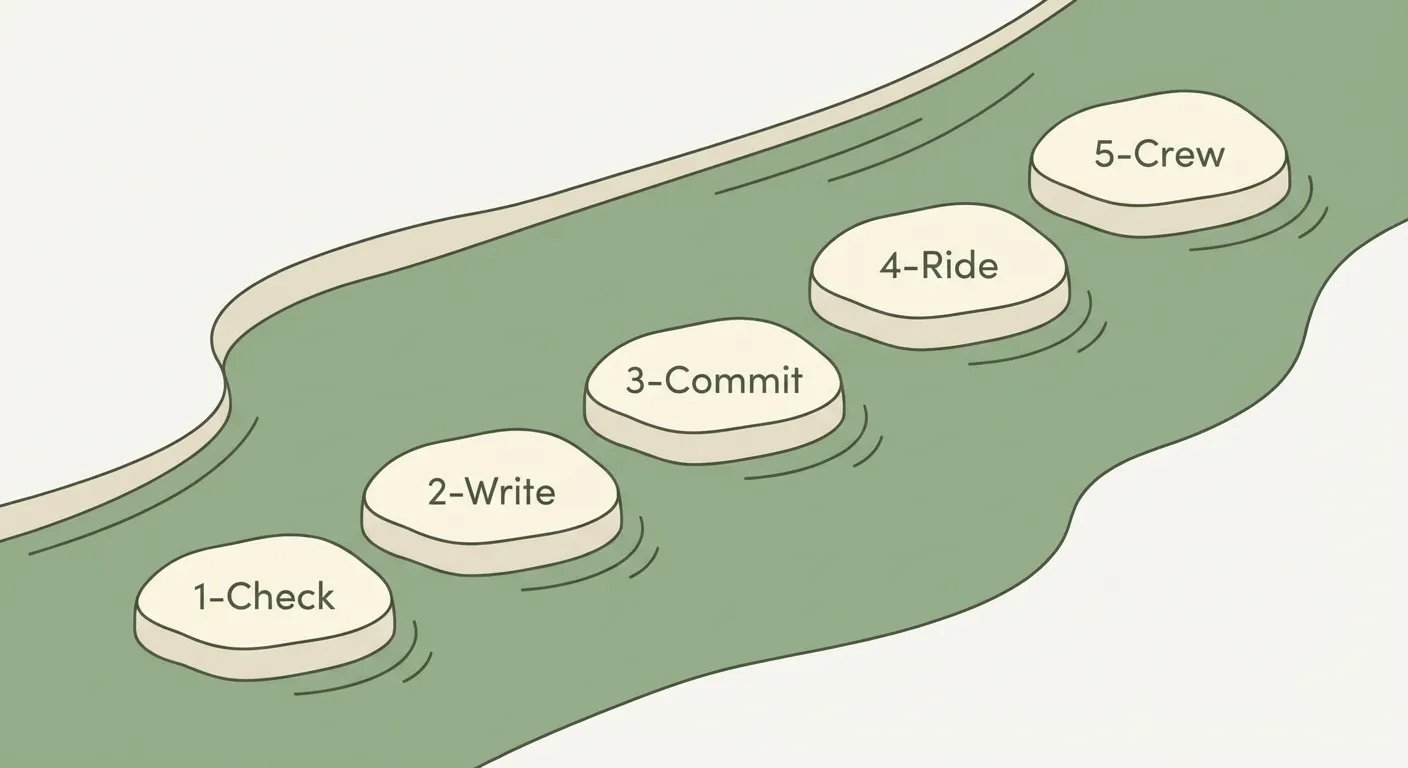
- The move: help your teen recruit a crew around their goal, then lay 4 foundations so the crew has something solid to rally around.
Why the most powerful goal-setting tool for teenagers isn't a planner, an app, or a pep talk. It's other people.

Picture two versions of your kid deciding to train for a 5K.
Version one: they download a running app, set the alarm for 6 AM, and head out alone. Day one goes great. Day four, it's raining. Day seven, they sleep through the alarm. By day ten, the app sends a sad little notification that nobody opens.
Version two: they text three friends and say, "Let's do this 5K together." Now it's Thursday at 4 PM and someone is waiting at the track. Skipping isn't just lazy — it's letting people down. Week three rolls around and they're still showing up. Not because they're more disciplined. Because the social wiring won't let them quit.
That's the crew effect. And it's the most underrated force in teen goal-setting.
Your job isn't to be the enforcer. It's to help them build the crew.
Solo Goals vs. Crew Goals
Going Solo
- Motivation depends entirely on mood
- No one notices when you skip
- Setbacks feel like personal failure
- Quitting is private and painless
- The goal competes with everything else for attention
With a Crew
- Showing up becomes a social commitment
- Someone asks "where were you?"
- Setbacks become shared problem-solving
- Quitting means leaving people behind
- The goal becomes part of the social calendar
Notice: the crew version doesn't require more willpower. It requires less. The social structure does the heavy lifting that self-discipline can't sustain.
The Crew Playbook
Not every goal crew looks the same. Here are four types of support people your teen can recruit — and they only need one or two to change the odds dramatically.
| Crew Role | What They Do | Example |
|---|---|---|
| The Partner | Works on the same goal alongside them | A friend who also wants to learn guitar — they practice together Wednesdays |
| The Checker | Asks how it's going (without nagging) | A parent who says "How's the running?" with curiosity, not judgment |
| The Mentor | Has already done it and can shortcut the learning curve | An older cousin who ran track and can share a training plan |
| The Believer | Simply thinks your teen can do it — and says so | A teacher who says "You'd be great at this" and means it |
Your teen's book club, study group, workout partner, or even a group chat where they share progress — these are all crew structures. The format matters less than the connection.
But Crews Need a Foundation
A crew amplifies whatever goal it's built around. Which means the goal itself needs to be solid. Four quick moves lay that foundation before the crew ever assembles.

Help your teen map the real cost — time, energy, what they'll say no to. If the price is too steep, shrink the goal. A smaller goal they finish beats ten ambitious ones they drop.
A goal that lives only in your teen's head stays fuzzy. Writing it down forces specificity. "Get healthier" becomes "Run a 5K by June." That precision is what makes it real enough to rally a crew around.
There's a moment between "I'll try" and "I'm doing this." Help your teen cross that line. Register, pay the fee, tell friends. Full commitment unlocks a kind of effort that hedging never will.
New school year, birthday, fresh start after a setback — these moments carry natural momentum. Help your teen channel that energy into something specific while it's hot. The feeling fades; the habit stays.
3 Traps That Kill Goals Before the Crew Can Help
Trap 1: Believing the Story Others Wrote
"Not a math person." "Too shy." "Not athletic." If your teen has been labeled, those stories cap their goals before they start. Help them see: other people's assessments are opinions frozen in time, not facts.
Trap 2: The "Already Ruined" Mindset
One bad week and your teen thinks the whole thing is blown. This all-or-nothing thinking kills more goals than lack of ability ever will. Falling off doesn't mean starting over — it just means getting back on.
Trap 3: Climbing the Wrong Mountain
Sometimes the goal matters to you, or their friends, but not actually to them. Every so often: "Do you still want what's at the top of this?" Adjusting direction early beats arriving somewhere they never wanted to be.
The One Thing to Remember
Your teen doesn't need more discipline. They need more people. A workout partner who shows up on Tuesdays. A book club that picks a new title each month. A friend who texts "did you practice?" A parent who asks with curiosity, not surveillance.
Help them build that crew, give the goal a solid foundation, and then do the hardest part of all: step back and let the social engine run.