
The One Question That Actually Keeps Kids Safe Around Guns
Training doesn't work. But this 10-second conversation does.
The only proven protection against child firearm injury is a locked safe.
- Kids raised by parents who ask the uncomfortable question and secure what's in their own home are shielded by the single intervention decades of research actually support.
- The move: pair secure storage at home with one 10-second question before every playdate.
Here is a sentence that should bother every parent: kids who receive the most gun safety training are more likely to handle a firearm when they find one.
Not less likely. More.
That single finding upends everything most of us assume about keeping kids safe around guns. And it points straight to the one move that actually works -- a move most parents never make.
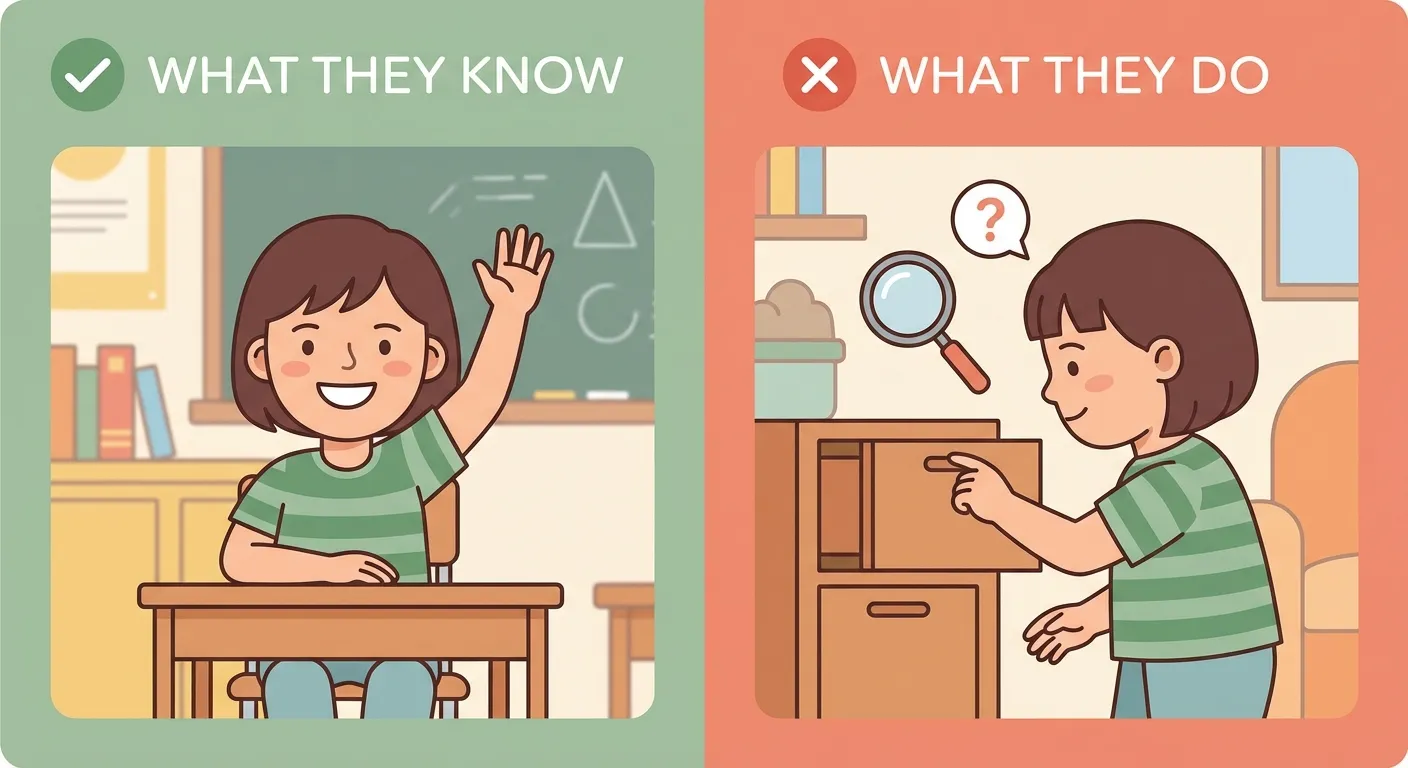
no training required
What the Research Actually Found
Researchers set up a simple experiment. They put a real (disabled) handgun in a room where school-age boys were playing. Most found it. Half picked it up. One in four pulled the trigger hard enough to fire it.
The part that matters: nearly all of those boys had already been through gun safety instruction.
It gets worse. Another team designed the most intensive program they could -- a full week of safety education covering handling, conflict resolution, decision-making, and peer pressure. Then they compared those kids to a group that received zero training.
The trained group handled firearms more often.
Every evaluation of structured gun safety curricula finds the same thing: kids learn the rules. They can recite them. They just don't follow them.
The Confidence Gap
What makes this dangerous isn't the research alone -- it's the gap between what parents believe and what's true.
| What Parents Believe | What Research Shows |
|---|---|
| "My child would walk away from a found gun" | Most children don't -- even those who promise they would |
| "My child knows real vs. toy" | Kids mistake real firearms for toys more often than the reverse |
| "My child doesn't know where we keep it" | Children almost always know, even when parents assume they don't |
| "My child has never handled our gun" | 1 in 5 parents are contradicted when the child is asked separately |
| "Familiarity makes them more cautious" | The opposite -- familiarity breeds handling, not caution |
These gaps persist whether or not parents keep their firearms locked or regularly talk about safety. The training creates confidence in the adults, not compliance in the kids.
The Only Thing Proven to Work
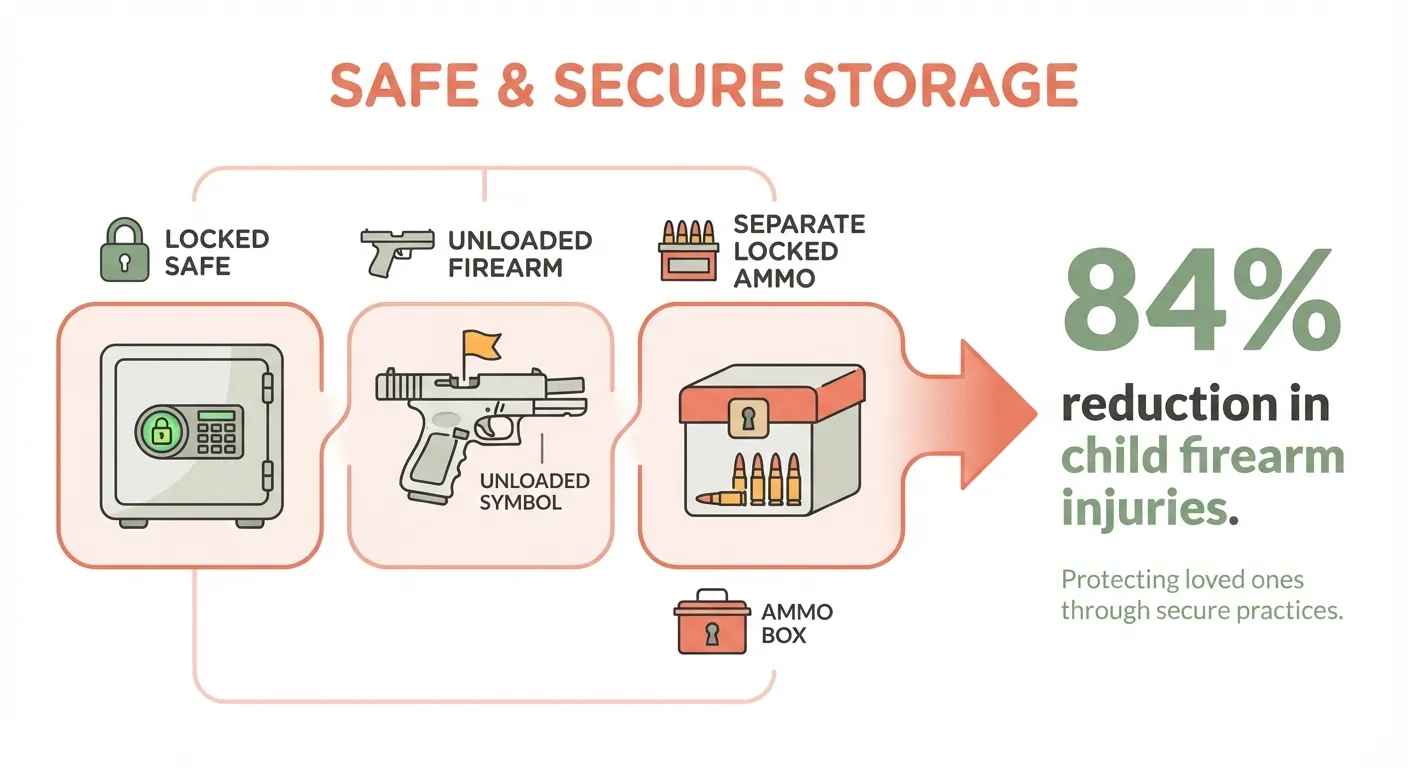
Decades of research point to one answer: secure storage.
unloaded alone
locked alone
both together
Firearms unloaded and locked, ammunition in a separate location. That combination cuts child firearm injuries by 84%. No training program has ever come close to that number.
Your Move: The SAFE Protocol
Secure Your Own
Store firearms unloaded and locked, ammunition in a separate spot. Cable locks and lockboxes are inexpensive. Don't rely on hiding spots -- kids find everything.
Ask Before Playdates
One question. Ten seconds. More protective than any training program ever built. (Script below.)
Forget Training as Protection
Gun safety education has value as general knowledge. But never treat it as a substitute for physical prevention. No program has changed how children actually behave around firearms.
Expect Curiosity
Kids are fascinated by guns. That's developmentally normal. Your job isn't to kill the curiosity -- it's to make sure they can't access a loaded weapon when curiosity wins.
The Playdate Question
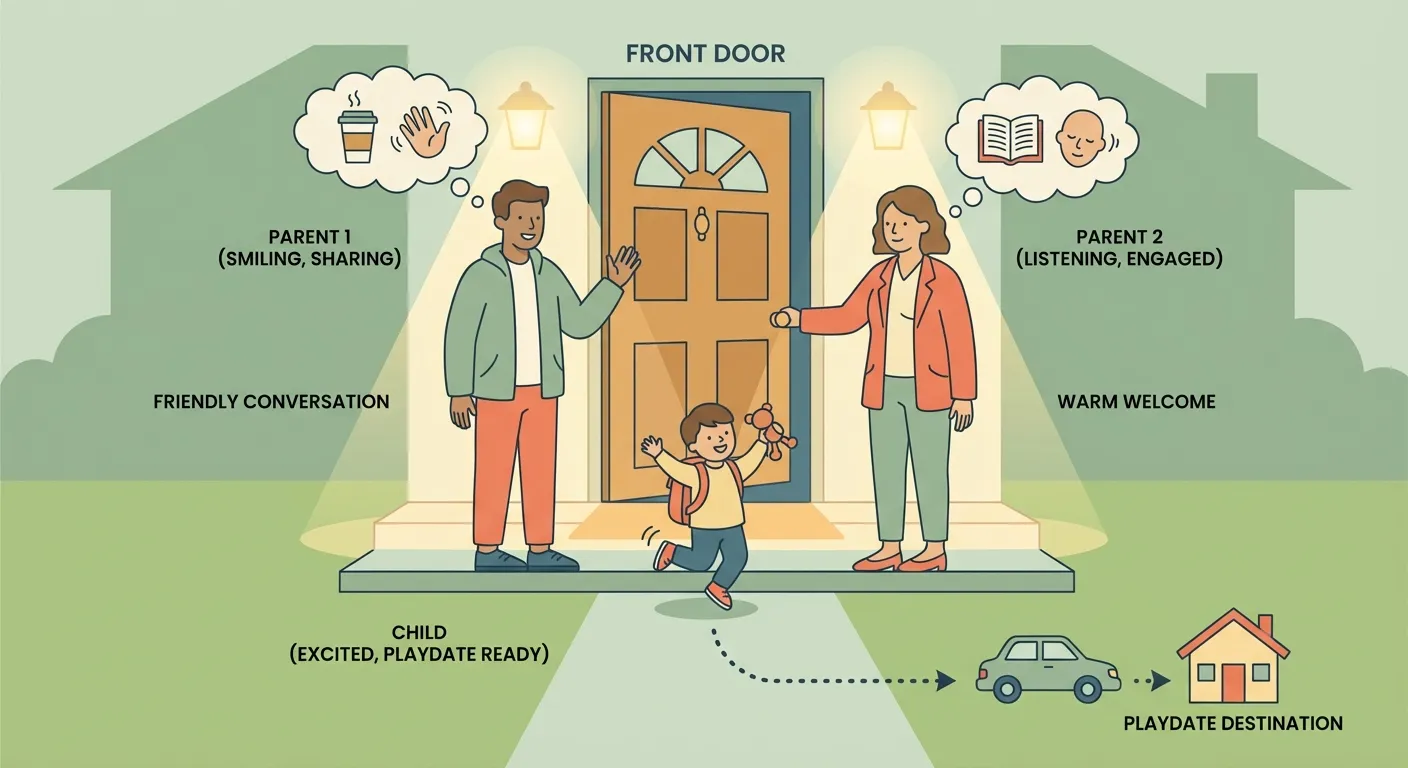
This is the single most uncomfortable -- and most effective -- conversation in child safety. Here is exactly what to say:
Copy This Script
"Hey, I always ask this before the kids head over -- do you guys have any guns in the house? And are they stored locked and unloaded? I ask everyone, it's just one of those parenting things."
Making it routine ("I ask everyone") removes the implication you're singling anyone out. Most parents respect the question. The ones who don't are exactly the ones you needed to ask.
You already ask about allergies. You check for pool fences. This is the same thing -- except it covers the risk that statistically matters most.
One in three homes with children contain firearms. Many are not stored safely. The question isn't whether your child will visit a home with a gun. It's whether you'll know about it when they do.
Keep Going as They Grow
Long-Term Safety Checklist
This isn't about politics. It's about one question, one storage method, and the 84% reduction that no amount of training can match.
Ask the question. Lock the safe. That's the whole playbook.