
Stop Nagging About Gaming. Build the System Instead.
Gaming takes over when nothing else competes for attention.
- Kids with the right setup treat gaming like a hobby, not a lifestyle. They still do sports, creative projects, and face-to-face hangouts without being dragged there.
- The move: cap total gaming across all devices, fill the vacuum with real alternatives, and evolve the rules as they grow.
Every game your kid plays was designed by a team of brilliant engineers whose entire job was making it impossible to put down. You're not going to out-willpower that. But you can out-engineer it.
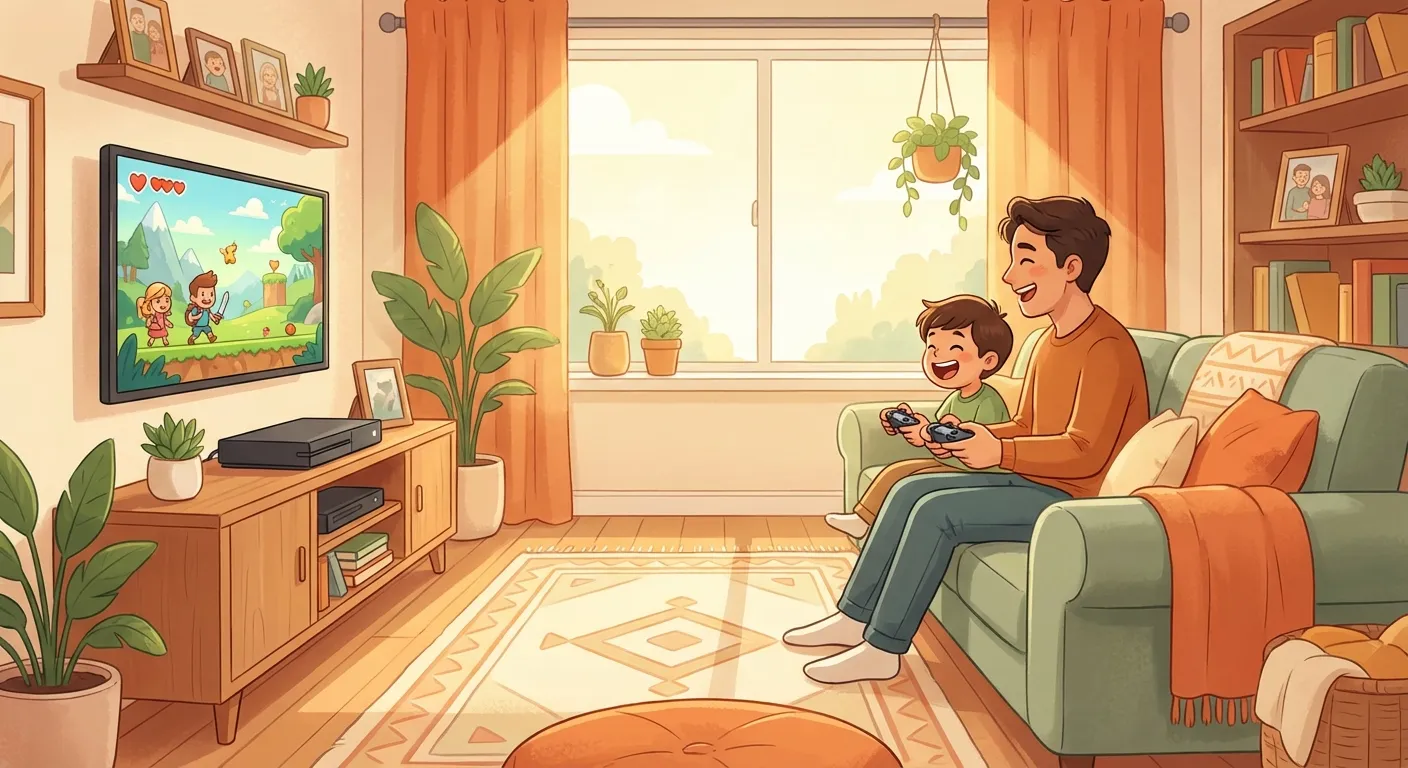
Here's the thing nobody tells you when you buy your kid a console: you're not just bringing home a toy. You're bringing home a product refined by decades of behavioral science, designed to keep attention locked in as long as possible. Loot boxes, level-up loops, social pressure to stay online with friends -- these aren't bugs. They're features.
And yet gaming itself? Not the villain. Research consistently shows that kids who game an hour or two a day are doing just fine. Some studies even show mild social benefits -- especially when kids play together. The problem only starts when "an hour" quietly becomes four, and four becomes "I can't get this kid to do anything else."
So instead of fighting each session like a new battle, you set up the environment once. Then the system does the work. That's the cheat code.
The Sweet Spot vs. The Danger Zone
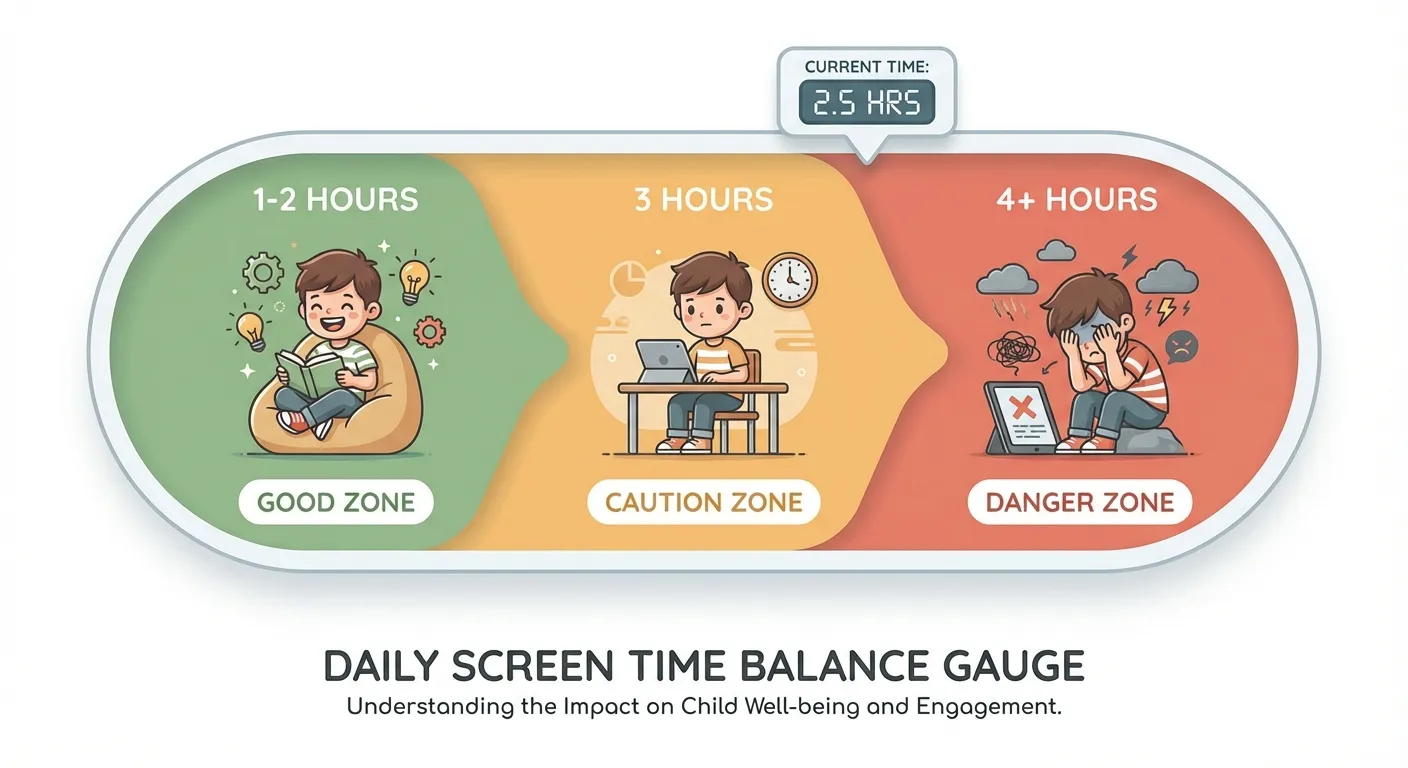
1-2 Hours / Day
- No correlation with mood problems
- Mildly social (especially multiplayer)
- Feels like a hobby, not a lifestyle
- Kid still picks up other activities
- Homework and sleep stay on track
4+ Hours / Day
- Higher rates of depression and anxiety
- Especially pronounced in boys
- Crowds out sports, creativity, socializing
- Sleep quality drops
- Increasingly irritable when asked to stop
The data isn't subtle. Moderate gaming sits in completely neutral territory. Heavy gaming correlates with meaningfully worse outcomes. Your goal isn't elimination -- it's keeping things in the zone where gaming stays fun and harmless.
Four Things to Set Up Once
1. Keep It in the Open
Consoles, desktops, VR headsets -- all of it goes in a shared family space. Living room, den, common area. Not the bedroom. Not the basement hideaway.
2. Lock Down Every Device
Parental controls on every single device that can run a game. Console, laptop, tablet, phone. Kids will find the unprotected one.
3. Cap Total Time Across Everything
A limit on the console means nothing if they switch to the phone. Think total gaming time, all devices combined.
| Day | Time Cap | Note |
|---|---|---|
| Monday - Thursday | Up to 1 hour | Or zero on school nights |
| Friday - Sunday | Up to 2 hours | After responsibilities are done |
4. Know What They're Playing
A building sandbox and a hyper-violent open-world game with voice chat are wildly different experiences, even if your kid describes both as "just a game."
The 60-Second Safety Scan
Before Any New Game Gets a Yes
- Check the age rating + a parent review (Common Sense Media is solid)
- Disable communication from strangers -- voice chat, DMs, friend requests from unknowns
- Use a child account where available (most platforms have built-in protections)
- Turn off purchases at the device level, not just the game level
- Actually watch the game being played -- ratings don't capture everything
- If they game online with friends, get those kids together in person sometimes too
When Gaming Starts Taking Over
Even with a solid setup, there are moments when things slide. A new game drops, a school break hits, and suddenly your kid is glued to the screen for half the day. Here's a graduated approach that doesn't start with confiscation.
Introduce Boundaries (Don't Jump to a Ban)
If they've been playing without limits, start by capping daily time. Use parental controls to enforce it so you're not the one nagging. Let the system be the bad guy.
Watch for 7-10 Days
More present? Less irritable? Picking up other activities? If you see improvement, stay the course. The boundary is working.
Name the Next Step Clearly
If they keep blowing through limits, tell them directly: the choice is respecting the boundary or a full pause. Let them decide.
Take a Full Break If Needed
Remove the console or disable accounts temporarily. First few days are uncomfortable. By week two, most families report their kid is noticeably more engaged with everything else.
Fill the Vacuum
Gaming takes over when nothing competes for attention. Make sure they have access to sports, outdoor time, creative projects, social activities. If gaming is the only thing they care about, that's your signal to actively introduce alternatives.
Words That Work
"Here's the deal. You can game for one hour on school days and two on weekends. The console shuts off automatically. If you can work with that, great. If it keeps being a fight, we take a full break for two weeks and then try again. Your call."If they explode when you set limits, that's actually useful information. A massive emotional reaction to gaming boundaries means the attachment has gotten too strong. It doesn't mean you're being unfair -- it means the boundary was overdue. Hold steady. The intensity fades. What replaces it is usually a kid who's more present, more flexible, and more themselves.
Keeping It Healthy Long-Term
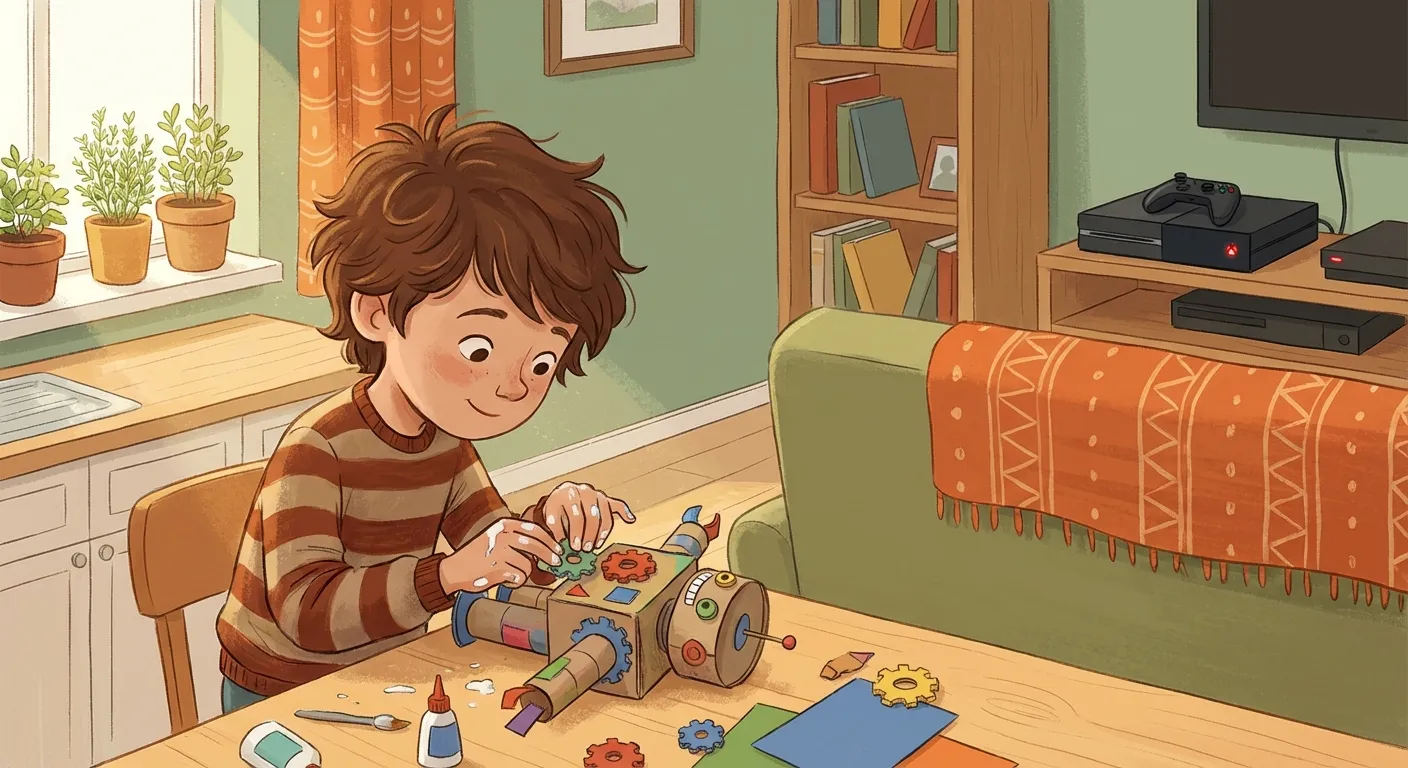
The setup isn't a one-and-done. Kids get new devices, discover new games, find workarounds. A few habits keep the system running:
Gaming isn't the enemy. Unstructured, unlimited gaming is. Build the guardrails once, and you get a kid who games for fun -- not because they can't stop.