
Your Kid Keeps Doing That Thing. Try Losing.
The counterintuitive move that ends power struggles in days — not months.
Fighting a kid's behavior feeds it. Playing with it ends it.
- Kids get their agency need met through laughter instead of conflict. Cushion-throwing, shoe-hiding, light-switching — each one resolved in weeks, not months, with zero lectures.
- The move: respond to disruption with exaggerated helplessness, reset the stage, and let the child decide when the game is done.
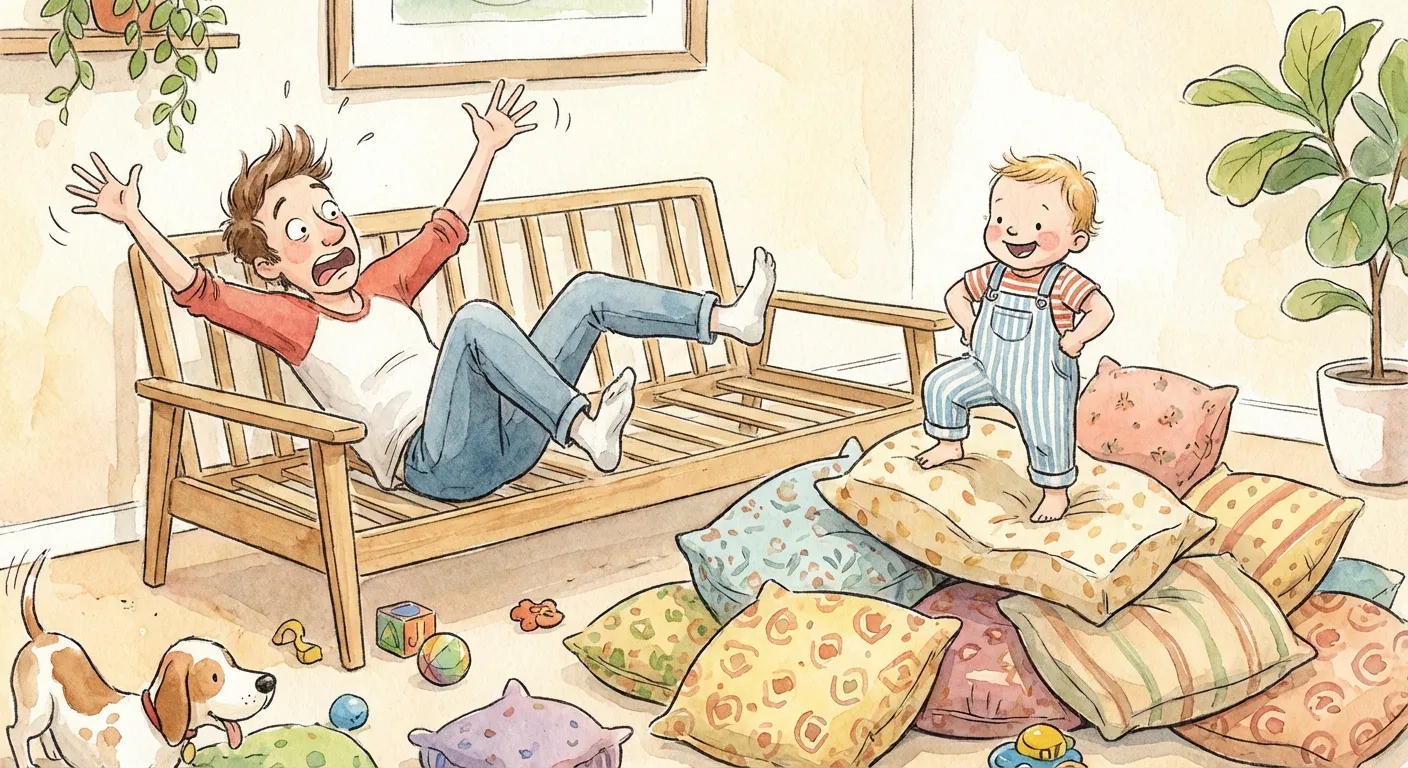
Mia was four when her baby brother arrived. Within a week, she had a new hobby: ripping every cushion off the couch and dumping them on the floor. Her mom put them back. Mia pulled them off. Mom put them back again, this time with a lecture. Mia pulled them off faster.
Then one afternoon, Mia's mom tried something different. When the cushions hit the floor, she gasped. "No! My beautiful couch! It's RUINED!" She staggered around trying to rebuild it. Mia knocked them off again. Mom flopped onto the bare frame in defeat.
Mia laughed so hard she fell over.
They played this game on and off for three weeks. Then one morning, Mia helped arrange the cushions neatly — and never pulled them off again.
The behavior that drove you crazy for weeks? It vanishes when you stop fighting it and start playing with it.
This is the Helpless Parent Move.
Why This Works
Kids who act out — scattering toys, hiding your keys, flipping light switches — aren't trying to ruin your day. They're running a test: "Can I affect the world around me?"
That need for agency is hardwired. When a child feels powerless (new sibling, new school, over-scheduled days), they manufacture moments of control. The disruption IS the point — they need to see that they can make something happen.
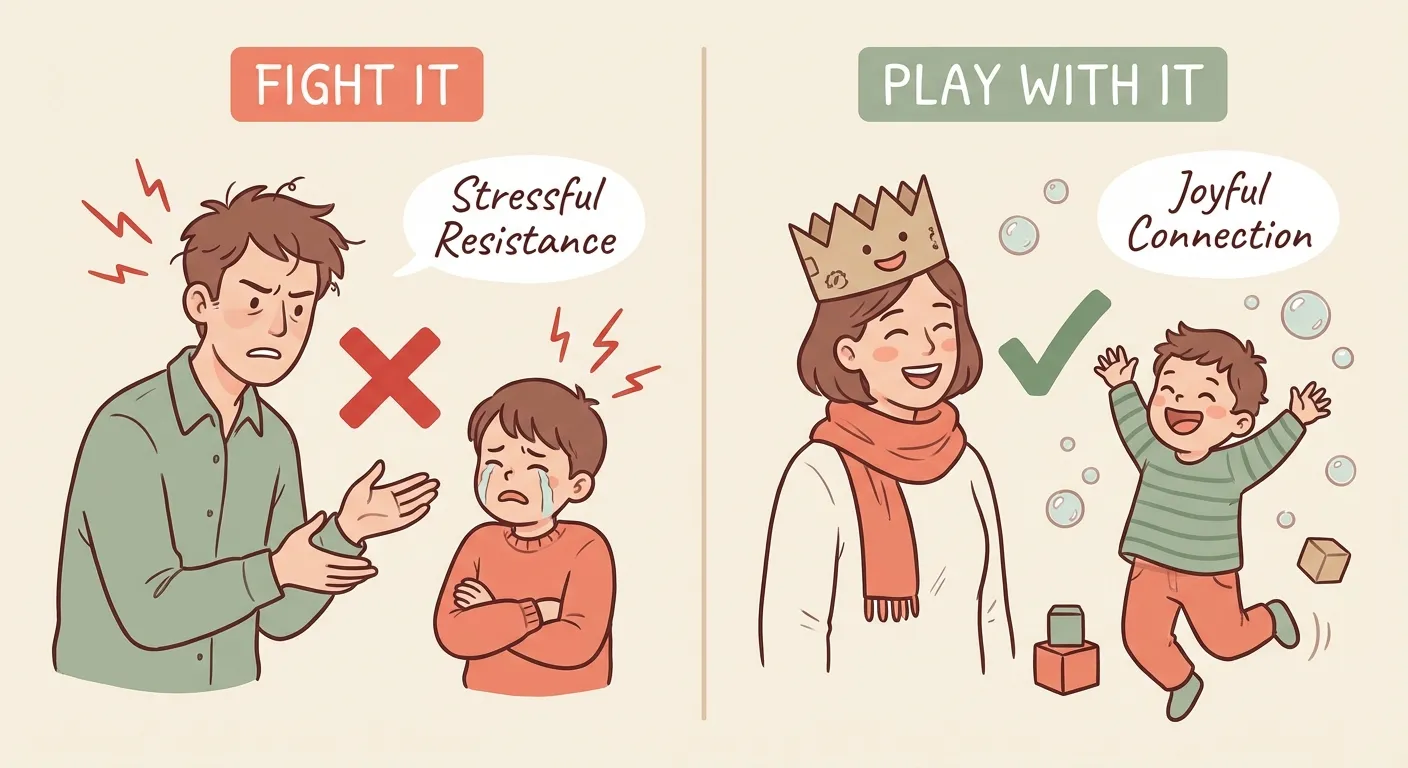
Two paths, two very different outcomes.
Correction ("Stop that!") fails because it confirms the child's powerlessness. Playing along succeeds because it fills the tank. Once the emotional need is met, the behavior loses its purpose and fades on its own.
React vs. Play: Side by Side
| The Usual Move | The Helpless Parent Move |
|---|---|
| "Stop pulling those cushions off!" | "NO! My couch! You've destroyed it!" |
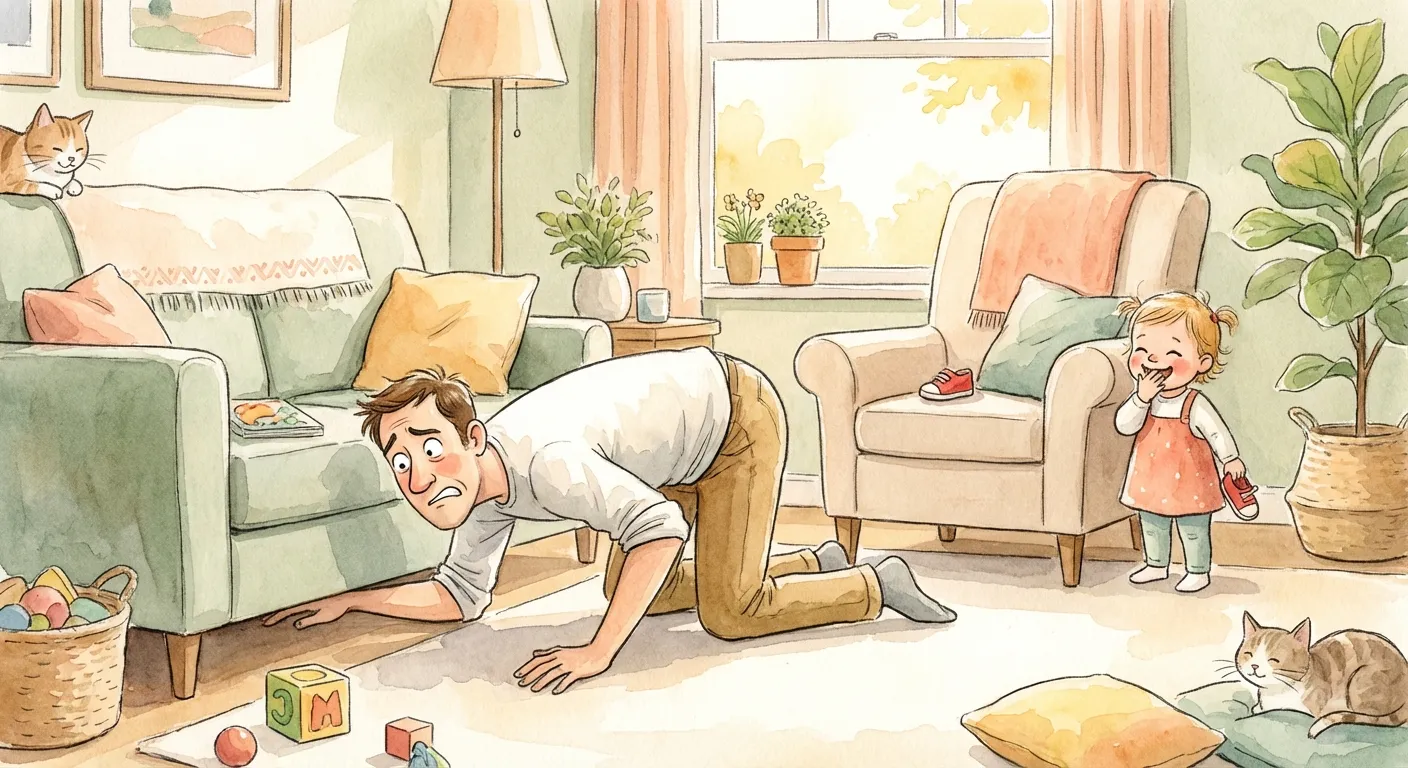
| "Give me back my shoes right now." | "Where are my shoes?! I'll have to go to work barefoot!" |
| "Stop turning the lights off." | "I can't see! Is that a chair or the cat?!" |
| Child repeats behavior → escalation | Child repeats behavior → laughter → resolution |
The YIELD Method
Five moves. No prep. Works tonight.
Yell (playfully)
Gasp, wail, clutch your head. Theatrical distress. This signals: I see what you're doing, and I'm in the game.
Invert the power
Be the bumbling, outmatched character. The more helpless you seem, the more capable your child feels — which is exactly what they're after.
Enable the repeat
Reset the stage. Gather the scattered things back up. Put the hidden item right back where it was. They need multiple rounds to fill the tank.
Let them lead
Follow their script. Don't redirect, don't add lessons, don't steer. You're the supporting actor. Their direction is the whole point.
Done when they say so
The game ends when your child walks away or loses interest. If you end it first, you've taken the power back — and the need stays unmet.
What It Sounds Like
(Stomp around in socks. Check the fridge. Look inside a plant pot.)
(Stumble around. Bump into things. Narrate your confusion.)
(Gather them back. Wait for round two. Collapse dramatically.)
Invitations You Might Be Missing
These aren't misbehaviors. They're bids for a round of play:
Three Ground Rules
The Long Game
Spot the pattern early. The faster you recognize a disruption as a power bid instead of a discipline problem, the faster you can play instead of react.
Build power into calm moments. Let them pick dinner. Choose the walking route. Decide the bedtime story order. Kids who feel capable all day need fewer power games.
Repair when you slip. Snapped instead of playing along? Come back later: "I think you were inviting me to play earlier and I missed it. Want to try again?"
Expect spikes during transitions. New sibling, new school, heavy schedule, exhausted parents — power-seeking behavior goes up. Expect it and you'll react differently.
Playing the fool takes more courage than playing the boss.
And it works about a hundred times better.