
Stop Helping Your Kid. Seriously.
Maria Montessori's checklist of what kids should do alone by age 6 -- and the uncomfortable math on what your "help" actually costs.
There's a checklist of skills every kid should handle alone by age six.
- Kids who hit these benchmarks clean their own spills, get dressed without being asked, and order their own food at restaurants.
- The shift: trade your speed for their competence -- hold back for 90 seconds and let them struggle through it.
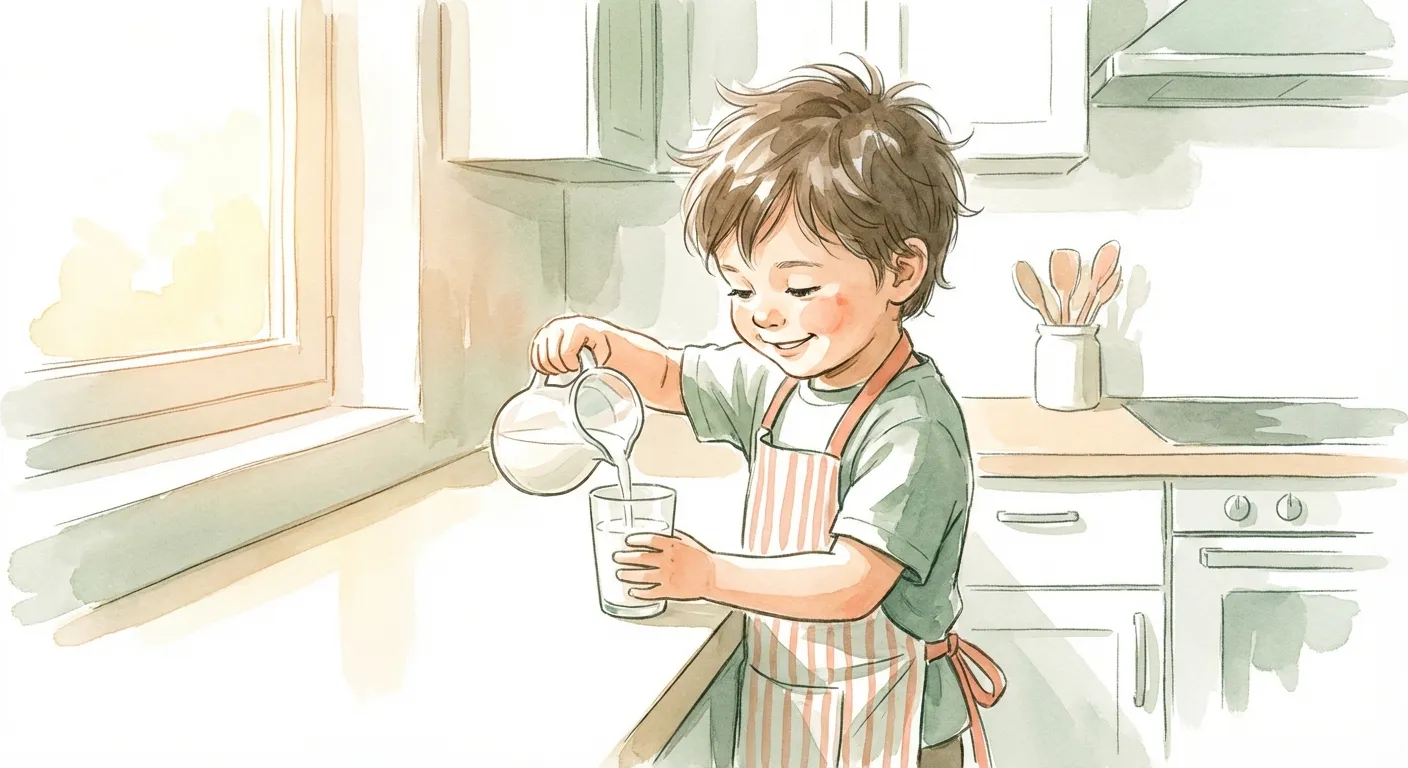
Your four-year-old reaches for the cereal box. Before their fingers even close around it, you've already grabbed it, poured the bowl, added the milk, and set the spoon in their hand.
Thirty seconds saved. Zero skills built.
Maria Montessori, the physician and educator who spent decades observing how children actually learn, saw this pattern and called it exactly what it was: treating children like puppets. Her argument was blunt -- every act of unnecessary help is a tiny act of oppression. Not because you mean harm. Because the math doesn't lie.
The Uncomfortable Equation
Here's the trade Montessori identified. Every time you do something for your kid that they could do themselves, you're making a deal:
You Get
30 seconds saved right now. A cleaner floor. One fewer spill to mop.
They Lose
One rep of practice. One shot at competence. One small brick in the wall of "I can handle things."
Multiply that trade across every meal, every morning getting dressed, every shoe-tying, every jacket-zipping -- and by age six, you've either built a kid who moves through the world with quiet confidence, or one who stands at the door waiting for someone to zip them up.
Montessori didn't sugarcoat which one most parents build.
What "Done Alone by Age 6" Actually Looks Like
Montessori's checklist isn't aspirational. It's baseline. These are skills she expected three-to-six-year-olds to master through daily practice:
Body
Self-Care
Communication
Look at that list. None of it is extraordinary. All of it is trainable. The question isn't "can my kid do this?" -- it's "have I stopped doing it for them?"
The Swap: What You Stop vs. What They Start
This is where it gets concrete. Montessori's method isn't "let them figure it out." It's a deliberate handoff: you trade your speed for their competence.
| You Stop Doing This | They Start Doing This |
|---|---|
| Pouring their cereal and milk | Small pitcher, small bowl. They pour. You breathe. |
| Zipping their jacket | You hold the bottom. They pull. Takes 3x longer. Worth it. |
| Picking up everything they drop | "Oops! Can you grab that?" Wait. They will. |
| Answering for them when people ask their name | Silence. They find the words. You smile. |
| Carrying them up the stairs | They climb. One step at a time. You stand behind. |
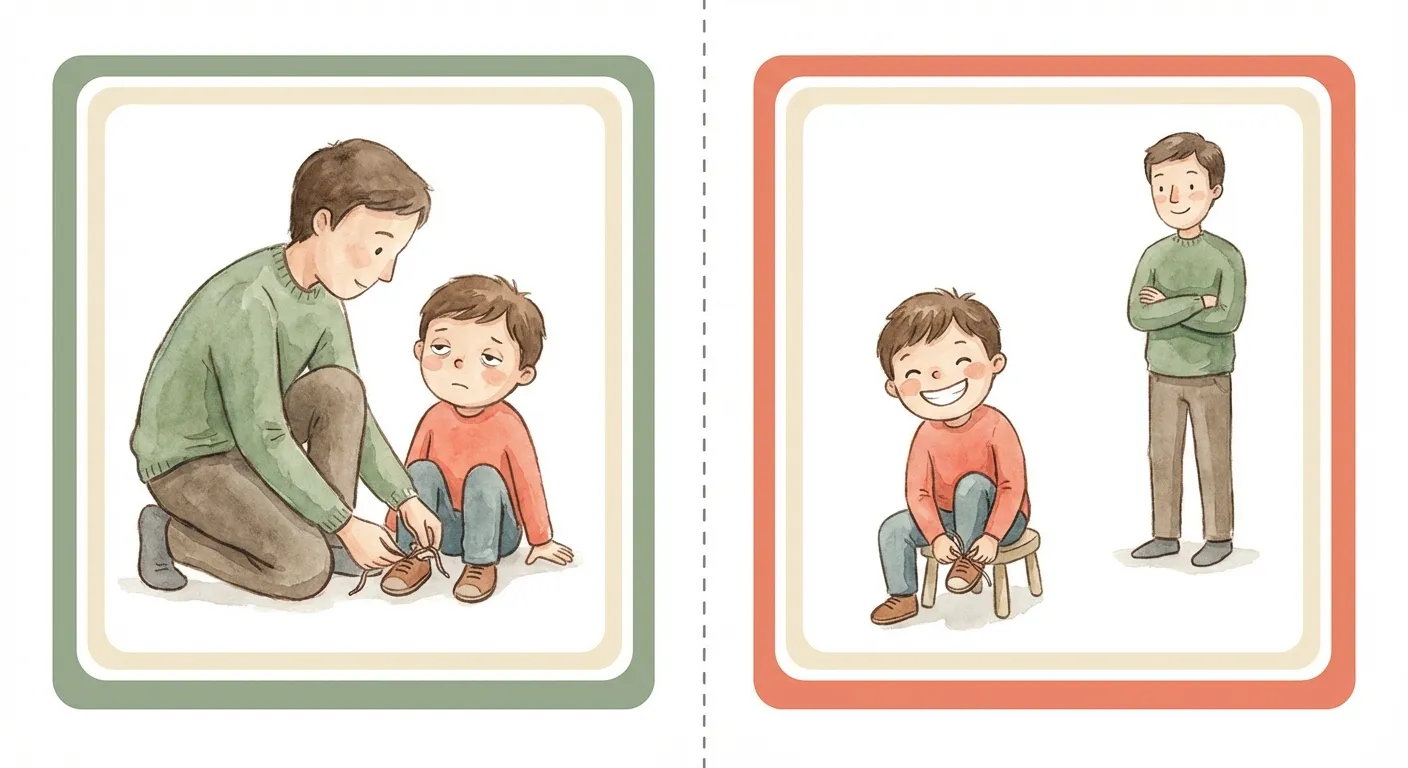
| Putting on their shoes | Velcro first, laces later. Their hands, not yours. |
The 7-Day Step-Back Challenge
Pick one week. Each day, hand off one thing you've been doing for your kid. Not all at once -- one skill per day. By Sunday, seven things have shifted from your hands to theirs.
Pouring Drinks
Small pitcher, small cup. Set it up and step away.
Getting Dressed
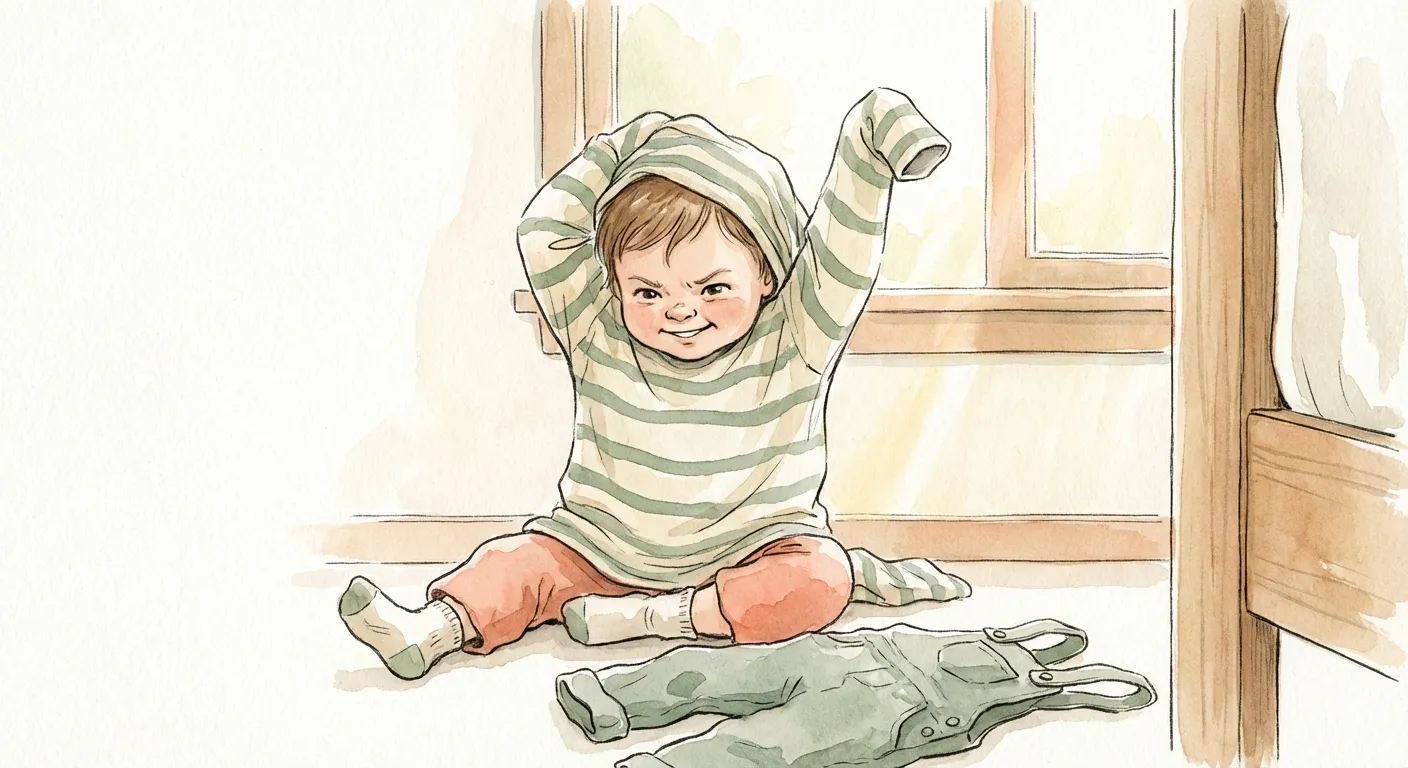
Lay out two outfit options the night before. Morning: they choose and dress.
Putting on Shoes
Velcro or slip-ons for now. Laces are a later victory.
Cleaning Up Spills
Small towel, accessible location. Spills are their jurisdiction now.
Washing Hands and Face
Step stool at the sink. Soap within reach. Towel at their height.
Speaking for Themselves
At the store, restaurant, playground. They order. They answer.
Setting Their Place at the Table
Plate, cup, fork, napkin. Show them once. Then it's their job forever.
By day seven, your mornings look different. Not because you discovered a hack. Because you stopped doing seven things that were never your job in the first place.
The Hardest Part Isn't the Kid
Montessori's sharpest insight wasn't about children at all. It was about us.
The hard part is watching your three-year-old struggle with a zipper for ninety seconds when you could do it in two. The hard part is sitting through a messy, slow pour when you could have it done before they even reached for the pitcher.
The hard part is choosing the longer path -- every single time -- because you know where the short one leads.
That longer path? It leads to a six-year-old who walks into a room and handles things. Who pours their own drink, dresses themselves, cleans their own mess, and looks you in the eye with the quiet confidence of someone who knows: I can do this.
That's not a parenting philosophy. That's a kid who is ready for the world.
Start tomorrow. Pick one thing. Step back. Watch what happens.