
Let Your Kid Go Broke
Allowance is a learning tool, not a paycheck for chores.
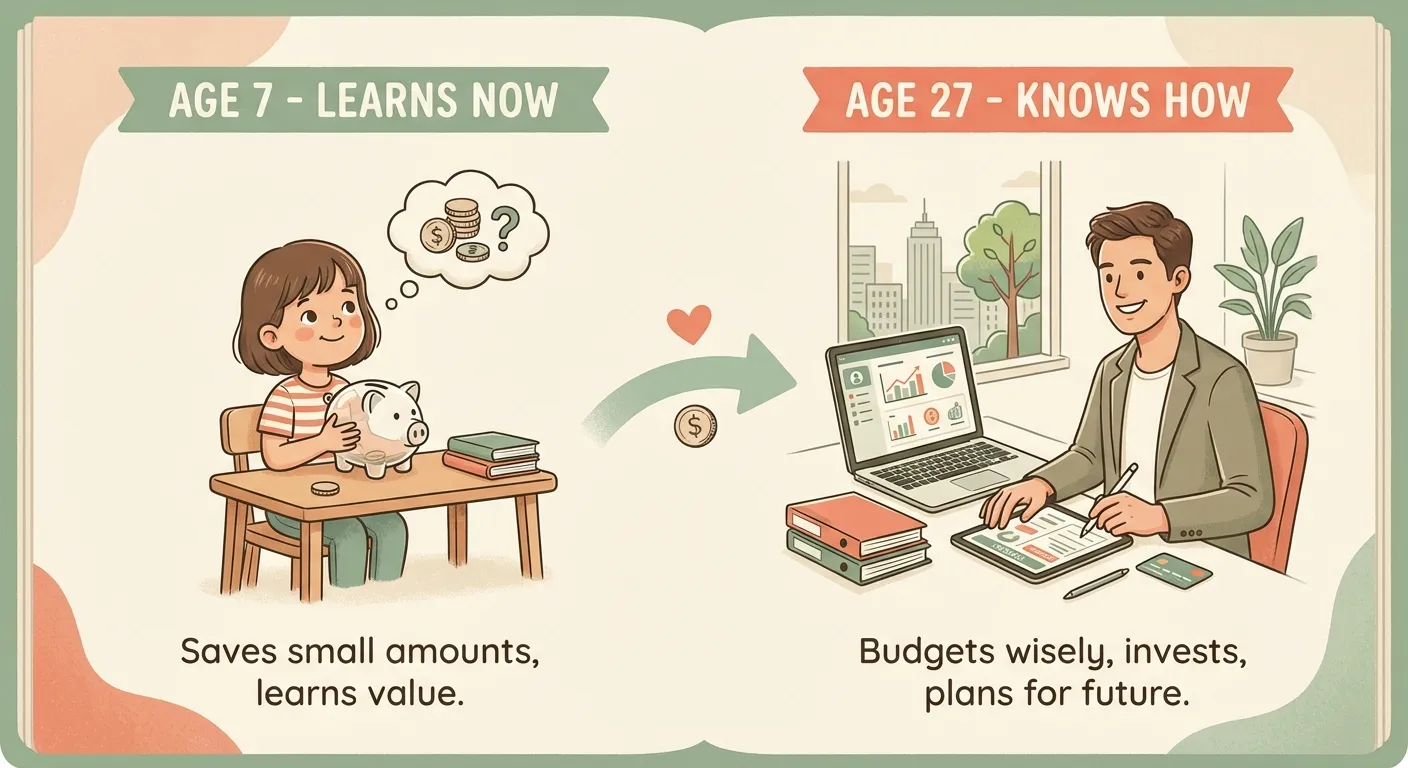
- Kids who feel “broke” at seven become adults who track spending, delay gratification, and handle money without drama.
- The move: give a fixed weekly amount, never tie it to chores, and refuse to rescue when it runs out.
The allowance system that teaches money skills no lecture ever could
Your seven-year-old blows her entire allowance on candy before Tuesday. She has nothing left for the rest of the week. She is upset. You are tempted to slip her a few dollars.
Don't.
What just happened is the single most effective financial education available to a child. She felt what "gone" means while the stakes are a handful of dollars, not a maxed-out credit card.
The Four Rules
This system is dead simple. Four rules, zero exceptions. The magic is in what you don't do.
Chores happen because everyone contributes to the household. Allowance is a fixed amount your child gets to learn with. Tie them together and your kid can quit any time: "I don't need the money, so I'm not doing dishes."
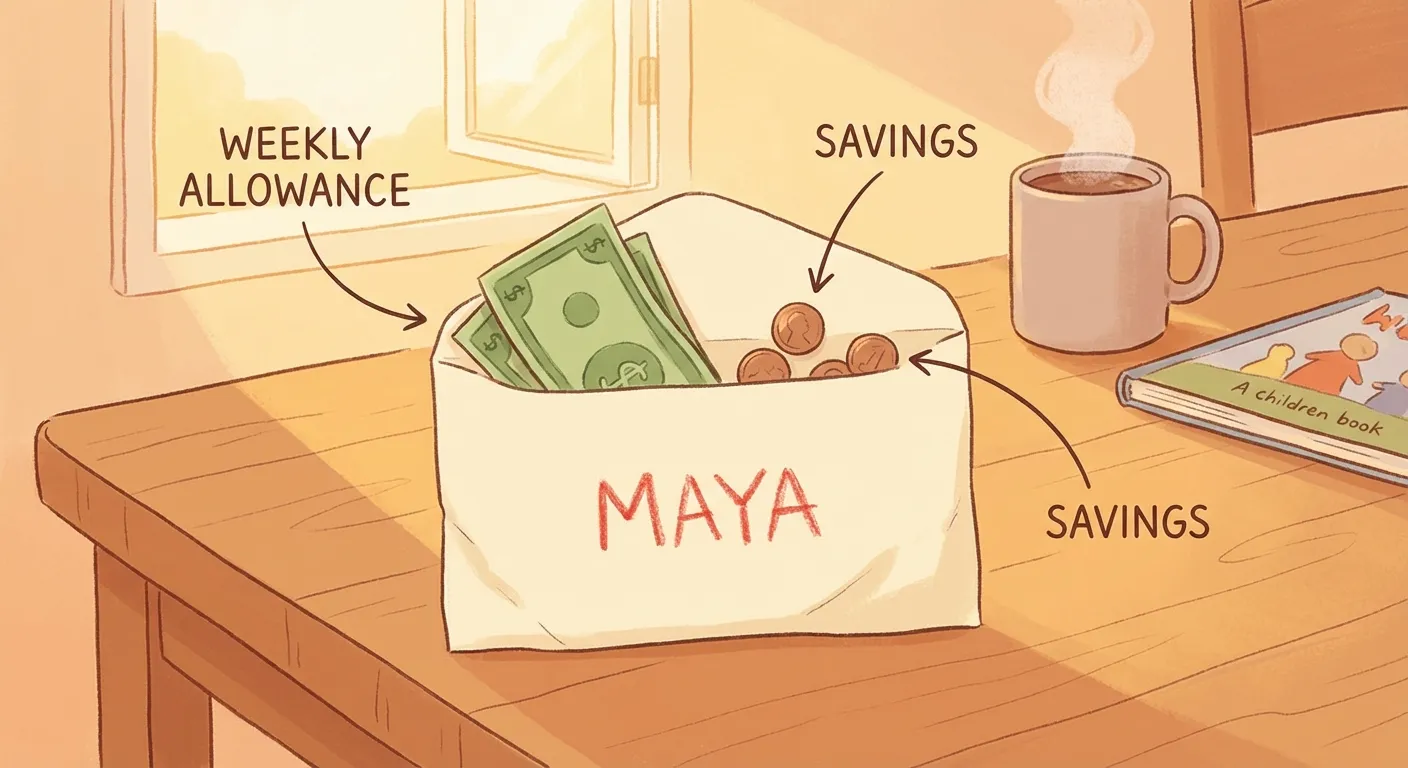
Saturday morning. An envelope with their name. Itemized so they can see what it covers. Consistency teaches reliability before a single dollar gets spent.
Counterintuitive, but children learn to save only after they know what broke feels like. Mandatory savings robs them of the lesson that actually sticks.
Candy, toys, saving it, losing it. As long as it is legal and safe, it is their call. When it is gone, it is gone.
The Weekly Envelope
Start around age five or six. Including necessities like lunch money forces them to budget for needs before wants.
Allowance vs. Chore Pay: Know the Difference
| Allowance | Extra Job Pay | |
|---|---|---|
| What is it? | Fixed weekly learning budget | Payment for work beyond normal chores |
| Tied to chores? | Never | Yes — specific extra tasks |
| Can they lose it? | No — it arrives every week | Only available when extra work is offered |
| What it teaches | Budgeting, trade-offs, patience | Earning, initiative, work ethic |
When They Run Out (And They Will)
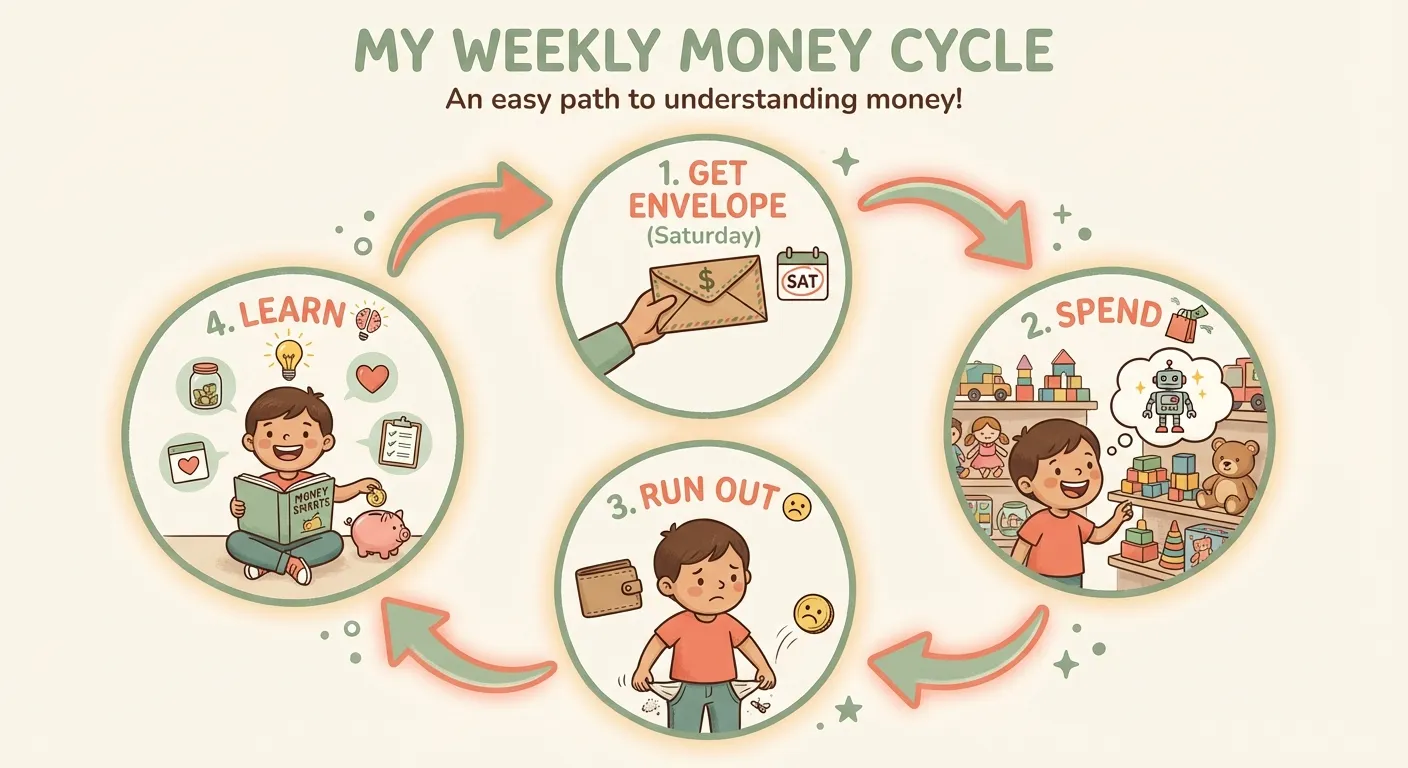
This is the moment the system works. Your job: stay warm, stay firm, do not rescue.
The Learning Cycle
Here is what actually happens over the first few weeks:
| Week | What They Do | What They Learn |
|---|---|---|
| 1-2 | Blow it all immediately | "Gone" is a real feeling |
| 3-4 | Slow down spending slightly | Maybe I should think first |
| 5-8 | Start setting some aside | Saving = future power |
| Ongoing | Make deliberate choices | Trade-offs are life. I can handle them. |
No lecture produces this. No chore chart. No "when I was your age" story. They learn it by living it, one envelope at a time.
Why This Works
Loss aversion is the best teacher alive
Behavioral economics research shows that the pain of losing something you had is far more powerful than any abstract lesson about saving. A child who feels the sting of an empty wallet on Wednesday remembers it the following Saturday in a way that a hundred conversations about "being careful with money" never achieve.
Thousands of micro-decisions before adulthood
A child who starts at six and gets a weekly envelope until eighteen makes roughly 600 spending decisions with real consequences. By the time they are managing a real paycheck, the muscle is already built.
The goal is not to teach them to save.
The goal is to let them go broke — safely — while the amounts are tiny.
Then watch them figure it out on their own.