
The One Question That Changes How You Discipline
Punishment teaches kids one thing: avoid getting caught.
- Kids raised on real consequences self-correct when no one's watching, take responsibility without being cornered, and actually trust their parents more.
- The move: ask 'would I handle it this way with someone else's kid?' — if not, you're punishing, not teaching.
Most discipline fails because it teaches kids about your anger, not about their choices. There's a simple test to tell the difference.
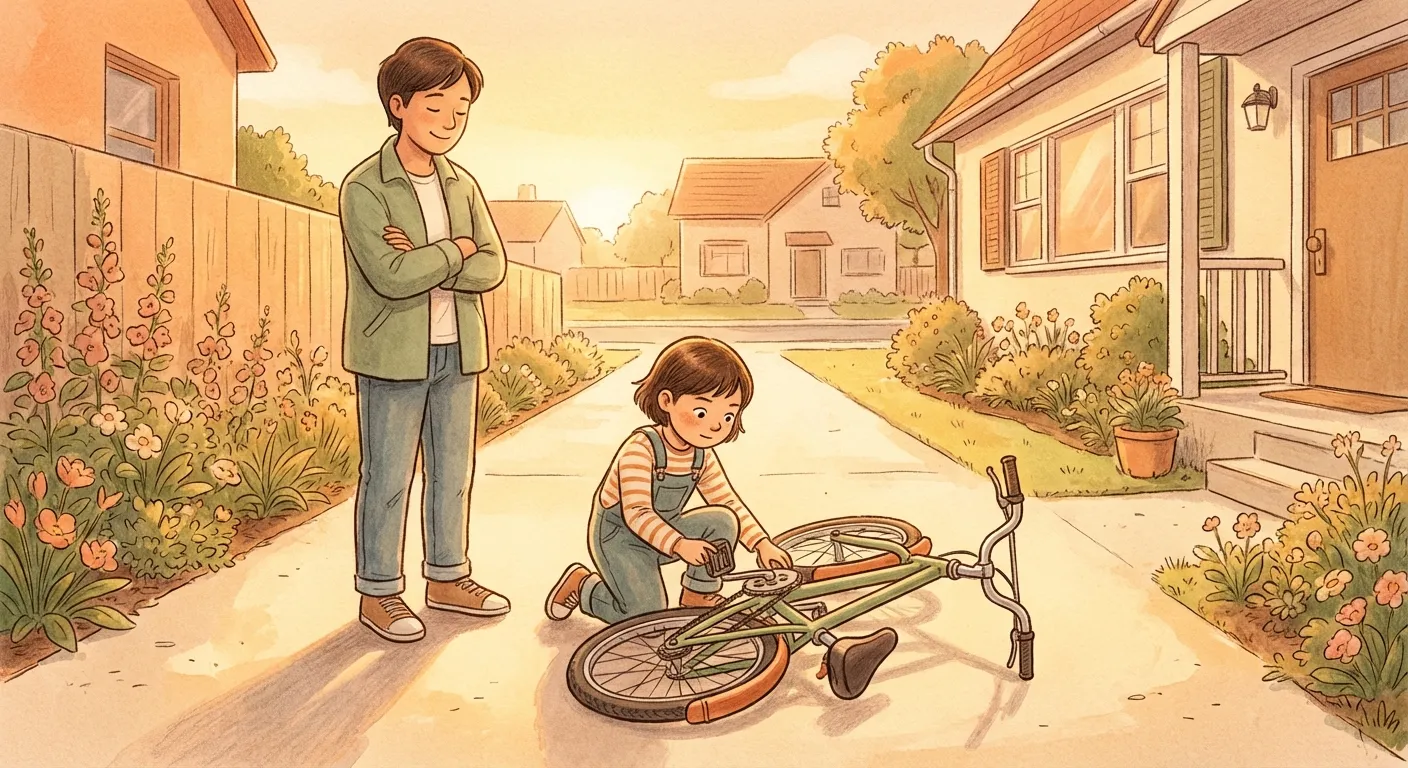
Here's a scenario. Your kid leaves their bike in the driveway. Again. You've told them four times this week. You're annoyed. So you take away screen time for the rest of the day.
That felt decisive. Parental. Like you handled it.
But ask yourself one question:
You wouldn't take a neighbor's kid's screen time for leaving a bike out. You'd probably just say, "Hey, your bike's in the driveway -- might want to move it before it gets run over." And guess what? That approach actually works better.
The bike in the driveway has nothing to do with screen time. Taking away screens is about making the kid feel your displeasure. It teaches one thing: avoid getting caught.
Two Paths From Every Situation
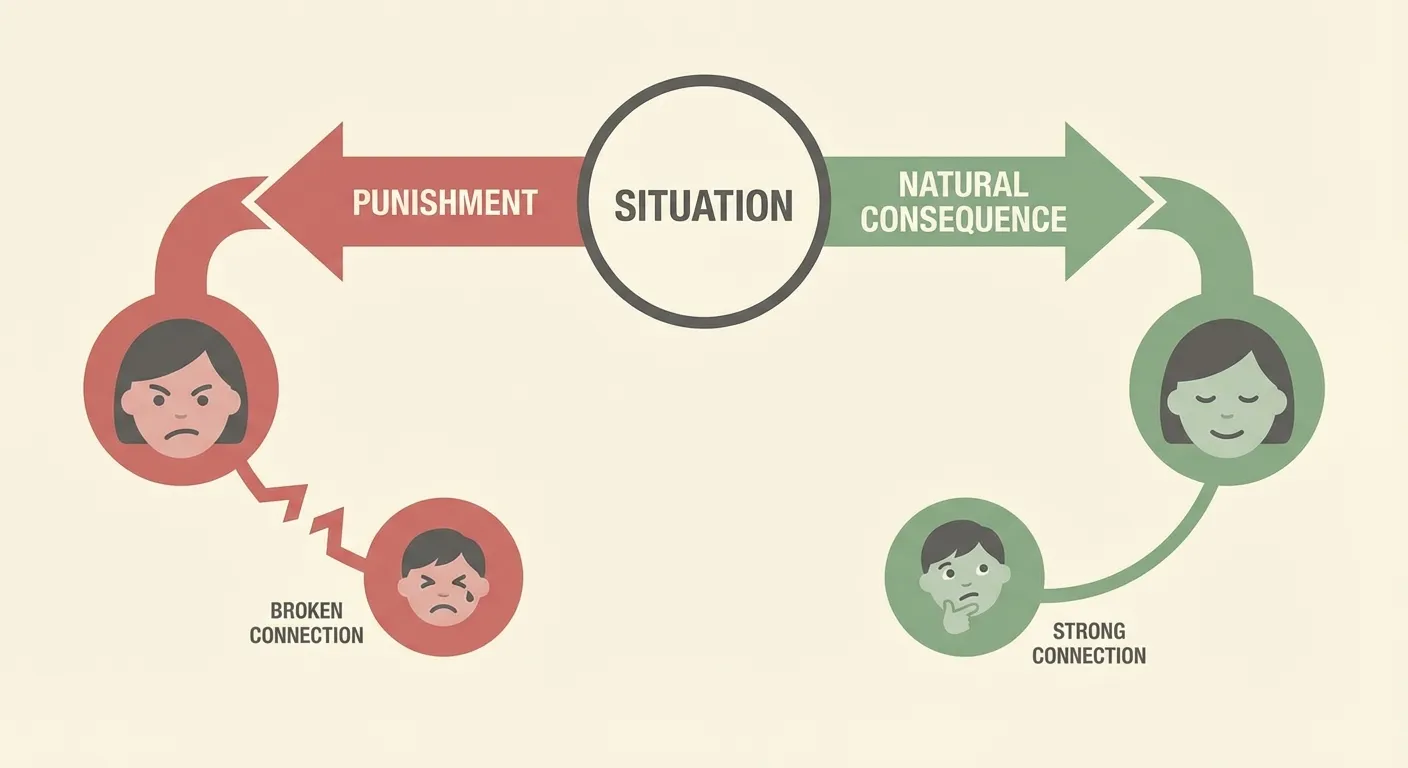
Every time your kid does something that needs correcting, you're at a fork. One path hands the lesson to reality. The other puts you in the middle as the enforcer.
| Punishment reflex | Reality teaches |
|---|---|
| Bike left in the driveway | |
| Take away screen time. Lecture. | Bike stays out. If it rains, it rusts. If you need to park, bike goes in the garage for the day.
"Driveway's for cars -- bike goes in the garage until tomorrow."
|
| Kid skips breakfast | |
| Beg, hover, threaten no snacks later. | They're hungry at school. Sympathize, don't rescue.
"Sounds like a rough morning. Lunch is at noon."
|
| Jacket left at school | |
| Lecture. Buy a replacement. Lecture again. | They wear a hoodie until they bring it home.
"Bet you'll grab it tomorrow. It's chilly out there."
|
| Kid won't do homework | |
| Stand over them. Threaten no TV. Nightly battle. | The teacher's response is the consequence. School problems belong to school.
"I'm here if you want help. It's your call."
|
| Breaks a sibling's toy | |
| Grounded for a week. No connection to what happened. | They make it right -- with their own money or by giving one of theirs.
"How are you going to fix this? You could replace it or give them one of yours."
|
Notice the pattern: the right column isn't permissive. It's not letting kids off the hook. The consequence is just connected to what actually happened. The lesson lives in the situation, not in your anger.
Why This Works Better Than Punishment
When a kid touches a hot mug and it burns, they don't need you to yell about it. The heat was the teacher. They learned. Instantly. No resentment.
That's the principle behind natural consequences -- life delivers the feedback so you don't have to. And when the natural consequence isn't safe or practical, you create a logical one: something directly tied to what they did, delivered without anger.
The key word is directly tied. "No dessert because you didn't eat dinner" makes sense -- food connects to food. "No dessert because you didn't clean your room" is just you flexing authority.
The LEARN Method: Five Steps in the Moment
Let go of the urge to control
Pause. Ask: "What happens if I do nothing?" If the answer is safe but uncomfortable for them (hunger, boredom, a missed opportunity) -- that might be the whole lesson.
Establish the connection
If you need to step in, find the link between behavior and outcome. The consequence should make a kid think "that makes sense," not "that's not fair."
Announce once, then act
State what will happen. Calmly. One time. Then do it. Repeating yourself five times teaches your kid that you don't mean it until you're yelling.
Resist the rescue
This is the hardest part. When they're upset, show warmth -- "I can see this is tough" -- but don't undo the outcome. Bailing them out teaches that consequences don't stick.
Next chance is always available
"You can try again tomorrow." That one sentence communicates faith in their ability. Consequences without a path forward feel like dead ends.
Watch the Tone Trap
You can say all the right words and still be punishing. If your voice carries "I told you so" energy, your kid hears punishment regardless.
Quick Self-Check
Before You Act, Run Through This
The adjustment period is real. Kids used to punishment will test hard. They'll push every boundary to see if you really mean it. Stay the course. That testing phase? It's proof the shift is working.
Your job isn't to make your child suffer for their mistakes.
It's to step back far enough that they learn from them --
and close enough that they know you're still there.