
Five Levels: The Responsibility Ladder Your Kid Actually Wants to Climb
Most parents wait too long to give kids real responsibility. The research says start at age 3.
- Kids who start early claim household jobs as their own, handle multi-day tasks without reminders, and show initiative -- seeing what needs doing and just doing it.
- The move: pair the earn-it deal with identity language, then step back -- no nagging, no hovering, no rescue.
A three-year-old who drops their own clothes in a basket today becomes a thirteen-year-old who books their own dentist appointment. Here's every step in between.
A longitudinal study tracked kids from preschool into their mid-twenties. The single strongest predictor of success as a young adult wasn't IQ. Wasn't family income. It was whether they'd started doing household tasks at age three or four.
Not "chores as punishment." Not a sticker chart that lasted two weeks. Actual, ongoing participation in the work of running a household -- starting absurdly early, and ratcheting up every year.
That's the ladder. Five levels. Each one builds on the last. And the kids who climb it don't just become helpful around the house -- they become people who handle things, period.
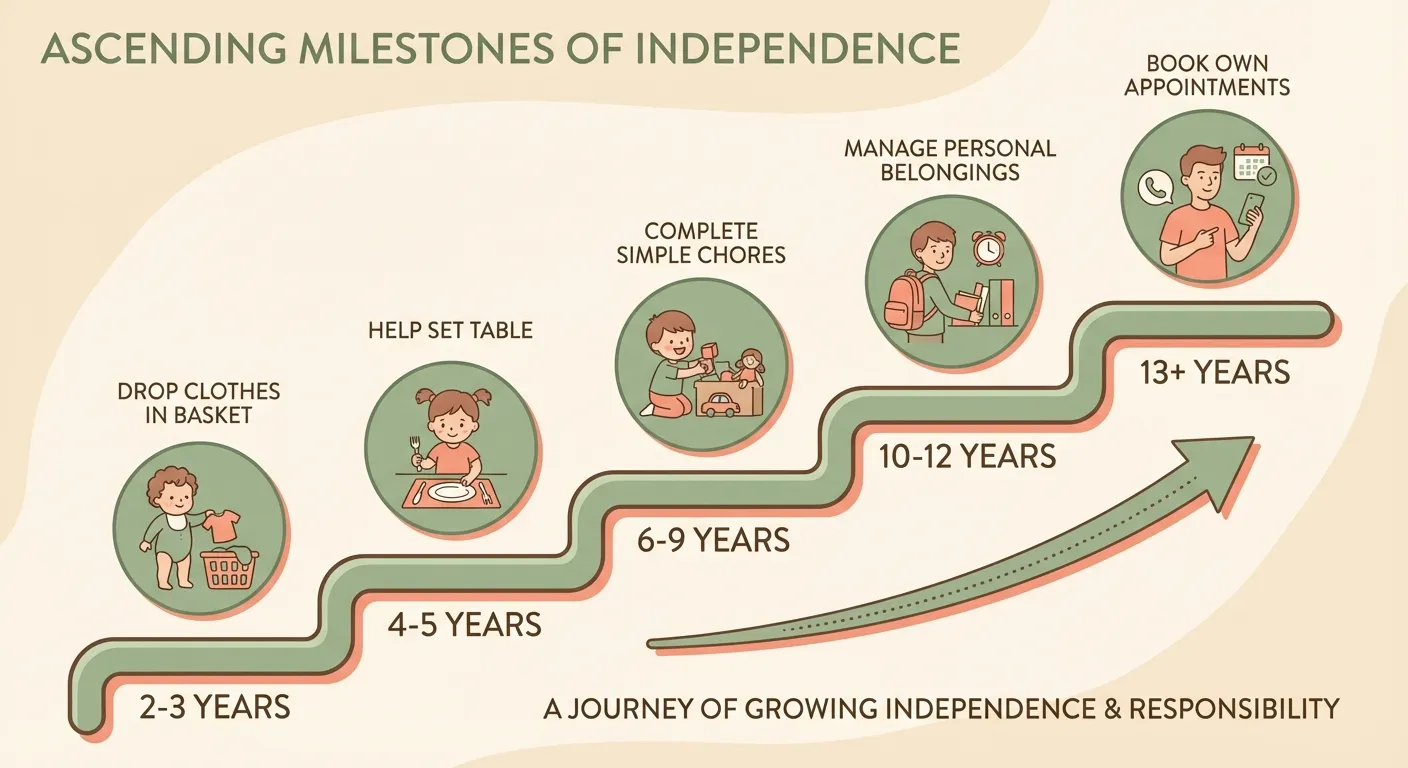
The Five Levels
The point isn't quality. It's participation. Everything takes twice as long with their "help," and that's fine. You're planting the seed that contributing is normal.
- Drop dirty clothes into a basket
- Carry their plate to the counter
- Put books back on a low shelf
- Wipe a table with a damp cloth
Give them a job the family genuinely relies on -- even a small one. "You're in charge of the napkins at dinner" creates ownership that sticker charts never will.
- Sort clean silverware into the drawer
- Water plants with a small can
- Choose their own outfit and dress independently
- Help unload groceries (light items)
This is where the earn-it deal really clicks. School-age kids understand fairness and sequence -- they get that privileges follow effort.
- Prepare a simple breakfast or snack
- Organize backpack the night before
- Feed a pet daily
- Fold and put away their own laundry
- Write thank-you notes after events
Preteens should be managing increasingly complex sequences -- not just single tasks, but multi-step responsibilities with real stakes.
- Plan and cook a full family meal
- Manage homework schedule without prompting
- Handle a small weekly budget
- Do a load of laundry start to finish
- Navigate a trip to a nearby store solo
The litmus test: if your child had to live on their own next year, what would they not know how to do? Whatever the answer -- that's your curriculum.
- Book their own appointments
- Plan and cook meals for the week
- Manage their own transportation
- Handle a conflict with a teacher or employer
- Earn, save, and budget their own money
Every year, your child should be able to handle a little more.
If they can't, the gap isn't in their ability -- it's in what you've asked of them.
The Engine That Moves Them Up
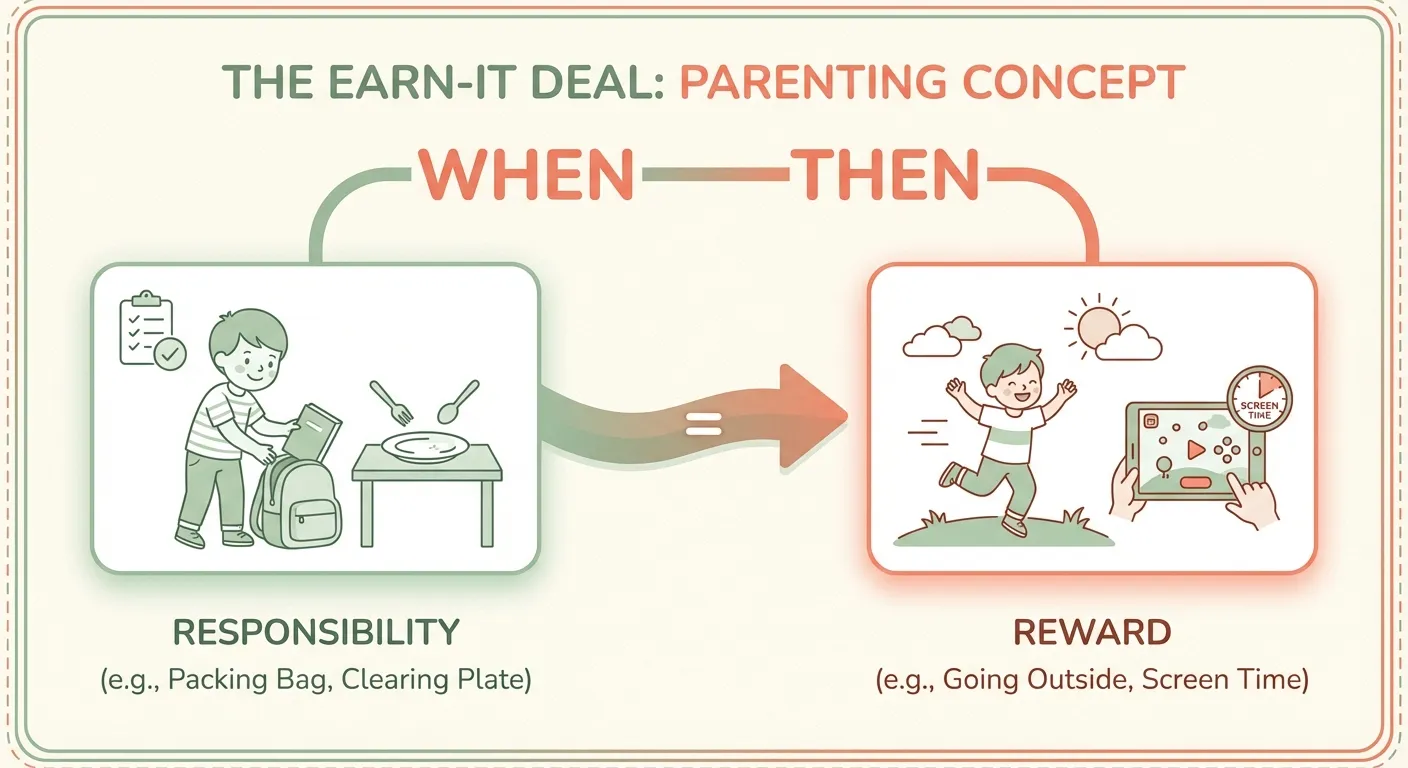
The ladder is the map. But you still need an engine -- something that makes kids want to do the less-fun thing before the fun thing, without threats, nagging, or sticker charts.
It's one sentence.
The Earn-It Deal
Instead of threatening to take things away, set up a deal: the less-fun thing comes first, the fun thing follows naturally.
The word "when" assumes they'll do it -- it's just a question of timing. "If" sounds optional. "You can't until" sounds like punishment. Same deal, completely different energy.
After you state the deal, step back. Don't nag. Don't remind. Don't hover. If the window for the fun thing passes because they didn't follow through, that's the natural consequence -- and it teaches more than any lecture.
The Identity Turbo-Charge
The earn-it deal handles the structure. But there's a second move that multiplies its power: instead of asking your kid to do something, tell them who they are.
Researchers found that children invited to "be a helper" showed dramatically more prosocial behavior than children asked to "help." The same pattern holds for adults -- people described as "a voter" actually vote more than people told "go vote."
Keep the Climb Going
Raise the bar every few months
If the same responsibilities have been friction-free for six months, they've outgrown them. Add something that stretches them slightly. Comfort is the enemy of growth.
Watch for initiative
Following instructions is baseline. The real signal? They see something that needs doing and just do it. When that happens, name it: "You noticed the trash was full and took it out. That's the kind of person you are."
Resist the rescue
When they forget their lunch or show up unprepared, every part of you wants to fix it. Don't. The temporary discomfort of a missed lunch teaches more than a year of reminders.
Model what you expect
Your kid is watching how you handle your own responsibilities. If you complain about chores or bail on commitments, that's the template they'll follow.
Level 5 is the goal. Level 1 starts tonight.
Pick one task from whatever level fits your child right now. Use the earn-it deal once. Tell them who they are. Then step back and watch what happens.