
Every Skill You Teach Is a Door They Open
The long game of building independence — and why it's the most rewarding thing you'll ever do
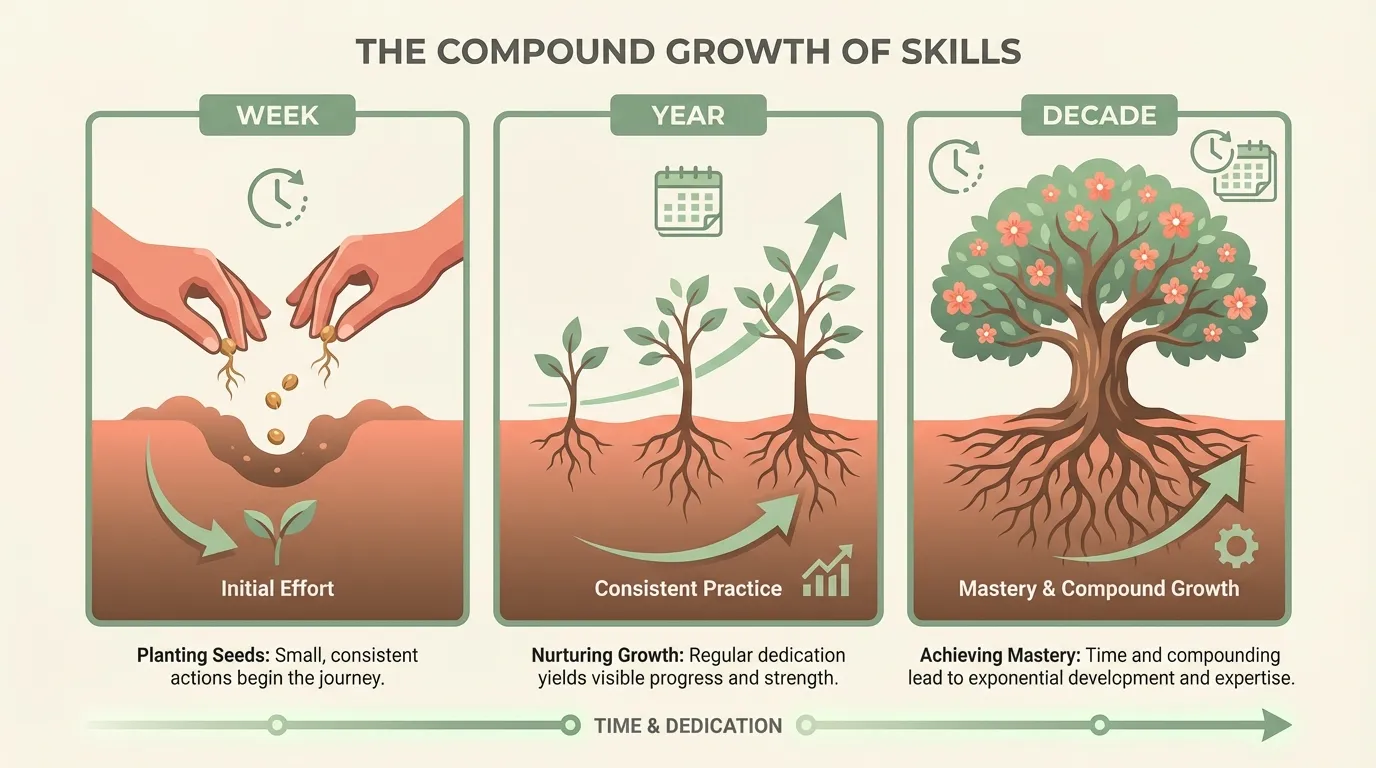
Month to month it looks like nothing. Decade to decade the transformation is staggering.
- Kids raised on deliberate skill handoffs navigate grocery stores alone, attend their own IEP meetings, and build adult lives no early assessment predicted — because someone refused to stop teaching.
- The shift: measure in years, not days — and protect your own capacity so you can sustain decades of deliberate teaching.
A three-year-old can't tie her shoes. So you tie them. A four-year-old can't tie her shoes. So you tie them. A five-year-old can't tie her shoes. So you sit on the floor, take her hands, and spend twenty minutes on one knot.
That twenty-minute session looks like nothing. It looks like a failed attempt with a shoelace. It looks, frankly, like you could have done it in four seconds.
But ten years later, she's tying the knot on her first job apron. And twenty years later she's the person who doesn't call someone when something breaks — she figures it out. That's the long game. Every single skill you deliberately teach compounds into a life that works.
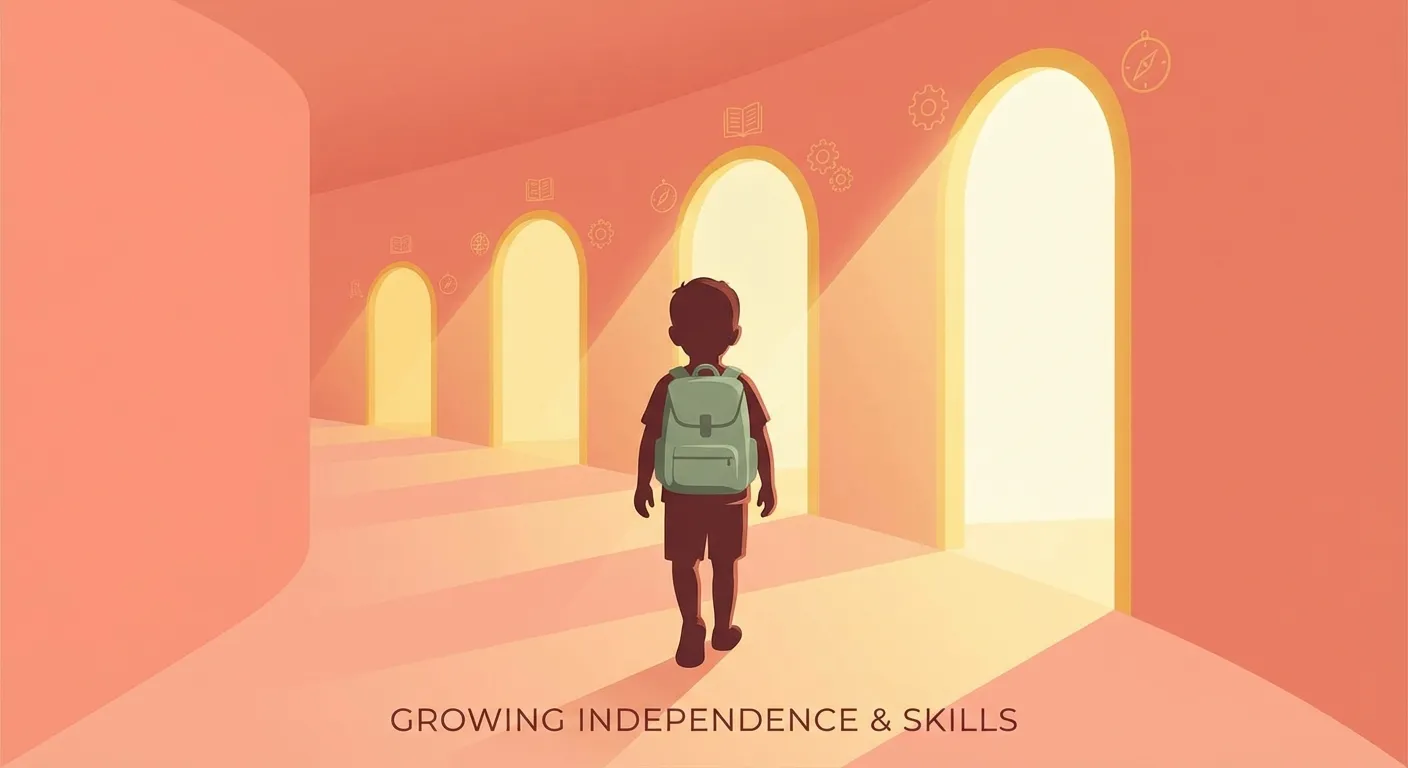
Independence isn't a destination. It's a direction. Every skill you teach today is a door they open tomorrow.
The Compound Effect Nobody Talks About
Here's the thing about building independence in a child — especially one who needs extra scaffolding. Month to month, it looks like nothing is changing. You're doing the same drills, having the same conversations, walking through the same routine for the hundredth time.
Then you zoom out.
| Zoom Level | What You See |
|---|---|
| Week to week | Same struggles, same routines, same plateau. "Are we getting anywhere?" |
| Year to year | The child who couldn't tolerate a grocery store at five navigates one independently at ten. |
| Decade to decade | Adults holding jobs, maintaining friendships, managing households — in ways no early prognosis predicted. |
That's not magic. That's compound interest on hundreds of twenty-minute sessions on the floor with a shoelace.
The REACH Method: Five Moves That Drive the Whole Journey
These aren't one-time actions. They cycle through your child's life at increasing levels of complexity. Think of them as your recurring playbook.
R — Reject the Ceiling
A specialist tells you what your child will never do. That's a prediction, not a verdict. If the assessment doesn't match what you see at home, get another opinion. And another. The brain is famously bad at staying inside predictions.
E — Educate Yourself
No therapist spends as much time with your child as you do. That gives you a dataset nobody else has. Pair it with deliberate study — diagnosis details, educational rights, how services work — and you become the most prepared person at the table.
A — Answer Honestly
Kids notice they're different. When they ask, give them a straight answer: "Your brain is wired differently. Some things are harder, some things are easier. We're figuring it out together." Self-knowledge is the foundation of self-advocacy.
C — Create New Pathways
School isn't the only environment. Many kids find confidence in unexpected places — art studios, martial arts, coding clubs, animal therapy. These spaces reward different strengths and provide peer interaction without academic pressure.
Hand Over the Mic
The ultimate move. Gradually shift from "I speak for you" to "I speak with you" to "I'm here if you need me." A teenager who stumbles through their own IEP meeting has done something more valuable than a parent delivering a perfect presentation on their behalf.
The Independence Arc: What to Focus on When
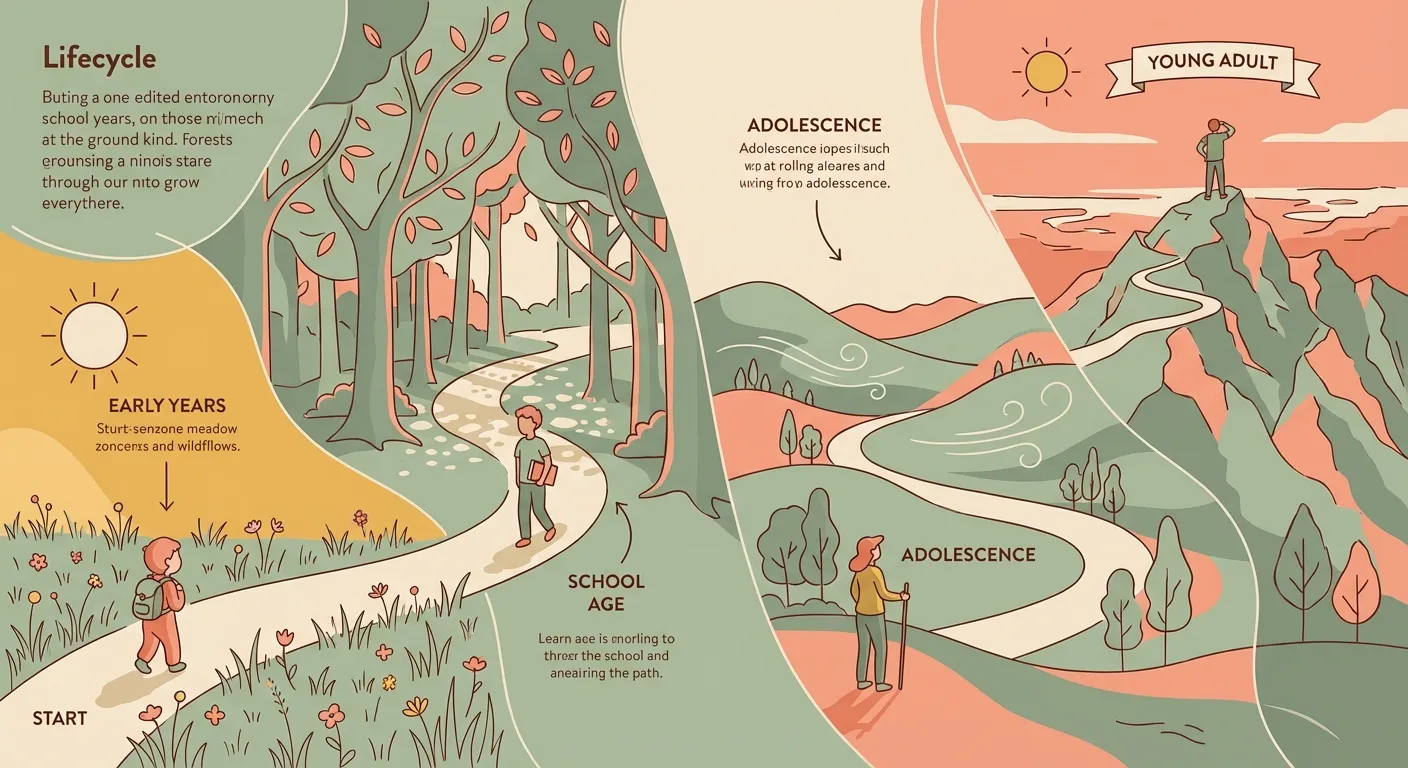
Where you put your energy shifts as your child grows. Each stage has its own job.
Build Your Team
Find the right specialists. Start therapies. Push back on discouraging assessments. Learn the system fast. Your job right now is to assemble the network that will support your family for years.
Get Them in the World
Push for the least restrictive environment that's safe and productive. Mainstream classrooms with proper support. Community activities alongside all kinds of peers. Your child won't learn to navigate a world they never encounter.
Let Them Push You Away
They're building a sense of identity — including integrating their diagnosis without being defined by it. Community groups, creative programs, advocacy experiences. The moment they tell you to back off? That's a success, not a rejection.
Teach the Mechanics of Adult Life
Managing money. How a lease works. What to do when an appliance breaks. How to talk to a boss. Skills neurotypical peers absorb by osmosis need to be broken down, practiced, and rehearsed. Every mastered skill is a piece of real freedom.
The One Trap That Undoes Everything
You already know it. You can feel it every single day.
Doing it for them because it's faster.
Tying the shoe. Making the call. Filling out the form. It takes four seconds when you do it. It takes twenty agonizing minutes when they do it. And sometimes you should just do it — not every moment needs to be a lesson.
But watch the pattern. If you're consistently doing things they could learn to do, you're trading short-term ease for long-term dependence.
The Question to Ask Yourself
"Am I doing this because they can't, or because it's easier if I do?"
Ask it once a day. It changes everything.
Why Explicit Teaching Is Your Superpower
A neurotypical child watches you pay for groceries and absorbs how transactions work. A child who processes the world differently might watch the same scene a hundred times and not connect the pieces. That's not a failure of intelligence. It's a difference in how learning happens.
Explicit teaching means breaking every skill into its parts. Demonstrate each one. Practice together. Then step back.
Break It Down
Take the skill apart. "Buying groceries" isn't one skill — it's a dozen: reading a list, finding items, waiting in line, placing items on the belt, paying, carrying bags.
Demonstrate Each Piece
Walk through each sub-skill slowly and narrate what you're doing and why.
Practice Together
Let them do it while you're right there. Resist the urge to take over when it gets slow.
Step Back
Move from beside them to behind them. You're still there, but they're driving.
The child who was explicitly taught how a checkout line works at eight is the adult who grocery shops independently at twenty-five. That's not a small thing. That's freedom.
Sustaining the Long Game Without Burning Out
This is a decades-long project. You need staying power, not just enthusiasm.
| Habit | Why It Matters |
|---|---|
| Measure in years, not days | A bad week doesn't erase a good year. Keep a simple milestone log. When progress feels invisible, reading back through six months of entries usually proves otherwise. |
| Revise the map regularly | What they need at seven is not what they need at fourteen. Reassess your approach, your team, and your goals at least once a year. |
| Resist comparison | The only useful comparison: your child today versus your child last year. Every other comparison will mislead you. |
| Protect your own capacity | You can't sustain decades of deliberate teaching on empty. Whatever keeps you functional — therapy, exercise, time alone — treat it as infrastructure, not indulgence. |
No one can predict what your child will or won't achieve.
Your job is to keep opening doors. Their job is to walk through them.
One skill. One handoff. One door at a time.