
Put the Ice Cream Next to the Broccoli
The one dinner move that sounds completely wrong -- until you watch your kid stop fighting and start eating.
Dessert as a reward turns dinner into a hostage negotiation.
- Kids raised with dessert alongside stop obsessing over sweets, eat a wider range of foods, and come to dinner without dread.
- The move: put the ice cream on the plate next to the broccoli -- no earning, no sequencing, no lever.
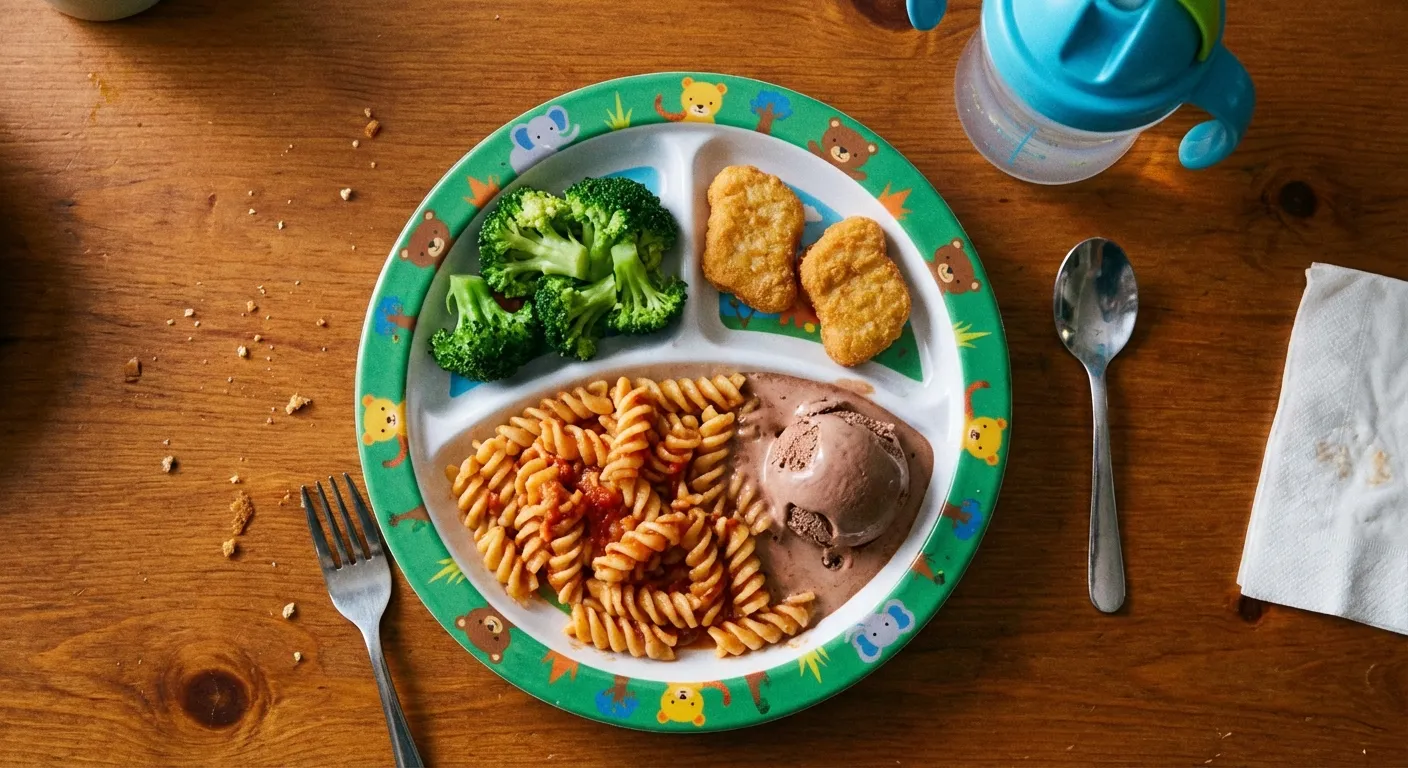
Dessert isn't a reward. It's just another food on the plate.
Tonight, try this: put a small scoop of ice cream directly on your kid's dinner plate. Right there, next to the broccoli and the chicken. Don't announce it. Don't make a speech. Just set it down like it's pasta.
Your kid will be confused. Maybe delighted. Possibly suspicious. They might eat the ice cream first. That's fine.
Here's what happens over the next few weeks: dessert stops being the golden trophy at the finish line. It becomes just... food. When ice cream isn't elevated above everything else on the plate, kids lose the obsession with it. They eat the ice cream, then they eat the chicken. Or they eat three bites of ice cream and move to the broccoli because the broccoli is right there and they're curious.
This one move -- dessert alongside, not after -- is the gateway to a system that makes mealtime battles disappear entirely.
The System Behind the Move
That ice cream trick isn't random. It's built on a principle dietitian Ellyn Satter spent decades developing in her clinical work with families. The idea is dead simple:
You control the menu. They control the fork.
When everybody stays in their lane, the fight disappears.
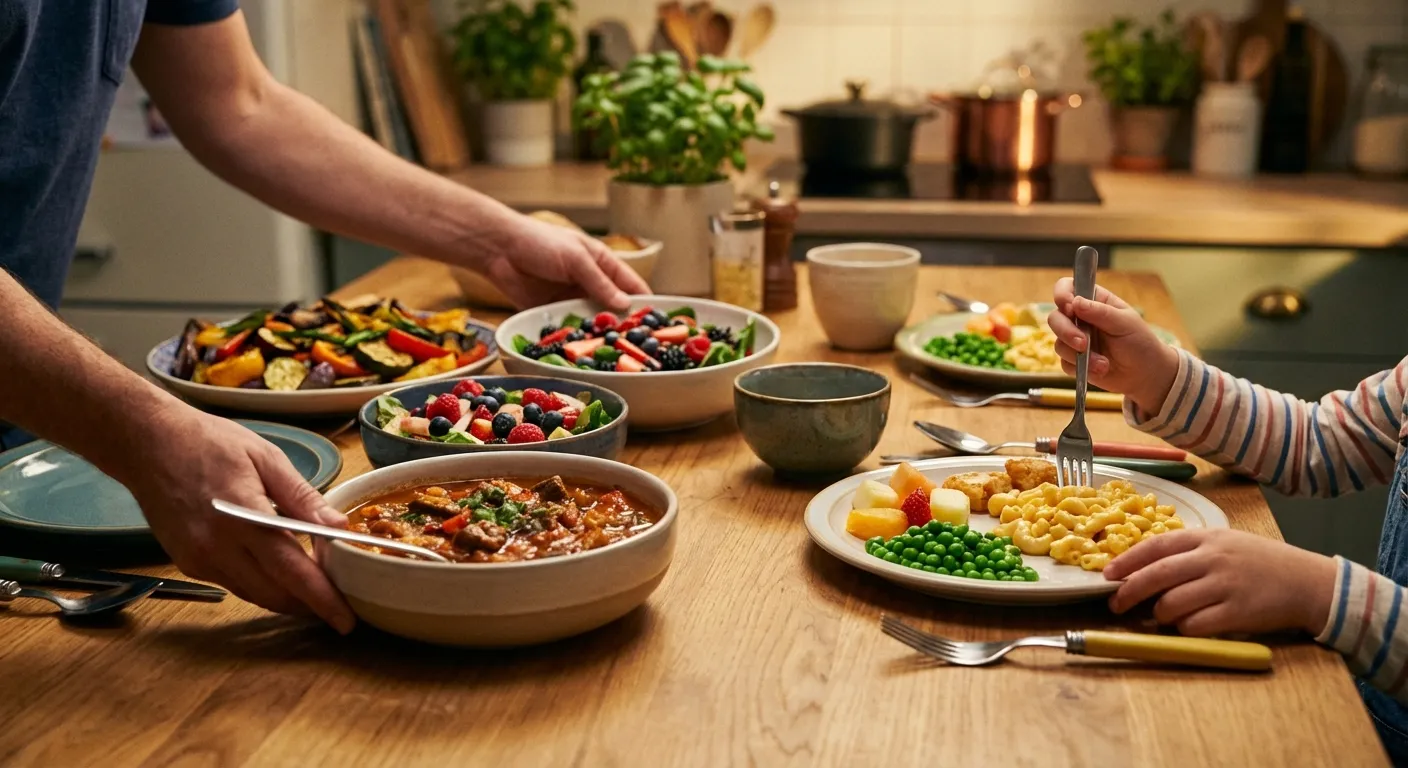
Your Lane
- What goes on the table
- When meals happen
- Where eating takes place
Their Lane
- Whether they eat
- How much goes in
- Which items they touch
That's it. Three decisions are yours. Three are theirs. When you stop reaching across that line, the power struggle loses its fuel.
Why Pushing Backfires
Every mealtime battle follows the same script:
It's not that your kid is being stubborn. It's that their mouth is the one thing they genuinely, completely control. Push on that, and they'll defend it with everything they've got. Not out of defiance -- out of instinct.
Feeding research consistently shows that pressuring kids to eat reduces intake and increases food avoidance. The harder you push, the less they eat. Every time.
What to Say Instead
Knowing the system is one thing. Knowing what to actually say at 6pm with a screaming kid is another. Here are the exact scripts.
Weekend morning, car ride, anywhere that isn't the dinner table. Say it once, as a fact -- not a pitch.
They don't need to agree. You're informing them, not negotiating. If they push back: "You don't have to love the idea right now. Let's just try it."
Arms crossed. "I don't like any of this." Rice, chicken, carrots -- all rejected on sight.
The moment you say "just try one piece" -- you've crossed the line. Stay warm, stay casual, move on with conversation.
You made soup. They want pizza. Tears, accusations, full performance.
Don't defend your choice. Don't explain why soup is nutritious. Name what they feel, state what is, let the storm pass. Your steadiness is the lesson.
The Before/After
| Old Pattern (Crossing Lanes) | New Pattern (Staying in Yours) |
|---|---|
| "Just three more bites." | "Everything's here whenever you're ready." |
| "No dessert until you finish." | Dessert served alongside. No lever. |
| "You can't be full yet!" | They say they're done. You say okay. |
| Making a separate "kid meal" | One meal, with one familiar item included. |
| Tracking every bite with anxiety | Evaluating your own job: Did I offer variety? Stay calm? |
The Snack Trap
Kids grazing on crackers all afternoon, then arriving at dinner full -- that's a pattern you can fix immediately. Snack timing is 100% your lane.

The goal: dinner as connection time, not combat.
Making It Stick
- Catch the lane-crossing. Anytime you hear "just one more bite" come out of your mouth, that's a signal. Gently steer back.
- Debrief yourself, not them. After meals: Did I offer variety? Did I stay calm? That's your report card. Let their eating data go.
- Expect 2-4 weeks of testing. Kids who've been pushed will test the new system. Some eat less initially. This is recalibration, not failure.
- Know your triggers. Most lane-crossing happens when you're worried about nutrition, feeling judged by a partner or grandparent, or exhausted. Those moments pull the old pattern hardest.
You set the table. They set the pace.
No one's fighting because no one needs to win.
Try the ice cream on the plate tonight. See what happens.