
Your "Lazy" Kid Isn't Lazy — They're Bored Out of Their Mind
Most parents lower the bar when kids disengage. The research says raise it.
- Kids working at the right level finish practice more energized than when they started — the mental equivalent of a good workout.
- The move: use the energy test — if they're drained after practice, the calibration is off.
The counterintuitive fix that turns zoned-out practice sessions into self-sustaining drive.
Your kid slumps over the piano. Sighs through math problems. Stares at the ceiling during chess. You think: they've lost interest. Maybe this isn't their thing. Maybe I need to back off.
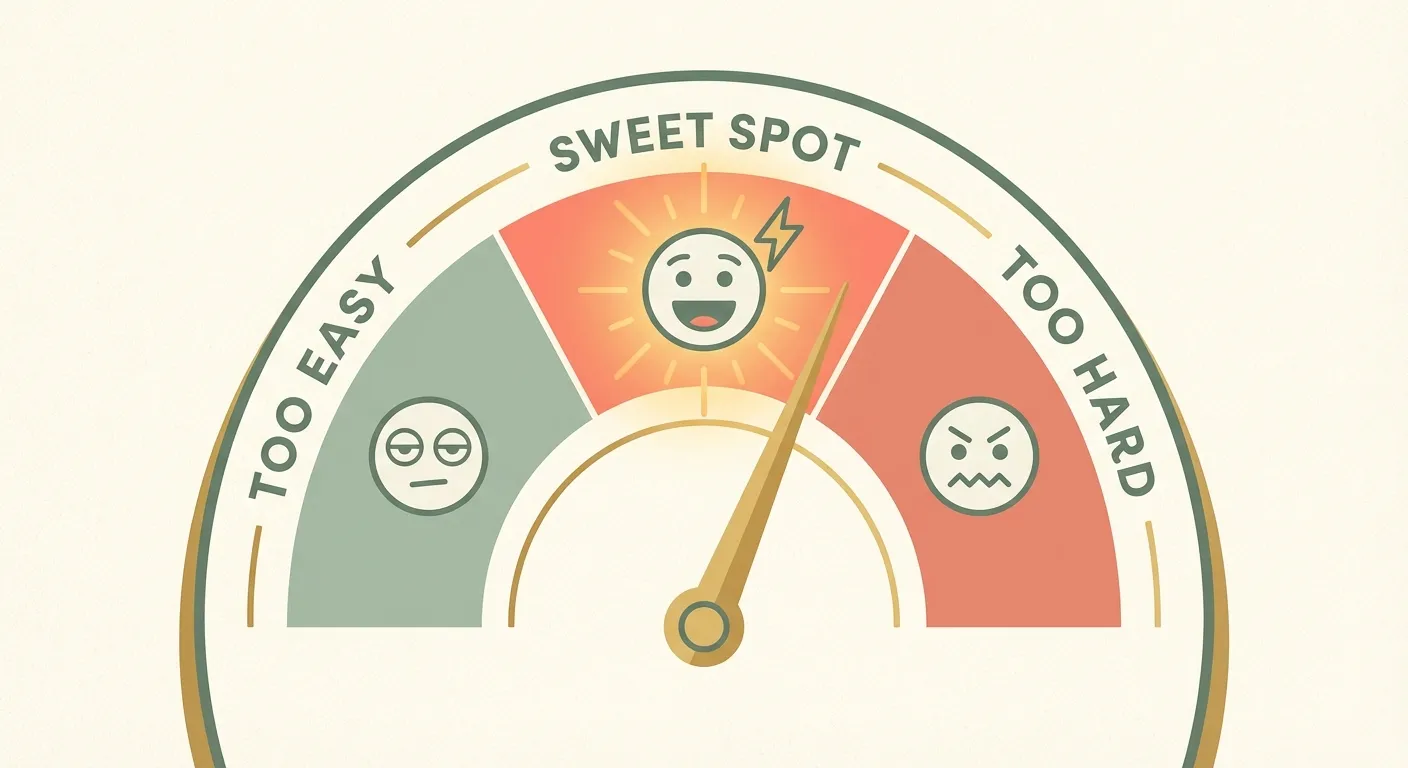
Here's what families who raise elite performers know that most parents don't: that boredom almost always means the material is too easy, not too hard. The slumping, the sighing, the glazed eyes — it's not a signal to lower the bar. It's a signal to raise it.
An under-challenged kid tires faster than one working at the right level. Think about that. The kid who looks exhausted and done? Give them something harder and watch them come alive.
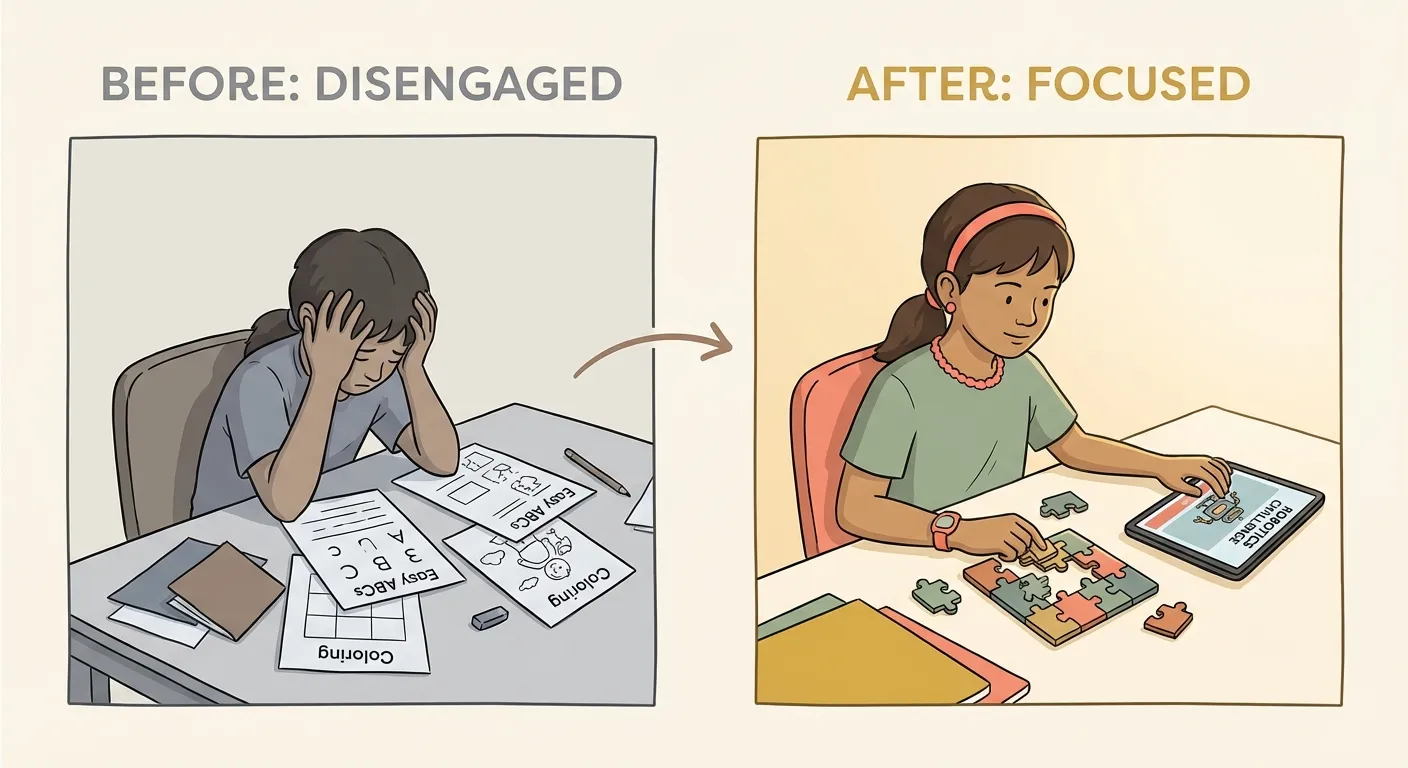
The Instinct Flip
Most parents operate on a reasonable-sounding assumption: if my child is struggling or disengaged, I should make things easier. And sometimes that's right — if you've thrown a seven-year-old into advanced calculus, sure, dial it back.
But far more often, the problem is the opposite. Here's how the flip works:
| What You See | Common Instinct | The Flip |
|---|---|---|
| Sighing, fidgeting during practice | They're tired. Shorten it. | Material's too easy. Raise difficulty. |
| "I don't want to practice" | They're losing interest. Back off. | Sessions aren't rewarding. Find the sweet spot. |
| Sloppy, careless work | They need more discipline. | Boredom kills precision. Engage the brain. |
| Resistance before practice | Push through. Build grit. | Check the calibration first. Then decide. |
This doesn't mean always ratchet up. It means diagnose before you react. And nine times out of ten, the diagnosis points to calibration, not character.
The Momentum Engine
Once you understand that motivation follows success (not the other way around), you can build what the Polgar family and other elite-producing households have built: a self-reinforcing loop.
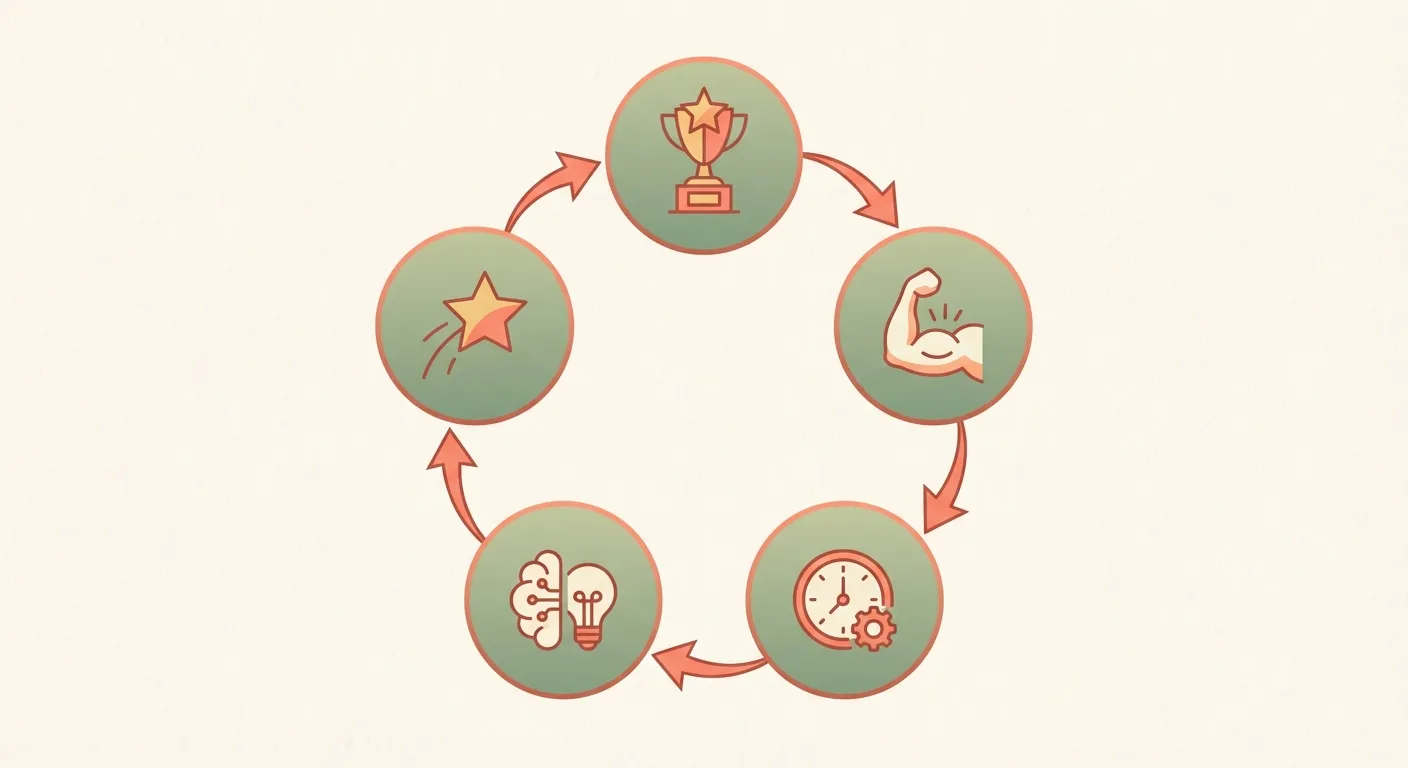
The Core Loop
You can't lecture a child into loving practice. You can't bribe them into it with sticker charts forever. But you can engineer enough early wins that their own sense of "I'm good at this" becomes the engine driving thousands of hours of work.
How to Build It: 6 Moves
Start Below Their Level
When introducing any new skill, begin with challenges your child can definitely handle. The first sessions should feel almost too easy. You're not being soft — you're building a reservoir of confidence that carries them through harder material later.
Stack the Deck on Practice Partners
When your child practices against others, match them carefully. The balance should lean heavily toward positive outcomes early on. A mix of challenges is fine — some they'll win comfortably, some that push them. But the ratio matters enormously. Too many losses too early kills motivation before it has roots.
No Premature Competitions
Only enter competitions when you're confident they'll perform well. This doesn't mean guaranteeing first place — it means avoiding situations where they're clearly outmatched. A devastating early loss can undo months of carefully built confidence.
Absorb Setbacks — Don't Amplify Them
When they lose (and they will), resist every urge to criticize. The disappointment is already doing the teaching. Comfort first. Analyze later.
Read Boredom Correctly
This is where most parents go wrong. When motivation drops, try increasing the difficulty or changing the format before assuming your child is lazy or losing interest. An engaged brain needs challenge the way muscles need resistance.
Watch for the Coast
Success-driven motivation has a shadow side: sometimes kids get so used to winning they stop pushing. After a big achievement, watch for less focused practice, less effort, more socializing. Gently recalibrate with harder material. The goal is confident humility, not complacency.
Praise That Fuels the Engine (vs. Praise That Breaks It)
The way you talk about your child's progress either accelerates the loop or jams it. Here's the split:
"You solved that faster than last week."
"You're the smartest kid ever!"
Show them a recording from 3 months ago vs. today.
"You're so talented, everything comes naturally."
"That passage was really clean — did you notice?"
"Amazing! Perfect! The best!"
Help them find satisfaction in the work itself.
Reward every session with treats or screen time.
Over-the-top praise sounds supportive but creates a fragile ego. When reality eventually delivers a loss, the gap between "you're the best in the world!" and the scoreboard is devastating. Honest recognition of real progress is far more durable.
The Energy Test
A well-calibrated session leaves your child more energized than when they started — the mental equivalent of a good workout. If they're drained, flat, or dreading the next session, something is off: the difficulty is wrong, the duration is too long, or the format needs to change.
The signal you're looking for: a child who finishes practice buzzing, not crawling toward the couch.
Keep It Running: The Long Game
- Recalibrate constantly — What felt challenging last month may be too easy now. Stay ahead of your child's growth.
- Build in variety — Change formats, exercises, contexts. Novelty re-engages attention when routine dulls it.
- Let them teach — Having your child explain concepts to a sibling or friend forces deeper understanding and builds confidence.
- Track milestones together — Children who can see the path ahead stay motivated longer than those practicing in the dark.
- Know when to push vs. back off — Some resistance is normal growth; persistent resistance is a signal. Learn your child's difference.
The families that produce kids who are crushing it — in music, math, sports, chess, whatever — aren't working with different raw material. They're running a different system. One where success breeds confidence, confidence breeds practice, practice breeds skill, and skill breeds more success.
Start the engine. Keep it calibrated. Watch it run.