
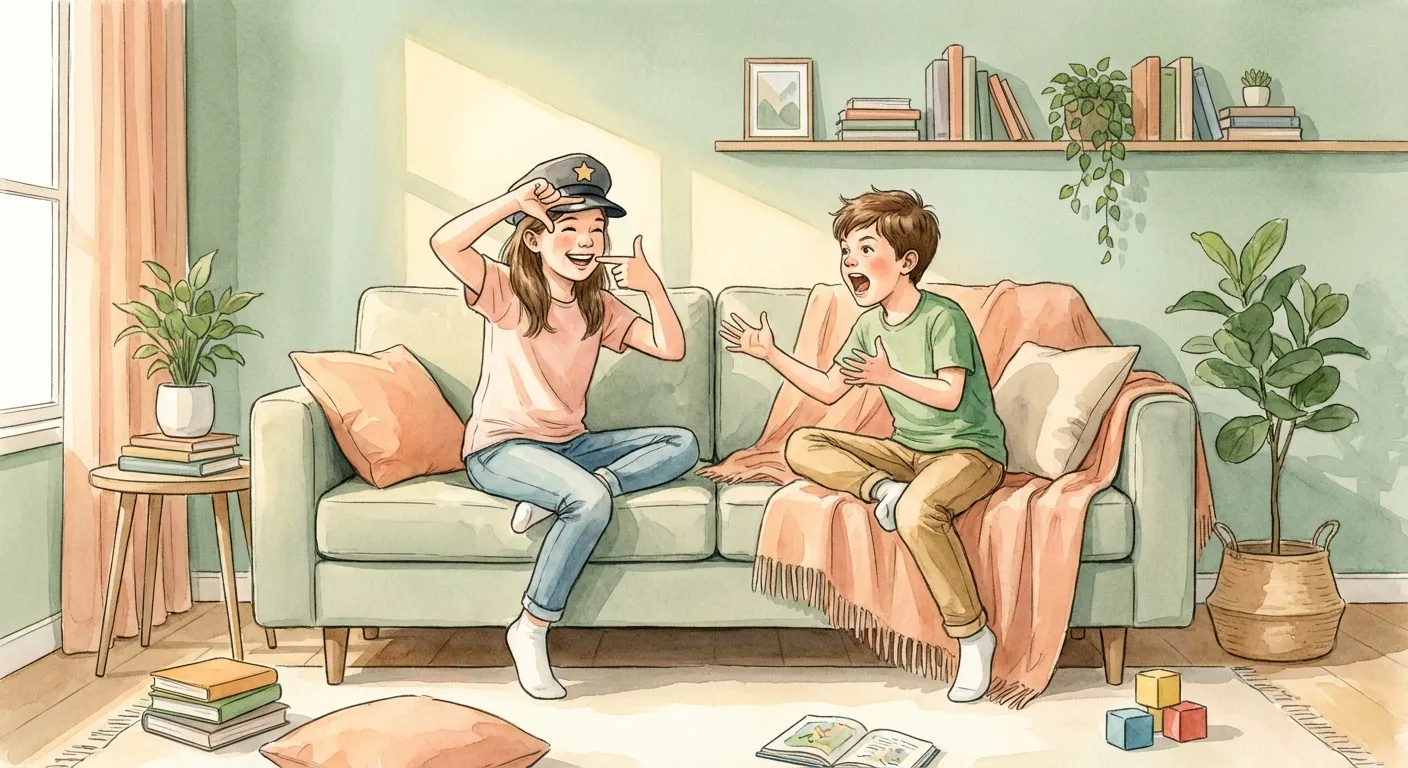
The 60-Second Trick That Turns Sibling Fights Into Problem-Solving
Empathy isn't something kids are born with. It's trained.
- Kids who get this practice handle sibling fights without an adult referee, pick up on body language their peers miss, and show up for friends when it counts.
- The move: turn everyday moments — conflicts, errands, drawing time — into perspective-taking reps.
Your kids are screaming at each other over a marker. You say five words. Sixty seconds later, they're calmly inventing solutions. Here's the game.
Two kids, one marker, total meltdown. You've been here. The old playbook says separate them, lecture about sharing, wait for the next eruption in twenty minutes.
But there's a faster move. You say: "Let's pretend this is a movie."
That's it. Five words. And something shifts immediately -- because you just handed your child a superpower they didn't know they had.
The Movie Scene
Here's the full play. When two kids are locked in a conflict -- screaming, crying, arms crossed -- you step in and reframe the entire situation as fiction.
How to Run It
- Say: "Let's watch this like a movie. Who are the characters? Let's call them Alex and Sam."
- Retell what happened using the fictional names: "So Alex grabbed Sam's marker without asking, and now Sam is really mad."
- Ask perspective questions: "Why is Sam so upset? What does Alex want?"
- Hand them the director's chair: "If you were directing this movie, how would you help these two solve it?"
- Let them write the ending: "What could Alex say? What could Sam do instead of yelling?"
"Let's pretend we're watching this like a movie. Who are the characters?"
"Okay, so in this scene, Alex grabbed Sam's marker without asking, and now Sam is really mad. Why do you think Sam is so upset?"
"If you were directing this movie, how would you help these two characters solve this problem?"
Why it works: Fictional names + mental distance = emotional cooling. When kids retell their own conflict as something happening to someone else, they stop defending and start problem-solving. The brain shifts from threat mode to creative mode. And here's the feedback loop: understanding how others think helps kids understand their own reactions, which makes them more curious about other perspectives.
| Without the Movie Scene | With the Movie Scene |
|---|---|
| "She took my marker!" (defending) | "Alex grabbed Sam's marker" (observing) |
| Escalating emotions | Emotional distance from fictional names |
| Parent imposes solution | Kids invent the solution |
| Same fight again in 20 minutes | Kids build a reusable skill |
This Is Empathy Training in Disguise
The Movie Scene works because it trains perspective-taking -- the ability to step outside your own viewpoint and imagine someone else's internal world. And perspective-taking isn't some soft, nice-to-have skill. It's predictive.
Empathy doesn't develop automatically. It requires practice. The Movie Scene is one game. Here are four more that build the same muscle from different angles.
Four More Games, Same Superpower
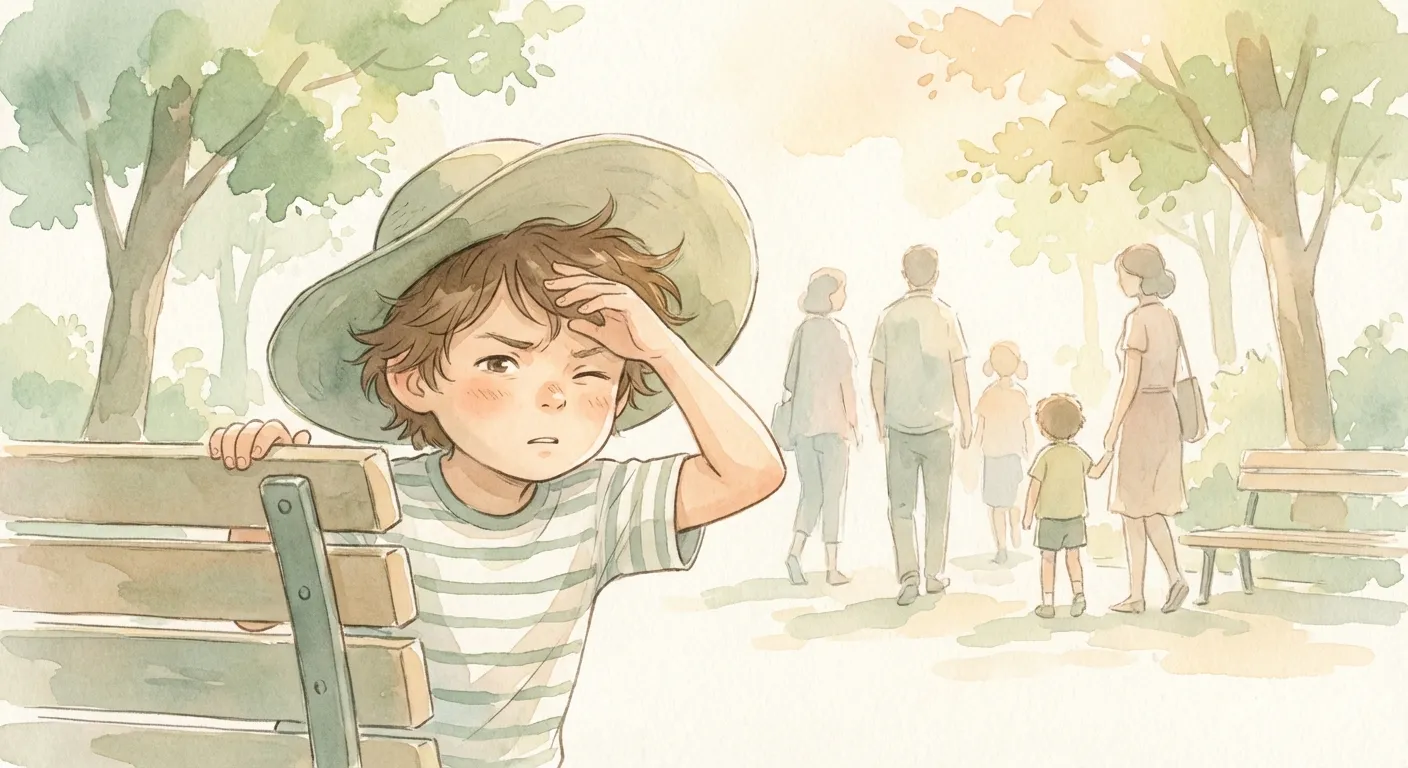
Emotion Detective
Point to someone nearby: "What do you think that person is feeling?" Look for clues together -- smiling? Walking fast? Shoulders slumped? Name the emotion, then ask: "What made you guess that?" Turns every outing into empathy reps.
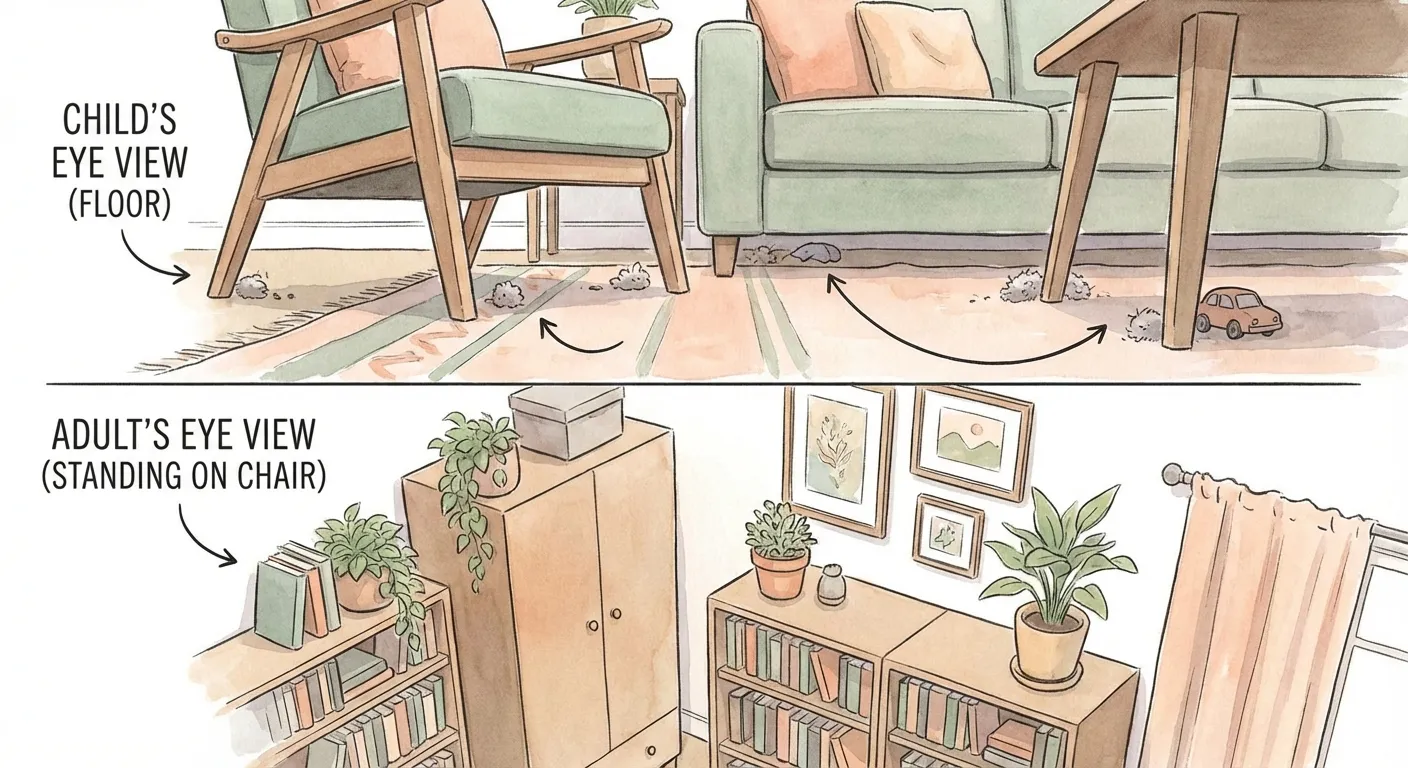
Floor and Ceiling
Everyone lies on the floor -- what do you see? Now stand on chairs -- what do you see? Dust under the couch vs. tops of shelves. Neither view is wrong. "That's how opinions work too." Physical proof that different perspectives are both valid.
Draw It Twice
Put an object in the center of the table. Each person draws it from where they sit. Then switch seats and draw it again. Compare: same object, totally different drawings. "When people disagree, sometimes they're both right -- different angles."
Build a Cozy Spot
Pick a stuffed animal. Build it a "home" from tissues, fabric scraps, a small box. "What would make this toy comfortable?" Check on it over the next few days. Caring for something -- even imaginary -- is empathy practice with zero emotional stakes.
Making It Stick Beyond Game Time
Games are the training wheels. Here's how the skill transfers to real life:
Four Habits That Lock It In
| Habit | What It Sounds Like |
|---|---|
| Model repair | "I yelled at you, and that wasn't fair. I was stressed about work, but you didn't deserve that. I'm sorry." |
| Name their wins | "You noticed Emma might be sad because no one picked her. That's empathy -- you just did something really smart." |
| Ask before solving | "What do you think was going on for them?" (before jumping to fix it) |
| Pause during stories | "Why do you think the character did that? What were they feeling?" |
Use the same trick on yourself. When your kid is driving you crazy, mentally zoom out. Imagine you're watching the situation from across the room. Ask: "If I saw this on video, what would I notice?" That shift from reactive to observer -- what Harvard negotiator William Ury calls "going to the balcony" -- often reveals the whole picture instead of just your frustration.
Five games. One underlying skill. The kind of thing that changes how your kid navigates friendships, handles conflict, and shows up for other people -- starting tonight, with a marker and two fictional characters named Alex and Sam.