

The Parenting Trap That Changes Every Few Years
What works at age 5 can backfire at age 12.
- Kids raised with stage-matched parenting build real self-control, handle peer pressure, and develop identity on their own terms instead of performing someone else's version of success.
- The move: match your approach to their developmental stage — five ages, five different shifts.
What worked last year might be the exact thing holding your kid back today.
Here's a strange fact about parenting: the thing you're doing right at age 5 can become the thing you're doing wrong at age 12. Not because you got lazy. Because your kid's brain rewired itself while you were still running the old playbook.
Developmental research is pretty clear on this. Children don't just get bigger -- they fundamentally change how they think, feel, and relate to you at predictable intervals. And at each stage, there's a specific trap that catches well-meaning parents. The trap isn't neglect or abuse. It's doing too much of the right thing at the wrong time.
Five stages. Five traps. Here's what catches people off guard at each one -- and the move that actually works.
The Boundary Builders
They can't hold two feelings at once. They're either happy or the world is ending.
- Protect free play -- a cardboard box beats an expensive "brain-building" toy
- Show, don't tell -- they copy how you treat the barista, not what you lecture about
- Firm limits ARE how they learn self-control; going soft on hitting teaches nothing
The Wide-Eyed Years
They think in absolutes. One bad day means "I'm terrible at everything."
- Correct what they did, not who they are
- Let development be uneven -- some read early, some don't
- Skip prizes for learning -- external rewards kill genuine interest
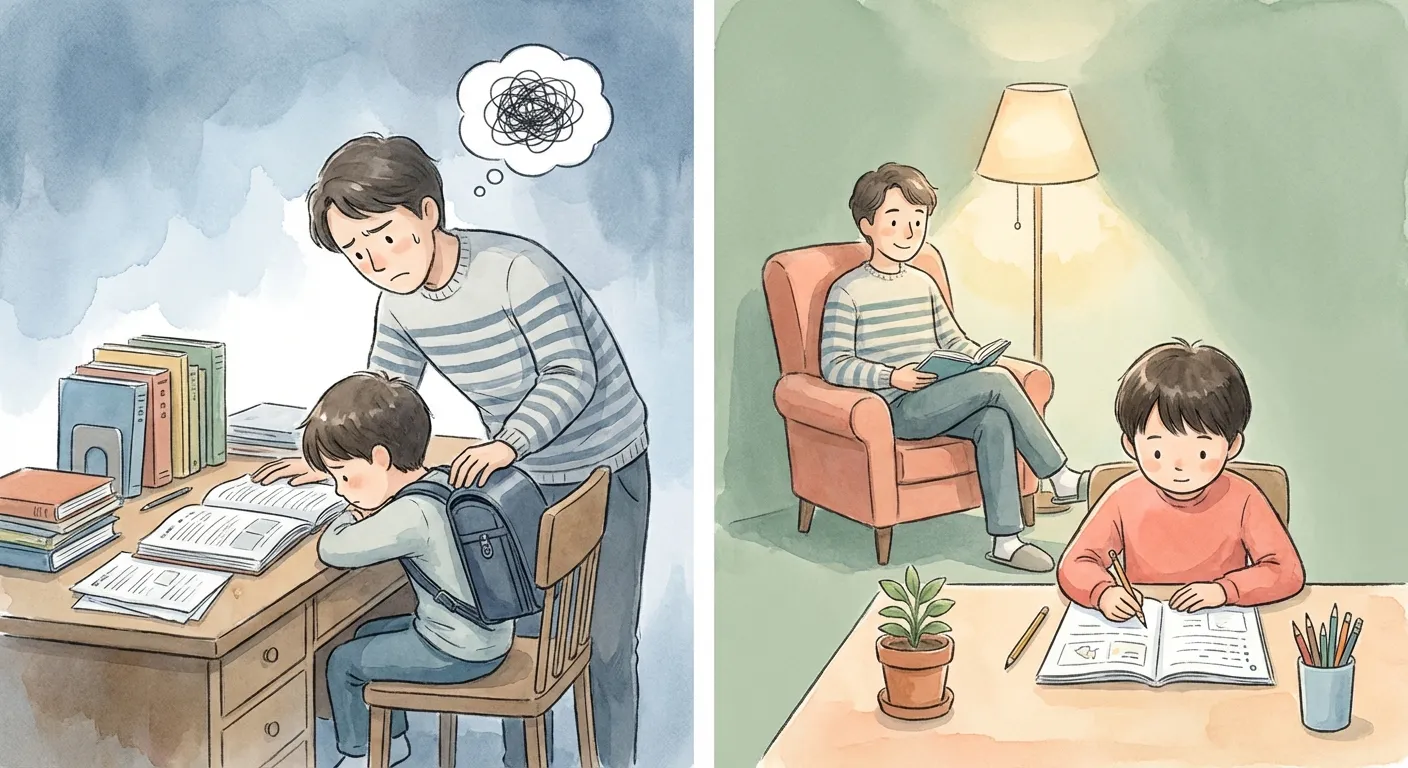
Five stages, five different traps. Same good intentions, different landmines.
The Reality Check
They can finally hold two truths at once: "I'm good at art but struggle with reading."
- Character first, effort second, results third
- Show your own imperfections -- let them see that adults have weaknesses too
- Never cancel chores to make room for more studying -- sends exactly the wrong message
The biggest parenting mistakes don't come from not caring enough.
They come from managing your own anxiety through your child.
If you're obsessing over grades, rankings, or social status -- ask whose need you're actually serving.
The Great Push-Away
They'll challenge your views, reject your taste, and criticize your choices. That's their job.
- Stay close even when they push -- too much freedom at this age is dangerous
- Stop calling coaches and teachers on their behalf -- let them handle it
- Their rejection of you is developmental, not a verdict on your parenting
Becoming Themselves
They're confident one day, lost the next. That's not inconsistency -- it's integration.
- Let them experiment with identity -- changing hobbies, style, and opinions is how they figure out what's real
- College applications, job interviews, school projects need to be genuinely theirs
- Don't dismiss substance use as "just what teenagers do" -- early use is a real risk factor
At a Glance
The Trap vs. The Move at Every Age
| Age | The Trap | The Move |
|---|---|---|
| 2-4 | Over-analyzing a toddler who hits | Short boundary, then move on |
| 5-7 | Performance-tracking a 6-year-old | Follow their curiosity |
| 8-11 | Making grades the center of everything | Give real responsibilities |
| 12-14 | Rewarding performed perfection | Survive their criticism calmly |
| 15-17 | Rescuing them from consequences | Let reality be the teacher |

The Thread That Runs Through Every Stage
Adjust, Don't Abandon
Your involvement should change shape, not disappear. A 4-year-old needs you to set the boundary. A 14-year-old needs you to hold it while they push.
Connection Before Correction
Discipline works better when the relationship is strong. Invest during calm times so you have something to draw on during hard ones.
Check Your Anxiety
At every age, the biggest mistakes come from parents managing their own worry through their child. Whose need are you serving?
Let Them Struggle
The instinct to remove obstacles is strong and often loving. But struggle is where growth happens. Be nearby -- don't clear the path.
Good parenting isn't one thing. It's a moving target.
The parent who adapts to where their child actually is -- not where they wish they were -- gives them the best shot at becoming themselves.