
A Sock Puppet Gets More Compliance Than a Lecture
The playful discipline toolkit that turns power struggles into connection — and actually changes behavior.
Children under seven don't process rules through logic — they process them through play.
- Kids who learn behavior through stories and pretend actually retain the lesson. They share without prompting, brush teeth without a fight, and self-correct during real conflicts because they already rehearsed the right move.
- The shift: stop explaining why and start wrapping the lesson in a character, a silly voice, or a make-believe scenario.
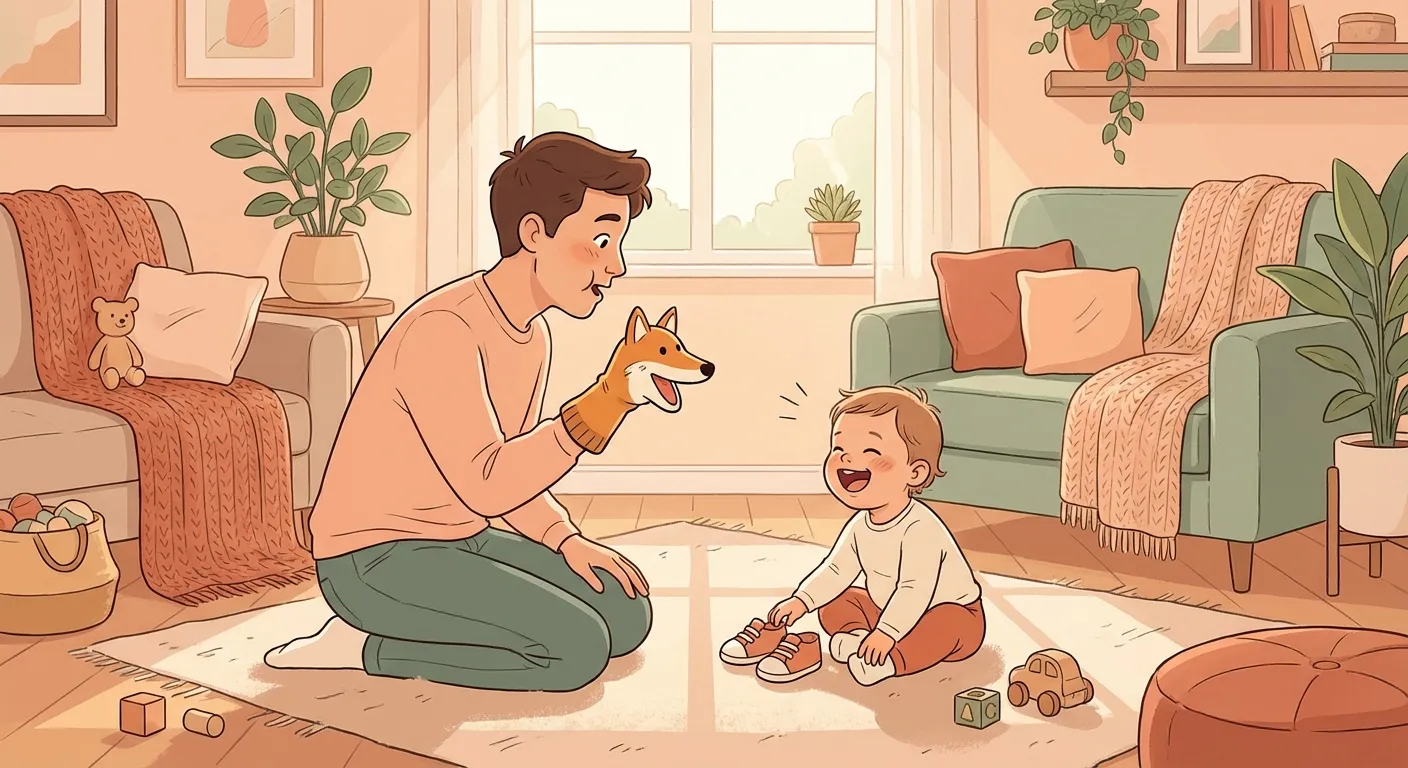
Make a fist. Tuck your thumb inside. Open and close it like a mouth. Now give it a squeaky voice: "Excuse me! Are these your shoes? I've been waiting here ALL morning!"
That ridiculous move — a talking hand aimed at a pair of sneakers — will get your three-year-old's shoes on faster than any countdown, bribe, or stern look you've ever tried.
It sounds too silly to be real discipline. But this is exactly what anthropologists found when they studied how Indigenous parents across the Arctic and beyond handle misbehavior. No time-outs. No lectures. No consequences charts on the fridge. Instead: stories, imaginary creatures, and playful rehearsal games.
And the neuroscience backs it up. Children — especially under seven — don't process the world through rational argument. They process it through imagination. When you explain why they should brush their teeth, you're speaking adult logic to a brain wired for stories and pretend. Wrap the same lesson in a character, a silly voice, or a make-believe scenario, and it lands instantly.
They learn through stories, characters, and pretend play.
Use their language.
The One Rule That Makes All of This Work
Both techniques below share a single non-negotiable: everyone must be calm.
When a child is emotionally flooded — mid-tantrum, just caught doing something wrong — they literally cannot absorb a lesson. The learning brain goes offline. The survival brain takes over. So you don't teach in the heat of it. You name it briefly ("Ouch, that hurt"), move on, and bring out imagination later, when the emotional weather has cleared.
This one shift — teaching when calm, not when upset — is the difference between a technique that changes behavior and one that just creates another fight.
Technique 1: Narrative Nudges
Narrative nudges replace direct commands with stories and imagination. You're still getting your child to do the thing — but through a side door they can't resist walking through.
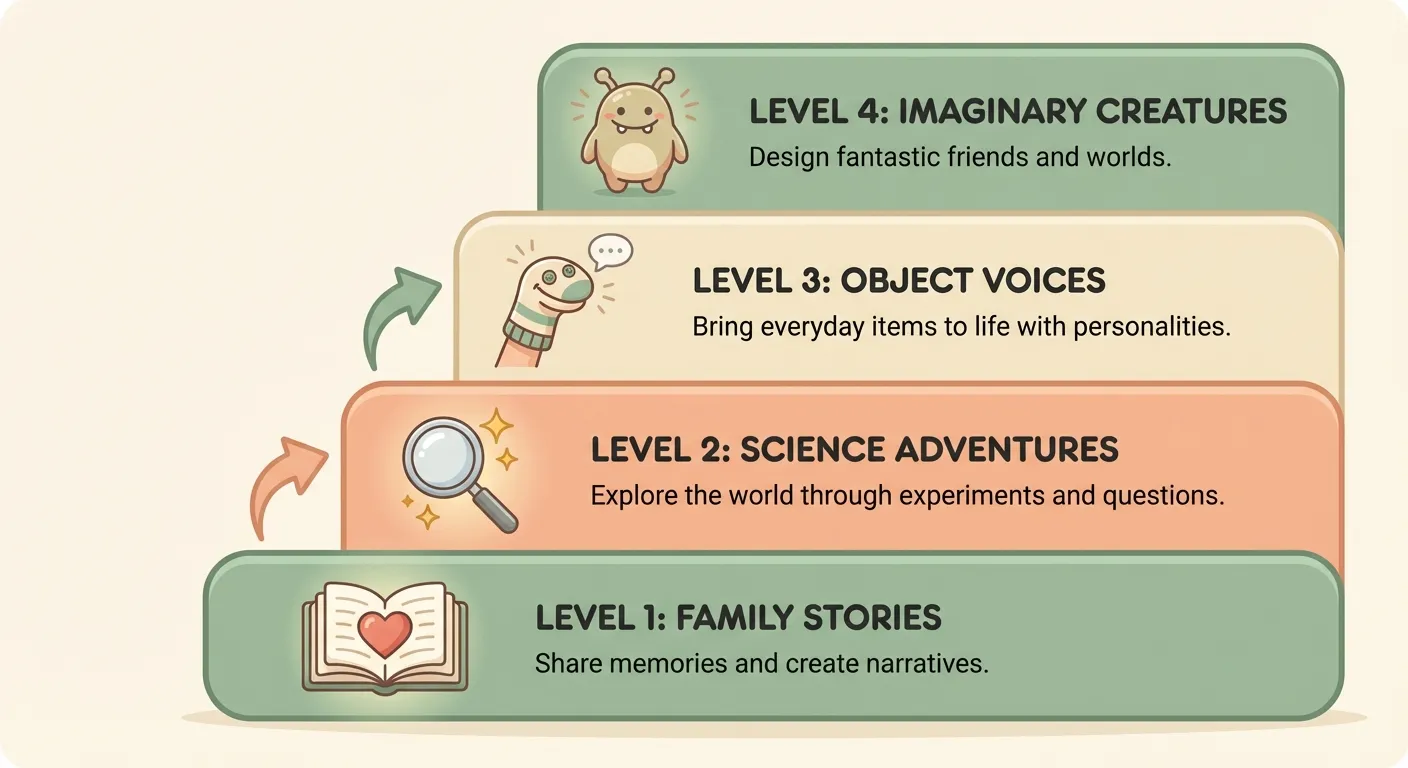
There are four levels, from simplest to most creative. Mix and match depending on the situation — and your energy level.
Family Legend Stories
Children are magnetically drawn to stories about your own childhood. "When I was your age" isn't a tired cliche to kids — it's a portal. What mistakes did you make? What rules did your parents have? What happened when you pushed back?
Research on family narratives found that children who know their family history show lower anxiety, fewer behavior problems, and a stronger sense of identity. And a child is far more willing to comply when they know their parent went through the same thing.
"You know what? When I was your age, Grandpa put broccoli on my plate every single night. I used to hide it under my napkin. He always found it. Eventually I just tried it — and now I actually like it."
"Want to hear something funny? When I was five, I used to try to sneak downstairs after bedtime. One time I tripped on the cat and woke everybody up. After that I figured it was easier to just stay in bed."
Science Adventures
Take a real fact from biology or physics, then dramatize it. Exaggerate. Anthropomorphize. Make the science feel alive and a little bit urgent.
"There are tiny invisible critters living on your teeth right now. They're having a party — dancing around, munching on sugar. The only thing they're scared of? Your toothbrush. Let's chase them out."
"Your hands are covered in invisible travelers right now. They hitched a ride from everything you touched today. If we don't wash them off, they'll sneak into your food and have a feast in your belly."
Object Voices
The quickest, lowest-effort move on this list. Pick up the nearest object. Give it a voice. Have it ask your child to do what you need. This works roughly nine times out of ten with toddlers and preschoolers.
| Situation | What You'd Normally Say | Object Voice Version |
|---|---|---|
| Getting shoes on | "Put your shoes on, we're late!" | Shoe (whiny voice): "Are these your feet? I've been waiting ALL morning!" |
| Cleaning up | "Pick up your toys right now." | Toy (held near your ear): "She says she wants to go home. Can you help?" |
| Getting dressed | "Come get dressed, please." | Shirt (squeaky voice): "Hey! Is anyone going to wear me today? I'm SO bored in this drawer!" |
Zero prep. Zero materials. Works in the car, at the grocery store, in the bathtub. You already own the props.
Imaginary Creatures
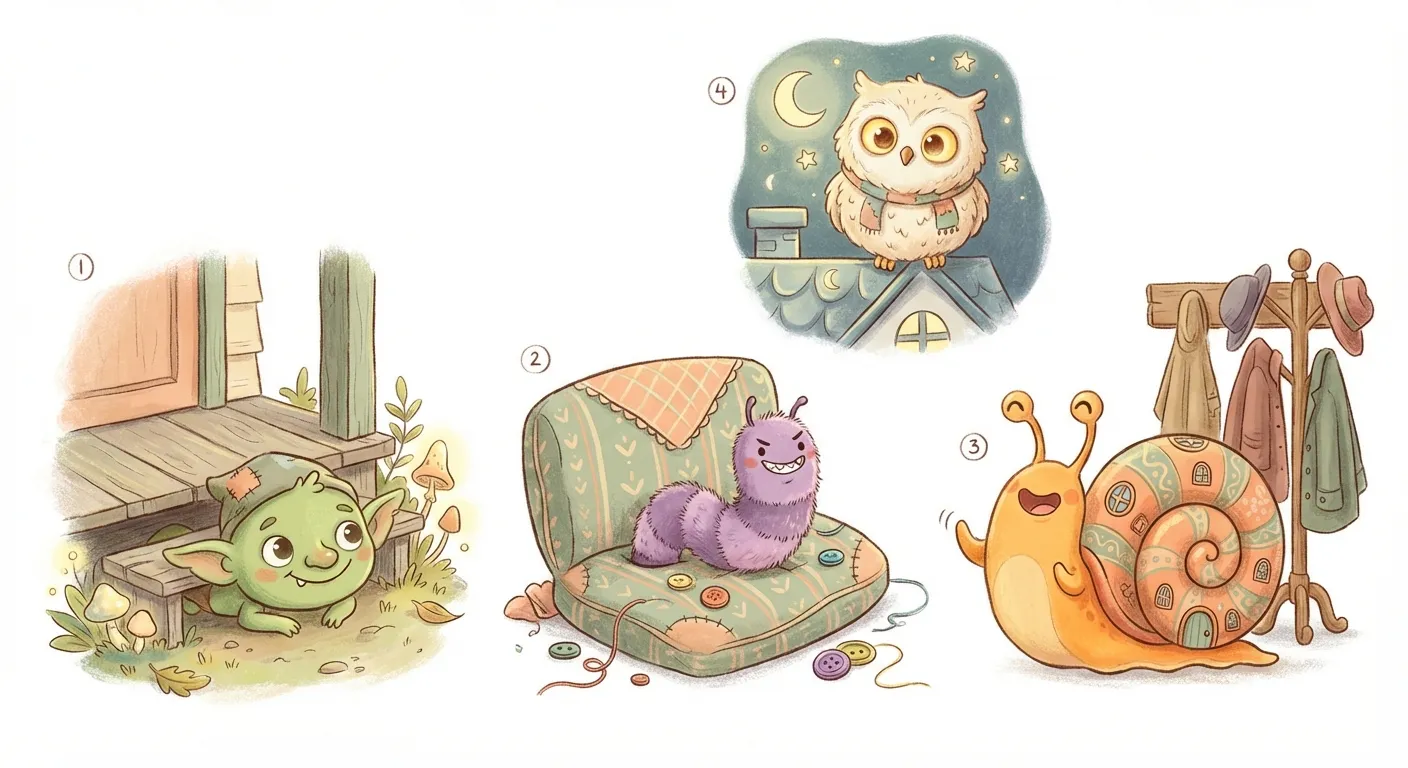
The most creative level — and the one kids love the most. Create playful creatures that live somewhere near your home. They're silly, a little mischievous, and they care about specific behaviors. Best for ages 2 through 6, though older kids often play along willingly.
The Grabby Goblin
Lives under the porch. Loves collecting things that aren't shared. Share your toys during the day, and he falls back asleep.
The Whine Worm
Sleeps in the couch cushions. Wakes up when someone whines. Use a normal voice and he stays put.
The Slowpoke Snail
Lives behind the coat rack. Watches the door every morning. Beat her to the door and she drifts off.
The Loud Owl
Perches on the roof at bedtime. Listens for noisy kids. Stay quiet and she sleeps peacefully.
The point isn't to scare — it's to give the rule a character. Children respond to characters. Make the creatures funny and slightly ridiculous. If your child laughs, you're doing it right.
Technique 2: Rehearsal Games
Narrative nudges handle daily friction — shoes, teeth, vegetables. Rehearsal games are for the bigger stuff: hitting, refusing to share, tantrums, any pattern that keeps repeating no matter what you try.
The principle is straightforward. When a child practices the right response during a calm, playful moment, those neural pathways strengthen. The next time the real situation hits, the practiced response is more available. You're not just telling them what to do — you're letting them physically rehearse it.
The SCENE Method
State the impact briefly
In the moment, just name it: "Ouch, that hurt my arm." No lecture, no punishment. Then move on.
Choose a calm moment later
Wait until everyone is relaxed and in a good mood. Rehearsal only works when nobody is defensive.
Entice them to try the wrong thing
Playfully invite the misbehavior: "Go ahead, push me!" or "I bet you won't share those crackers." Light, teasing voice.
Name what happens (dramatically)
"Oh no! My arm! That really stings!" Then: "Wait — do you still want to play with me?"
Elevate their identity
"Is that what big kids do?" Children are deeply motivated to be seen as mature. Connect the right behavior to the identity they want.
Repeat over days and weeks. Each time your child resists the bait, simply notice it: "Look at that — she chose to share." Let them switch roles if they want. Eventually the practiced response becomes automatic.
The Replay (Works at Any Age — Even Teens)
For any chronic conflict — bedtime arguments, homework battles, morning chaos — turn the problem into a performance.
"We've been butting heads about screen time every night. Want to act it out? You be the parent and I'll be the kid. Make it as ridiculous as you want."
Exaggerate everything. Play the misbehavior as outrageously as possible. The goal is to laugh together and release the tension that has built up around the issue. Once the tension breaks, the real conversation becomes possible.
Two non-negotiables
1. Everyone must be calm. Any edge in the air? Wait.
2. Keep it light. No hidden lessons or sneaky lectures. Children need to feel safe to try out the wrong response and discover the right one.
A Different Way to See Misbehavior
Here's the reframe that holds all of this together: when your child keeps doing the wrong thing over and over, they aren't deliberately pushing your buttons. They're trying to figure out the right response — they just haven't gotten there yet. Each repetition is a practice attempt.
Rehearsal games give them a safe place to keep practicing until they get it right. Narrative nudges give them a world where the right choice feels obvious and even fun.
Neither of these tools requires a timeout chair, a consequence jar, or a raised voice. Just a willingness to enter your child's world and speak their language — which is, and always has been, play.
A child who learns through play isn't being tricked.
They're being met where they actually live —
in imagination, stories, and make-believe.
That's where real learning happens.