
Is Your Kid a Soda Can?
How to build a teen who stays cool when life shakes them up
Reactive teens let the world push their buttons. Proactive teens pick their own response.
- Kids raised with this toolkit handle friend drama without imploding, take ownership of bad grades instead of blaming teachers, and stay calm when things feel unfair. They keep their power instead of giving it away.
- The shift: swap reactive language for proactive language -- 'I have to' becomes 'I choose to' -- and practice with low-stakes scenarios until it becomes automatic.
Grab a can of soda. Shake it. Open it.
You know exactly what happens. Explosive. Messy. Totally predictable.
Now grab a water bottle. Shake it just as hard. Open it.
Nothing. Completely unrattled.
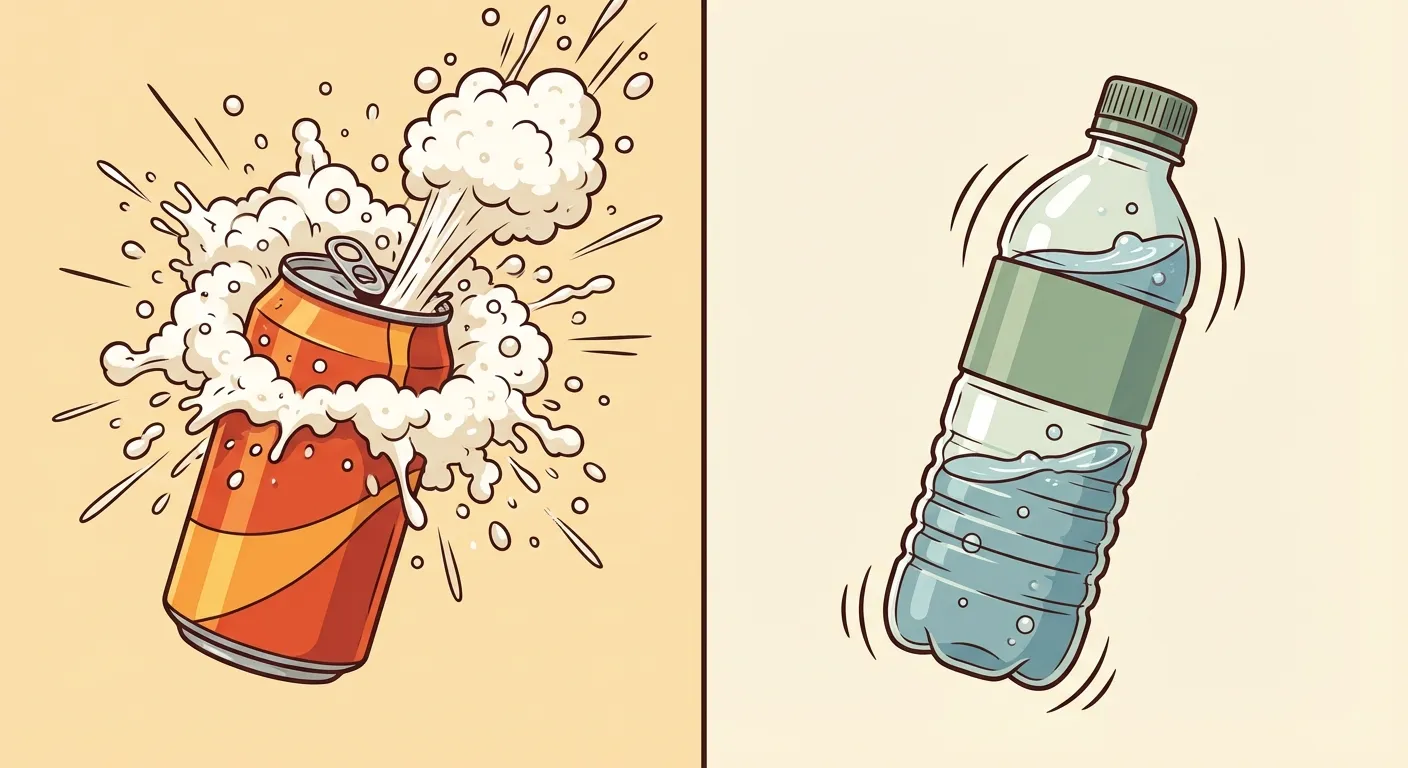
Same shake. Completely different outcome.
Sean Covey, a leadership educator who works with teens, uses a dead-simple metaphor for how teenagers move through the world. Reactive kids are soda cans -- someone bumps into them and they explode. A friend says something rude, they fire back. A teacher marks them down, they shut down. Every external event triggers an automatic, unfiltered reaction.
Proactive kids are water bottles. Same situations. Same shaking. But the response is chosen, not triggered. And that changes everything -- grades, friendships, confidence, the whole trajectory.
The good news: this is teachable. And it starts with one move.
The Pause Button
Between every trigger and every response, there's a gap. Most teens blow right past it. The entire toolkit starts with making that gap visible.
Push Pause
Stop. Breathe. Don't speak yet. The goal isn't calm -- it's choice. Even 5 seconds of pause interrupts autopilot and opens up options that didn't exist a moment ago.
That's it. Not meditation. Not counting to ten. Just a beat of silence before the mouth moves. Five seconds changes the outcome of the next five minutes.
Once the pause exists, your teen has access to something powerful.
The Four Tools No Animal Has
Your dog reacts to every doorbell. Every squirrel. Every dropped crumb. Dogs don't have a choice -- stimulus in, reaction out. Humans have four tools that create a different path.
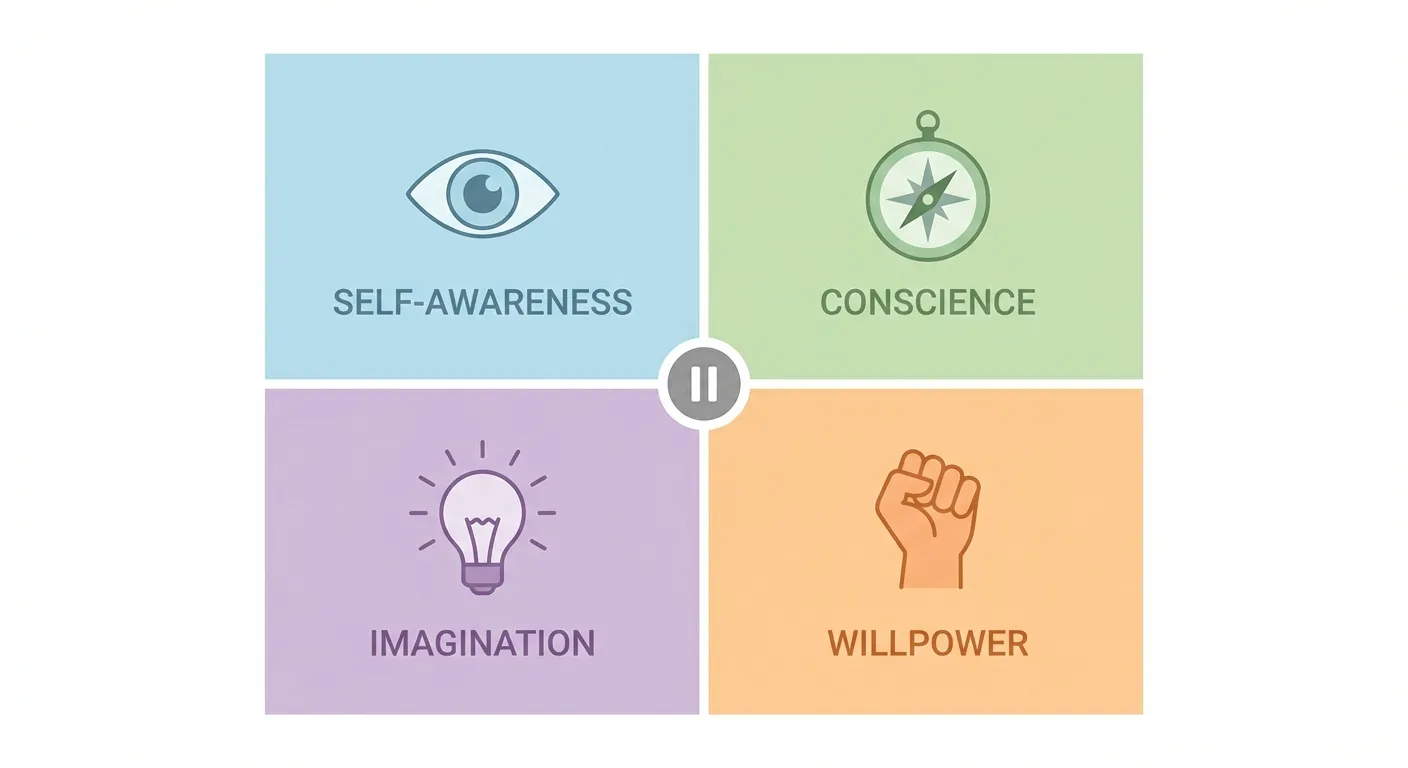
Self-Awareness
Stand apart from yourself and watch your own thoughts.
"I notice I'm angry because of the breakup, and I'm taking it out on Mom."
Conscience
The inner voice that flags right from wrong.
"She's new and needs friends. Being rude isn't the move."
Imagination
See outcomes before they happen.
"What if I respond calmly? What happens if I go first and apologize?"
Willpower
Choose an action even when emotions push the other way.
"I want to yell back, but I'm choosing to stay calm."
Each tool is a question your teen can ask in that 5-second pause. Self-awareness: "What am I actually feeling?" Conscience: "What's the right thing here?" Imagination: "What would happen if I...?" Willpower: "Am I choosing this, or is it choosing me?"
One tool is sometimes enough. All four together are unstoppable.
The Language Swap
Here's how you spot a soda can in the wild. Listen to the words.
Reactive language gives power away. Proactive language keeps it. The difference is surprisingly small -- and surprisingly loud once you hear it.
| Soda Can Talk | Water Bottle Talk |
|---|---|
| "That's just the way I am" | "I can do better than that" |
| "There's nothing I can do" | "Let's look at all our options" |
| "I have to" | "I choose to" |
| "I can't" | "There's gotta be a way" |
| "You ruined my day" | "I'm not letting that rub off on me" |
| "I'll try" | "I'll do it" |
| "If only..." | "I will..." |
The shift isn't just semantic. "I have to go to practice" and "I choose to go to practice" feel completely different in the body. One is a cage. The other is power. Same activity, different operating system.
Start catching these in your own language first. Your teen will notice before you even bring it up.
Where the Power Actually Lives
Here's the concept that makes all of this click. Everything in your teen's life falls into one of two zones:
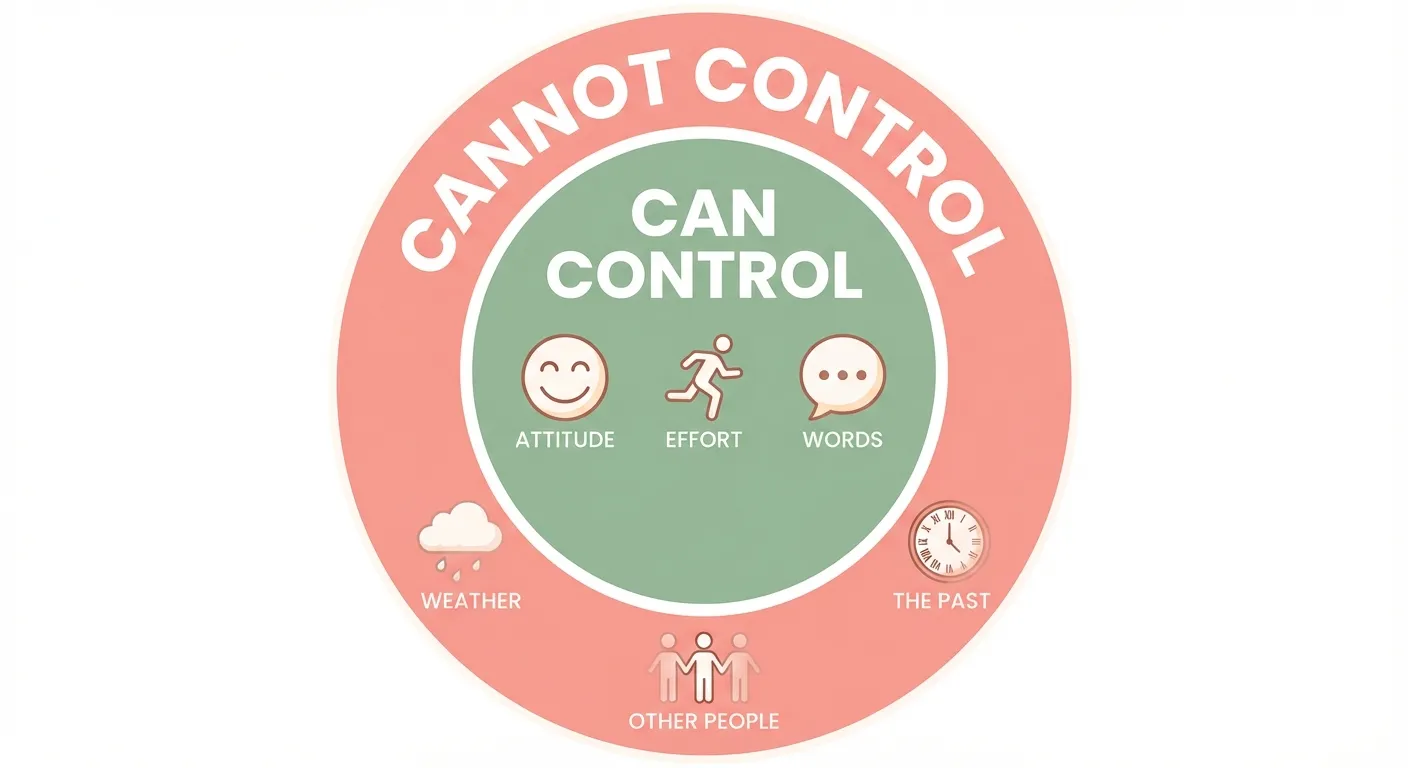
The move: Proactive people pour all their energy into the green circle. Reactive people drain their energy raging at the coral one.
When your teen says "It's not fair that she got picked and I didn't" -- that's coral-circle thinking. Redirect: "What's in your green circle right now?" Suddenly they're talking about practice schedules and asking the coach for feedback instead of stewing about the injustice.
Try It Tonight
Run these scenarios at dinner. Ask your teen: what would the soda can do? What would the water bottle do?
Your best friend bad-mouths you behind your back
Someone at work gets the shift you wanted
Someone cuts you off in traffic
The scenarios are low-stakes on purpose. Once the soda-can/water-bottle language becomes natural at dinner, it shows up automatically when the real stuff hits -- the breakup, the rejection letter, the friendship betrayal.
Seven phrases. One pause button. Four tools. That's the whole toolkit. And the beautiful thing is, it works on adults too -- so you might catch yourself swapping a few phrases along the way.