
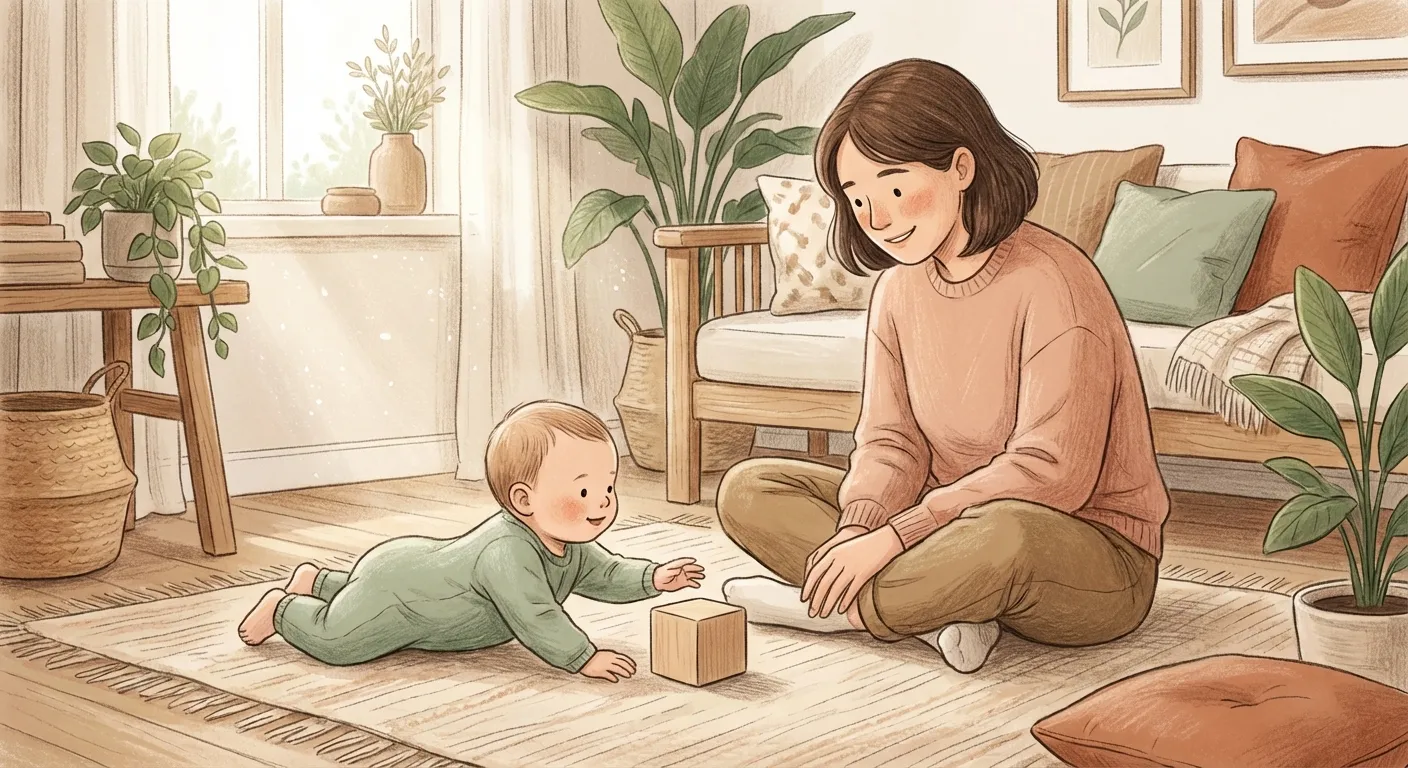
There's a language your baby already speaks. You just haven't learned it yet.
- Parents who pick this up raise kids who self-soothe earlier, cooperate without power struggles, and communicate at a lower volume because they know it works.
- The shift: slow to their speed, follow their gaze, and leave room for their turn before you take yours.
Your baby looked away mid-feed and you nudged the bottle back. Your toddler went quiet on the play mat and you rattled a toy to re-engage. Normal moves. Loving moves. But what if those pauses were the most important part of the conversation?
Researchers filmed thousands of hours of parents with their babies starting in the 1970s. They expected to find that the best parents were the most stimulating, the most educational, the most active. They found the opposite. The parents whose children thrived most weren't doing more. They were noticing more.
Your baby is already communicating. Your job isn't to direct the conversation. It's to listen first and respond second.
The Secret Dictionary
Babies can't talk, but they're far from silent. They broadcast their internal state constantly through body language, gaze, facial expression, and timing. Once you know what to look for, it's like subtitles appearing on a foreign film.
Engagement vs. disengagement -- the two channels your baby broadcasts on
| Signal | "I'm In" (Keep Going) | "I Need a Break" (Ease Off) |
|---|---|---|
| Eyes | Bright, wide, locked on you | Looking away, gaze drifting, eyes closing |
| Face | Animated, smiling, mouth open | Going flat, frowning, yawning |
| Body | Reaching, leaning in, kicking | Arching back, going still, turning away |
| Hands | Open, grasping, waving | Clenched fists, pushing away |
| Sounds | Cooing, babbling, laughing | Fussing, sharp cries, silence after noise |
The magic isn't in memorizing this chart. It's in the practice of pausing long enough to notice which channel your baby is broadcasting on right now.
What Fluency Actually Looks Like
The difference between a tuned-in moment and an overriding one is often just three seconds of pause. Here's what that gap looks like in real life:
Mid-Feed Pause
Tuned In
Baby pauses, looks around. You wait. Maybe a soft word, a cheek stroke. When they return to eating, you settle back. Their rhythm, not yours.
Overriding
Baby pauses -- you immediately adjust the bottle, nudge them back. That pause was self-regulation. You just skipped their turn in the conversation.
Play Mat Discovery
Tuned In
Baby fixates on a wooden block. You sit nearby, look at it too. "That's a good one." They bang it. You tap the floor. They grin. You just entered their game.
Overriding
Baby holds a block. You wave a stuffed bear. "Look! Look at the bear!" They glance, turn back to the block. You try again. You're competing with their interest.
Face-to-Face Play
Tuned In
Baby is animated -- cooing, arms waving. You match their energy. Then they suddenly turn away. You wait. A few seconds later, they look back. You pick up where you left off.
Overriding
Baby turns away and you lean in closer. "Hey! Where'd you go?" The harder you chase, the more they pull back. They needed a pause you didn't give.
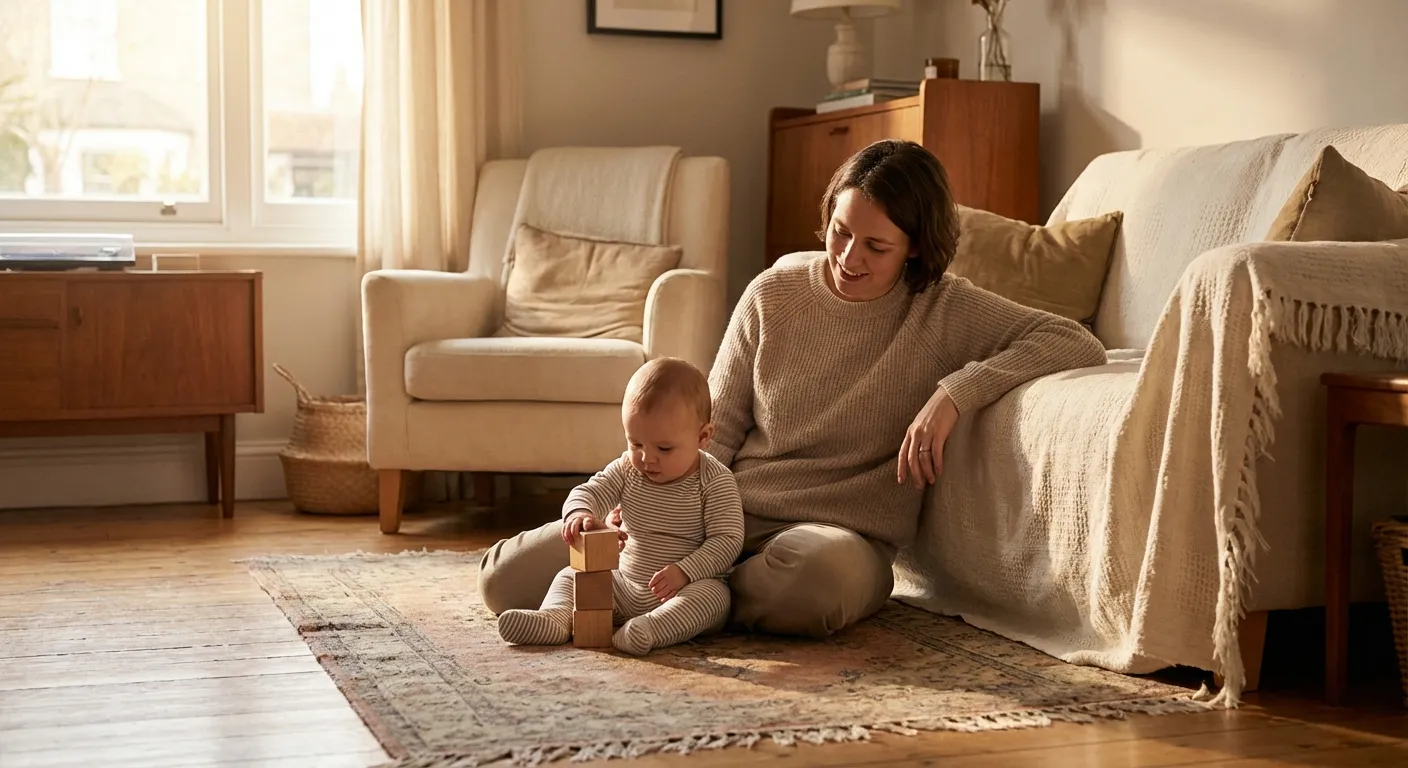
The most powerful position in parenting: present, available, unhurried
The LISTEN Phrasebook
Fluency takes practice. This framework gives you a way to practice deliberately, one interaction at a time:
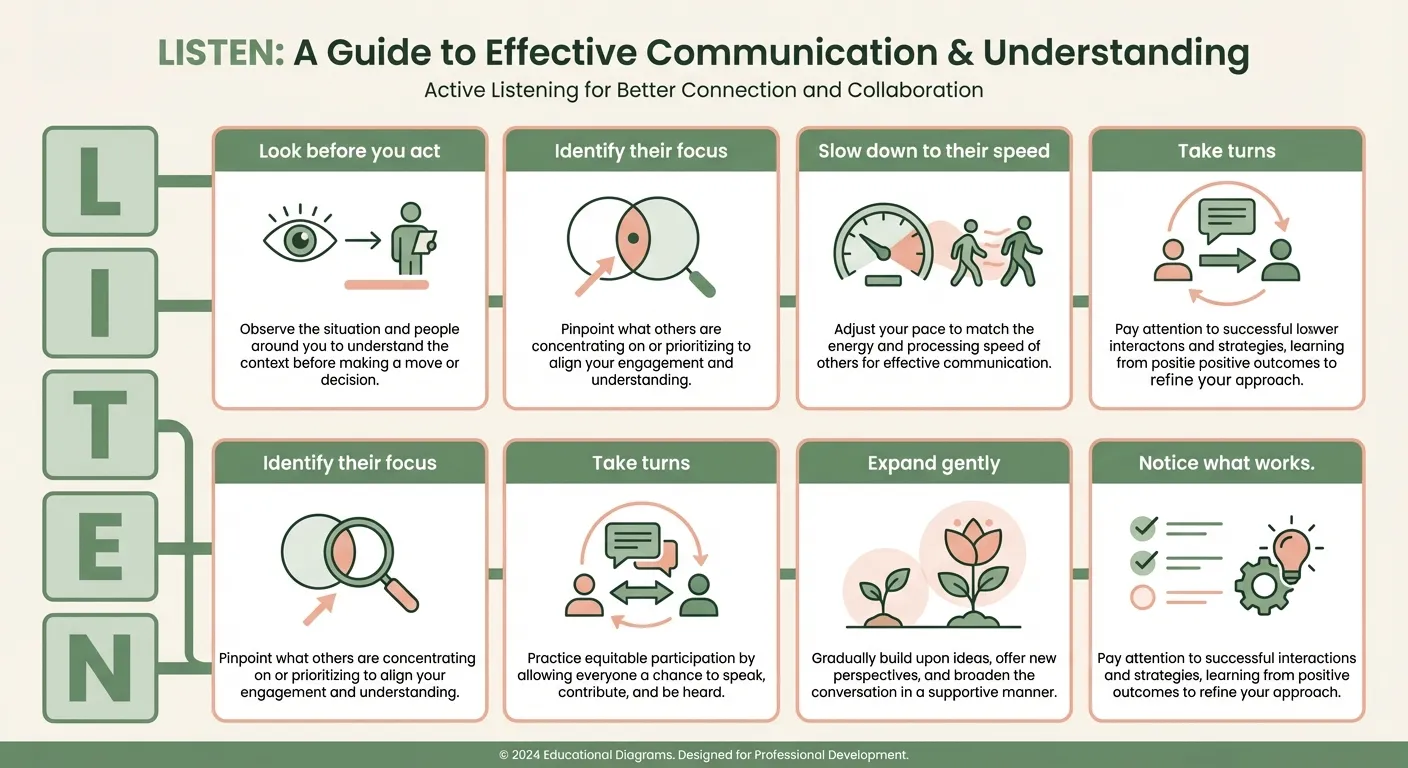
Look Before You Act
Before you reach for a toy or start singing -- pause. Where are their eyes? What are their hands doing? Ten seconds of watching.
Identify Their Focus
Whatever has their attention -- a shadow, their toes, a spoon -- that's your starting point. Join their world.
Slow to Their Speed
Babies process slower than adults. Match their pace. When they go quiet, you go quiet. When they perk up, you respond.
Take Turns
They make a sound -- you wait for them to finish, then respond. This back-and-forth is their first conversation. Leave room for their turn.
Expand Gently
Once you've joined their focus, build on it. They stare at a cup -- tap it, name it, flip it. Add to their interest, don't replace it.
Notice What Lands
Did that work? Smiling, looking back? Keep going. Turning away, going still? Back off. Their reaction is the answer key.
The Counterintuitive Truth
Many parents worry that responding to every signal creates a clingy, demanding child. Decades of research found the exact opposite.
Babies whose parents tuned into their cues became more cooperative over time. They fussed less. They were easier to soothe. They went along with what their parent needed more willingly.
It makes sense: a baby who trusts that their signals will be heard doesn't need to scream to get through. They can communicate at a lower volume because they know it works.
Getting Started
- Pick one interaction a day. One feeding, one play session, one quiet moment. Practice the LISTEN steps deliberately. The rest of the time, just be you.
- Watch your own speed. Most adults default faster than babies need. Rapid-fire talking, bouncing toys, switching activities -- if you catch it, slow down.
- Missed signals don't matter. You will misread your baby. Everyone does. What matters is the pattern: are you generally paying attention and adjusting? That's enough.
- This grows with your child. With a toddler, it means following their play idea before introducing yours. With a school-age kid, it means listening before solving. The signals change. The principle doesn't.
You are not passive. You are an active listener -- and the best conversations start with paying attention.