
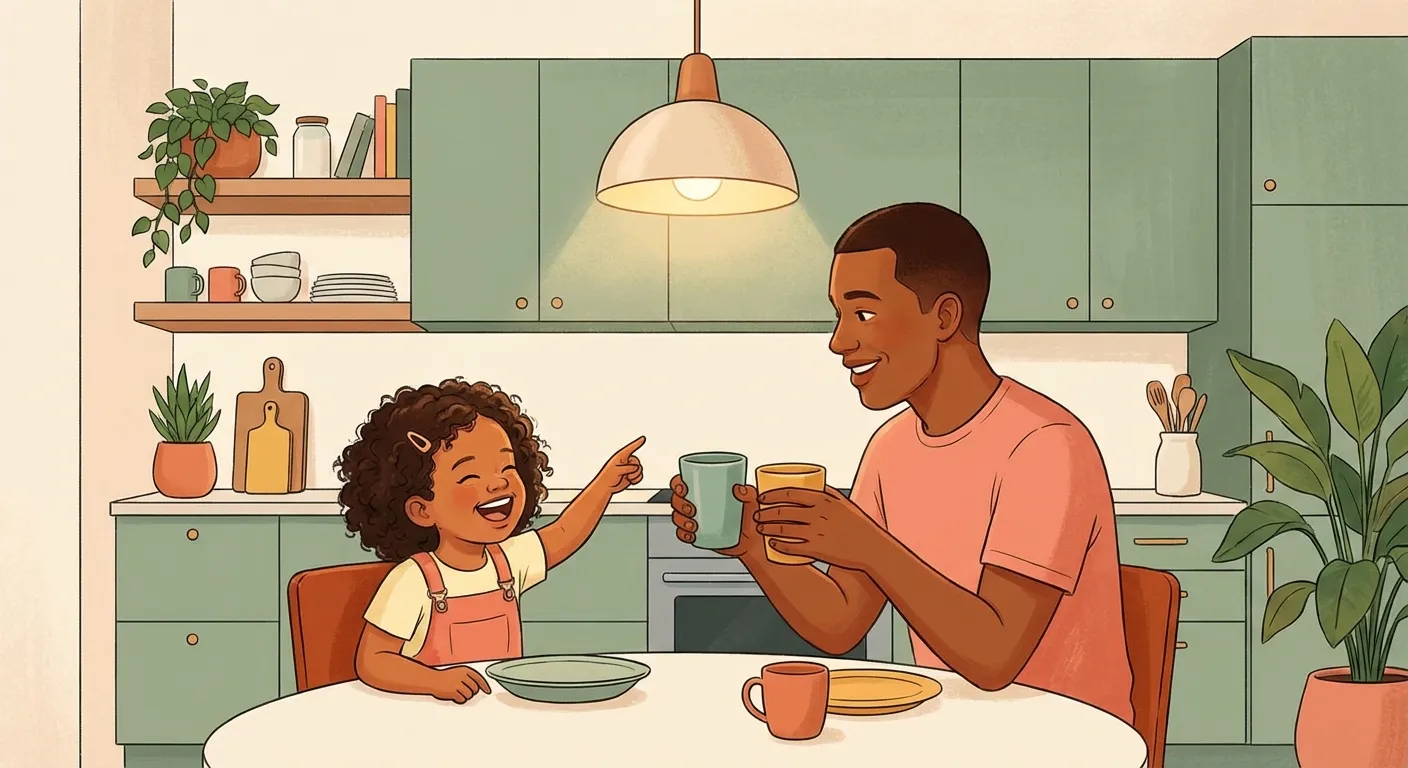
The Dinner Table Game That Reveals How Your Kid Feels Loved
One dinnertime game can tell you more about your child than months of guessing.
- Kids raised by parents who speak their primary style handle peer rejection, share more easily, and stay emotionally open through the preteen years.
- The shift: replace generic affection with targeted connection — find the one style that lights them up and lead with it.
Tonight at dinner, try this: give your child two choices. Not "chicken or pasta." Something like "Would you rather we bake cookies together right now, or I hide a surprise treat in your lunchbox tomorrow?" Their answer tells you more than you'd think.
Kids feel love in different ways. One child absolutely melts when you say "I noticed how hard you worked on that" while their sibling barely registers the compliment — but turns into a different person when you sit down and play Legos for twenty minutes. Same family, same parents, completely different wiring.
There are five connection styles. Every child responds to all of them, but most have one or two that hit way deeper than the rest.
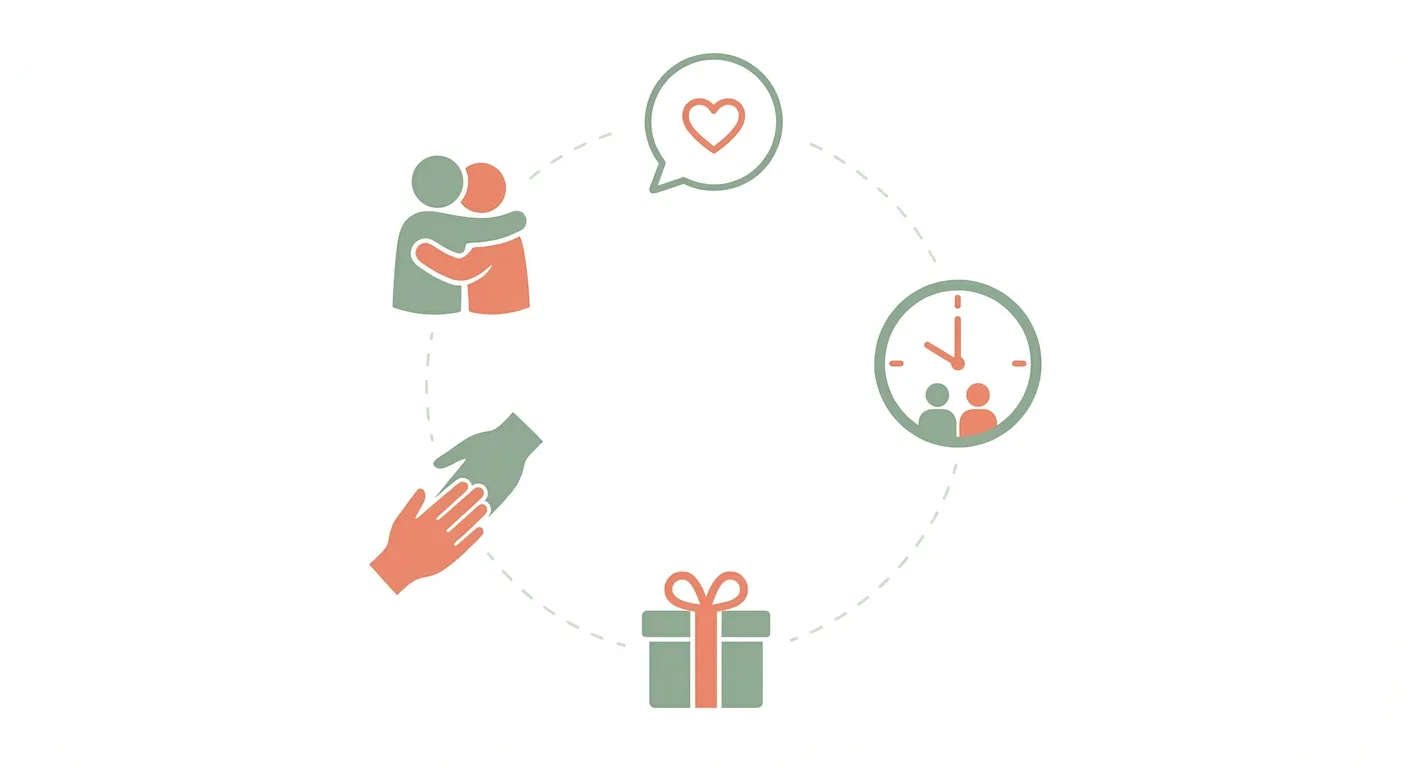
The question is: which one is your kid's? Here are four ways to figure it out. The first one you can start tonight.
1. Play "Would You Rather" (ages 5+)
Toss casual either/or questions where each option represents a different style. Don't explain what you're doing. Just play. Over 15-20 choices spread across a few weeks, the pattern becomes obvious.
| Age | Option A | Option B |
|---|---|---|
| 5-7 | We bake cookies together right now Togetherness | I pack a surprise treat in your lunchbox tomorrow Surprises |
| 5-7 | Big hug and a tickle fight Closeness | I write you a note about my favorite thing you did today Encouragement |
| 5-7 | I set up your art supplies all ready for you Helpful Actions | We do the art project together, side by side Togetherness |
| 8-11 | I take you to pick out something special this weekend Surprises | We spend the whole afternoon at the park, just us two Togetherness |
| 8-11 | I organize your room exactly how you like it Helpful Actions | I tell you three specific things I noticed you're getting better at Encouragement |
| 12+ | We cook dinner together and you pick the music Togetherness | I handle the dishes tonight so you can relax Helpful Actions |
| 12+ | I text you something encouraging before your game Encouragement | Fist bump, arm around the shoulder, "I've got your back" Closeness |
If your kid catches on and asks what you're up to:
2. Watch What They Do (Without Prompting)
Children naturally express love the way they want to receive it. Watch how your child shows affection when nobody has prompted them — to you, friends, teachers, grandparents. The clues are already there.
Closeness
Always climbing into your lap, holding your hand at the store, wanting piggyback rides long after they're "too old"
Encouragement
Tells the neighbor "my mom makes the best pancakes," writes unsolicited "you're the best" notes
Togetherness
Follows you room to room, wants to tag along to the grocery store, says "stay with me" at bedtime
Surprises
Makes you "gifts" from craft supplies, picks flowers on walks, wraps up their own toys to give you
Helpful Actions
Tries to carry bags for you, sets the table without being asked, volunteers to help a younger sibling
3. Listen to the Complaints
This one is almost too easy. Complaints are requests turned inside out. The thing they gripe about most reveals what matters most to them.
Filter out one-offs. A single grumpy comment after a rough day isn't data. You're looking for the same theme surfacing again and again over weeks.
4. Track Their Requests
Over 2-3 weeks, listen for the emotional requests hiding inside everyday asks. Not "can I have a cookie" — the other kind.
Togetherness
"Watch me do this!" / "Can we go somewhere together?" / "Come see what I made!"
Encouragement
"Was that good?" / "Do you like it?" / "Am I doing it right?"
Helpful Actions
"Can you help me build this?" / "Will you make my lunch the special way?"
Closeness
"Carry me" / "Scratch my back" / keeps finding reasons to be physically near you
If more than half the emotional requests point to one style, that's your signal.
Still Not Sure? The 10-Day Deep Dive
If none of the above produces a clear winner, try concentrated immersion in one style at a time.
Three Things to Keep in Mind
Preferences shift.
What works at 6 might not fit at 12. Re-run this detective work informally once a year, especially around big transitions — new school, new sibling, puberty.
Under 5? Hold off.
Most children don't show a clear preference until around age 5-6. Before that, pour all five styles on generously and don't try to pin down a primary one.
The primary style leads. It doesn't replace the others.
Finding your child's top style means you lead with that one. You never drop the other four. Think of it like a volume knob, not a switch.
Speak all five styles. Lead with the one that lights them up.
The goal isn't a label — it's paying closer attention.