
Efficiency is the enemy of development.
- Kids who struggle through their own conquests — shoes, chairs, spilled juice — build the confidence loop that feeds independence across every domain.
- The move: swap 'Here, let me do it' for 'You're working on that. I'll wait.'
Published by kungfu.family
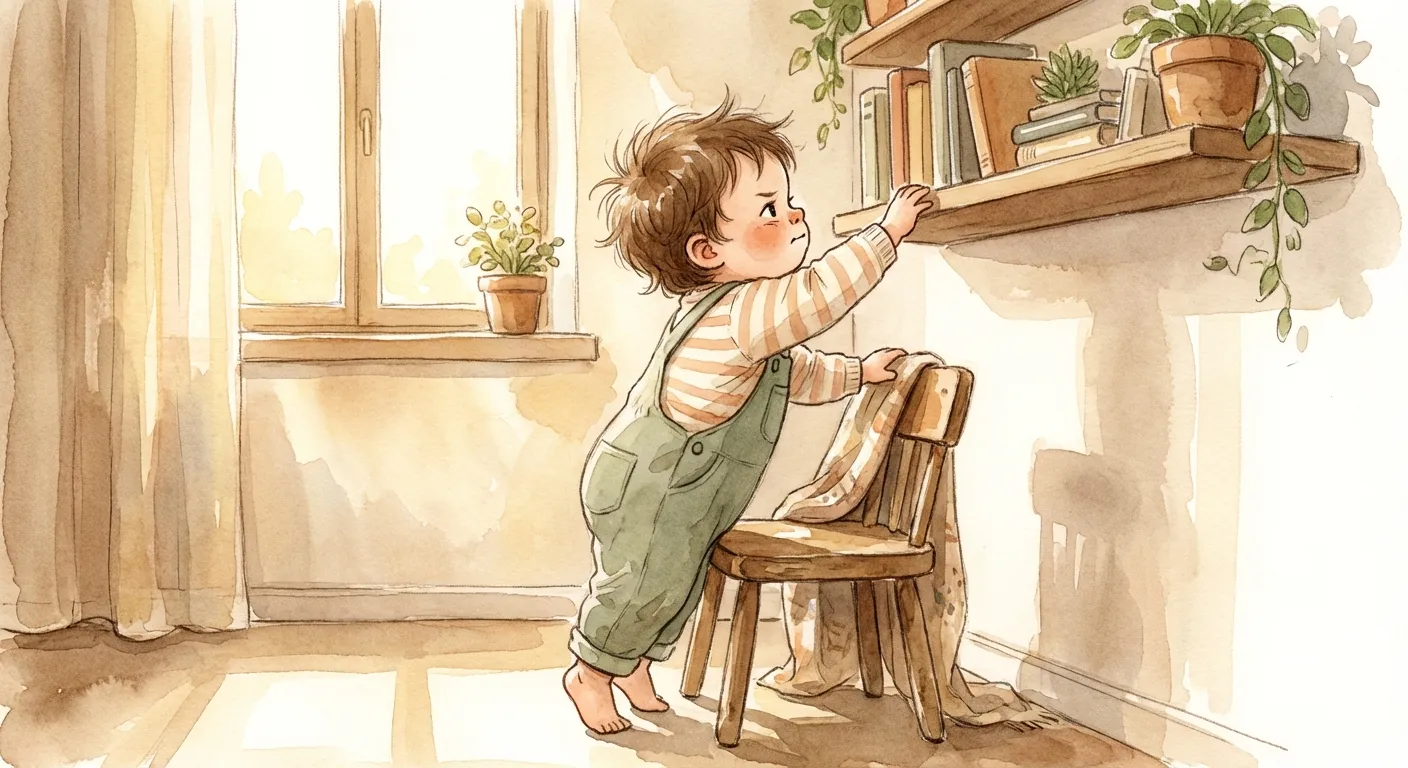
A two-and-a-half-year-old spots a basin he wants to reach. He looks around. Finds a chair. Starts dragging it across the room, face lit up with joy, anxiety, and hope.
The teacher sees this. Walks over. Lifts him to the basin.
Done. Problem solved. Faster. Easier.
And the child's face shifts to what Montessori called "the stupid expression of the child who knows that others will act for him."
That teacher didn't help that child. She robbed him of a conquest.
Montessori documented this pattern across hundreds of classrooms: well-meaning adults crushing developmental breakthroughs by mistaking purposeful activity for disorder. The moments that looked messy, slow, or pointless were often the ones that mattered most.
What It Looks Like vs. What's Actually Happening
This is the table every parent needs on their fridge. Four real examples from Montessori's classrooms:
| You See... | They're Actually... |
|---|---|
| Girl bossing younger kids around, telling them to "pray" | Practicing leadership and teaching instincts |
| "Abnormal" child shoving tables around | Achieving his FIRST coordinated, directed movements |
| Toddler dragging a chair across the room | Problem-solving, planning, building independence |
| Child picking up things the teacher dropped | Signaling readiness for lessons in ORDER |
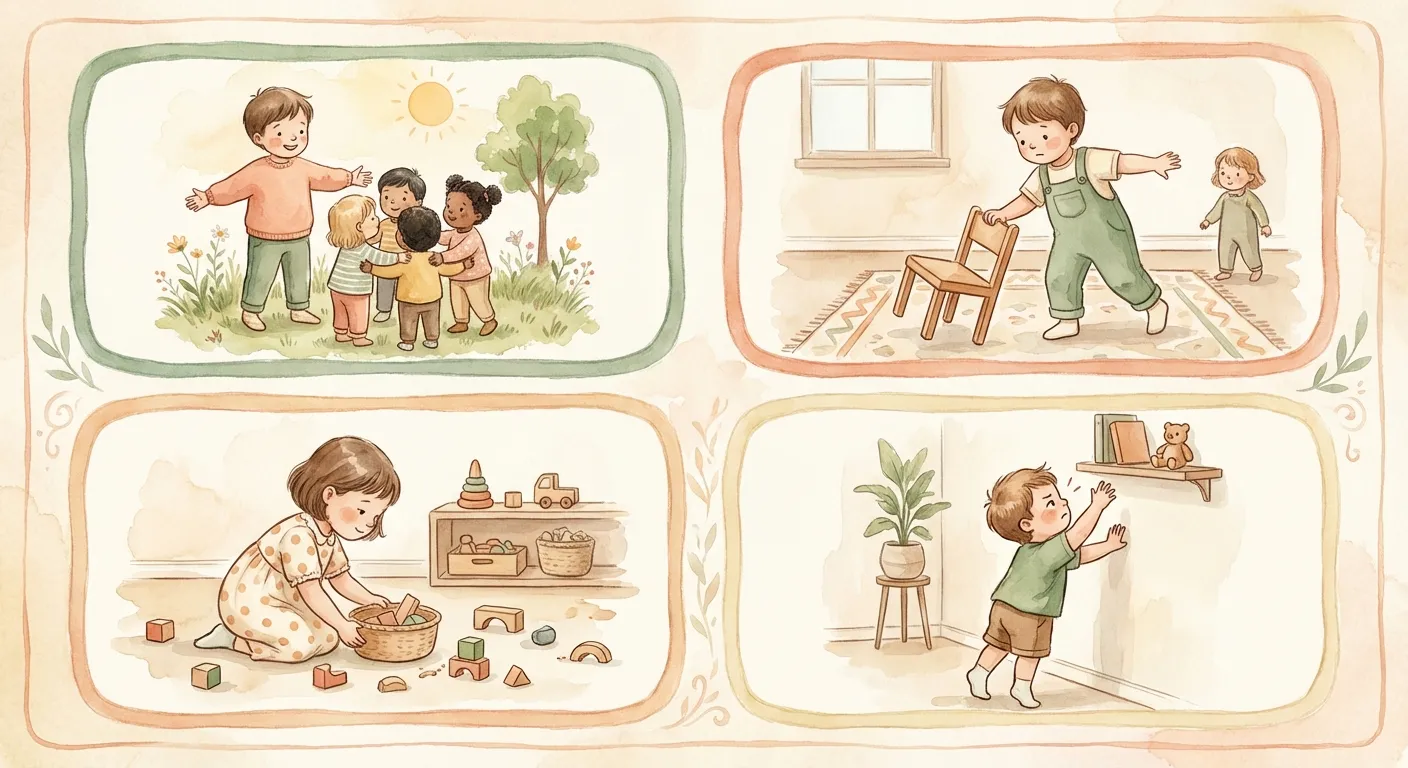
Every one of these children was stopped. The girl was told to behave. The boy with the tables was corrected. The toddler was lifted. The helper was ignored.
Every intervention killed the developmental moment dead.
The Face Test
Montessori gives us something better than a parenting philosophy. She gives us a diagnostic tool you can use in real time.
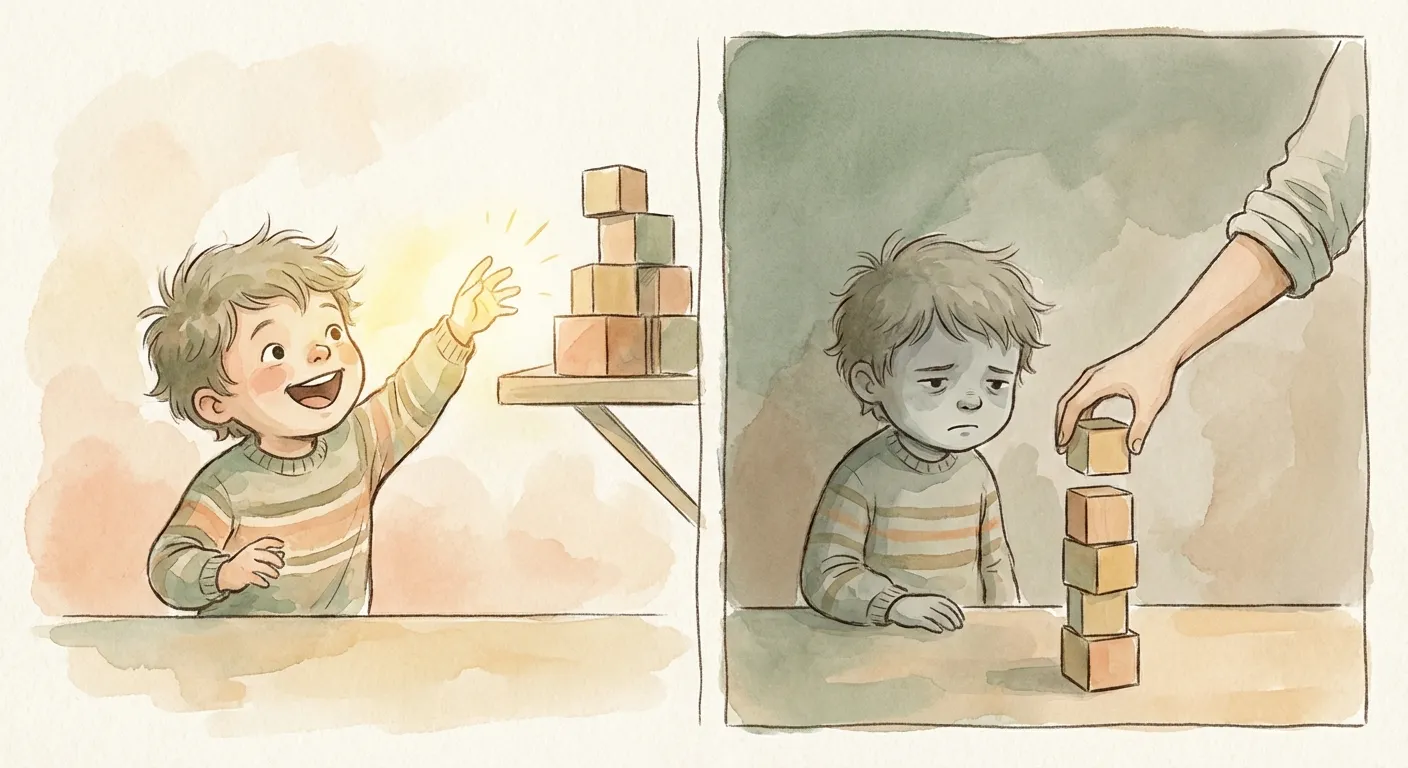
Watch the face. A child in purposeful activity has a specific look: concentration, intensity, sometimes frustration, but always engagement. When you step in and do it for them, that look vanishes. What replaces it is passivity.
The child went from "joy, anxiety, and hope" to "the stupid expression of the child who knows that others will act for him." One moment of misguided help. That's all it took.
This isn't about letting kids run wild. It's about developing the eye to see what they're actually doing beneath the surface.
The One-Line Decision Rule
Before You Intervene, Ask:
- Activity has a useful purpose
- Child is concentrated
- It looks unusual but isn't harmful
- They're struggling but engaged
- It offends or annoys others
- It's rough or ill-mannered
- There's actual safety risk
- The child is distressed, not focused
That's it. If the activity has a useful scope -- even if it's loud, messy, slow, or confusing to you -- permit it.
What to Say Instead of "Let Me Do That"
"The child who does not do, does not know how to do."
Teaching a child to feed himself is much more tedious than feeding him. But the former is the work of an educator. The latter is the easy, inferior work of a servant. Every time you step back and let them struggle toward their own conquest, you're building a kid who knows they can handle things. That's kung fu parenting.