

The Two Words That Are Making Your Kid Less Safe
A child who never practices fear arrives at adolescence unprepared.
- Kids with regular risky play experience lower anxiety, sharper body awareness, and the judgment to tell the difference between a thrill and actual danger.
- The shift: catch "be careful" before it leaves your mouth and replace it with a question that makes your kid think.
You say them a dozen times a day. They feel protective. They're actually training your child to stop thinking for themselves.
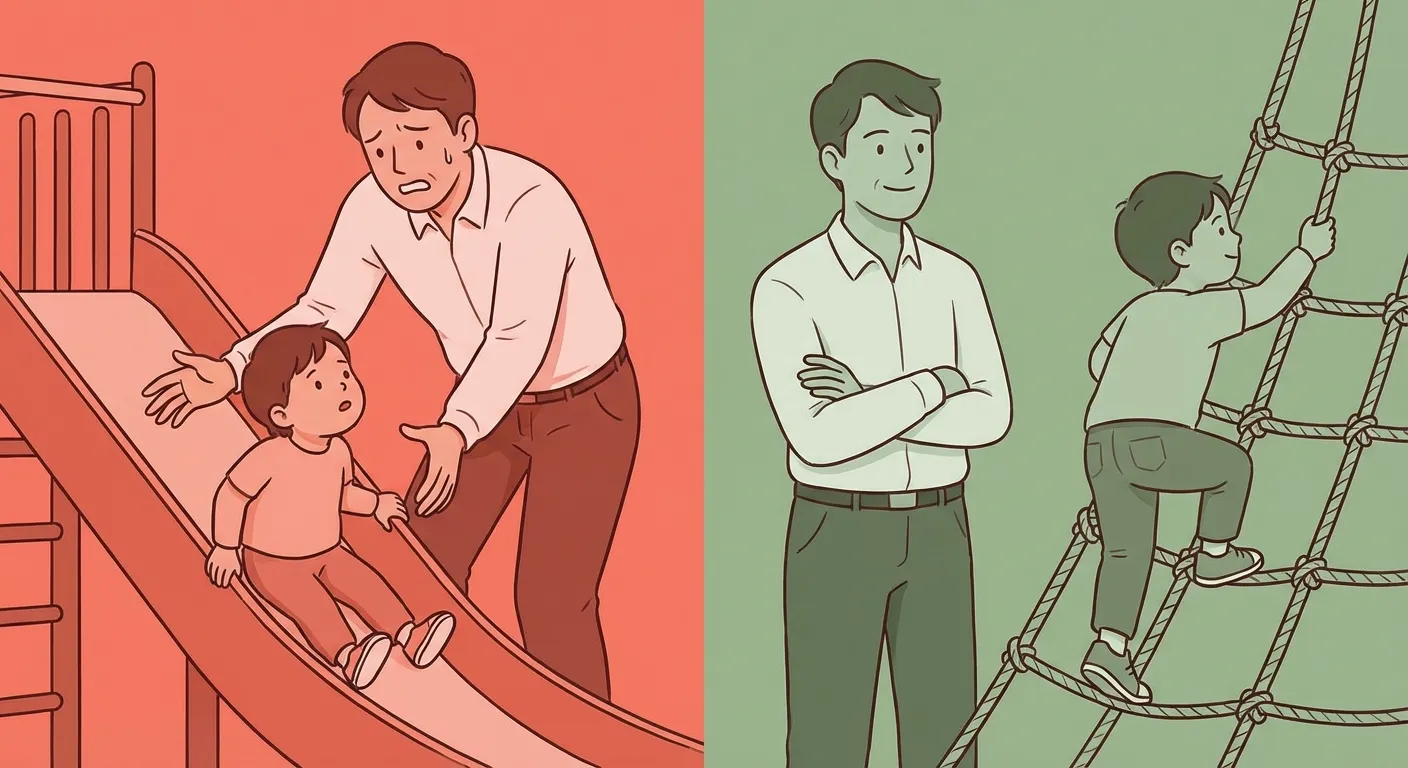
"Be careful."
It rolls out reflexively. Your kid reaches for a high branch, steps toward a puddle, picks up a stick. Be careful. It feels like love. It feels like your job.
But here's the thing: "be careful" doesn't teach your child how to be careful. It just tells them that you're worried. And over time, that worry becomes their inner voice — not assessing risk, just avoiding it.
The goal isn't "as safe as possible."
It's "as safe as necessary."
That distinction changes everything. Because a child who never practices handling manageable fear — a high branch, a fast hill, a wobbly balance beam — arrives at adolescence with zero risk-assessment skills and a whole menu of genuinely dangerous choices to make.
The Language Swap
Researchers studying risky play (notably Ellen Sandseter's work) found that children who regularly encounter manageable risk develop better judgment, lower anxiety, and stronger self-awareness. The mechanism is straightforward: small doses of fear in safe conditions train the brain to respond to stress without panicking.
The first practical shift is the words you use. Instead of a blanket "be careful" that shuts down thinking, try awareness questions that turn it on:
| Stop saying | Start asking |
|---|---|
| "Be careful!" | "Notice where your foot is." |
| "Be careful!" | "What's your plan?" |
| "Be careful!" | "What is your body telling you?" |
| "Be careful!" | "Do you feel steady?" |
| "Be careful!" | "What do you notice about the water?" |
See the difference? Every "be careful" is a command that removes your child from the equation. Every awareness question puts them back in charge of their own body. The child who hears "what's your plan?" learns to make plans. The child who only hears "be careful" learns to wait for permission.
Six Kinds of Risk Your Kid Actually Needs
Risky play isn't random recklessness. Researchers have identified six distinct types, each building a different capability:
Great Heights
Climbing trees, rocks, jungle gyms. The child experiences fear, excitement, and eventual mastery — all in one activity.
High Speed
Biking fast downhill, swinging high, sledding. Controlled thrills that wire body awareness and spatial judgment.
Dangerous Tools
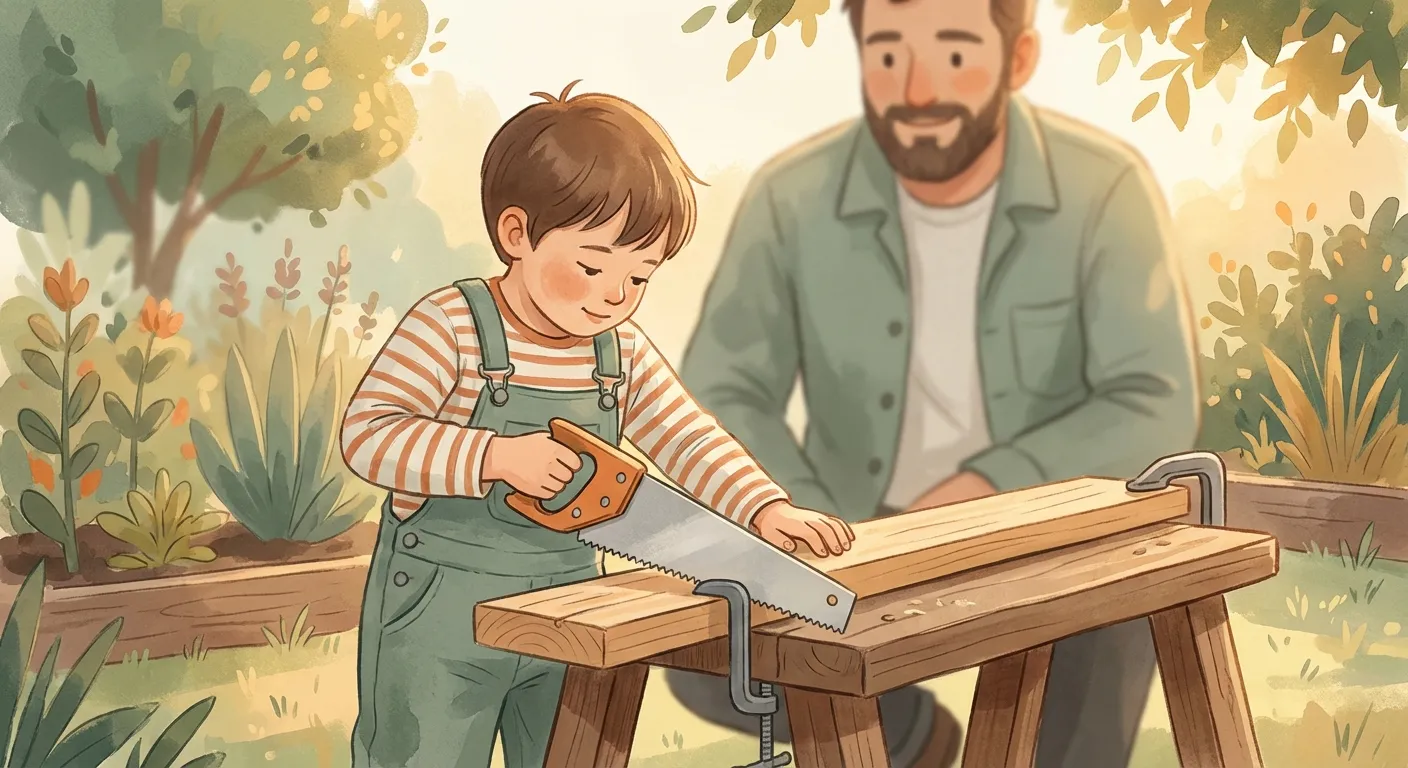
Saws, knives, hammers (age-appropriate, supervised). Nothing builds focus and responsibility like real consequences.
Dangerous Elements
Playing near fire, water, cliffs. Learning to respect natural forces through direct experience, not lectures.
Rough-and-Tumble
Wrestling, play fighting. Releases stress hormones, stimulates growth factors, and calibrates social boundaries.
Getting Lost
Exploring ahead of you, hiding in the park. Builds navigation, self-trust, and the confidence to find their way back.
You don't need all six every day. But if your child's week is completely void of any of these, their risk muscle isn't getting exercise.
Your Job: Close, Not Controlling
This doesn't mean walking away. It means changing what you do when you're right there.
The Risky Play Stance
- Stay close enough to help if genuinely needed — far enough to let them figure it out
- Before intervening, pause: is there real danger here, or is this my anxiety talking?
- If real danger: help them navigate out. If not: switch to awareness language
- You're present, not controlling — there's a massive difference
- Notice your own fear response. Your anxiety about risk might need its own attention
Tonight, when your kid starts climbing something or running somewhere or picking up something sharp, catch the "be careful" before it leaves your mouth. Replace it with a question. Watch what happens when they actually think about the answer.
That's not reckless parenting. That's building the kid who can handle what's coming.