
Your Kid Already Has What Money Can't Buy
Bilingual kids have a measurable cognitive advantage. Most schools ignore it.
- Kids who maintain their first language while adding English show stronger problem-solving, faster language acquisition, and cognitive flexibility that monolingual peers don't develop.
- The move: protect the home language at all costs and learn to navigate a system that wasn't built to recognize it.
How immigrant families can decode the school system and turn hidden advantages into real results
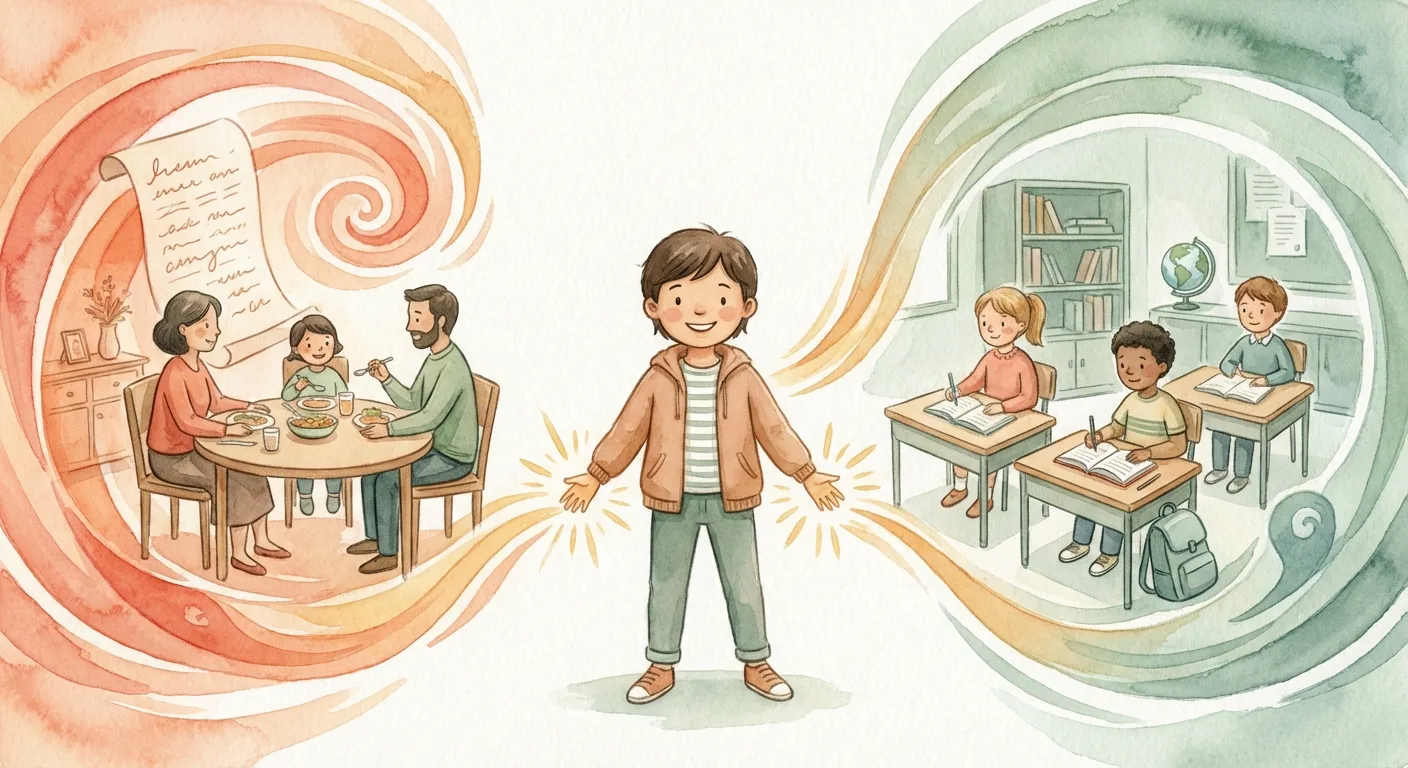
Most parents spend years and thousands of dollars trying to give their kids a cognitive edge. Tutoring, brain-training apps, enrichment programs, the whole circuit.
Your kid already has one. It's the language you speak at home.
Bilingual children consistently show advantages in cognitive flexibility and problem-solving compared with monolingual peers. Strong skills in a first language actually help children learn a second language faster and more deeply. Your home language isn't a handicap to overcome -- it's a foundation to build on.
But here's the problem: the school system doesn't always see it that way.
Three Myths That Need to Die
"Switch to English at home so they learn faster."
Kids who maintain their first language learn English faster and deeper. Your language builds the cognitive foundation English runs on.
"Young kids just soak up language effortlessly."
Older children and teens actually acquire new languages faster in academic settings. All kids need support and time -- it doesn't just happen.
"Being bilingual confuses children."
Bilingual children show advantages in cognitive flexibility and problem-solving. Two languages are complementary, not competing.
So the research is clear: keep speaking your language. Now the question is -- how do you make sure the school system works with that advantage instead of against it?
The Gratitude Trap
Many immigrant families are so thankful for free public schooling that they assume the system is looking out for their child. Reasonable assumption. Risky one.
Not all schools deliver the same education. Not all class tracks lead to college. And not every counselor will push your child toward their full potential. Some may steer capable students into lower tracks simply because of language barriers.
Gratitude is good. Blind trust is dangerous.
Five Signals That Reveal a School's True Colors
Walk the building. Talk to people. These five areas tell you what kind of school your child is actually in.
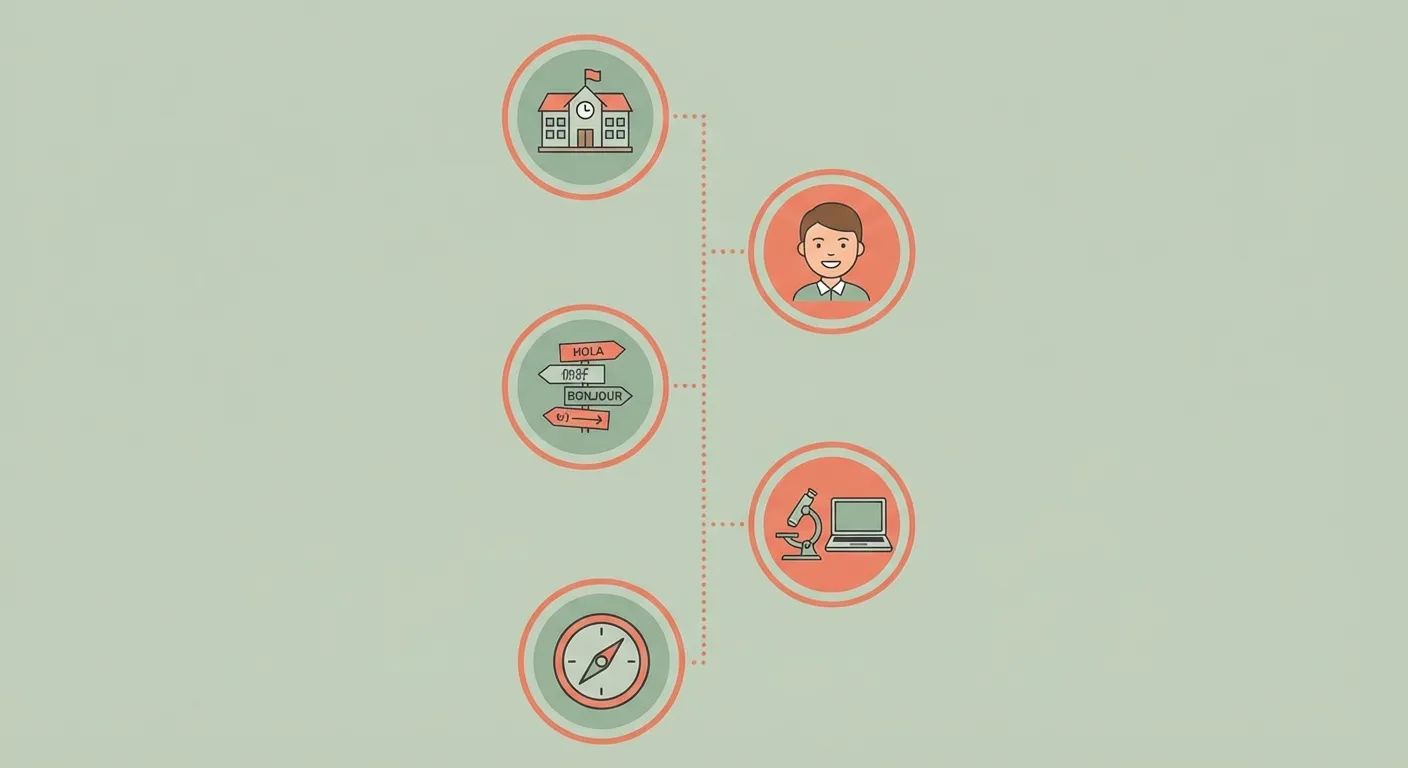
Leadership Tone
Strong: Principal talks about every student succeeding regardless of background. Low staff turnover.
Weak: Administration absent or overwhelmed. Teachers rotating every year.
Teacher Attitudes
Strong: Teachers are curious about your child's background and see their home language as an asset.
Weak: Teachers view immigrant students as a burden or assume ability based on accent.
Visual Cues
Strong: Signs in multiple languages, diverse student work on display, culturally varied reading materials.
Weak: Everything monolingual. No acknowledgment of the actual student body.
Resources & Rigor
Strong: Current technology, updated materials, AP or honors tracks available.
Weak: Outdated textbooks, broken equipment, no advanced courses.
Counselor Quality
Strong: Counselors know students by name, actively guide them toward college-prep courses.
Weak: Counselors stretched thin or confusing limited English with limited ability.
What to Say When It Matters
Advocacy doesn't need to be confrontational. It just needs to be specific. Here are the exact conversations that change trajectories.
The Unwritten Rules Nobody Tells You
Experienced families know these. New families shouldn't have to learn them the hard way.
- All classes lead to the same destination
- ESL classes count toward graduation
- Counselors will advocate for my child
- Fluent conversation = academic readiness
- College is unaffordable for us
- Some tracks lead to college; others don't
- ESL may not count -- ask specifically
- Advocacy is your job. No one else will do it.
- Full academic fluency takes 5-7 years. This is normal.
- Financial aid and scholarships exist -- but have deadlines
Protect the Superpower

Your home language is the foundation everything else builds on. Here's how to keep it strong while your child adds English on top.
Language Protection Playbook
Your child arrived with a deep belief in the power of education and a cognitive advantage most families would pay anything for. Learn the rules. Question the placement. Show up. The system wasn't built for your family -- but your family can absolutely master it.