
Operation Midnight Phone
The stealth mission your kid is already running — and how to shut it down in two moves
Of all screen boundaries, this one has the clearest evidence and biggest payoff.
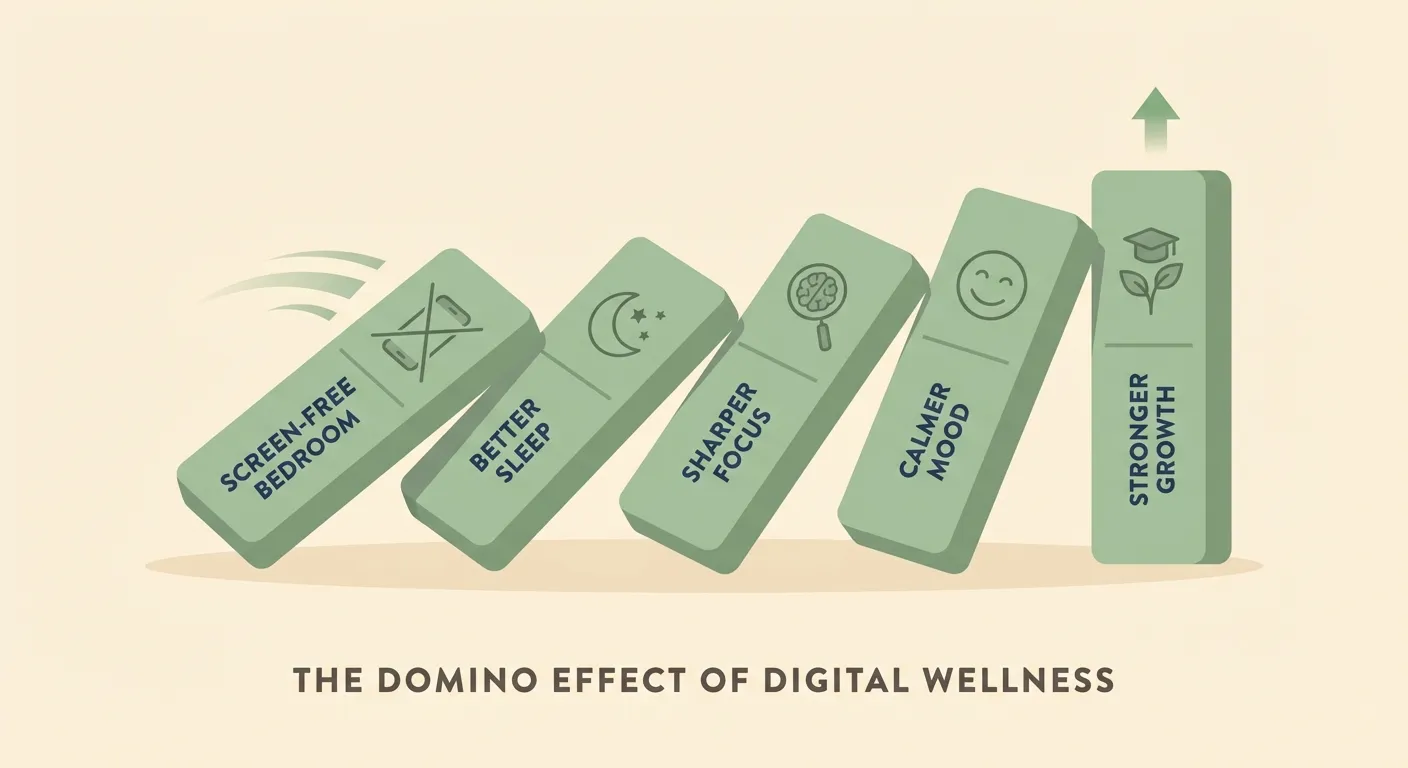
- Kids get back hours of sleep, better moods, sharper focus, and a brain that actually recovers overnight instead of scrolling through it.
- The move: every device leaves the bedroom every night — backed by software downtime so sleepovers and vacations don't blow the system.
Somewhere around 1:17 a.m. last Tuesday, your kid executed a flawless tactical extraction. Bare feet on carpet. Low crawl past the creaky floorboard. Phone liberated from the kitchen counter. Back in bed by 1:19, scrolling TikTok under the covers with the brightness at 3%.
They think they're being sneaky. They're actually being completely normal.
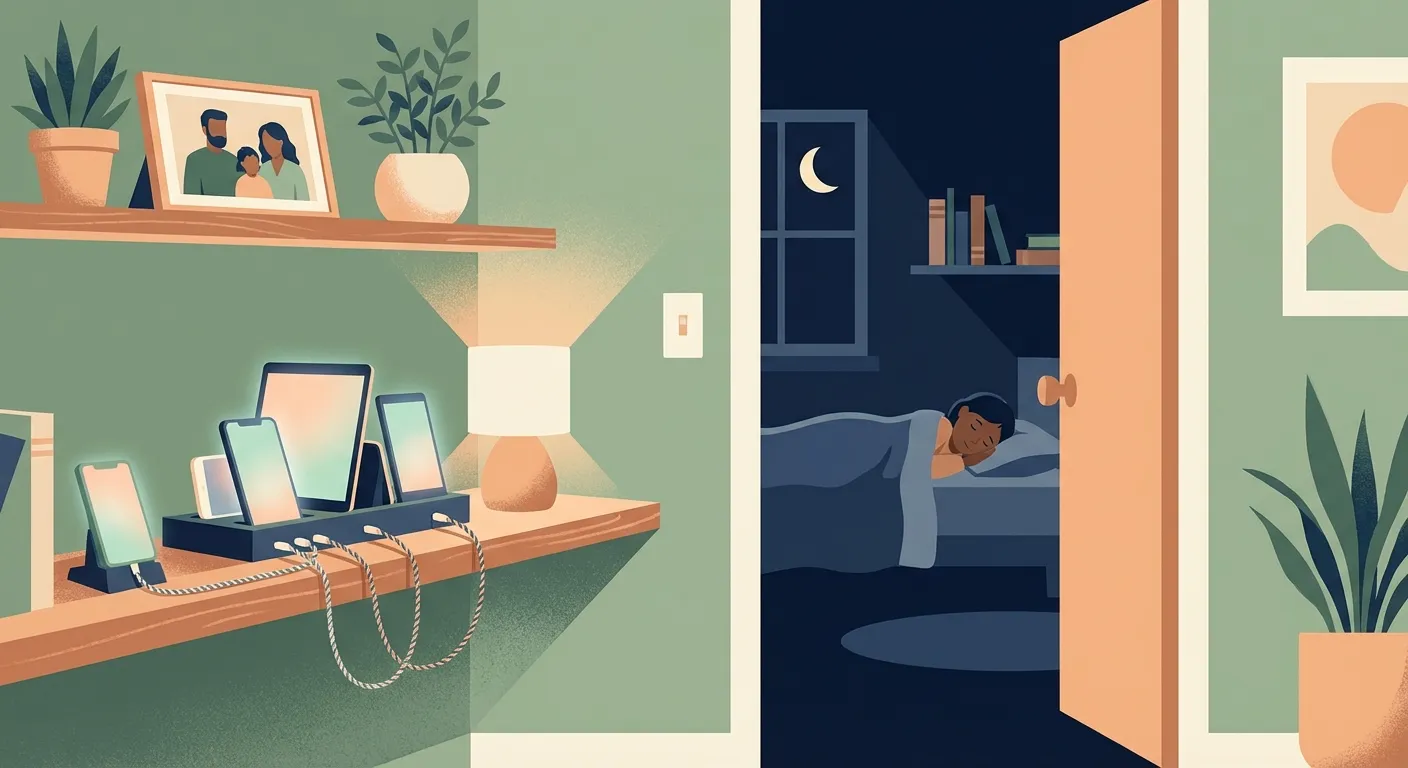
Artist's rendering. Your kid's technique may vary.
The phone-in-the-bedroom problem has been studied to death and the findings are unanimous: screens in the bedroom shred sleep quality. Not a little. A lot. Large studies show the majority of teens use their phones during the night on school nights, and those kids are significantly more likely to be sleep-deprived.
But here's the part nobody talks about: most families who try to fix this use only one layer of defense. And one layer has a known exploit.
The Move
Two layers. Physical removal + software lockdown. Neither alone is enough. Together, they're airtight.
Why One Layer Always Fails
Before we build the system, you need to understand the three ways a phone attacks sleep once it's in the bedroom.
The Notification Pull
Kids wake naturally several times a night. With a phone within arm's reach, each waking becomes a check-in. A glance at the lock screen turns into ten minutes of scrolling. Research shows a significant percentage of middle schoolers use their phones when they stir at night.
The Infinite Scroll
Teens already have a biological clock pushing bedtime later. Add an infinite feed of short videos and group chats, and "five more minutes" becomes an hour. The content is engineered to have no natural stopping point.
The Wired Brain
Using screens in bed trains the brain to associate the pillow with stimulation, not rest. The light suppresses melatonin. The mental activity keeps the brain in alert mode. Over time, even screen-free nights feel harder because the association has been built.
This is why "just set a timer on the phone" doesn't work. The phone is still right there. Glowing. Vibrating. Calling out from the nightstand like a siren on the rocks.
And "just take the phone away" doesn't work either, because the one night you forget, or the sleepover, or the vacation, the whole system collapses. Your kid at midnight has zero willpower and infinite creativity.
The Two-Layer System
Physical Removal
Pick whichever fits your family. All three work.
Software Lockdown
Set the device to shut down everything except calls and basic functions 30 minutes before bedtime. This is your safety net. On the nights the routine slips — sleepovers, vacations, forgotten handoffs — they still can't scroll at 2 a.m.
Both iOS and Android have built-in downtime scheduling. Third-party apps give you more granular control and remote management.
Why Both Layers?
The Objections (and What Actually Works)
Your kid will have objections. Every single one has been field-tested by thousands of parents. Here's the cheat sheet:
| They'll Say | You'll Do |
|---|---|
"I need it for my alarm." |
Buy a $7 alarm clock. Problem solved. This is the easiest objection to handle and they know it — it's a test balloon. |
"I still have homework." |
That's a time-management conversation, not a reason for a screen in bed. Help them plan their evening so homework wraps up before handoff time.
Research consistently shows it's recreational screen time — not schoolwork — driving sleep loss in teens.
|
"I forgot to put it away." |
Clear consequence: device takes a day off. If they hid it intentionally, the consequence is longer. Consistency beats lectures every time.
"The rule is simple: phone goes to the charging spot every night. When that doesn't happen, the phone takes a day off."
|
"My friend is in crisis." |
A child up at midnight is not equipped to be crisis support. If a friend truly needs help, the right move is an adult — their parent, a counselor, or a crisis line. Your kid checks in tomorrow.
"You're a good friend for caring. But helping someone in a real crisis is a job for a grown-up, not a tired kid at midnight. Let's make sure they have a real support option."
|
"Nobody else's parents do this." |
Many families are doing exactly this — they just don't advertise it. And the majority of parents who set this boundary wish they'd done it sooner.
"Different families figure this out at different times. We're doing it now because the evidence is really clear, and your sleep matters too much to leave to chance."
|
How Much Sleep Are We Protecting?
A quick reality check on how much sleep kids actually need (spoiler: more than they're getting):
Build in a 15-30 minute buffer before target sleep time. Nobody falls asleep the instant they close their eyes.
Making It Stick
- Model it yourself. If your phone charges in your bedroom but theirs can't be there, they'll call it out within 48 hours. Put yours on the family charging spot too. This is the single most powerful move for compliance.
- Start on a Friday. The first couple of nights involve grumbling. Beginning on a weekend takes the pressure off — no school morning on the line.
- Name what you notice. When they start sleeping better (and they will), point it out. "You seem sharper this week" or "You've been in a good mood lately" reinforces the connection without making it a lecture.
- Revisit, don't relax. As kids get older, the conversation can evolve — maybe they earn later handoff times. But the bedroom stays screen-free. The sleep science doesn't change at 15.
The Bottom Line
You're not taking something away. You're giving them back hours of sleep, better moods, sharper focus, and a brain that actually gets to recover overnight.
Of all the screen boundaries you could set, this one has the clearest evidence and the biggest payoff. Two layers. One rule. A kid who wakes up actually rested.
Operation Midnight Phone: mission cancelled.