
Screens Were Supposed to Kill Boredom. They Made It Worse.
The generation with the most entertainment options reports the highest boredom.
- Kids who grow up with protected screen-free time sleep better, hold real conversations, and stop needing a device to fill every quiet moment.
- The move: designate specific rooms and times as phone-free — meals first, then bedtime, then weekends — and make the rule universal.
The counterintuitive science behind screen-free zones — and a room-by-room blueprint for setting them up tonight.
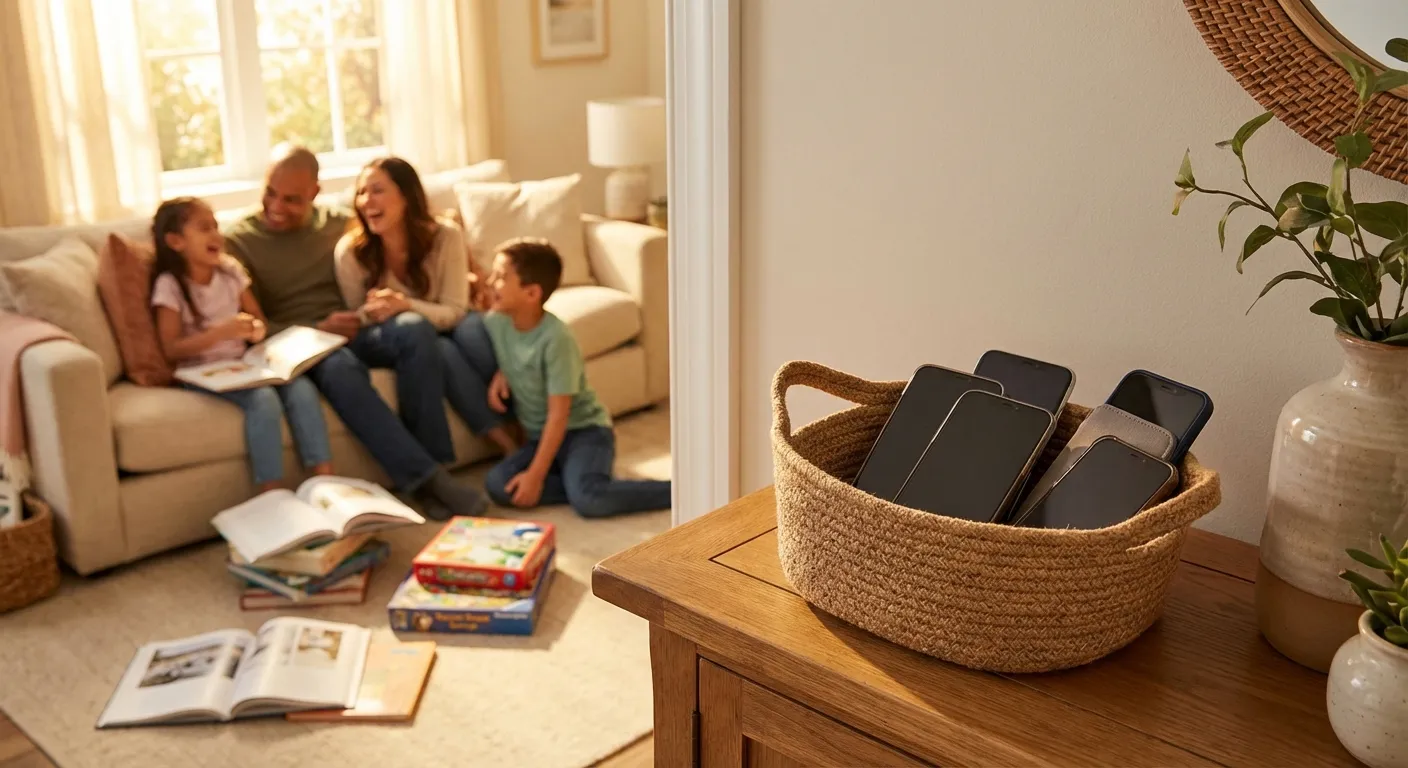
Here is a strange fact: the generation with the most entertainment options in human history reports the highest rates of boredom. Teens who spend more time switching between apps and feeds don't feel less restless. They feel more.
Meanwhile, research consistently shows that the old-fashioned stuff — being outside, making things with your hands, talking face-to-face — is linked to less boredom. Not more.
Devices designed to fill every idle second haven't eliminated boredom. They've amplified it. The brain gets trained to expect constant stimulation, and when it doesn't get it, everything feels dull.
The fix isn't banning screens from existence. It's protecting specific moments and places — the ones where the best stuff actually happens. Sleep. Conversation. Creative play. Family connection.
Here's a room-by-room, moment-by-moment blueprint.
Protect Sleep: The Wind-Down Window
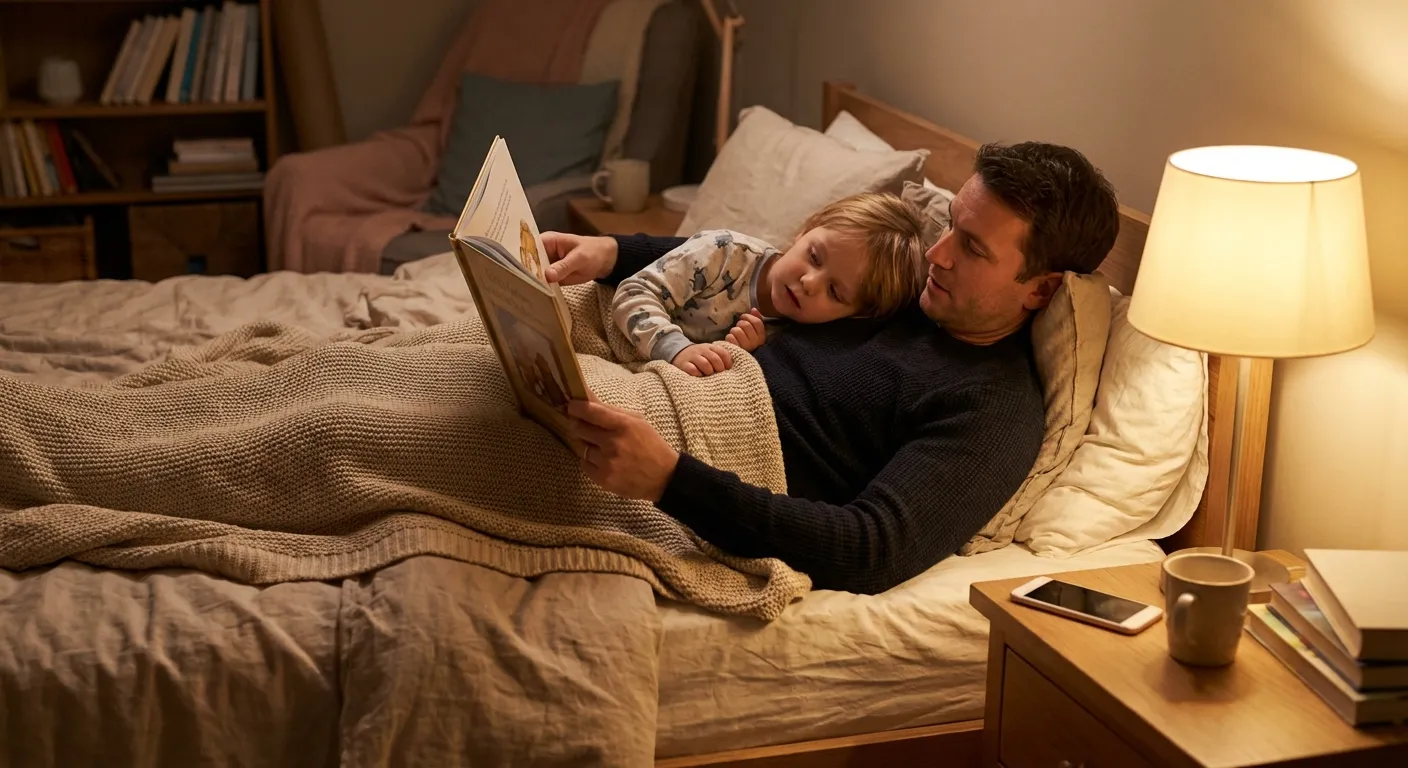
Sleep doesn't happen like flipping a switch. The brain needs a runway. Screens stimulate alertness and suppress melatonin — the hormone that says "time to sleep." Research on young adults found that even moderate device use in the hour before bed was linked to substantially higher rates of sleep trouble and measurably less sleep overall.
| Before bed (avoid) | Before bed (swap in) |
|---|---|
| Scrolling social media | Reading a physical book together |
| Watching YouTube | Talking about the day |
| Gaming on a tablet | Stretching, drawing, or puzzles |
| Texting in bed | E-ink reader with backlight off |
The Move
Protect Relationships: Meals and Conversations
Dinner is your daily window into each other's lives. Devices on the table — even face-down — split attention and signal that something else might be more important. Experimental studies found that people rated their meals as more enjoyable when phones were physically removed from the room. Not silenced. Removed.
The same principle applies to any conversation that matters. Research has found that simply having a phone visible — even untouched — reduces the quality of the interaction.
Pick a physical spot
A basket by the door, a drawer in the kitchen, a charging station in the hallway. When the default is "phone goes here," you don't have to negotiate each time.
Everyone. Including you.
Kids will not respect a rule you don't follow. Put your phone away too, every single time. This is non-negotiable.
Cover guests and extended family
When grandparents visit, when friends come to dinner — that time is irreplaceable. Make the basket visible and easy to use.
Help your kids set expectations with friends, too:
Even better: when hanging out in person, have kids stack their phones somewhere else for a while. See what happens to the conversation.
Build Independence: Outdoor Time and the Boredom Cure
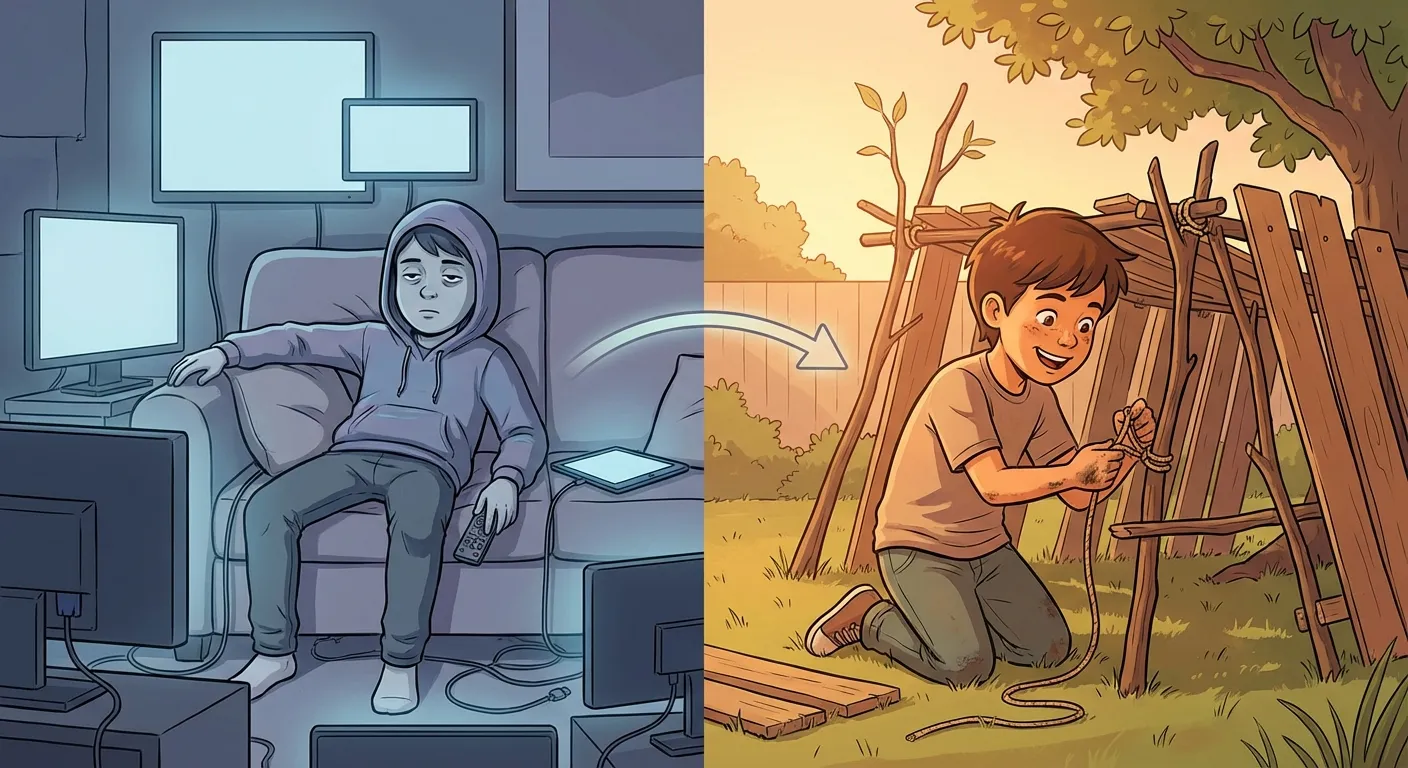
Unstructured time outdoors — especially with other kids and without screens — is one of the most reliable ways to build social awareness, self-control, and confidence. Studies of kids at screen-free camps found measurable gains in reading social cues and emotional self-regulation, even after relatively short stays.
Prioritize camps that are mostly outside and face-to-face. Day camps or overnights that ban devices give kids the experience of navigating the world without a screen as a crutch.
And when they say "I'm bored" — resist the urge to hand them a device.
The Fridge List
Have your kids brainstorm 25 things they'd do if screens didn't exist. Post it on the fridge. When boredom strikes, point to the list. Here are starters:
- Build a fort
- Write a comic book
- Learn a card trick
- Bake something from scratch
- Start a neighborhood scavenger hunt
- Take the dog on an adventure walk
- Build the tallest possible card tower
- Invent a board game
...let them fill in the other 17.
Make It Stick: The Rollout Plan
Screen-free zones only work if they're consistent and universal. Trying to enforce everything at once invites pushback. Here's the sequence that works:
Start with meals
Easiest win. Phone basket on the table, everyone participates. One week to make it automatic.
Add the wind-down window
Once meals feel natural, set the bedtime device curfew. 30-60 minutes before lights out.
Expand to weekends
Set a modest daily screen budget for non-school days. Fill the rest with bikes, books, outdoor play, and projects.
Protect trips and vacations
Consider collecting phones for family outings. Give each kid a simple digital camera for memories without the pull of apps.
Expect resistance the first week. After that, kids adapt faster than you'd expect. Many families report that kids start to prefer the screen-free times.
Every screen-free zone you create is a space where something better can happen.
You're not taking something away. You're making room.