
Turn Down the World, Turn Up Their Superpowers
Your child's brain splits attention five ways. These exercises fix that.
- Kids who play these games become exceedingly keen discriminators -- they notice texture differences adults walk past, hear sounds others miss, and identify foods without looking.
- The move: shut down vision, and all that processing power floods into touch, hearing, smell, and taste.
The Montessori technique that sharpens your child's senses by doing something beautifully counterintuitive: removing stimulation.
Picture a room full of four-year-olds. The lights go low. Every child bows their head into their hands, covering their eyes. Silence fills the space until it feels physical, like something you could touch.
Then, from across the room, a whisper. One single name.
The child whose name was called lifts their head, face lit up, and moves toward the voice with the focus of a tiny ninja hearing a signal only they were tuned to receive.
That is sensory isolation at work. And it might be the most fun your kid has with their eyes closed.
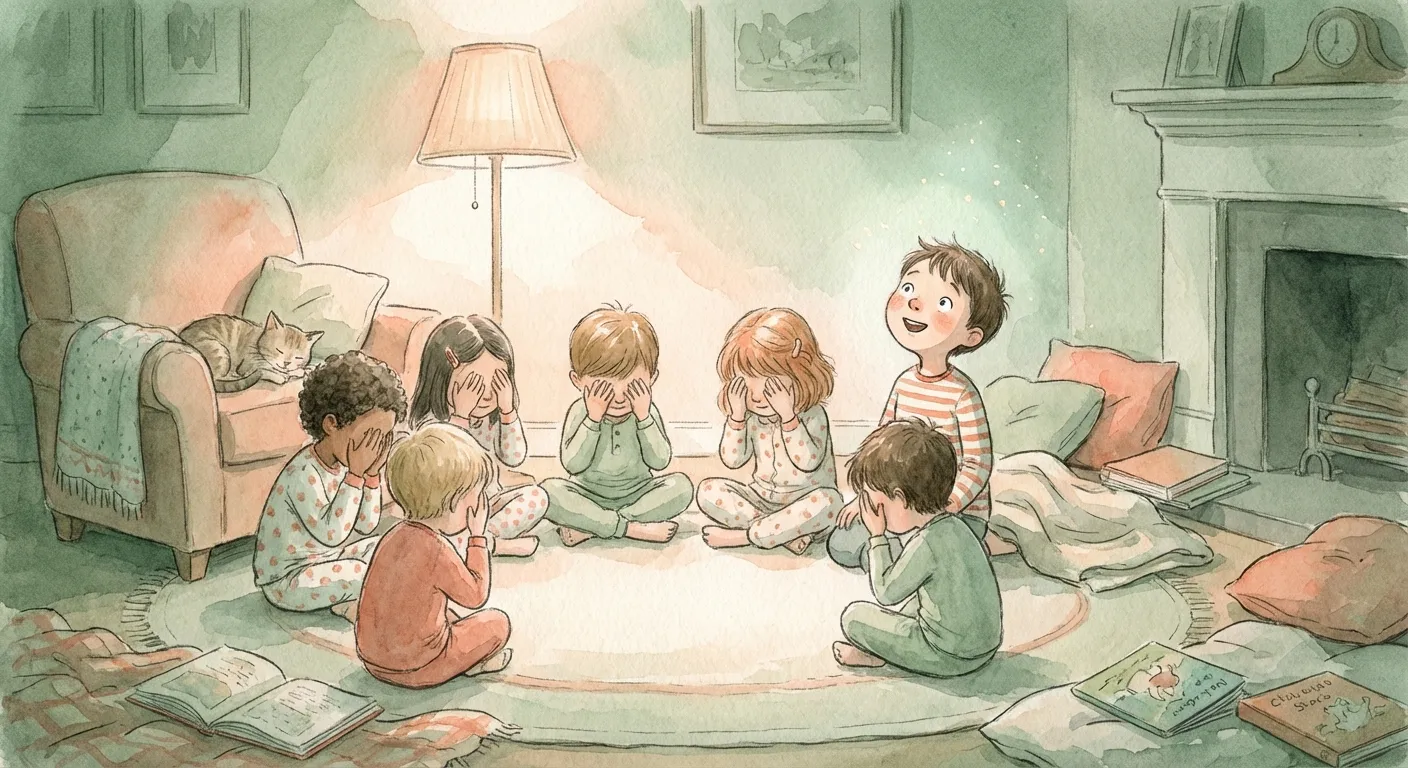
The whispered name exercise: silence turns ordinary hearing into a superpower.
The Counterintuitive Move
Maria Montessori figured out something over a hundred years ago that neuroscience keeps confirming: when you take one sense away, the others get sharper. Not a little sharper. Dramatically sharper.
Think of it this way. Your child's brain has a fixed amount of attention. Right now, it's split five ways across everything they can see, hear, touch, smell, and taste. Close their eyes? All that visual processing power gets redistributed. Touch becomes electric. Sound becomes vivid. It's not magic -- it's bandwidth reallocation.
| Scenario | All Senses Active | One Sense Isolated |
|---|---|---|
| Touching sandpaper | Notices it's rough | Detects grain direction, density variations, edge textures |
| Listening to sounds | Hears obvious noises | Picks out the fridge hum, a bird outside, their own breathing |
| Tasting food | Likes it or doesn't | Identifies sweetness, salt, texture, temperature layers |
Montessori didn't just observe this. She built exercises around it -- and the kids didn't just tolerate them. They asked for more.
Three Exercises That Actually Work
Here's what Montessori designed and tested with real children. Each one isolates a different sense by deliberately reducing the others.
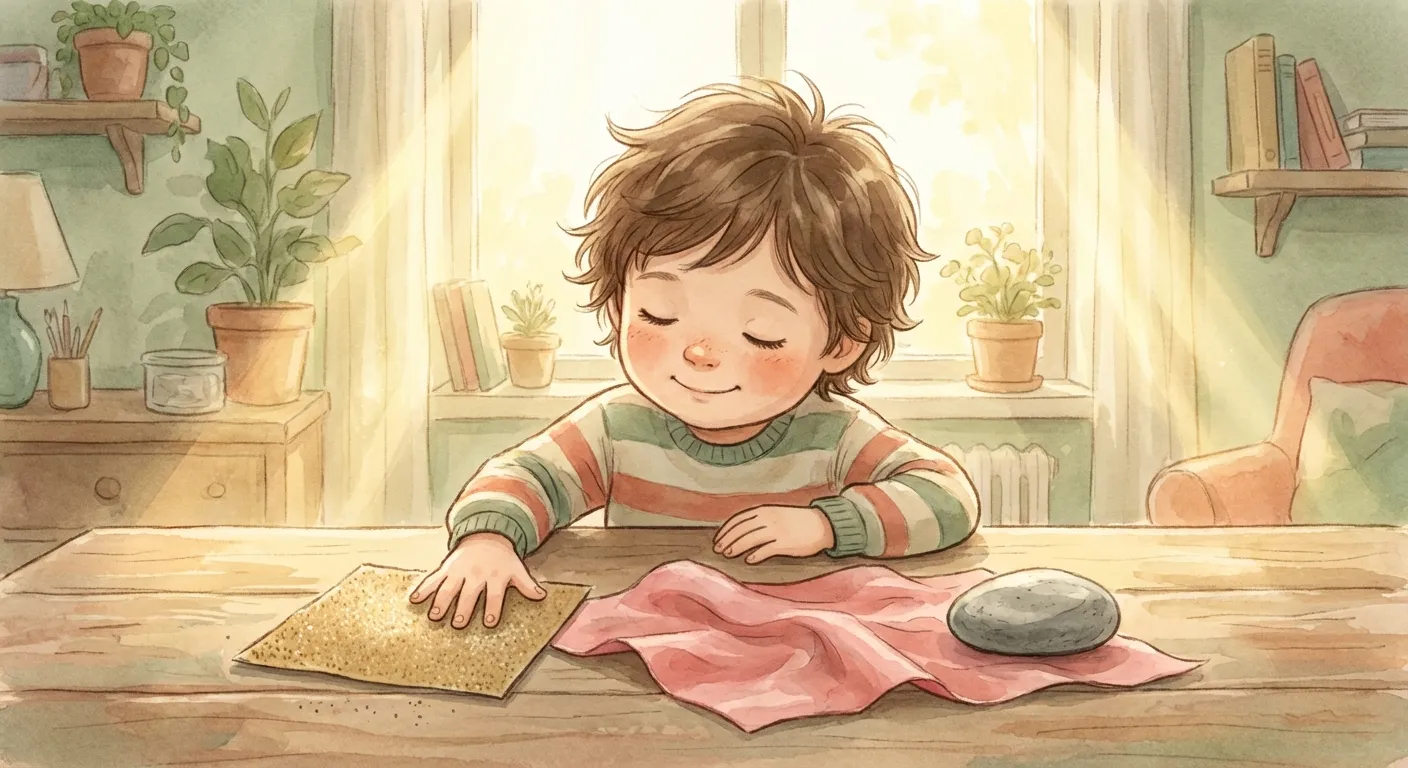
Warm hands + closed eyes = fingertips that notice everything.
The Touch Discovery
This one has a secret step that most people skip -- and it makes all the difference.
Montessori found that children became "exceedingly keen in discriminating" textures this way. They'd notice differences between surfaces that adults walked right past.
The Whispered Name
This is the one that turns a classroom into a cathedral of focus. Works just as well at home.
Each child waits for their turn, locked in. The concentration this produces is extraordinary -- these are three-and four-year-olds sitting in focused stillness. Voluntarily.
The Temperature Challenge
Water at different temperatures -- that's all you need.
Without seeing the bowls, children develop "remarkably fine temperature discrimination." They start noticing temperature differences everywhere -- on different surfaces, in different rooms, on different sides of a pillow.
Your Kitchen Is Already a Sensory Lab
You don't need Montessori materials. You need a blindfold (or just closed eyes) and stuff you already have.
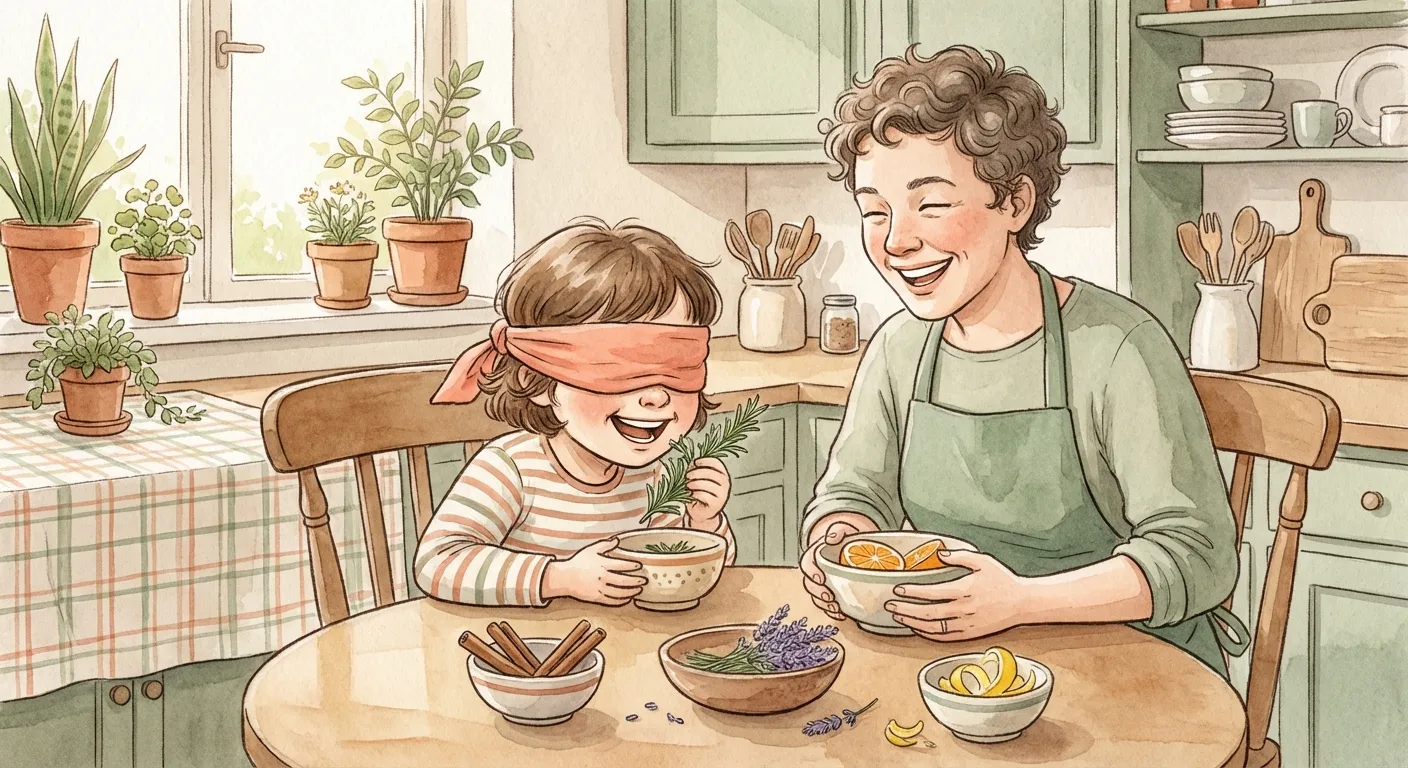
Everything you need is already in your kitchen drawers and pantry.
Mystery Bag
Fill a cloth bag with household objects. Eyes closed, reach in, identify by touch alone.
Sound Safari
Close eyes together. Count how many different sounds you can hear in 60 seconds. The fridge, the clock, birds, cars, breathing.
Scent Detective
Blindfolded, sniff cinnamon, coffee, vanilla, lemon, peanut butter. Name each one.
Blindfold Taste Test
Small bites of different fruits or vegetables. No looking, no smelling (pinch nose). What can the tongue figure out alone?
Fabric Pairs
Cut two swatches each of silk, denim, fleece, cotton, burlap. Eyes closed, match them by feel.
The Silence Game
Challenge: how long can the whole family stay absolutely silent? Start small. The child who breaks first isn't "out" -- everyone just resets and tries again.
Why Kids Love This
Here's the part that surprises people: children don't resist these exercises. They light up. Montessori described children approaching touch exercises with visible anticipation, running toward the whispered voice with "keenest joy."
There's no coercion here. The isolation itself creates a kind of heightened state that children find genuinely thrilling. It's the same reason they love hide-and-seek in the dark. When one sense dims, the others don't just compensate -- they come alive.
And once they've experienced this sharpened awareness? They start noticing more in everyday life. The kid who played the texture game starts commenting on how different fabrics feel at the store. The kid who did the sound safari starts hearing bird calls on walks that you missed entirely.
You're not teaching them to sense better.
You're teaching them to pay attention to what they already sense. That's a skill that transfers to everything -- music, sports, academics, relationships. Attention is the foundation.
Try one tonight. Dim the lights after dinner, have everyone close their eyes, and whisper a challenge: "Who can hear the most sounds?" Then watch what happens to the room.
You're not doing a Montessori exercise. You're unlocking bandwidth your child didn't know they had.