

The Food Detective Game
Feeding therapy distilled into a game any parent can run at home.
- Kids who play the food detective game grow a 'tried it' list they're proud of, eat wider than before, and stop melting down at unfamiliar plates.
- The move: turn new food into a four-step investigation — looking and touching count as wins, biting is optional.
Four stages that turn "I won't eat that" into "Wait, let me check it out."
My daughter once screamed at a blueberry. Not because it touched her mouth. Because it was on her plate. That was the moment I realized we weren't dealing with pickiness. We were dealing with a nervous system that had classified unfamiliar food as a genuine threat.
Here's what changed everything: we stopped trying to get her to eat, and started playing detective instead.
Why "Just Try One Bite" Backfires
Kids who freak out around new food aren't being difficult. Their sensory system is firing alarm bells. An unfamiliar texture, smell, or color triggers the same fight-or-flight response you'd feel if someone put a spider in your hand.
Forcing a bite into that state does the opposite of what you want:
| Forcing a Bite | Sensory Stepping Stones |
|---|---|
| Triggers fight-or-flight | Builds familiarity gradually |
| Creates negative food memories | Creates neutral or positive ones |
| Next attempt is even harder | Each session makes the next easier |
| Child feels trapped | Child stays in control |
The Setup (90 Seconds of Prep That Matters)
Don't do this at dinner. Don't do it when they're hungry. Pick a calm, low-stakes moment — Saturday morning, just the two of you, kitchen table.
- Let them choose the food. Offer 3-4 options. Their sense of control is your biggest asset.
- Start mild. Plain pasta, sweet potato, a simple cracker. Skip bold flavors for now.
- Put a "safety cup" of water on the table. Knowing they can spit and rinse removes the fear of being trapped with a bad taste.
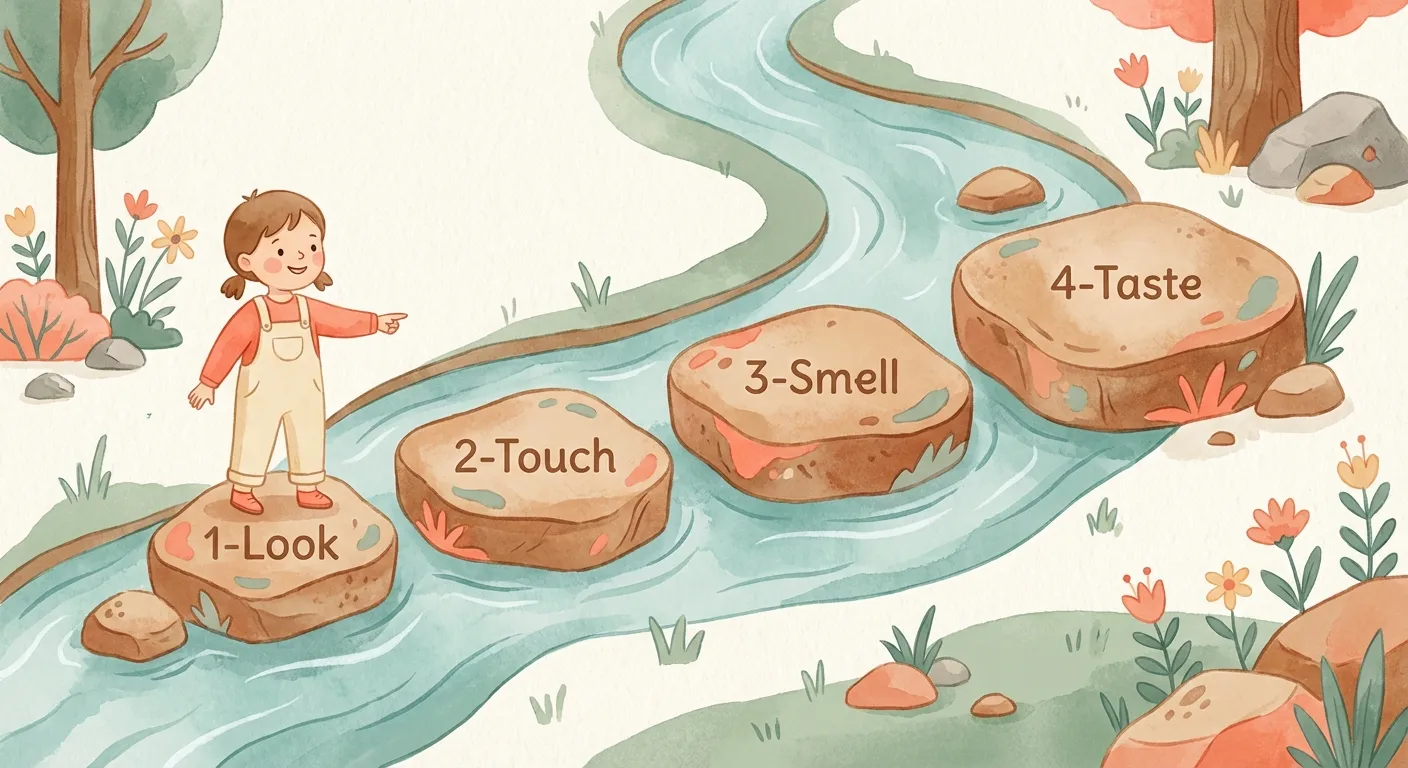
The Four Stages
Move at your child's pace. All four in one session? Great. Stuck on Stage 1 for three weeks? Also great. Both are real progress.
Goal: child observes the food without distress
Put the food on the table. Don't push it toward them. Start talking about it like you're both examining something interesting.
Even "it looks weird" counts as engagement. They're looking. They're thinking. Their nervous system is collecting data through the safest channel: eyes.
Goal: child voluntarily handles the food
Pick it up yourself first. Then invite them in.
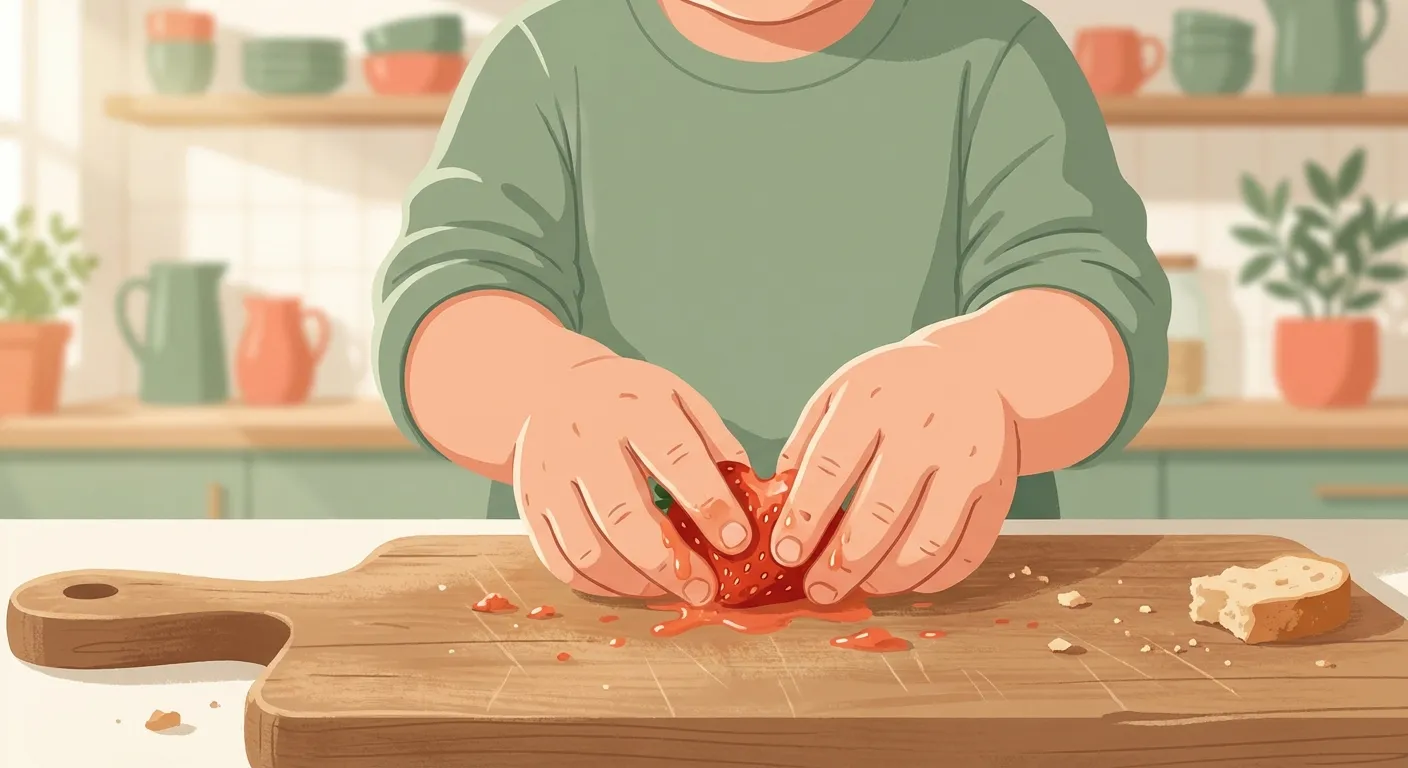
Let them squeeze it, break it, poke it. Messy is perfect. Hands are a safe channel — the more sensory data their brain gets through touch, the less threatening the food becomes to a riskier channel (mouth).
Goal: food comes close to their face
The bridge between touching and tasting. Not a bite — just contact.
If they do it, ask what they noticed. Warm or cold? Smooth or rough? Strong smell or mild? You're keeping their analytical brain engaged, which dampens the fear response.
Goal: a small, voluntary bite
Only when they're genuinely willing — not performing for you.
If they bite: "You did it — how was it?" Calm celebration, not fireworks. Over-excitement adds pressure next time. If they spit it out? Still counts. Their mouth got new data, and nothing bad happened. That's a win.
Reading the Room
The hardest part: knowing when to gently encourage versus when to stop. Here's the cheat sheet:
The Rules That Make It Work
- Celebrate every stage. Getting through "Look" is real progress for a kid who usually won't sit near new food. Name it: "You really looked at it closely — that took guts."
- Never force, bribe, or guilt. No "just one bite for me." No dessert bargaining. Pressure creates negative associations that compound.
- Rejected food? Rotate it out. Try something different next session. Wait a month before bringing the same food back.
- Vomiting = one-year break. The sensory memory is too intense. Reintroducing too soon triggers the same response.
- Same time, same place, same setup. When everything else is predictable, the new food is the only variable. That makes it manageable.
Playing the Long Game
This isn't a one-session fix. It's a system that compounds. Here's how to keep building:
- Start a "tried it" list together. Even spit-out foods go on it. Watching the list grow gives your kid visible proof of their own bravery.
- Bridge from accepted foods. If they eat plain pasta, try pasta with a thin coat of butter. Small variations expand the zone without triggering alarm.
- Involve them in cooking. Washing, stirring, arranging food on a plate — that's sensory exposure (sight, smell, touch) with zero pressure to eat. It counts toward those 10-14 exposures.
- Expect regression. Illness, stress, new school — these shrink the menu temporarily. Go back to the stages with accepted foods to rebuild, then re-expand.
- Know when to get help. Fewer than 10 foods, losing weight, or extreme gagging/vomiting? Work with a pediatric feeding therapist alongside this method.