
The Moment Your Kid Becomes
"The Piano Kid"
Talent doesn't make skills stick. Identity does. Here's the phase most parents skip.
Practice doesn't make skills stick. Being seen does.
- Kids who get recognized early — at family dinners, school shows, in their peer group — internalize the skill as part of who they are. That's self-sustaining fuel.
- The move: pair daily practice with genuine, low-key performance moments that make your child feel known for what they do.
There's a seven-year-old at every holiday dinner who gets asked to play something on the piano. She grins, hops off her chair, and plays "Fur Elise" for grandma. Grandma tears up. Uncle Dave says "She's going to be famous." The kid floats back to the table six inches taller.
That moment right there? That's more important than the piano lessons, the practice schedule, and the teacher combined. That's the moment the activity stops being something she does and starts being who she is.
Researchers studying world-class performers across music, sports, and academics found the same thing every time: the families that produced elite talent followed a specific five-phase sequence. And the phase that locked everything in place wasn't the one you'd guess.
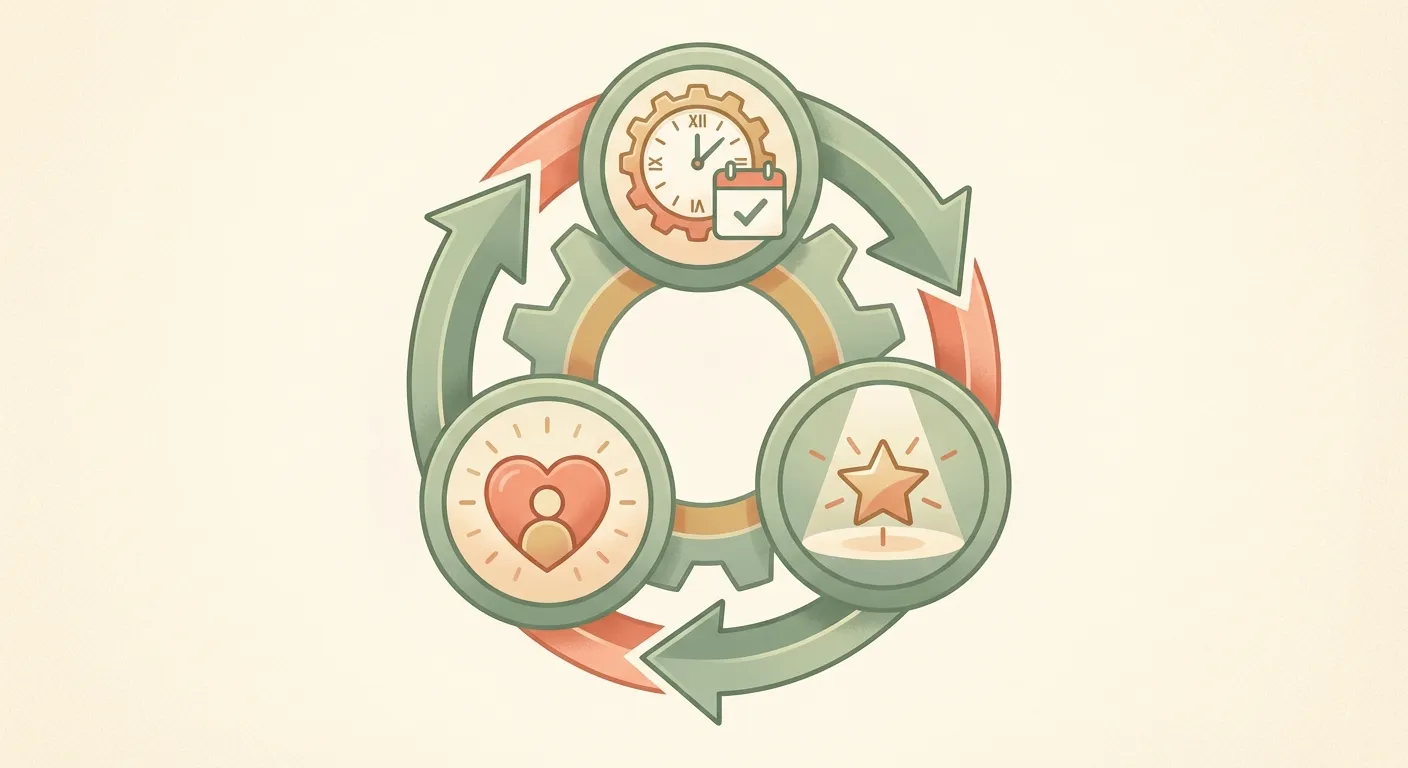
Exceptional skill doesn't start with exceptional talent. It starts with a specific sequence of family conditions — and the critical lock-in moment is when the child begins to see the activity as part of who they are.
The Five Phases (and Which One Actually Matters Most)
Every family that produced a high-level performer moved through the same five phases. Most did it without any plan at all. Here's the sequence:
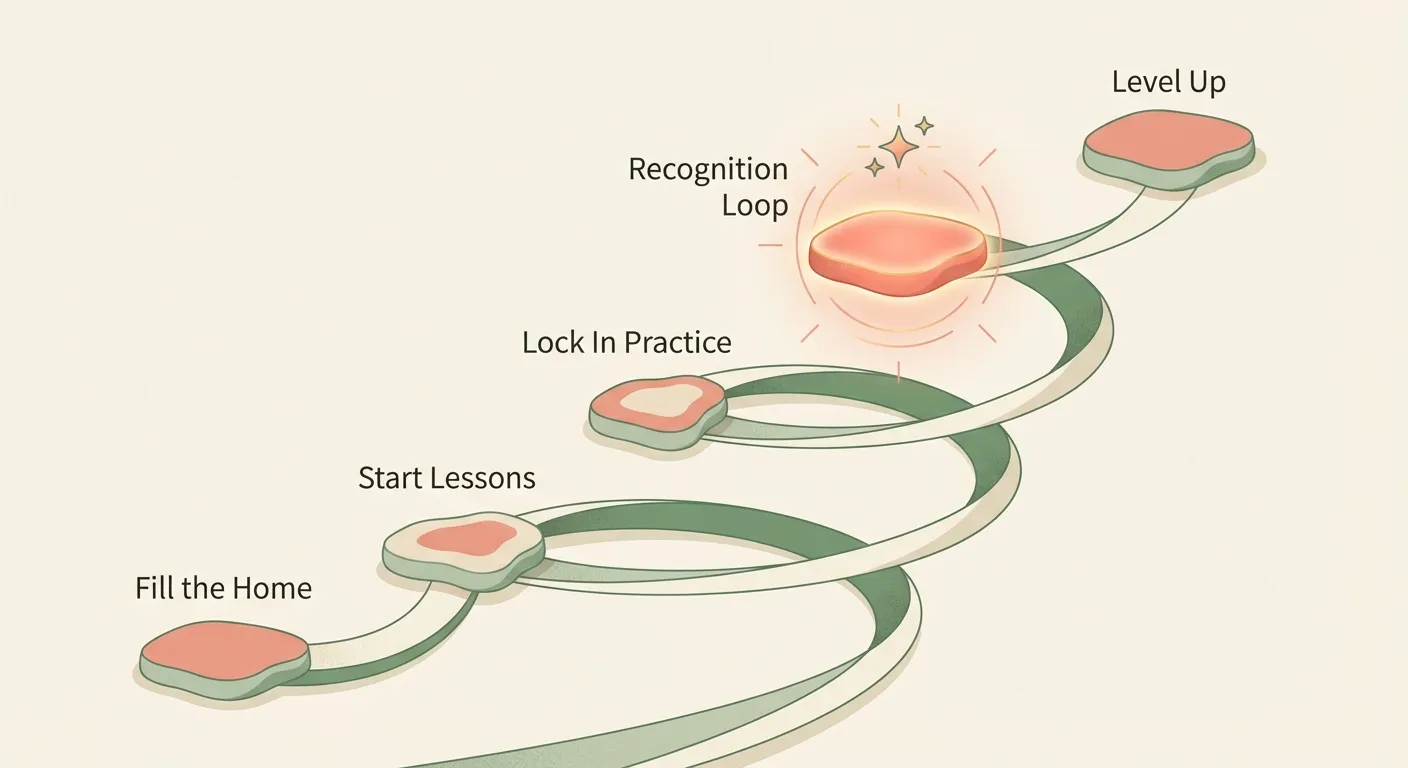
Fill the Home
The activity is ambient before anyone introduces it. Background music while cooking. A ball in the backyard. A sketchpad on the kitchen table. The parents aren't engineering anything — they're living their own interests. The child absorbs what's already there.
Start Lessons as "Just Something We Do"
Lessons are framed as normal, not special. "Every kid should try this," not "You're gifted." All siblings take lessons too. And the first teacher? Chosen for warmth, not credentials.
Lock In the Practice Habit
Daily practice gets installed before the schedule fills up. Parents enforce time, not quality — showing up is the only requirement. The quality follows the quantity.
The Recognition Loop
This is the one. The child performs for family, gets praise at school, earns "local star" status. The activity becomes their identity. Everything that came before was building to this. Everything after is powered by it.
Level Up
The first teacher runs out of things to teach. Time for a more advanced instructor. But by now the child's identity is locked in — they want the challenge.
Why the Recognition Loop Changes Everything
Practice habits can be broken. Teachers can be quit. Even a home full of instruments doesn't guarantee anything. But once a child thinks of themselves as "the kid who plays piano" or "the one who's really good at swimming" — that's self-sustaining fuel.
Here's what the research found happening in these families:
| What Parents Did | What the Child Experienced |
|---|---|
| Asked the child to play for visiting relatives | Felt pride, attention, being "special" at something |
| Showed genuine enthusiasm at small progress | Connected effort with positive attention |
| Mentioned the child's skill to other adults in earshot | Heard themselves described as talented — started believing it |
| Put them in recitals, demos, school performances | Became "the kid who does this" in their peer group |
How to Build the Loop (Without Turning Into a Stage Parent)
The recognition loop works because it's genuine. The families who pulled this off weren't performing enthusiasm. They actually cared. The trick is creating natural opportunities for your child's ability to be seen.
Create performance moments
"Grandma hasn't heard you play yet — want to show her that song you learned?"
"Your teacher said you nailed that last piece. I told Dad and he wants to hear it after dinner."
Not this
"You're going to perform for everyone at Thanksgiving whether you like it or not." Forced performance kills the loop. The child should feel invited, not conscripted.
Make it their thing, not your thing
The goal is for your child to feel ownership. They don't need to be the best in the world. They need to be the best in their world — the family, the classroom, the neighborhood. That's enough to make the activity part of their identity.
| Identity-building | Pressure-building |
|---|---|
| "You're getting so good at this." | "You need to practice more if you want to be the best." |
| Hanging their art on the fridge proudly | Comparing their work to other kids' |
| Letting them pick what to perform | Choosing their recital piece for them |
| "You're our little musician!" | "With all the money we spend on lessons, you better practice." |
The Phase Before the Loop: Locking In Practice
Recognition only works if there's something to recognize. Phase 3 — the practice habit — is what gives the recognition loop something to feed on.
The families who did this well had three things in common:
Practice came first in the day
Before homework, before screens, before everything else. Kids who practice early treat it as normal. Kids who practice late treat it as optional.
A parent was nearby (not teaching)
Sitting in on lessons. Checking the teacher's notes. Listening from the next room. You don't need to know anything about the activity. You just need to show it matters to you.
They enforced time, not quality
Twenty minutes at the piano, every day, no exceptions. Whether those twenty minutes were brilliant or terrible wasn't their problem — that was the teacher's domain. The parent's only job: make sure the kid shows up.
The First Teacher Trap
Parents who search for the most qualified teacher for a five-year-old are solving the wrong problem. The first teacher's only job is to make your child love the activity. That requires warmth, patience, and a gift for making learning feel like play.
| First Teacher Must Have | Can Wait for Teacher #2 |
|---|---|
| Genuine warmth with young kids | Advanced technical ability |
| Makes learning feel like play | Professional credentials |
| Gives kids chances to perform | A grand development plan |
| Will say "they've outgrown me" | Personal performance career |
The majority of world-class performers started with local, convenient teachers who were good with children — not experts. Many were described as average in their own skill but extraordinary at making kids excited about learning.
When to Level Up
Phase 5 happens naturally when the identity is locked in. Watch for the signal: your child has outgrown their teacher. Sometimes the teacher says so. Sometimes you notice progress has plateaued. Don't let comfort keep them at a level below their ability.
Chemistry still matters at every level
Even as teachers get more serious and demanding, the relationship has to work. If a new teacher's style is crushing your child's enjoyment — harsh methods, a bad personality fit, teaching through fear — trust your instincts and find someone else. A child who dreads lessons won't become a child who practices willingly.
The Bottom Line
Skills stick when they become identity. Fill the home, find a warm teacher, lock in practice, then create natural moments for your child's ability to be seen. Once they're "the piano kid" or "the swimming kid" — once it's who they are, not just what they do — the rest takes care of itself.