

The No-Drama Phone Plan
Most families treat the phone decision as a single yes-or-no moment. It's not.
- Kids raised on a staged plan hit 16 with years of practice managing devices. They self-regulate screen time, handle social media with guardrails already in place, and never felt punished along the way.
- The shift: replace the one big decision with a milestone ladder — each upgrade tied to a real-world change, not a birthday.
Set the milestones. Share the roadmap. Never argue about screens again.
You know the conversation. It starts around third grade and never really stops:
"But everyone has one."
"I'm literally the only kid without a phone."
"You don't trust me."
Most parents handle this by deflecting ("We'll see"), drawing a hard line ("Not until you're older"), or eventually caving under pressure. All three approaches share the same problem: they turn the phone into a recurring battle with no clear finish line.
There's a better move. Instead of defending a vague "no," you lay out the entire plan up front. Your kid knows exactly what's coming and when. You never have to debate it again.
That's it. When your child knows the milestones are real, tied to their own development, and non-negotiable, the begging stops. Not because they're happy about it -- but because there's nothing to negotiate. The plan is the plan.
Why This Works
- "Can I have a phone?" every few weeks
- Arguments escalate as peers get devices
- Parent guilt builds ("Am I being too strict?")
- One bad day leads to caving early
- Child learns that persistence breaks you
- Child knows the timeline from the start
- Each stage feels earned, not withheld
- Peer pressure meets a clear answer
- Parent confidence stays steady
- Child learns patience has a payoff
The research backs this up hard. A study of nearly 28,000 young adults across multiple countries found that those who got smartphones later had significantly better mental health in early adulthood. The effect was especially strong for girls. Meanwhile, teen depression rates roughly doubled over the 15 years following widespread smartphone adoption.
Later isn't just safer. It's measurably better.
The Milestone Map
| Age | What They Get | Why This Stage |
|---|---|---|
| 0 - 10 | No personal device. Parent's phone for travel. Family TV for shows. | Zero practical need. Every "reason" is actually a want. |
| 11 - 12 | Basic phone Calls & texts Camera No internet No social media | Starting middle school. May commute or stay after school. Needs to reach you -- nothing more. |
| 13 - 15 | Basic phone + controls Approved apps only Laptop with parental controls No smartphone No social media | Homework demands a computer. Phone stays basic. Controls on everything. |
| 16+ | Smartphone Maps & navigation Social media (daily cap) Bedtime shutoff App approval required | Driving independently. A smartphone becomes genuinely useful for the first time. |
| 18+ | Gradual release of controls as responsibility grows. | Years of practice with guardrails. Now they manage it themselves. |
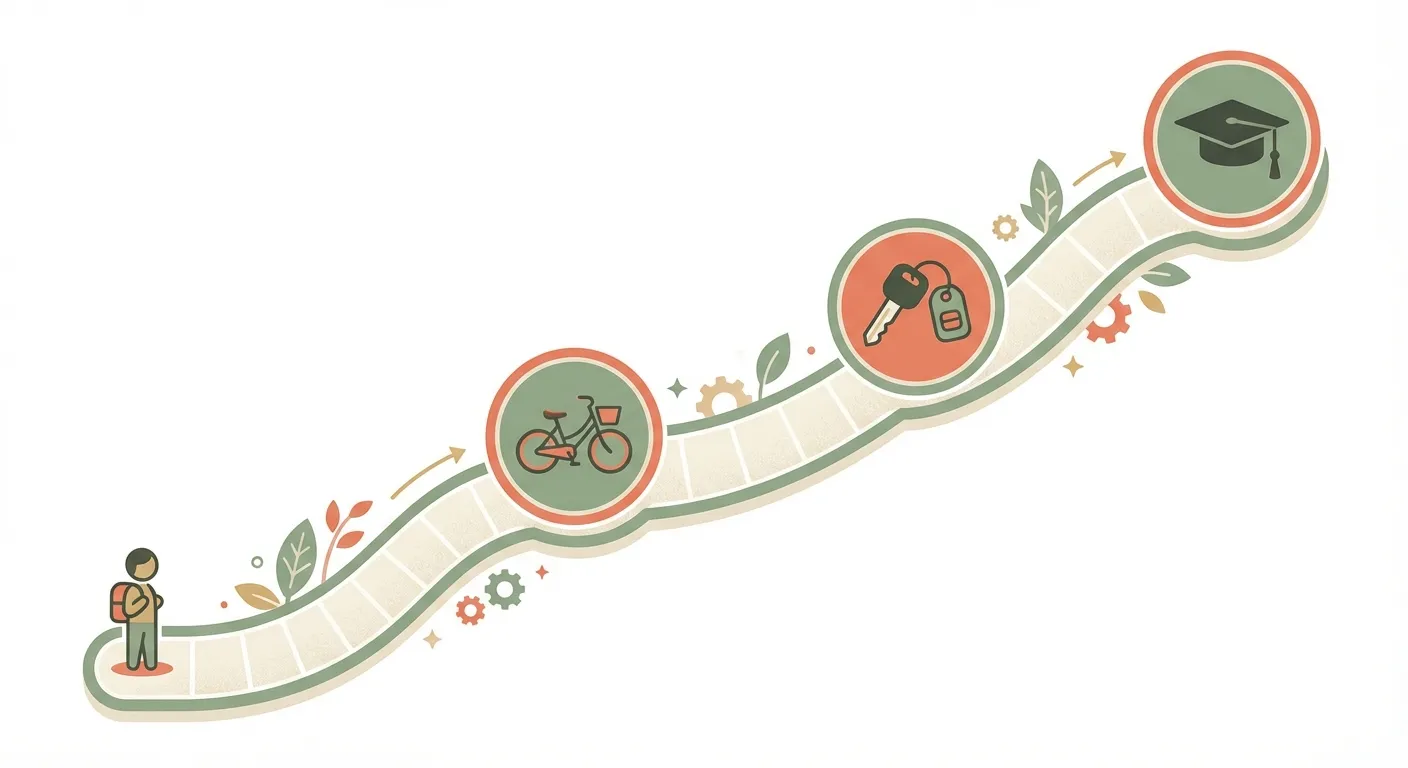
Notice the pattern: every upgrade is tied to a real-world milestone, not a birthday. Starting middle school. Starting to drive. Moving out. Your child can point to what they're working toward, and you can point to why it matters.
What to Say When They Push Back
The plan removes the argument, but it doesn't remove the feelings. Here's how to handle the three conversations that will still happen:
Build Your Parent Alliance

The single most powerful thing you can do is make sure your kid isn't the only one. When three or four families follow the same plan, "everyone else has one" falls apart instantly.
Three Steps to a Phone-Free Coalition
Pick 3-4 families whose kids are in the same friend group. Text them this week.
Share your milestone plan. Most parents are relieved someone went first.
Agree on the basics: no smartphones before driving age, no social media before high school.
You don't need the whole school. You need your kid's closest circle. That's enough to shift the social reality from "I'm the only one" to "we're the ones who do it differently."
Annual Check-In
Once a year, sit down together and look at where they are on the map. This is key -- it turns a rigid "no" into an evolving conversation they have a stake in.
Acknowledge their growth. Recognize what they've handled well. Adjust if something genuinely changed. Maybe they started a new activity that requires coordination with teammates. Maybe they've shown they can manage screen time on the laptop without reminders. Let the plan breathe.
One thing that stays constant: model it yourself. If you're scrolling at dinner, the plan feels like a double standard. Put your phone in a drawer during family time. Show them device management is a lifelong skill, not a punishment for being young.
Already Handed Over a Smartphone?
You can always course-correct. Parents who pulled back consistently say it was worth the friction.
- Swap to a basic phone. Several brands (Gabb, Pinwheel, Bark) make modern-looking devices without internet or social media.
- Remove social media apps and require your approval for reinstalls.
- Add parental controls with automatic shutoff at bedtime and daily time limits.
- Frame it as an upgrade, not a punishment: "We're adjusting the plan because we learned more. This is what smart families do."
Parents who waited always say they're glad they did.
Parents who didn't always wish they had.
Make the plan. Share it with your kid. Then stop arguing and start living.