
The Best Teachers Barely Teach
Ask, don't tell. Three words that change how your child learns everything.
- Kids who figure things out become kids who want to figure things out — they practice piano without nagging, try three approaches before quitting, and remember what they learned weeks later.
- The move: instead of explaining the answer, set up a situation where they stumble into it. The 'I got it!' moment does the rest.
Stop explaining. Start asking. Watch what happens.
You sit down with your kid to teach them something. You know the material. You explain it clearly. They nod. They try it. They get it wrong. You explain again, slower this time. They nod again. They sort of get it. Session over, everyone's a little tired.
Now picture something different.
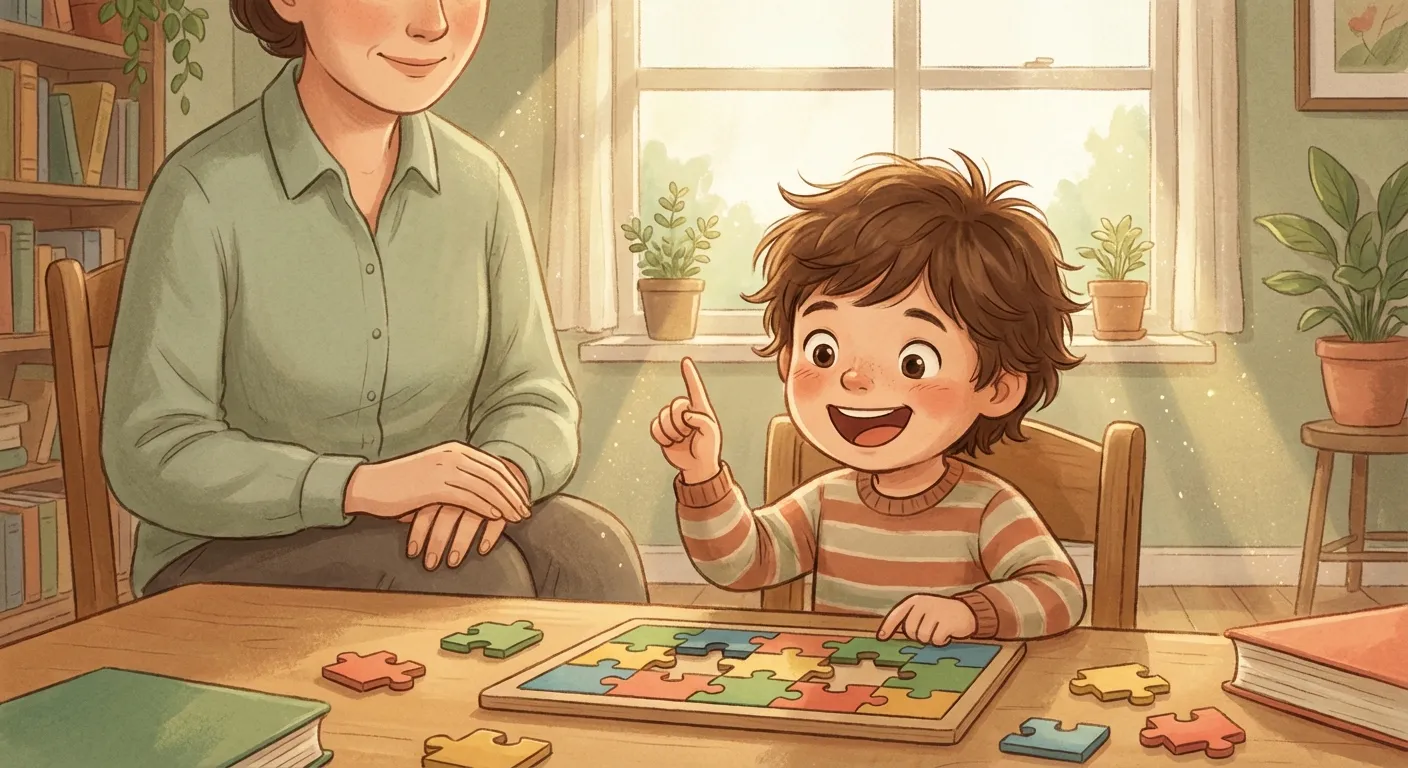
You put a puzzle in front of them. You don't explain the rules. You ask: "What do you think happens if you try this piece here?" They try. It doesn't fit. They try another. It clicks. Their face lights up. They reach for the next piece before you can say a word.
That second version -- where you barely taught at all -- is the one that produces kids who practice without being asked, who bounce back from failure, and who eventually teach themselves new skills with no help from you.
The less you explain,
the more they understand.
Tell vs. Ask
Every teaching moment is a fork. You can tell the child the answer, or you can set up a situation where they find it. Both work in the short term. Only one builds the kind of kid who keeps going when you're not around.
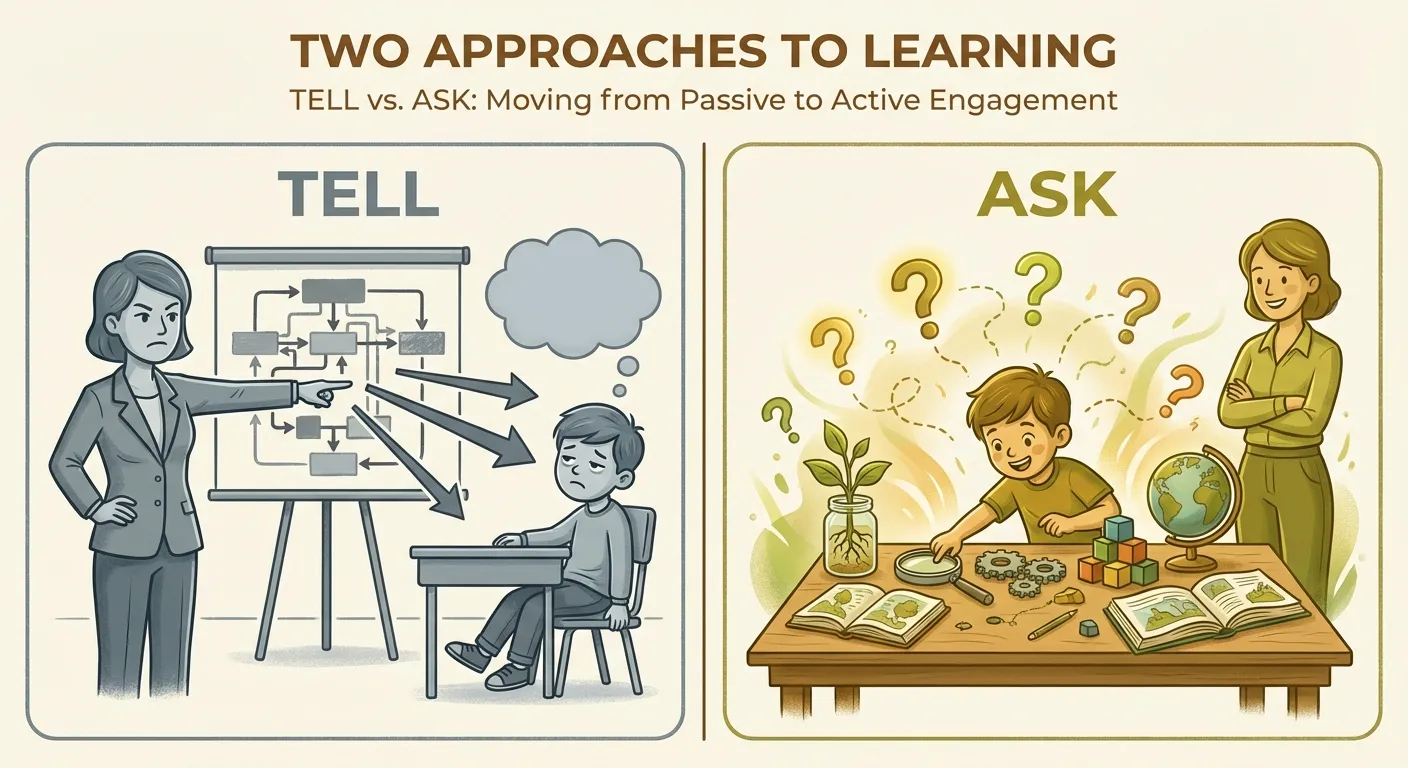
The "ask" approach takes a few extra seconds. But it does something no amount of explaining can: it makes the child the one who figured it out. And a child who figures things out becomes a child who wants to figure things out.
The Four-Stage Discovery Staircase
"Ask, don't tell" is the engine. But an engine needs a vehicle. The staircase is four stages, each with a different job. Rush any one and you pay for it later.
Spark
First weeksPure play. Not instruction disguised as play -- actual play. Keep sessions short. Arrange early challenges so the child wins more than they lose. If their first memory of the skill is frustration, you're fighting uphill from here.
Build
Weeks 2 -- 8One new element at a time. Practice it for several days before adding the next. This is where most parents break -- it feels too slow. It isn't. Hundreds of easy reps at the current level build automatic recall, and automatic recall is what frees up mental space for harder material later.
Combine
Months 3 -- 6The isolated pieces connect into real ability. Mix focused drills with open-ended challenges. Introduce friendly competitions at an appropriate level -- stretching, not crushing. Add visualization: can they replay what they just did in their head? Can they plan ahead?
Launch
Month 6+The child starts learning independently. They pick up books, watch tutorials, teach younger kids what they know. You're not the engine anymore. You built a child who runs on their own curiosity.
Five Things That Keep the Engine Running
Warmth First
A child who feels loved tolerates far more challenge than one who feels judged. The relationship is the foundation under the staircase.
Stack the Wins
Arrange conditions so successes vastly outnumber failures. When something hard comes, they draw from a deep well of "I can do hard things."
Make Progress Visible
Charts, recordings, before-and-after comparisons. Let them see how far they've come. Visible progress becomes automatic motivation.
Praise Strategy, Not Talent
"You figured that out because you tried three different approaches" beats "You're so smart" every single time.
Let Obsession Happen
When your child wants to do it all the time, talks about it constantly, can't stop -- that's the engine at full speed. Don't manage it. Protect it.
The One Diagnostic Question
If your child stops enjoying the work, something in your method is wrong -- not the child. Check: Is it too hard? Too easy? Too much pressure? Not enough celebration? Their engagement is your feedback loop. Fix the method, not the child.
Why This Works
A child who is told the answer learns the answer. A child who discovers the answer learns how to discover answers. The first child needs you every time. The second child needs you less and less -- until one day they're mastering things you never taught them, in fields you've never heard of, completely on their own.
That's the staircase. Not four stages of instruction. Four stages of stepping back.